The Profession of Arms: A Guide for Young Army Officers
It takes courage, especially for a young officer, to check a man met on the road for not saluting properly or for slovenly appearance, but, every time he does, it adds to his stock of moral courage, and whatever the soldier may say, he has respect for the officer who does pull him up.
Read Document →The Dragon's Teeth: Assessing China's Military Modernization
PLA has focused on modernising its capabilities across all warfare domains to achieve these goals. This includes land, air, and maritime operations, nuclear, space, counter-space, electronic warfare and cyberspace operations, aiming to become a fully integrated joint force.
Read Document →Transforming the PLA: A Decade of reorganisation from SSF to ISF
PRC has engaged in a sustained and broad effort to transform the PLA from an infantry-heavy, low-technology, ground forces-centric military into a high-technology, networked force with an increasing emphasis on joint operations and naval and air power projection.
Read Document →Eyes without Borders: Exploring the World of Open Source Intelligence (OSINT) in the Digital Age
Open Source Intelligence (OSINT) is gaining prominence with the rise of social media, the digital society and the vast growth of publicly and commercially available information (PAI and CAI).
Read Document →
The PLA’s Developing Cyber Warfare Capabilities and India's Options
Informationised warfare blurs the lines between peacetime and wartime. A nation in the information age cannot wait for the hostilities to break out to collect intelligence, carryout influence operations, develop antisatellite systems or design computer software weapons.
Read Document →
Galwan and After
Why did China did this when he is under tremendous pressure in all fronts, is this China's salami slice tactics being progressed rigorously, what will be new Rules of Engagement, what will be escalatory control mechanism, who has taken this decision, will there be some pressure put by China in India's North-East through insurgency.
Read Document →
India’s Joint Doctrine for Cyberspace Operations: A Critical Review
Chief of Defence Staff (CDS) General Anil Chauhan and Secretary, Department of Military Affairs, formally released declassified versions of the Joint Doctrines for Cyberspace Operations during the Chiefs of Staff Committee meeting in New Delhi.
Read Document →
Know your Enemy General(now Field Marshal) Syed Aseem Munir
Gen SA Munir's position in the hierarchy of Pakistan was not very comfortable. The state of economy, insurgency in Pakhtoonistan and Balochistan, attack on the Jaffar Express, constant protests by supporters of Imran Khan's supporters inside and outside of parliament.
Read Document →
Decoding Operation SINDOOR: Key Aspects and Implications
Precision strikes were carried out on nine sites—four in Pakistan and five in PoK—linked to anti-India terrorist groups such as the LeT, JeM and the Hizbul Mujahideen. The targeted sites included Muridke (LeT headquarters) and Bahawalpur (JeM headquarters).
Read Document →
Chinese Cyber Exploitation in India's Power Grid - Is There a linkage to Mumbai Power Outage?
The New York Times (NYT), based on analysis by a U.S. based private intelligence firm Recorded Future, reported that a Chinese entity penetrated India’s power grid at multiple load dispatch points. Chinese malware intruded into the control systems that manage electric supply across India, along with a high-voltage transmission substation and a coal-fired power plant
Read Document →3 April 2018
New Delhi is walking into the China trap
Gilgit-Baltistan: Story of how region 6 times the size of PoK passed on to Pakistan
The UK Parliament has said what India has been saying for 70 years. That Gilgit-Baltistan belongs to India as an integral part of the state of Jammu and Kashmir after it legally acceded to the Union in 1947. Passing a motion yesterday, the UK Parliament said that Gilgit-Baltistan is a legal and constitutional part of Jammu and Kashmir, illegally occupied by Pakistan since 1947.Afghanistan’s road to peace won’t be an easy one
Is there hope for an end to the long war in Afghanistan? A month ago, President Ashraf Ghani offered the Taliban a “comprehensive peace deal.”Defense Secretary Jim Mattis says the United States is open to a peace settlement in Afghanistan. And some Taliban leaders have expressed an interest in talks, as well. For now, however, the prospects for peace in Afghanistan remain grim. There are multiple steps to a potential deal — and many barriers to success. Here are five pitfalls on the road to peace.Xi Jinping’s grasp on power has captured the West’s attention – now what?
The Belt and Road Initiative: Is China Putting Its Money Where its Mouth Is?
Why Does Everyone Hate Made in China 2025?
On the same day that the Trump administration announced $60 billion in tariffs against China last week, the Office of the United States Trade Representative (USTR) dropped the results of its Section 301 investigation into China’s unfair trade practices. The nearly 200-page report presents a searing indictment of China’s disregard for intellectual property, discrimination against foreign firms, and use of preferential industrial policies to unfairly bolster Chinese firms. Interestingly, the report singles out one Chinese government initiative, in particular, as a prime example of Beijing's egregious behavior: Made in China 2025.What the West Doesn’t Get About Xi Jinping
The recent decision by China’s National People’s Congress to abolish term limits for the office of the president has sent shock waves through the West: Xi Jinping, the current officeholder, is suddenly being described as a new Confucian autocrat, overseeing a state still governed by a Marxist-Leninist party, presiding over a selectively capitalist economy, with ambitions to make his country a global superpower. This sense of shock says more about the West than China. For the last five years, Western leaders and analysts have often projected onto China an image of their preferred imaginings, rather than one reflecting the actual statements of China’s own leaders, or in the physical evidence of Chinese statecraft. These have long pointed to a vastly different reality.China’s four-decade route to the world’s No 1 economy
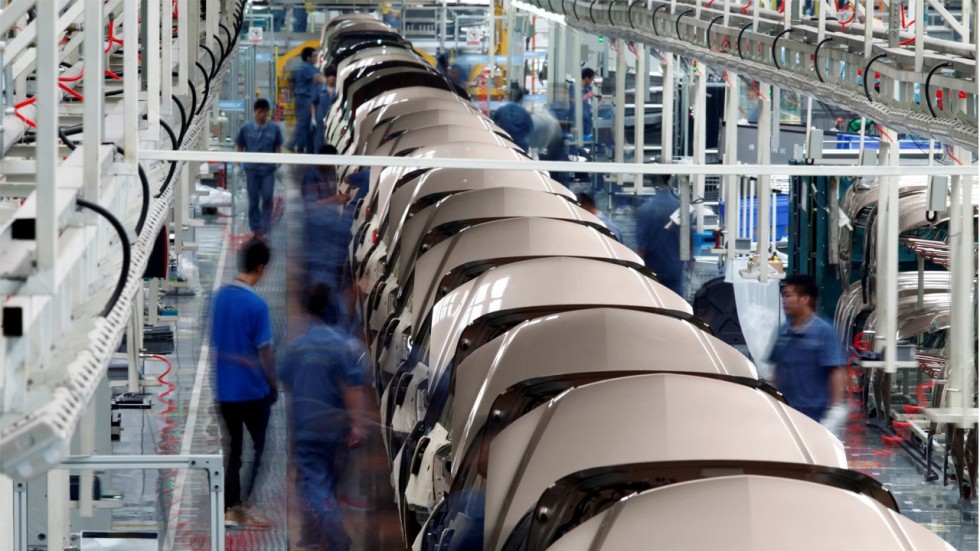
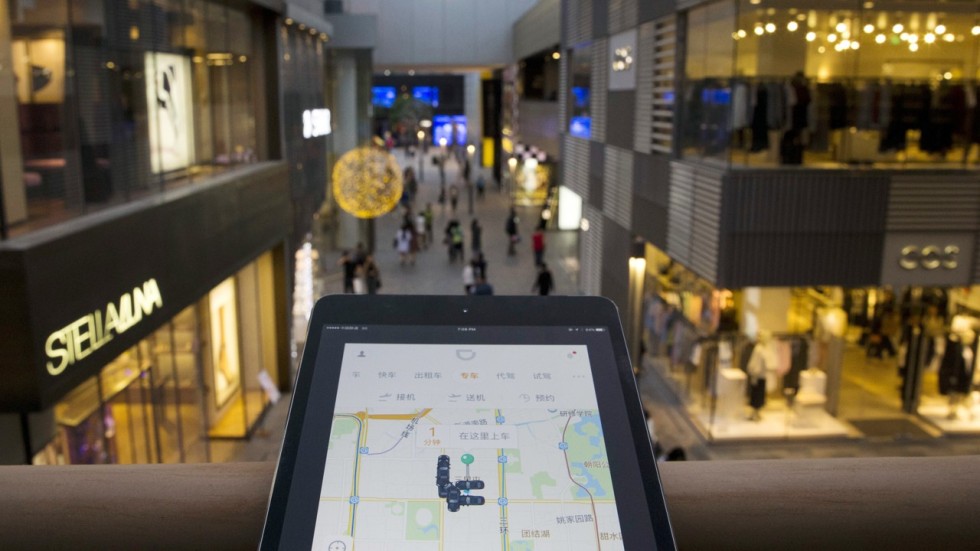
Its impressive achievements are thanks to perseverance and the far-reaching economic and societal changes that have been introduced since 1978. Within our lifetimes, China has transformed from an agrarian economy to a world-beating digital and consumption-led powerhouse, driven by smartphone-wallet shoppers. this year marks the 40th anniversary of China’s economic reform and opening. In December 1978, China’s “open door” policy signposted a turning point in its economic management and trajectory.At the heart of China’s techno-nationalism is a hit list of 200 unicorns
China Re-Enters the Korean Field of Play
Huawei’s R&D budget hits $14bn as next-generation networks arrive
10 Takeaways from the Fight against the Islamic State
Nearly three years on from the Islamic State’s high water mark in the summer of 2015, there are several lessons that the United States and its allies can discern from the terrorist group’s meteoric rise to control large parts of Iraq and Syria to the loss of its physical caliphate late last year. The steady decline in ISIL’s fortunes is striking given the palpable fear its rise in the summer of 2014 sparked across Washington, when a common question circulating within the policy community was whether Baghdad itself might fall. Many of these takeaways will be relevant to U.S. policymakers as they attempt to prevent the group from reconstituting itself in the coming months.Post-Conflict Reconstruction A U.S. Containment Strategy for Syria
The United States’ interests in Syria lie in formalizing its battlefield gains with a negotiated settlement and then leaving the country. To achieve this goal, it will need to find common cause in the short term with its greatest geopolitical foe, Russia. Doing so will require Washington to acknowledge a painful but obvious truth: Syrian President Bashar al-Assad has largely routed the anti-regime insurgency, consolidated power in much of the country’s west, and received open-ended support and security guarantees from Moscow and Tehran. Assad will govern most of Syria for the foreseeable future.Foreign Investment and U.S. National Security
The United States is both the world’s largest foreign direct investor and the largest beneficiary of foreign direct investment (FDI). But like every sovereign country, it has sought to temper its embrace of open markets with the protection of its national security interests. Achieving this balance, which has shifted over time, has meant placing certain limitations on overseas investment in strategically sensitive sectors of the U.S. economy.What’s Next for Russia’s Relations With the West?
In response to the poisoning of a former Russian spy on British soil, President Donald J. Trump has ordered the expulsion of dozens of Russian diplomats and the closing of the Russian consulate in Seattle. The United States joins more than twenty other governments taking similar steps against Moscow. In a written interview, CFR’s Stephen Sestanovich says the unity of action, particularly in Europe, is a “real warning sign to Putin.” Meanwhile, U.S. policy toward Russia is likely to become “more hostile” with Trump’s newly configured national security team, he says. EU-NATO Alignment after Brexit
At a summit in Brussels on March 22, EU heads of government will issue a statement of solidarity with the United Kingdom following the recent nerve agent attack on double-agent Sergei Skripal in Salisbury. This statement of support follows similar strong declarations by NATO and the EU’s Foreign Affairs Council. It is still not certain what additional action may be taken by the alliance or the EU, as it is not yet clear how the UK government will further respond to the attack, beyond having already expelled 23 Russian diplomats.Technology and National Security: The United States at a Critical Crossroads
Preventing the Balkanization of the Internet
The View From Olympus: Setting the Agenda
The View From Olympus: Danger Ahead?
The Macron Leaks: The Defeat of Informational Warfare
Macron’s fake news law will protect democracy
Twitter commentators were quick to attack him for oversimplifying the problem to make a political point. They may be right. But at its core, Macron’s instinct is the right one. We need to rethink the rules of engagement in social media and hold accountable producers, distributors and financiers of content, without compromising on freedom of speech. Macron’s proposal includes tougher rules for social media platforms when it comes to revealing the sources of sponsored content. It would also strengthen the authority of France’s media watchdog — the Conseil Supรฉrieur de l’Audiovisuel, or CSA — to impose heavy fines on outlets who publish or distribute lies, rumors and gossip.In Balkans, Britain rejoins battle for influence
BELGRADE — The West is fighting back against Russia in a battle for influence in the Balkans. But although the European Union has renewed its interest in the region, the latest charge is being led by Britain. Seven years after shutting down in Belgrade, the BBC on Monday reopened its Serbian language service, launching a website and unveiling partnerships with local media outlets. The move is part of a broader soft-power struggle in the Balkans, particularly Serbia, where pro-Russian media have been pumping out fake news stories — such as a recent piece from Kremlin-backed Sputnik claiming that NATO was preparing to conduct military exercises in Bosnia and Herzegovina using depleted uranium.Disinformation And Fake News: Old Wine In New Bottles – Analysis
Disinformation, Fake News and Deliberate Online Falsehoods are nothing new. They are all forms of Propaganda. Singapore should be concerned when a Sending State’s Strategic Propaganda mechanisms and its Agents of Influence within our shores seek to achieve Information Dominance. As the Select Committee on Deliberate Online Falsehoods continues its public hearings on the issue, it seems apt to take a step back and consider the whole matter of “Disinformation” and “Fake News” from a wider historical and conceptual perspective.Increasing International Cooperation in Cybersecurity and Adapting Cyber Norms
Information and communications technology (ICT) presents one of the most critical modern challenges to global security. Threat assessments predict that the next major international crisis could be due to a state or terrorist group weaponizing ICTs to devastate critical infrastructure or military logistics networks. The proliferation of asymmetric warfare (i.e., conflicts between nations or groups that have disparate military capabilities) has increased states’ use of ICTs, which necessitates the development of an international code of cyber conduct.To Learn How to Protect America From Digital Threats, Look to Europe
The revelation that Cambridge Analytica, a data firm hired by the Trump campaign, exploited Facebook data from 50 million Americans should be a wake-up call. Our government is failing to protect us online. Foreign intelligence agencies need only check social media user-agreement boxes to harvest our data and run influence campaigns. Meanwhile, as everything from hospitals to nuclear power plants to Wall Street are connected online, America is increasingly vulnerable. Yet compared with our allies, there is little urgency to tackle the problem.The unstoppable rise of veganism: how a fringe movement went mainstream
After the Facebook scandal it’s time to base the digital economy on public v private ownership of data
The continuing collapse of public trust in Facebook is welcome news to those of us who have been warning about the perils of “data extractivism” for years. It’s reassuring to have final, definitive proof that beneath Facebook’s highfalutin rhetoric of “building a global community that works for all of us” lies a cynical, aggressive project – of building a global data vacuum cleaner that sucks from all of us. Like others in this industry, Facebook makes money by drilling deep into our data selves – pokes and likes is simply how our data comes to the surface – much like energy firms drill deep into the oil wells: profits first, social and individual consequences later.