 The Asia-Africa Growth Corridor (AAGC) is a collaborative vision shared by India and Japan to create a growth corridor and industrial network connecting Northeast Asia, Southeast Asia, South Asia and Africa across the Indo-Pacific region. It has been seen as being aimed at “countering the Belt and Road (the Silk Road Economic Belt and the 21st Century Maritime Silk Road Initiative),” as there is a high level of overlapping in geographic coverage and cooperation fields between the AAGC and the Belt and Road Initiative. What’s proposed? Indian Prime Minister Narendra Modi has declared that India and Japan would jointly develop an Asia-Africa Growth Corridor and a vision document of the Asia-Africa Growth Corridor Partnership for Sustainable and Innovative Development was drawn up.
30 April 2018
The challenge to China's New Silk Road
The Asia-Africa Growth Corridor (AAGC) is a collaborative vision shared by India and Japan to create a growth corridor and industrial network connecting Northeast Asia, Southeast Asia, South Asia and Africa across the Indo-Pacific region. It has been seen as being aimed at “countering the Belt and Road (the Silk Road Economic Belt and the 21st Century Maritime Silk Road Initiative),” as there is a high level of overlapping in geographic coverage and cooperation fields between the AAGC and the Belt and Road Initiative. What’s proposed? Indian Prime Minister Narendra Modi has declared that India and Japan would jointly develop an Asia-Africa Growth Corridor and a vision document of the Asia-Africa Growth Corridor Partnership for Sustainable and Innovative Development was drawn up.Corralling the People’s Armed Police: Centralizing Control to Reflect Centralized Budgets
By: Adrian Zenz
On March 21, the Chinese government announced a major restructuring of the People’s Armed Police (PAP) that will relegate all but one of its current units to other ministries, meaning that these units’ staff will no longer be part of the military service (National Audit Office, March 21). This came on the heels of another important change in December 2017, when command over the PAP, which had been shared between the Central Military and the State Council, was assigned exclusively to the former (South China Morning Post, December 28, 2017).
China's Defense Budget: What Everyone Is Missing
Nan Li
 The recent session of China’s National People’s Congress approved an increase of China’s defense budget by 8.1 percent, which translates into an annual spending of $175 billion for the People’s Liberation Army (PLA) for 2018. Chinese analysts state that the increase keeps pace with China’s annual economic growth rate of 6.9 percent for 2017, and that unlike before 2016 when defense budget had gained mostly double-digit growth since the early 1990s, it has slowed down to single-digit growth for the past three consecutive years.
 Rivalry in Rejuvenation? Seeking New Paradigms for U.S.-China Strategic Competition
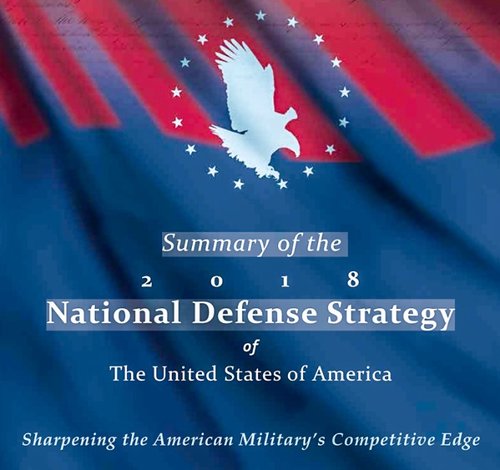 The U.S.-China relationship may shape the course of this century, and its future trajectory remains highly uncertain and contentious. Persistently, U.S. strategy has struggled to characterize and formulate a framework for America’s relationship with the People’s Republic of China (PRC). Today, as the U.S. and China dance on the precipice of a trade war, there is talk of a new Cold War in which the U.S. confronts a rival that is unique as not only a near-peer military competitor but also a rising economic and technological powerhouse. Increasingly, this competition is even extending into what has been characterized as “tech cold war” or an “artificial intelligence arms race.”[1,2] The status quo is seen as untenable by those who condemn the damages of years of “cyber-enabled economic warfare” and those who warn that our current course risks tumbling into Thucydides’ Trap.[3] Although high levels of cooperation and interdependence—particularly economic—between the U.S. and China could serve as a critical ballast for the relationship, such entanglement can just as readily constrain conflict as create frictions that render warfare more likely. Even as debates polarize, there is consensus that the stakes are high and the consequences of miscalculation would be historically deleterious.
What Would Taiwan Do If China Invaded?
Russell Hsiao
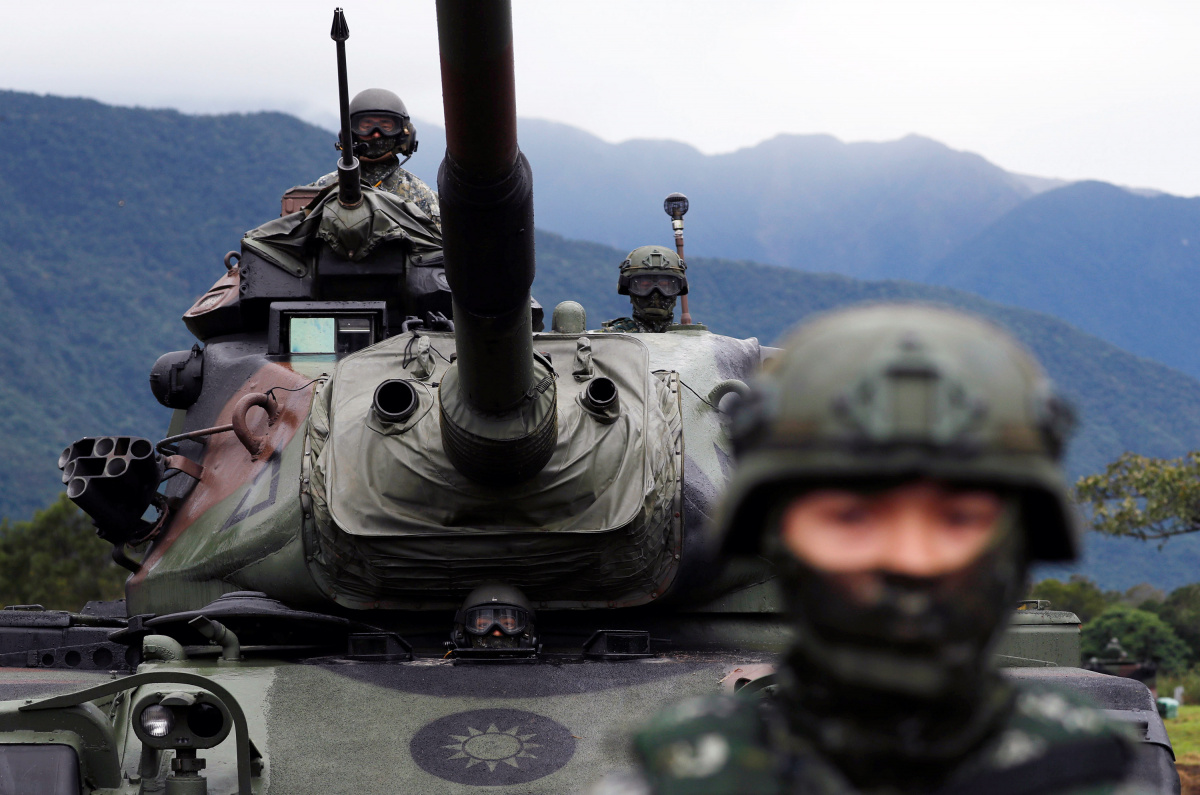 “The American people have come to the aid of foreign countries in the name of freedom many times in our history; but Americans will not in good conscience support countries that are unwilling to defend themselves.” The former U.S. representative from Connecticut and retired Army Col. Rob Simmons made the statement back in 2005 while Taiwan’s Legislative Yuan stalled in funding critical defense acquisitions necessary for the country’s defense. The defense budget was held up largely due to partisan wrangling in the fledgling democracy and the protracted delay were raising serious doubts in Washington about Taiwan’s commitment to its own defense. While the former congressman’s statement was made more than a decade ago, it touched upon a fundamental issue in U.S.-Taiwan relations that remains relevant today: Would the United States come to the defense of Taiwan if it was invaded by China?
China's Defense Budget: What Everyone Is Missing
Nan Li
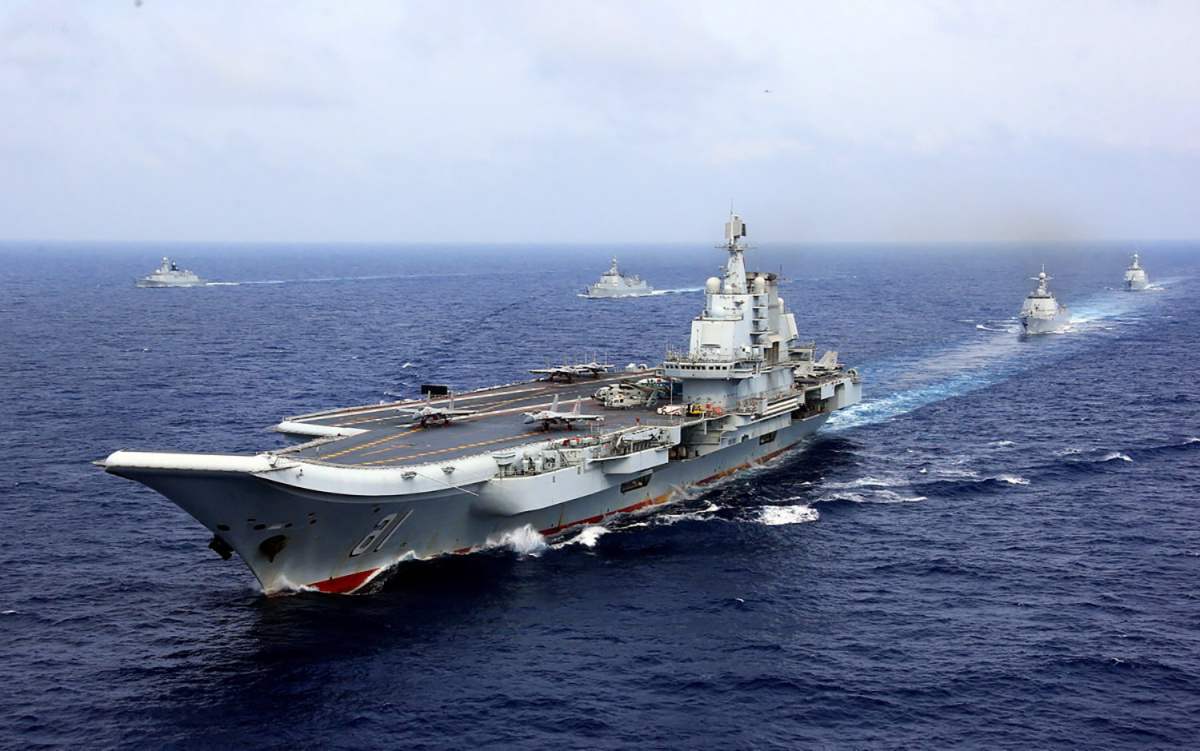 The recent session of China’s National People’s Congress approved an increase of China’s defense budget by 8.1 percent, which translates into an annual spending of $175 billion for the People’s Liberation Army (PLA) for 2018. Chinese analysts state that the increase keeps pace with China’s annual economic growth rate of 6.9 percent for 2017, and that unlike before 2016 when defense budget had gained mostly double-digit growth since the early 1990s, it has slowed down to single-digit growth for the past three consecutive years. They also point out that China’s defense budget as a percentage of growth domestic product (GDP) and of total government spending and in terms of per capita spending on defense remains low compared with other major powers. China’s 2018 defense budget, for instance, constitutes only about 1.4 percent of its annual GDP if compared with the United States’ 3.4 percent and Russia’s 2.8 percent. China’s budget is also only one quarter of the United States’ budget. As a result, they argue that this year’s budget increase would benefit China’s military modernization moderately. When such an argument is reasonable, there are several other reasons that suggest that the budget increase may be more significant than it appears to be.
Russia and China Could Stop America from Controlling the Seas in a War
Dave Majumdar

The United States Navy and Marine Corps have come to terms with the fact that America no longer has uncontested mastery of the seas for the first time since the fall of the Soviet Union in 1991. With the rise of near-peer competitors such as Russia and China and the proliferation of long-range precision-guided weapons, control of the sea can no longer be taken for granted. “The strategic environment is rapidly changing and the Navy and Marine Corps is engaged in a competition that they have not faced in over twenty years,” secretary of the navy Richard Spencer said in his written testimony on April 24 before the Senate Armed Services Committee. “Our PB19 budget continues to make strides in achieving that requirement to once again re-establish the standard that has ensured preeminence. This will be imperative to winning peer-on-peer competition, as we move forward to deliver enhanced distributed lethality.”
China’s Ever-Expanding Surveillance State
By Sarah Cook
 China’s authoritarian regime is taking systematic steps to expand its surveillance of people and communication channels within the country, and the tentacles of the apparatus are slowly extending far beyond China’s borders. A series of revelations and activist arrests over the past month provide insight on this project and what it means for the future of China and the world.
Xinjiang as Incubator
Waiting For China's Collapse
by Dan Steinbock
 Since the 1980s, a new generation of chaos capitalists have been undermining the progress of emerging economies. Under the pretext of “efficient markets," they seek to exploit real or perceived weaknesses. Recently, hedge funder Jim Chanos appeared on CNNMoney’s Markets Now program that was promoted heavily on the CNN: “Chanos got China right." Amid the global crisis, Chanos predicted that China would collapse. Nevertheless, CNN characterized his 2009 call as “brilliant."
Dealing With China’s High-Tech Ambitions

President Donald Trump’s handling of the trade relationship with China poses a threat both to the U.S. and to the world economy — but even his harshest critics agree with him on one thing. China’s bid to dominate the high-tech industries of the future often bends or breaks the rules of liberal international commerce, and needs to be checked. What’s important, and what this administration finds so difficult, is to be smart about it. Through its “Made in China 2025” blueprint and assorted plans and directives, China’s government aims to move the country up the manufacturing value chain and dominate advanced technologies such as robotics, artificial intelligence, semiconductors and biomedicine. In this effort, China has advantages — an enormous (and relatively closed) domestic market, a capacious budget for supporting preferred industries, and a technocratic government facing no organized domestic opposition.
The ISIS triangle which allows militants to disappear calls for a joint operation between Iraq, Syria and the US
Hassan Hassan

A delicate security triangle is forming along the Syrian-Iraqi borders. Operational lines of separation have prevented the United States, Iraq and the Damascus camp from working together to fight ISIS. But new complications have forced a fresh dynamic that effectively enables the US to target ISIS outside its established jurisdiction by proxy, through the Iraqis. The new dynamic, while still nascent, is a product of improvised arrangements between Washington and Moscow to prevent aerial collision and to demarcate areas of operation during the fight against the extremist group. The two sides agreed to have the Euphrates river as the “deconfliction” line, despite obvious flaws more apparent now than a few months ago.
“Russia-West ties have plummeted dramatically”
KANWAL SIBAL
The West and Russia have had an inherently conflictual relationship even if, historically, the two have collaborated.For the West Russia is not fully Western, whereas Russia identifies itself as a European country, though when rebuffed it projects itself as a Eurasian and Slavic country with its own civilizational characteristics. Culturally, Russia is European, but geopolitically it has transcended Europe because of its huge size, formidable strategic capacities and past superpower status. Within a security framework, the NATO-Russia Council implicitly recognized this, but not the EU within an economic framework, as in its response to Russia’s overtures after the Soviet collapse, it offered not an equal partnership but accommodation within its Neighborhood Policy.
McMaster and Commander Can a national-security adviser retain his integrity if the President has none?
By Patrick Radden Keefe
 When Donald Trump had a phone conversation with Vladimir Putin on the morning of March 20th, the two were at an excruciatingly delicate juncture. American intelligence officials had concluded that Russia had interfered in the 2016 Presidential election, with the goal of helping Trump win, and Trump had become the subject of an investigation, by the special counsel Robert Mueller, into allegations of collusion between the Kremlin and the Trump campaign. On March 4th, a former Russian spy and his daughter had been poisoned with a military-grade nerve agent in the English city of Salisbury. Theresa May, the British Prime Minister, announced that the Russian state appeared to be responsible and expelled twenty-three Russian diplomats from the U.K.
Export Control Reform: Better Late than Never
By Rachel Zissimos
Last Thursday, the Trump administration released a Presidential Memorandumthat sensibly reforms U.S. conventional arms transfer policy. The memo brings U.S. policy into closer alignment with the economic and security interests of the U.S. and its allies, through changes that reflect the rapid pace of technological innovation and the competitive global environment. An updated policy was sorely needed. Many regulations and agreements governing U.S. arms transfers date back to when the U.S. maintained a comfortable lead in military innovation. Since that time, globalization has rapidly expanded other nations’ access to advanced technologies and complicated efforts to contain their spread and use.
Technological Innovation and the Geopolitics of Energy
By Severin Fischer
 In this article, Severin Fischer discusses three of the most important recent and upcoming technological advancements in energy – horizontal drilling with hydraulic fracturing, photovoltaics and batteries – and their potential impact on international politics. Further, he outlines why China and the US will have the biggest impact on future discussions on the geopolitics of energy. Technological change has a tremendous impact on societies in general, including international politics. This chapter discusses the most important recent and upcoming technological advancements in energy – horizontal drilling with hydraulic fracturing, photovoltaics, and batteries – and their possible influence on geopolitical dynamics. For different reasons, China and the US will have the biggest impact on the way we will discuss the geopolitics of energy in the future.
Beating Moscow at its Main Game: Espionage
The Cipher Brief
We talk a lot these days about smart power and hard power and soft power even the sharp power of manipulating information. In the end, power and influence have always been exercised in multiple dimensions – military, economic, political, ideological. Some states are strong in all dimensions, like the United States in the 1950s or the British in the 19th century. Others have limited capabilities, like ideological China under Mao. How do we deal with a state whose power and influence are largely one dimensional: a state like Russia which extends itself through spy craft? Indeed, Russia is a unique type of power: an espionage state.
Russia’s Travails in Syria and Other Russian Military News
Russia: Need A win, Not Spin
Russia is hustling to carry out some damage control in Syria after two embarrassing defeats. First there was the loss of several hundred Russian military contractors during a failed February attack on American and Kurdish forces in eastern Syria. In April there was the U.S., British and French attack on Assad chemical weapons facilities with 105 smart bombs and missiles. The Syrian air defense system, using recently updated equipment, failed to stop any of the incoming missiles, all of which apparently hit their targets and did so nearly simultaneously. Russia later admitted it did not use its S-400 air defense system in Syria because the incoming missiles, as per previous agreements, avoided all Russian facilities. Russia still insists that the Syrian air defense system shot down a lot of the incoming missiles but has not provided any proof. Such proof would be easy to locate and display if it existed, but it doesn’t and Russia is left insisting that its S-400 system, which it recently sold to Turkey, could have shot down the incoming missiles. Meanwhile Russia says it is sending some S-300 batteries to Syria to upgrade the Syrian air defenses and that these would also knock down incoming missiles. It is uncertain when the S-300 systems will arrive in Syria, or whether they will be sent at all.
Russia Widens EW War, ‘Disabling’ EC-130s In Syria
By COLIN CLARK
EC-130 Compass Call electronic warfare aircraft
 GEOINT: The Compass Call is supposed to be one of America’s foremost electronic warfare weapons, but the EC-130s flying near Syria are being attacked and disabled “in the most aggressive EW environment on the planet,” the head of Special Operations Command said here today. “Right now in Syria we are operating in the most aggressive EW environment on the planet from our adversaries. They are testing us everyday, knocking our communications down, disabling our EC-130s, etcetera,” Gen. Raymond Thomas told an audience of some 2,000 intelligence professionals.
An illusory victory: Was “mission accomplished” in Syria?
Dror Michman and Yael Mizrahi-Arnaud
After the April 13 attack on Syrian chemical facilities, the leaders of the United States, France, and Britain—who jointly conducted the strike—expressed satisfaction at the outcome. As Trump tweeted the next morning: A perfectly executed strike last night. Thank you to France and the United Kingdom for their wisdom and the power of their fine Military. Could not have had a better result. Mission Accomplished! But was this really a “mission accomplished”? The attack itself was quite limited, and an analysis of other paths not taken indicates that better options—to accomplish the intended goal of preventing the further use of chemical weapons, as well as sending a stronger message—were likely available.
Russia Widens EW War, ‘Disabling’ EC-130s OR AC-130s In Syria
By COLIN CLARK
GEOINT: The Compass Call is supposed to be one of America’s foremost electronic warfare weapons, but the EC-130s flying near Syria are being attacked and disabled “in the most aggressive EW environment on the planet,” the head of Special Operations Command said here today. “Right now in Syria we are operating in the most aggressive EW environment on the planet from our adversaries. They are testing us everyday, knocking our communications down, disabling our EC-130s, etcetera,” Gen. Raymond Thomas told an audience of some 2,000 intelligence professionals.
Gas Geoeconomics In Europe: Make Russia A "Normal" Gas Supplier Again
By Gabriel Collins, Anna Mikulska
 The U.S. should ramp up its energy diplomacy in Europe and help better insulate our European partners from Russian gas coercion. Gas supplies are a powerful tool of geoeconomics--using “economic instruments to produce beneficial geopolitical results.” To date, Moscow has dominated this game. The shale revolution offers Washington and its partners an opportunity to right the balance and further harness the benefits of globally abundant natural gas. European consumers’ economic security would benefit—and with it, the Continent’s overall security in the face of increasingly aggressive Russian behavior.
Israel Confronts Its Changing Demographics
 As Israel hits 70, its shifting demographic composition could strain the country's already contentious social situation, undermining its security. High birth rates among the Israeli Bedouin and Haredi populations stand to have a more profound effect on the country's economic and diplomatic future than will the changing ratio of Arab Palestinians to Israeli Jews within the borders of the former British Mandate for Palestine. Unless the two groups adapt their opposing cultural, educational and social outlooks, they could undermine Israel's economic and strategic strength.
L’Etat of the Union
By FRED KAPLAN
In a rousing speech before a joint session of Congress on Wednesday, French President Emmanuel Macron criticized trade wars, celebrated international institutions, rejected extreme nationalism, stood up for science, expressed hopes that the United States would “one day” return to the Paris talks on climate change, and defended the Iran nuclear deal. In short, the morning after a lavish White House state dinner and reports of a blooming “bromance” between the French and American presidents, Macron took several serious jabs at the policies and beliefs of his host, Donald Trump. At times, his nearly hour-long speech resembled a modern State of the Union, with lawmakers in half the chamber—in this case, the Democratic half—rising and cheering lustily, while those in the other half clapped politely or sat on their hands.
The futility of prohibiting bitcoin trade
Rahul Matthan
 Now that the technology has been banned and we have driven all who use it underground, bitcoins will be purchased through cash or other untraceable commodities Even though every bitcoin transaction is recorded and open to inspection, no-one knows the person behind the address who made the trade. Recently, the Reserve Bank of India (RBI) prohibited, with immediate effect, all regulated entities from providing services to anyone who deals with or settles any virtual currencies, citing concerns about the risks that these virtual currencies pose in the context of consumer protection, market integrity and money laundering. The true reason behind it is not entirely clear.
Quantum radar to render stealth technologies ineffective
David Szondy
 Stealth technology may not be very stealthy in the future thanks to a US$2.7-million project by the Canadian Department of National Defence to develop a new quantum radar system. The project, led by Jonathan Baugh at the University of Waterloo's Institute for Quantum Computing (IQC), uses the phenomenon of quantum entanglement to eliminate heavy background noise, thereby defeating stealth anti-radar technologies to detect incoming aircraft and missiles with much greater accuracy.