The Profession of Arms: A Guide for Young Army Officers
It takes courage, especially for a young officer, to check a man met on the road for not saluting properly or for slovenly appearance, but, every time he does, it adds to his stock of moral courage, and whatever the soldier may say, he has respect for the officer who does pull him up.
Read Document →The Dragon's Teeth: Assessing China's Military Modernization
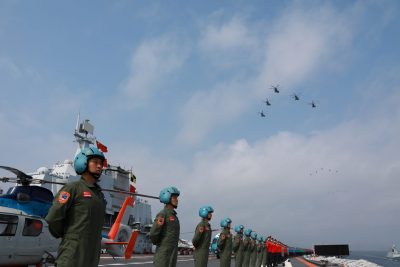
PLA has focused on modernising its capabilities across all warfare domains to achieve these goals. This includes land, air, and maritime operations, nuclear, space, counter-space, electronic warfare and cyberspace operations, aiming to become a fully integrated joint force.
Read Document →Transforming the PLA: A Decade of reorganisation from SSF to ISF
PRC has engaged in a sustained and broad effort to transform the PLA from an infantry-heavy, low-technology, ground forces-centric military into a high-technology, networked force with an increasing emphasis on joint operations and naval and air power projection.
Read Document →Eyes without Borders: Exploring the World of Open Source Intelligence (OSINT) in the Digital Age
Open Source Intelligence (OSINT) is gaining prominence with the rise of social media, the digital society and the vast growth of publicly and commercially available information (PAI and CAI).
Read Document →
The PLA’s Developing Cyber Warfare Capabilities and India's Options
Informationised warfare blurs the lines between peacetime and wartime. A nation in the information age cannot wait for the hostilities to break out to collect intelligence, carryout influence operations, develop antisatellite systems or design computer software weapons.
Read Document →
Galwan and After
Why did China did this when he is under tremendous pressure in all fronts, is this China's salami slice tactics being progressed rigorously, what will be new Rules of Engagement, what will be escalatory control mechanism, who has taken this decision, will there be some pressure put by China in India's North-East through insurgency.
Read Document →
India’s Joint Doctrine for Cyberspace Operations: A Critical Review
Chief of Defence Staff (CDS) General Anil Chauhan and Secretary, Department of Military Affairs, formally released declassified versions of the Joint Doctrines for Cyberspace Operations during the Chiefs of Staff Committee meeting in New Delhi.
Read Document →
Know your Enemy General(now Field Marshal) Syed Aseem Munir
Gen SA Munir's position in the hierarchy of Pakistan was not very comfortable. The state of economy, insurgency in Pakhtoonistan and Balochistan, attack on the Jaffar Express, constant protests by supporters of Imran Khan's supporters inside and outside of parliament.
Read Document →
Decoding Operation SINDOOR: Key Aspects and Implications
Precision strikes were carried out on nine sites—four in Pakistan and five in PoK—linked to anti-India terrorist groups such as the LeT, JeM and the Hizbul Mujahideen. The targeted sites included Muridke (LeT headquarters) and Bahawalpur (JeM headquarters).
Read Document →
Chinese Cyber Exploitation in India's Power Grid - Is There a linkage to Mumbai Power Outage?
The New York Times (NYT), based on analysis by a U.S. based private intelligence firm Recorded Future, reported that a Chinese entity penetrated India’s power grid at multiple load dispatch points. Chinese malware intruded into the control systems that manage electric supply across India, along with a high-voltage transmission substation and a coal-fired power plant
Read Document →26 April 2018
Reforming defence planning in India
India Shelves FGFA Project – Where to Now?
One Step Forward, One Step Back for PLA Military Education
New Russian Missiles May Be Aimed East
Beijing’s Ambitions in the South China Sea: How Should Europe Respond?
Blue China: Navigating the Maritime Silk Road to Europe
China in the Pacific: where there’s smoke, there’s mirrors
Taliban announce the start of their annual spring offensive, dismiss peace overtures
Beijing’s Ambitions in the South China Sea: How Should Europe Respond?
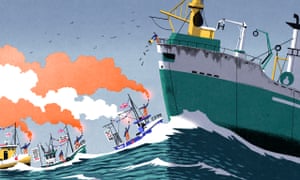
Beijing’s growing assertiveness in the South China Sea is putting Europe’s economic interests in the area at risk. More than one third of Europe’s external trade takes place with the Indo-Pacific region and any escalation of tensions in this area will undoubtedly have a direct impact on Europe. China has recently stepped up territorial and maritime claims over large swaths of the South China Sea. These claims are not only based on economic and security considerations, but also on national identity and the renewal of China’s past grandeur. President Xi Jinping’s reiteration of his vision of a “Chinese dream”, as most recently outlined during the 13th National People’s Congress held in Beijing in March 2018, reflects these efforts to rebrand China’s image and polish its credentials as a global actor.[1]Propaganda delivered the Brexit vote but it can’t land more fish
Why should France tolerate Islamic intolerance?
The Shadow War Between Israel and Iran Takes Center Stage
Israel’s Got Its Own Refugee Dilemma: African ‘Dreamers’
Trump and the North Korean Tipping Point
Do Israel’s Targeted Killings Work?
Technological Innovation and the Geopolitics of Energy
How will FinTech and digital currencies transform central banking
Why DoD is starting a new cyber cell on the Korean Peninsula
The Department of Defense is establishing a new cyber planning cell on the Korean Peninsula to in response to the threat from North Korea. The small team, known as a cyber operations-integrated planning elements (CO-IPE), will help better coordinate offensive and defensive cyber tools with traditional military operations. While U.S. Cyber Command is standing up cyber planning cells locally at all the combatant command headquarters, a Cyber Command spokesman said U.S. Forces Korea is the only sub-unified command with a team. “Given North Korea’s activities, the decision to establish a CO-IPE at the sub-unified level was well-advised,” the spokesman said.Why Israel is Keeping Its Warplanes Close to Home
Israel has withdrawn a squadron of fighter jets from a high-profile multinational military exercise in the United States and given them orders to stay in country. The move highlights Israel's deepinging concern over rising tensions with Iran and its need for greater readiness along its northern border with Syria. Instead of participating in a high-profile U.S. military air combat exercise in Alaska that starts April 30, the Israeli Defense Forces ordered a squadron of its fighter jets — likely the 69th Squadron, equipped with F-15I Ra'am strike fighters — to remain in Israel, while other of its air force assets have been allowed to proceed. Given that the U.S. Red Flag exercises require substantial preparation and confer valuable experience, Israel would not have made the decision to keep its fighters home lightly. The withdrawal, announced April 17, indicates a heightened probability that a cycle of escalation and confrontation between Iran (and, by extension, Hezbollah) and Israel lies ahead.Has a Bull Oil Market Returned?
Saudi Arabia and other major oil producers may reach their goal of reducing global oil inventories to their five-year average by the next OPEC meeting, scheduled for June. With that part of the strategy complete, Saudi Arabia is seeing other reasons — including boosting the valuation of Saudi Aramco — to support higher prices. But it's not just Saudi Arabia's strategy that has helped bring oil prices to their highest level since November 2014; structural factors that have leaned heavily on oil producers like Venezuela and the prospects for production in Libya and Iran have contributed to the higher prices.TACTICS AND THE HUMAN FACTOR
WHY ARE MILITANTS USING DRONES? UAV WEAPONS HAVE SPREAD FAR BEYOND NATION STATES
Why Syria may be the most aggressive electronic warfare environment on Earth
Cyber Week in Review: April 20, 2018
Here is a quick round-up of this week’s technology headlines and related stories you may have missed:


/arc-anglerfish-arc2-prod-mco.s3.amazonaws.com/public/IGKK47TRLVHCNEKOVI4HNVIYWU.jpg)