 What Pakistan seeks in Afghanistan cannot be fully understood from its official statements. However, its ‘dialogue diplomacy’ has propped up Taliban as a legitimate political force. For years, the U.S. agenda aimed at defeating Taliban militarily and preventing their return. India and Pakistan are not the only external powers fighting for influence in Afghanistan, there is also competition for influence between the United States and China, and Russia, between Iran and Pakistan. The agenda of defeating the Taliban has occasionally gone on the back burner amidst the complexity of those rivalries. What has not much recognized, however, is the increasing capability of the Afghan state and its institutions to consolidate and assert its power, something that Afghanistan has not seen in its previous conflicts, mainly in the post-Soviet era. This paper aims at analyzing how the Afghan state is emerging powerful to the extent that the Taliban may not overthrow it violently. Moreover, the politics of consensus has opened new avenues of dialogue that has brought Gulbadin Hikmatyar back from militancy. Pakistan’s denial of these developments often reflects in its overstating the role of India in Afghanistan, which is largely development focused.
 1 May 2018
Beyond the TAPI Project: An Afghan Factor in India-Pakistan Diplomacy?
What Pakistan seeks in Afghanistan cannot be fully understood from its official statements. However, its ‘dialogue diplomacy’ has propped up Taliban as a legitimate political force. For years, the U.S. agenda aimed at defeating Taliban militarily and preventing their return. India and Pakistan are not the only external powers fighting for influence in Afghanistan, there is also competition for influence between the United States and China, and Russia, between Iran and Pakistan. The agenda of defeating the Taliban has occasionally gone on the back burner amidst the complexity of those rivalries. What has not much recognized, however, is the increasing capability of the Afghan state and its institutions to consolidate and assert its power, something that Afghanistan has not seen in its previous conflicts, mainly in the post-Soviet era. This paper aims at analyzing how the Afghan state is emerging powerful to the extent that the Taliban may not overthrow it violently. Moreover, the politics of consensus has opened new avenues of dialogue that has brought Gulbadin Hikmatyar back from militancy. Pakistan’s denial of these developments often reflects in its overstating the role of India in Afghanistan, which is largely development focused. Is the Indo-Japan rail project a boondoggle?
The construction of a new high-speed railway line in India is scheduled to officially get underway this year, connecting the commercial capital of Mumbai and the industrial city of Ahmedabad in the western part of the country. The project to build the line fashioned after Japan’s shinkansen system is a product of an agreement between Prime Minister Shinzo Abe and his Indian counterpart, Narendra Modi, in their December 2015 summit. Yet anxiety is already rising due to soaring costs brought about by haphazard policies of the Indian government, leading both the Japanese government and Japanese firms to start getting bogged down. On Sept. 14 last year, less than two years after the summit, a groundbreaking ceremony was held in Ahmedabad, attended by both Abe and Modi. The total cost of the project is set at 1.08 trillion rupees (about ¥1.8 trillion). Of that total, 880 billion rupees (about ¥1.46 trillion) earmarked for the actual construction work is to be funded by yen-denominated loans from the Japanese government with an annual interest rate of 0.1 percent and repayable in 50 years.
Has Pakistan Truly Tamed its Tribal Frontier?
BENNETT SEFTEL
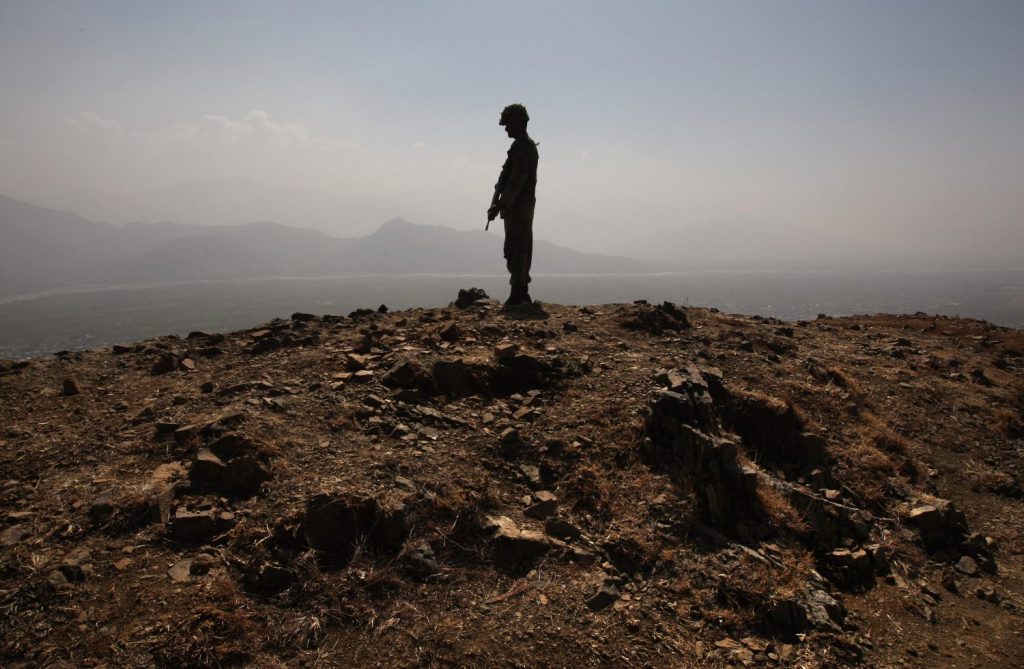 Maligned as a bastion of extremism and a top terrorist safe haven, Pakistan’s Federally Administrated Tribal Areas (FATA), along the country’s northwestern border with Afghanistan, have endured a significant transformation in the last few years. Between June 2014 and May 2016, the Pakistani army launched operation Zarb-e-Azb, literally translated as “swift and conclusive strike,” which focused on clearing terrorist organizations such as Tehrik-i-Taliban Pakistan (TTP), Punjabi Taliban, East Turkestan Islamic Movement (ETIM), Islamic Movement of Uzbekistan and the Haqqani network from the seven administrative units that comprise FATA. According to Pakistani military officials, at the start of the operation, approximately one-third of the FATA had been under “miscreant control” with the North Waziristan district earmarked as the key terrorist stronghold.
The corrosive influence of Pakistan’s ‘deep state’
The term “deep state” refers to a coordinated effort by career government employees and other individuals to influence public policy without regard for democratically elected leadership. It is actually the expansion of military complexes and corporate vested interests.
The deep state works on the principle that common citizens have no understanding of the complex affairs of the policymakers, hence their collective wisdom to choose elected representatives is not deemed good for the country.
Breaking New Ground
Manoj Kewalramani
A weekly bulletin offering news and analysis related to the Middle Kingdom. This week, the diplomatic reset was the only news that people could talk about. Indian Prime Minister Narendra Modi arrived in Wuhan on Thursday for an informal meeting with Chinese President Xi Jinping over the next two days. The Chinese side has described the meeting as potentially transformational while commentators in India have termed it as a reset. China’s vice foreign minister Kong Xuanyou says that the two leaders will engage in “strategic communication on the most profound and unprecedented changes the world has seen in a century.” Although there is no formal agenda or specific statements expected, Kong says Modi and Xi will “thoroughly exchange views on the overall, long-term, and strategic issues of China-India relations.” The goal, from a Chinese perspective is to devise an “overarching long-term vision for the next 100 years to deepen bilateral cooperation and properly handle differences to bring both countries to a new starting point.” Amidst all this, Tanvi Madan’s nuanced assessment of ties heading into Wuhan and this Suhasini Haidar piece on the mixed record of grand summitry are worth reading.
HINA’S NEW ‘GUAM KILLER’ MISSILE COULD REACH U.S. MILITARY BASES
BY CRISTINA SILVA
China's new missile is being called the "Guam killer" because it could attack a U.S. military base in the Pacific Ocean with a nuclear weapon. Defense Ministry spokesperson Wu Qian said the DF-26 intermediate range ballistic missile was now in service and could carry conventional and nuclear warheads to attack targets at land or sea. It has a range of up to 4,000 kilometers, or 2,500 miles, meaning it could hit important U.S. installations on the island of Guam, or other military bases in the region. Wu said China would not launch a nuclear strike against an opponent unless it was an act of defense, the Associated Press reported. This is the first time the DF-26 missile has been operational. China previously showed it off during a 2015 military parade marking the 70th anniversary of World War II ending.
China Can Hurt Trump With Trade Responses
by Dan Steinbock
 In the trade war against China, the White House’s “America First" advocates are relying on trade instruments that contained Japan’s rise in the 1980s. But China is not Japan. It has ten ways to hit back. Two weeks ago China said it would impose anti-dumping duties on imports of U.S. sorghum. As the largest buyer of U. sorghum - about $1 billion annually - China holds substantial leverage. Currently, China relies almost solely on the US for its sorghum. As bilateral trade relations erode, that kind of reliance may soon be a thing of the past.
Who Will Win the New Great Game?
By Jochen Bittner
 HAMBURG, Germany — To claim we are living through a new Cold War is both an understatement and a category mistake. The 20th-century face-off between the Communist East and the Capitalist West was, ideology aside, about two superpowers trying to contain each other. The global conflict of today is far less static. What we are witnessing instead is a new Great Game, a collision of great powers that are trying to roll back one another’s spheres of influence. Unlike the Great Game of the 19th century between the British and the Russian Empire that culminated in the fight for dominance over Afghanistan, today’s Great Game is global, more complex and much more dangerous.
Autocracy With Chinese Characteristics
By Yuen Yuen Ang
Sooner or later this economy will slow,” the New York Times columnist Thomas Friedman declared of China in 1998. He continued: “That’s when China will need a government that is legitimate. . . . When China’s 900 million villagers get phones, and start calling each other, this will inevitably become a more open country.” At the time, just a few years after the fall of the Soviet Union, Friedman’s certainty was broadly shared. China’s economic ascent under authoritarian rule could not last; eventually, and inescapably, further economic development would bring about democratization.
No ISIS targets is no longer a problem for Central Command
/arc-anglerfish-arc2-prod-mco.s3.amazonaws.com/public/PJ5O32ETPNDWPGOW2A5QELMWDQ.jpg) Central Command is piloting a new approach for processing the ocean of data collected by the intelligence, surveillance and reconnaissance assets in theater. CENTCOM’s deputy commander, Air Force Lt. Gen. Charles Brown, described how in his previous role as the air component commander for CENTCOM, he was having difficulty finding ISIS targets to strike. Instead, he told an audience at the annual GEOINT symposium April 25 in Tampa, Florida, that his team struggled to assign the processing, exploitation and dissemination (PED) of the data and that directly led to the lack of targets identified to strike.
Central Command is piloting a new approach for processing the ocean of data collected by the intelligence, surveillance and reconnaissance assets in theater. CENTCOM’s deputy commander, Air Force Lt. Gen. Charles Brown, described how in his previous role as the air component commander for CENTCOM, he was having difficulty finding ISIS targets to strike. Instead, he told an audience at the annual GEOINT symposium April 25 in Tampa, Florida, that his team struggled to assign the processing, exploitation and dissemination (PED) of the data and that directly led to the lack of targets identified to strike.Can North Korea Really Give Up Its Nukes?
By Rodger Baker
 North Korea's diplomatic outreach again raises the possibility that it is willing to use its nuclear program as a bargaining chip. With an eye toward regime survival and eventual Korean unification, Pyongyang could trade away the public face of its nuclear weapons program. Having offered such a concession, North Korea will demand a lot more than an easing of sanctions by South Korea and the United States in return.
The US Does Not Need New Tactical Nukes
BY WILLIAM J. PERRY
 There’s a false narrative afoot: that we lack the weapons to deter a Russian nuclear strike. Very soon, Congress will have to make a major decision: should it approve the Trump administration’s request for new, smaller, more usable nuclear weapons? No, it should not. There is no need for such weapons, and building them would make us less safe. These so-called “low-yield” nuclear weapons are a gateway to a nuclear catastrophe. There is a false narrative in Washington that the United States has a “gap” in its ability to deter the use of nuclear weapons by Russia. Administration officials allege that Moscow believes that an American president would not respond to Russian use of “tactical,” or lower-yield, nuclear weapons since his only options include “strategic,” or high-yield, ones. Since our president would not want to start an all-out nuclear war, he would be “self-deterred” from using big nukes, the logic goes, and Moscow would have a path to using small nukes that we could not block.
A Shadowy War’s Newest Front: A Drone Base Rising From Saharan Dust
by ERIC SCHMITT
Rising from a barren stretch of African scrubland, a half-finished drone base represents the newest front line in America’s global shadow war. At its center, hundreds of Air Force personnel are feverishly working to complete a $110 million airfield that, when finished in the coming months, will be used to stalk or strike extremists deep into West and North Africa, a region where most Americans have no idea the country is fighting. Near the nascent runway, Army Green Berets are training Nigerien forces to carry out counterterrorism raids or fend off an enemy ambush — like the one that killed four American soldiers near the Mali border last fall. Taken together, these parallel missions reflect a largely undeclared American military buildup outside the battlefields of Iraq and Afghanistan, often with murky authorities and little public attention, unfolding in remote places like Yemen, Somalia and, increasingly, West Africa.
Production Cost Of Renewable Energy Now 'Lower' Than Fossil Fuels
Gaurav Sharma
Hanno Schoklitsch, Chief Executive Officer of Kaiserwetter, said: "We are in a scenario in which renewable energy is already less expensive than conventional energy. From now on, the digital platforms that use the Internet of Things (IoT) and Smart Data will be the next key factor to achieve the objectives of the Paris Climate Agreement and attract more investors. " The decrease in the cost of renewable energy, which is around 80% lower since 2010, for instance, in the photovoltaic solar sector, has occurred for several reasons, he added. "These include technological improvements and the competitive simplicity of renewables, through a broad base of project developers, especially investment funds and banks, optimistic about the unstoppable future of a market whose profitability continues to skyrocket even once the subsidies have ceased, backed by a great social and political support."
Is a Strong France and a Weak Germany the EU’s New Normal?
Judah Grunstein
 With French President Emmanuel Macron and German Chancellor Angela Merkel staging back-to-back visits to Washington this week, many observers have commented on the stark contrast in the two European leaders’ respective relationship with Donald Trump. But the visits also highlight an emerging intra-European dynamic: A strong France and a weak Germany at the heart of the European Union. Coverage of the two visits has been dominated by close attention to the interpersonal dynamics between each leader and Trump, and the major policy differences that both Macron and Merkel will try to bridge with the U.S. president. Through a deft blend of bluntness and charm, Macron has managed to forge a personal bond with Trump. By contrast, in her previous meetings with him, Merkel has seemed like a lightning rod for his pent-up frustrations.
 An Introduction to Hashing in the Era of Machine Learning
 In December 2017, researchers at Google and MIT published a provocative research paper about their efforts into “learned index structures”. The research is quite exciting, as the authors state in the abstract: “[…] we believe that the idea of replacing core components of a data management system through learned models has far reaching implications for future systems designs and that this work just provides a glimpse of what might be possible.” Indeed the results presented by the team of Google and MIT researchers includes findings that could signal new competition for the most venerable stalwarts in the world of indexing: the B-Tree and the Hash Map. The engineering community is ever abuzz about the future of machine learning; as such the research paper has made its rounds on Hacker News, Reddit, and through the halls of engineering communities worldwide.
Massive cyber attack targets mid-Atlantic nation 'Berylia'
By Richard Chirgwin
 NATO and assorted partners have unleashed a massive cyber-attack on the fictional country of Berylia to test their ability to defend critical infrastructure against outside attacks.
The virtual country will suffer its virtual attack under NATO's Cooperative Cyber Defence Centre of Excellence's (CCDCOE) Locked Shields 2018, which CCDCOE described as the world's “largest and most advanced international live-fire cyber defence exercise”.
War Cloud: JEDI To Deploy Backpack Servers To Front Line
By SYDNEY J. FREEDBERG JR.
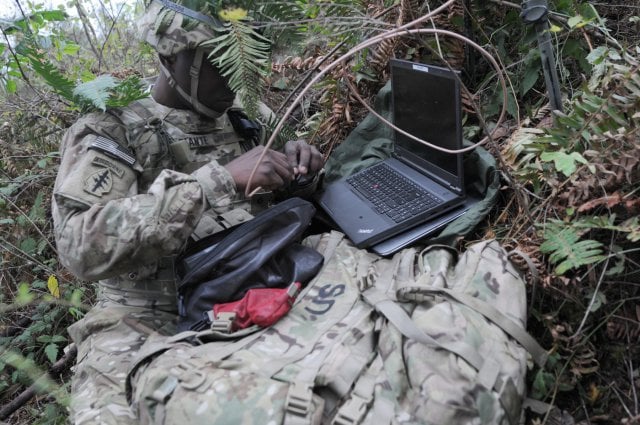 In a world where knowledge increasingly matters more than physical power, US troops can’t quickly access vital information in a labyrinth of often incompatible and inaccessible databases. The Joint Enterprise Defense Infrastructure — archly acronymized as JEDI — aims to fix all that. A soldier from the Army’s offensive cyber brigade during an exercise at Fort Lewis, Washington. UPDATE with Dep. Sec. Shanahan remarks PENTAGON: The Defense Department’s 10-year, $10 billion cloud computing contract isn’t just a huge information technology initiative. It’s also a weapon system.
Quantum Computing explained!
At sub atomic levels every thing that we know about classical physics breaks, not just by a small margin but at massive scale. Welcome to the world of quantum mechanics and be ready to be amazed. Before we start talking about Quantum Computing, we must have a good grip of what Quantum Mechanics is, what is special about it, and how quantum-mechanical phenomenons help us perform advanced computations. Initial researches on Quantum Mechanics can be dated back to 17th century, when scientists proposed wave theory of light (Light can exhibit both a wave theory, and a particle theory at the same time). The existence of a light quantum was proposed by Max Planck in 1900, which was further enhanced by Albert Einstein stating that that light is composed of tiny particles called photons, and each photon has energy. In general, quantum mechanics deals with the behaviour of matter and its interactions with energy on the scale of atoms and subatomic particles.
How secure is blockchain?
Nigel Phair
 Blockchain technology is transforming the way we do business by allowing consumers to cut out the middleman in numerous vital services, reducing costs and boosting efficiency. In this way it has the potential to reduce poverty throughout the developing world. But is it secure? More specifically, can blockchain-based technologies simultaneously offer trust and privacy to ensure private and tamper-free records? This issue should concern those development institutions, businesses and governments exploring blockchain for more efficient delivery of aid, money remittances, smart contracts, health services and more. Likewise, social entrepreneurs must ask the same question as they pursue the potential for cheaper international payments, clearer property rights and broader access to finance.
Blockchain technology is transforming the way we do business by allowing consumers to cut out the middleman in numerous vital services, reducing costs and boosting efficiency. In this way it has the potential to reduce poverty throughout the developing world. But is it secure? More specifically, can blockchain-based technologies simultaneously offer trust and privacy to ensure private and tamper-free records? This issue should concern those development institutions, businesses and governments exploring blockchain for more efficient delivery of aid, money remittances, smart contracts, health services and more. Likewise, social entrepreneurs must ask the same question as they pursue the potential for cheaper international payments, clearer property rights and broader access to finance.Pentagon Aims to Win Global Race for New Hypersonic Technologies
By Oriana Pawlyk
 If the great Space Race that began in the 1950s helped define technologies that would take satellites and mankind into space, a new kind of global competition today will define technologies that move at more than five times the speed of sound. The U.S. Air Force this week awarded Lockheed Martin Corp. a contract to develop a prototype hypersonic cruise missile, or the Hypersonic Conventional Strike Weapon. The project -- one of two hypersonic weapon prototyping efforts the service is pursuing -- could cost as much as $928 million over the course of its lifetime.
The Privacy Paradox Facebook Twitter Whatsapp
JEFFREY D. SACHS
Even before concerns about technology companies' use of personal data surfaced this year, many of the same firms were routinely accommodating official requests for access to it. Is data privacy even possible in the digital age? The EU has taken the lead in responding to abuse by the likes of Facebook, thanks to its new privacy standards and proposed greater taxation of peddlers of online personal data. Yet more is needed and feasible. Chris Hughes, a co-founder of Facebook, recently notedthat the public scrutiny of Facebook is “very much overdue,” declaring that “it’s shocking to me that they didn’t have to answer more of these questions earlier on.” Leaders in the information technology sector, especially in Europe, have been warning of the abuses by Facebook (and other portals) for years. Their insights and practical recommendations are especially urgent now.
Traveling Geopolitically
By George Friedman
A few years ago, I wrote a series titled “Geopolitical Journeys.” Since I tend to travel widely, it was intended to be a consideration of the geopolitical nature of a country, with a discussion of its present situation. I want to resume that series because I was told it was interesting, and because I gained a great deal when I visited countries I knew I was going to write about. Knowing that you will have to write about a place provides a discipline that merely being there does not. In the next two weeks, I will be visiting Portugal and Italy. I will see far less than the whole of these countries, but I will see a part, and from that part I can learn important things about the whole.
Resilience: The ´Fifth Wave´ in the Evolution of Deterrence
By Tim Prior
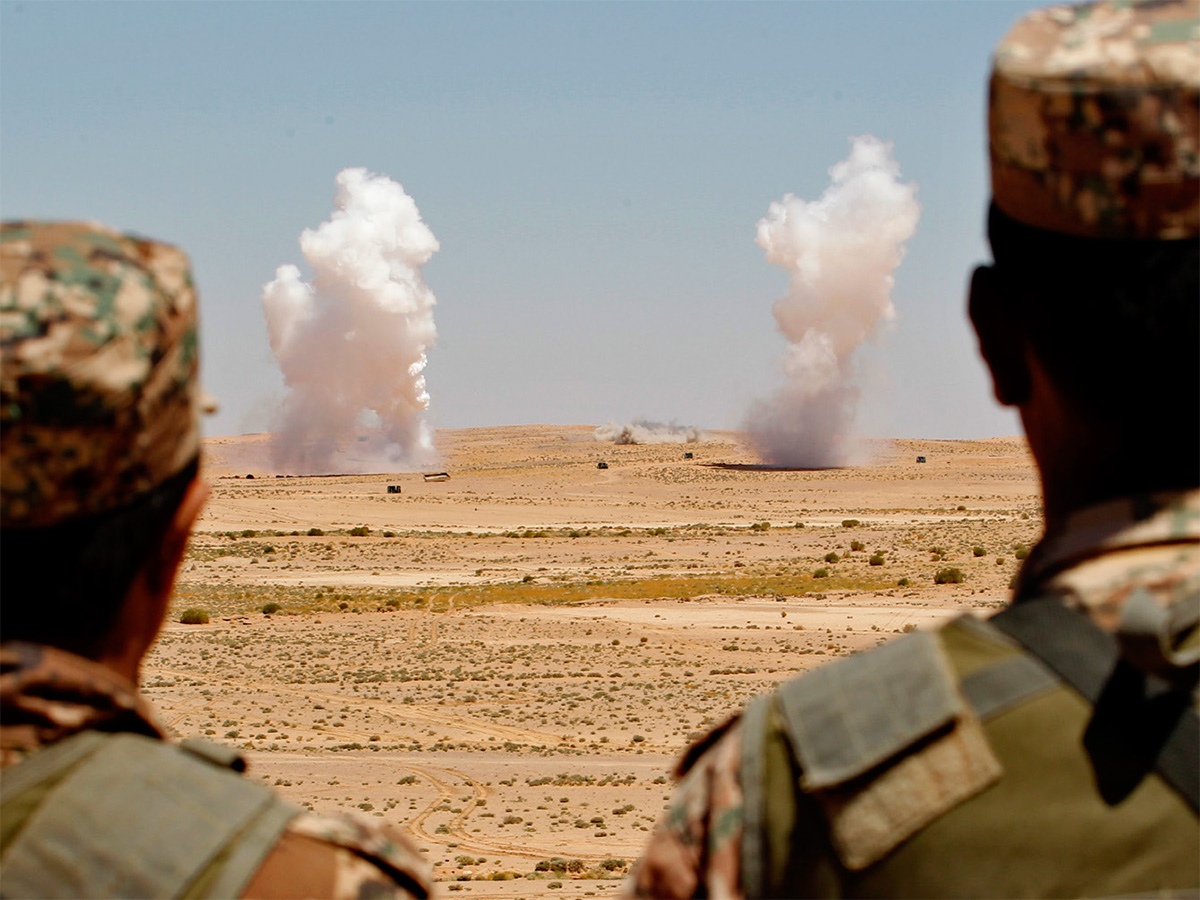 According to Tim Prior, the ‘fifth wave’ of deterrence development is rising at a point when established approaches are fumbling to provide an effective response to complex contemporary security threats. However, Prior believes that an answer lies in resilience thinking. Indeed, he argues that resilience can increase the ability of security institutions to cope with complex threats, for instance, by reducing vulnerabilities and denying threatening actors suitable targets for their attacks. This article was originally published in Strategic Trends 2018 by the Center for Security Studies on 13 April 2018.
Russian and Chinese Hypersonic Glide Vehicles: Closing the Gap
By Davis Florick
Russia and China are quickly developing robust hypersonic glide vehicle (HGV) programs intended to coerce the United States (U.S.), allies, and partners. In recent years, Moscow’s and Beijing’s HGV testing programs have significantly outpaced Washington’s comparable program. Russia and China have prioritized these programs, believing that HGV capabilities can easily overcome U.S., allied, and partner defenses. Therefore, both are working to attain a coercive and debilitating capability. Exacerbating the problem, Moscow and Beijing have reportedly broached the possibility of arming HGVs with conventional or nuclear munitions thus complicating how the U.S., allies, and partners might handle a crisis situation. Russia’s and China’s races to field HGVs make imperative a U.S. response which includes more modern missile defenses and sufficient response options.