The Profession of Arms: A Guide for Young Army Officers
It takes courage, especially for a young officer, to check a man met on the road for not saluting properly or for slovenly appearance, but, every time he does, it adds to his stock of moral courage, and whatever the soldier may say, he has respect for the officer who does pull him up.
Read Document →The Dragon's Teeth: Assessing China's Military Modernization
PLA has focused on modernising its capabilities across all warfare domains to achieve these goals. This includes land, air, and maritime operations, nuclear, space, counter-space, electronic warfare and cyberspace operations, aiming to become a fully integrated joint force.
Read Document →Transforming the PLA: A Decade of reorganisation from SSF to ISF
PRC has engaged in a sustained and broad effort to transform the PLA from an infantry-heavy, low-technology, ground forces-centric military into a high-technology, networked force with an increasing emphasis on joint operations and naval and air power projection.
Read Document →Eyes without Borders: Exploring the World of Open Source Intelligence (OSINT) in the Digital Age
Open Source Intelligence (OSINT) is gaining prominence with the rise of social media, the digital society and the vast growth of publicly and commercially available information (PAI and CAI).
Read Document →
The PLA’s Developing Cyber Warfare Capabilities and India's Options
Informationised warfare blurs the lines between peacetime and wartime. A nation in the information age cannot wait for the hostilities to break out to collect intelligence, carryout influence operations, develop antisatellite systems or design computer software weapons.
Read Document →
Galwan and After
Why did China did this when he is under tremendous pressure in all fronts, is this China's salami slice tactics being progressed rigorously, what will be new Rules of Engagement, what will be escalatory control mechanism, who has taken this decision, will there be some pressure put by China in India's North-East through insurgency.
Read Document →
India’s Joint Doctrine for Cyberspace Operations: A Critical Review
Chief of Defence Staff (CDS) General Anil Chauhan and Secretary, Department of Military Affairs, formally released declassified versions of the Joint Doctrines for Cyberspace Operations during the Chiefs of Staff Committee meeting in New Delhi.
Read Document →
Know your Enemy General(now Field Marshal) Syed Aseem Munir
Gen SA Munir's position in the hierarchy of Pakistan was not very comfortable. The state of economy, insurgency in Pakhtoonistan and Balochistan, attack on the Jaffar Express, constant protests by supporters of Imran Khan's supporters inside and outside of parliament.
Read Document →
Decoding Operation SINDOOR: Key Aspects and Implications
Precision strikes were carried out on nine sites—four in Pakistan and five in PoK—linked to anti-India terrorist groups such as the LeT, JeM and the Hizbul Mujahideen. The targeted sites included Muridke (LeT headquarters) and Bahawalpur (JeM headquarters).
Read Document →
Chinese Cyber Exploitation in India's Power Grid - Is There a linkage to Mumbai Power Outage?
The New York Times (NYT), based on analysis by a U.S. based private intelligence firm Recorded Future, reported that a Chinese entity penetrated India’s power grid at multiple load dispatch points. Chinese malware intruded into the control systems that manage electric supply across India, along with a high-voltage transmission substation and a coal-fired power plant
Read Document →14 April 2021
India has proved to be a popular—and clever—investor in poor countries
Extending Constitutional Rights to Pakistan’s Tribal Areas

Post-Coup Myanmar Could Become a Failed State

The Cost of the Coup: Myanmar Edges Toward State Collapse
A "China Model?" Beijing’s Promotion of Alternative Global Norms and Standards
Opinion – China’s Wolf Warrior Propaganda Versus Western Criticism in the Xinjiang Cotton Crisis

Ideas Matter: The Fight Against the Ideology of the Chinese Regime
Opinion: Don't Help China By Hyping Risk Of War Over Taiwan

Beijing has pierced Washington’s deterrence bubble. How can the US recover?
Blackout Hits Iran Nuclear Site in What Appears to Be Israeli Sabotage
A power failure that appeared to have been caused by a deliberately planned explosion struck Iran’s Natanz uranium enrichment site on Sunday, in what Iranian officials called an act of sabotage that they suggested had been carried out by Israel.Moving Trends and Statistics in the US During the COVID-19 Pandemic

How a growing fight against a little-known ISIS affiliate pulled in US Green Berets and foreign mercenaries
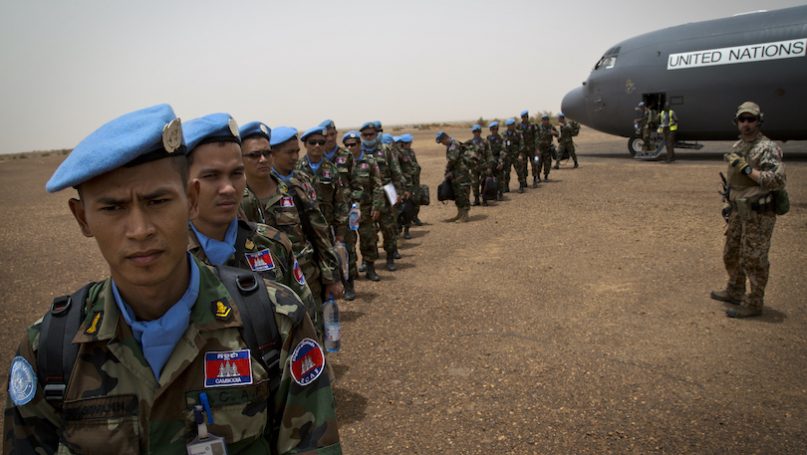
The Implications of Stabilisation Logic in UN Peacekeeping: The Context of MINUSMA

Earth, Water, Air & Gas: The Four Elements of Turkish Geopolitics

Knowledge Diplomacy and the Future(s) of Global Cooperation

A History of the Third Offset, 2014–2018
Technology Futures: Projecting the Possible, Navigating What's Next

US intelligence report warns of increased offensive cyber, disinformation around the world
Global Cybersecurity Governance Is Fragmented – Get over It

The Modern Security Battlefield: What 2020 taught us about gaps in vulnerability management
Artificial Intelligence and Governance: Going Beyond Ethics
Neutrality and Cyberspace: Bridging the Gap between Theory and Reality
Global Counterspace Capabilities
Space security has become an increasingly salient policy issue. Over the last several years, there has been growing concern from multiple governments over the reliance on vulnerable space capabilities for national security, and the corresponding proliferation of offensive counterspace capabilities that could be used to disrupt, deny, degrade, or destroy space systems. This in turn has led to increased rhetoric from some countries about the need to prepare for future conflicts on Earth to extend into space, and calls from some corners to increase the development of offensive counterspace capabilities and put in place more aggressive policies and postures.International Cooperation to Mitigate Cyber Operations against Critical Infrastructure
To address the risk of increasingly complex and effective cyber threats aimed at critical infrastructure, the international community uses norms of expected behaviour of States in cyberspace to promote cooperation. This report investigates the norm – as proposed in 2015 by the United Nations Group of Governmental Experts on Developments in the Field of Information and Telecommunications in the Context of International Security – that urges States to respond to other States’ requests for assistance or mitigation in the event of malicious cyber operations against critical infrastructure.The Intelligence Community’s Deadly Bias Toward Classified Sources
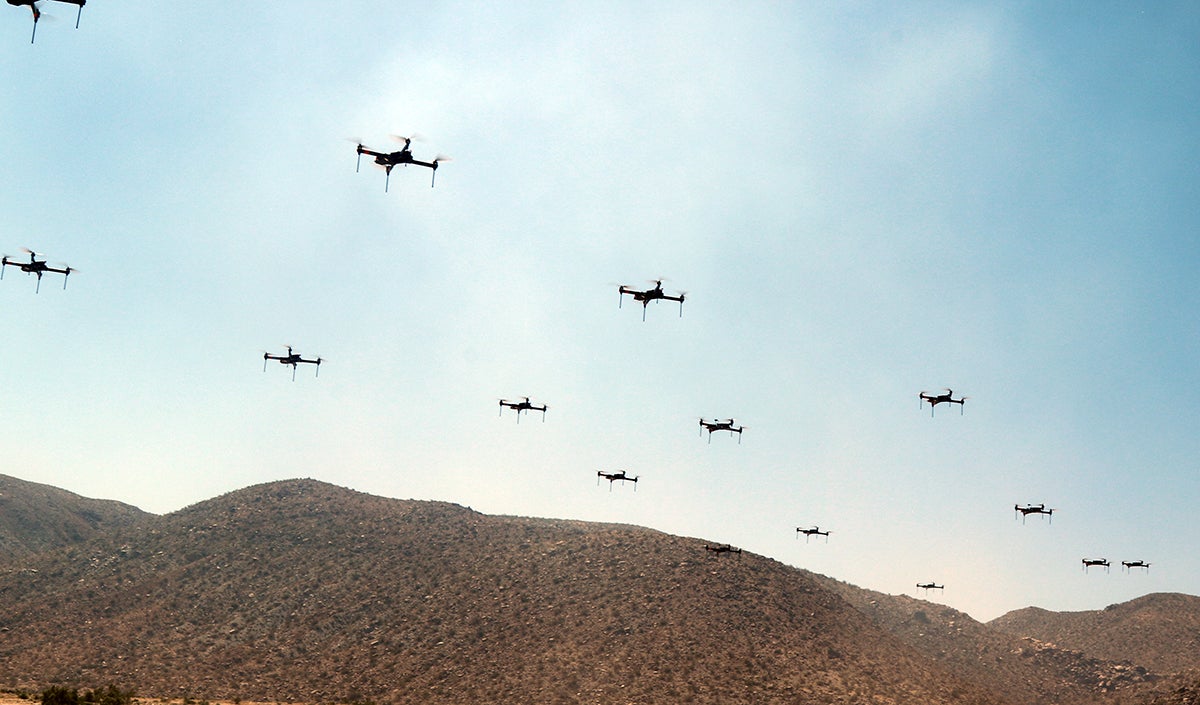
THE ROLE OF DRONES IN FUTURE TERRORIST ATTACKS