The Profession of Arms: A Guide for Young Army Officers
It takes courage, especially for a young officer, to check a man met on the road for not saluting properly or for slovenly appearance, but, every time he does, it adds to his stock of moral courage, and whatever the soldier may say, he has respect for the officer who does pull him up.
Read Document →The Dragon's Teeth: Assessing China's Military Modernization
PLA has focused on modernising its capabilities across all warfare domains to achieve these goals. This includes land, air, and maritime operations, nuclear, space, counter-space, electronic warfare and cyberspace operations, aiming to become a fully integrated joint force.
Read Document →Transforming the PLA: A Decade of reorganisation from SSF to ISF
PRC has engaged in a sustained and broad effort to transform the PLA from an infantry-heavy, low-technology, ground forces-centric military into a high-technology, networked force with an increasing emphasis on joint operations and naval and air power projection.
Read Document →Eyes without Borders: Exploring the World of Open Source Intelligence (OSINT) in the Digital Age
Open Source Intelligence (OSINT) is gaining prominence with the rise of social media, the digital society and the vast growth of publicly and commercially available information (PAI and CAI).
Read Document →
The PLA’s Developing Cyber Warfare Capabilities and India's Options
Informationised warfare blurs the lines between peacetime and wartime. A nation in the information age cannot wait for the hostilities to break out to collect intelligence, carryout influence operations, develop antisatellite systems or design computer software weapons.
Read Document →
Galwan and After
Why did China did this when he is under tremendous pressure in all fronts, is this China's salami slice tactics being progressed rigorously, what will be new Rules of Engagement, what will be escalatory control mechanism, who has taken this decision, will there be some pressure put by China in India's North-East through insurgency.
Read Document →
India’s Joint Doctrine for Cyberspace Operations: A Critical Review
Chief of Defence Staff (CDS) General Anil Chauhan and Secretary, Department of Military Affairs, formally released declassified versions of the Joint Doctrines for Cyberspace Operations during the Chiefs of Staff Committee meeting in New Delhi.
Read Document →
Know your Enemy General(now Field Marshal) Syed Aseem Munir
Gen SA Munir's position in the hierarchy of Pakistan was not very comfortable. The state of economy, insurgency in Pakhtoonistan and Balochistan, attack on the Jaffar Express, constant protests by supporters of Imran Khan's supporters inside and outside of parliament.
Read Document →
Decoding Operation SINDOOR: Key Aspects and Implications
Precision strikes were carried out on nine sites—four in Pakistan and five in PoK—linked to anti-India terrorist groups such as the LeT, JeM and the Hizbul Mujahideen. The targeted sites included Muridke (LeT headquarters) and Bahawalpur (JeM headquarters).
Read Document →
Chinese Cyber Exploitation in India's Power Grid - Is There a linkage to Mumbai Power Outage?
The New York Times (NYT), based on analysis by a U.S. based private intelligence firm Recorded Future, reported that a Chinese entity penetrated India’s power grid at multiple load dispatch points. Chinese malware intruded into the control systems that manage electric supply across India, along with a high-voltage transmission substation and a coal-fired power plant
Read Document →12 February 2018
India's New Gateway to Bhutan Northeast India could be Bhutan’s new gateway to the world.
India’s Insular Dilemma in the Maldives Political Crisis
One hopes that Indian diplomats and national-security managers are doing some serious soul-searching about how and why events spun, so swiftly, out of control in neighbouring Maldives.For this newly formed Army unit, the stakes in Afghanistan will be high
Mapping Taliban Control in Afghanistan

Meet the Believers: The Afghanistan War’s US Commanders are Ready For a Reboot
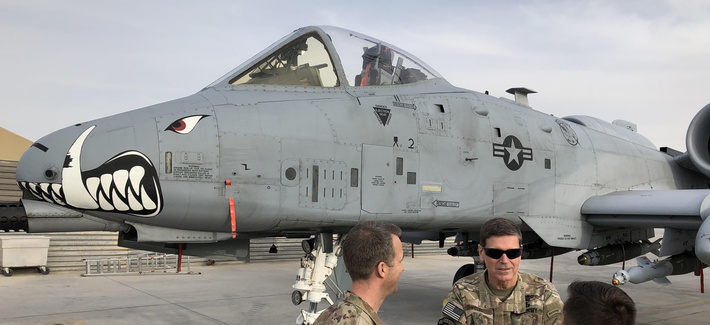
KANDAHAR, Afghanistan – There’s a new faith among the latest U.S. generals who have come to win the war in Afghanistan, but plenty of old realities. U.S. Central Command’s Gen. Joseph Votel, who is overseeing the Trump administration’s Afghanistan War reboot, came here to see its beginning and its promise of victory, with newly arriving squadrons of attack jets, howitzer cannons, and hundreds of specialized and experienced U.S. troops.THE EXPANDING SECRECY OF THE AFGHANISTAN WAR
Maldives Crisis: What Is Wrong With India?
Maldivians regret the knee-jerk reaction of the Indian strategic community and the media, which have neither the time nor interest in their nation and its people unless China or IS or both get a free mention.India and the Maldives Emergency
China’s Evolving Nuclear Strategy: Will China Drop “No First Use?”
The PLA Rocket Force is continuing to upgrade its missile forces and shift its emphasis from a posture of immobile and vulnerable positions hidden deep in mountains to a highly mobile and more survivable mode. A new CCTV documentary also reveals that China’s multiple independently targetable re-entry vehicle (MIRV)-capable intercontinental ballistic missile (ICBM) DF-41 will begin active service in 2018 (PLA Daily, December 25, 2017; People’s Daily Online, November 28, 2017).MENU Search China’s Fourth Industrial Revolution: Artificial Intelligence
Bottom Line: China’s nationwide pursuit to become the world leader in artificial intelligence (AI) is an attempt to not only match U.S. economic power, but to bypass it geo-strategically. While Beijing’s involvement is spurred by economic ambitions, it has made it clear that the development of AI will simultaneously be for military applications that could change the character of warfare and place the U.S. at a geopolitical disadvantage.How Djibouti Became China's Gateway To Africa
New Photographs Show China's South China Sea Artificial Islands Like You've Never Seen Them
How Dutch Spies Were Able To Outwit Russian Hackers
Since at least 2010, the Russian state-sponsored hacking group Cozy Bearhas been implicated in cyber attacks around the world, penetrating networks belonging to the U.S. State Department, the Joint Chiefs of Staff, and the Democratic National Committee, and targeting other systems around the world from Norway to Brazil.
Starving Wolf No Longer: Can Russia Sustain Its Military? (Op-ed)
In December 2017, Vladimir Putin triumphantly declared Russia’s victory in Syria. Addressing troops during a surprise visit to the Khmeimim airbase, he also announced a partial withdrawal of forces. “The homeland is waiting for you, friends. Godspeed!” he said. Russia’s Disinformation Offensive
America Needs to Prepare for a Great Power War
Dark Money: How Militants Exploit Hawala to Fund Terror
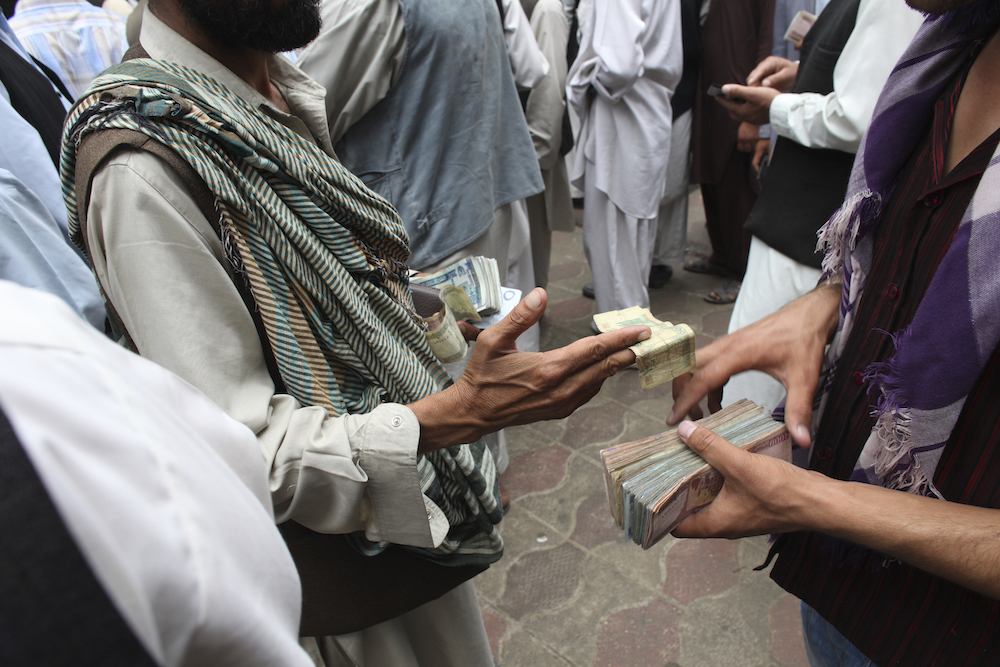
Bottom Line: For terrorists, moving money covertly through hawala networks to circumvent institutionalized banking systems remains one of their leading methods of avoiding detection. The U.S. has managed to unearth and even sanction certain illicit hawala networks, but terrorists continue to exploit this centuries old, nearly untraceable practice to finance their operations around the world.PACIFIC MONEY What Now for Economic Integration in the Asia-Pacific? Image Credit: Michael Valdon What Now for Economic Integration in the Asia-Pacific?
In January, Toshimitsu Motegi, the Japanese minister in charge of economic revitalization, announced that an agreement had been reached on TPP-11, absent the United States, and that it was set to be signed this March. Several days later, U.S. President Donald J. Trump attracted considerable attention for remarks hinting at the United States returning to the TPP. The evidence took the form of a speech delivered by Trump at the annual World Economic Forum in Davos, and an interview with U.S. media outlet CNBC he gave just before his speech.The Collapse of Venezuela’s Economy and the Growing Potential for Violence
Labor 2030: The Collision of Demographics, Automation and Inequality
Researchers are sounding the alarm on cyberbiosecurity
Cyberbiosecurity advocates are sounding the alarm about the enormous risks posed by the biotech industry's increased reliance on computer-controlled instruments and networks.