The worst terror attack on India since Narendra Modi came to power will put pressure on the prime minister to approve a military response against Pakistan, which it blamed for a deadly assault in Kashmir, as it comes ahead of the country’s general election. Islamabad denied any link.The Profession of Arms: A Guide for Young Army Officers
It takes courage, especially for a young officer, to check a man met on the road for not saluting properly or for slovenly appearance, but, every time he does, it adds to his stock of moral courage, and whatever the soldier may say, he has respect for the officer who does pull him up.
Read Document →The Dragon's Teeth: Assessing China's Military Modernization
PLA has focused on modernising its capabilities across all warfare domains to achieve these goals. This includes land, air, and maritime operations, nuclear, space, counter-space, electronic warfare and cyberspace operations, aiming to become a fully integrated joint force.
Read Document →Transforming the PLA: A Decade of reorganisation from SSF to ISF
PRC has engaged in a sustained and broad effort to transform the PLA from an infantry-heavy, low-technology, ground forces-centric military into a high-technology, networked force with an increasing emphasis on joint operations and naval and air power projection.
Read Document →Eyes without Borders: Exploring the World of Open Source Intelligence (OSINT) in the Digital Age
Open Source Intelligence (OSINT) is gaining prominence with the rise of social media, the digital society and the vast growth of publicly and commercially available information (PAI and CAI).
Read Document →
The PLA’s Developing Cyber Warfare Capabilities and India's Options
Informationised warfare blurs the lines between peacetime and wartime. A nation in the information age cannot wait for the hostilities to break out to collect intelligence, carryout influence operations, develop antisatellite systems or design computer software weapons.
Read Document →
Galwan and After
Why did China did this when he is under tremendous pressure in all fronts, is this China's salami slice tactics being progressed rigorously, what will be new Rules of Engagement, what will be escalatory control mechanism, who has taken this decision, will there be some pressure put by China in India's North-East through insurgency.
Read Document →
India’s Joint Doctrine for Cyberspace Operations: A Critical Review
Chief of Defence Staff (CDS) General Anil Chauhan and Secretary, Department of Military Affairs, formally released declassified versions of the Joint Doctrines for Cyberspace Operations during the Chiefs of Staff Committee meeting in New Delhi.
Read Document →
Know your Enemy General(now Field Marshal) Syed Aseem Munir
Gen SA Munir's position in the hierarchy of Pakistan was not very comfortable. The state of economy, insurgency in Pakhtoonistan and Balochistan, attack on the Jaffar Express, constant protests by supporters of Imran Khan's supporters inside and outside of parliament.
Read Document →
Decoding Operation SINDOOR: Key Aspects and Implications
Precision strikes were carried out on nine sites—four in Pakistan and five in PoK—linked to anti-India terrorist groups such as the LeT, JeM and the Hizbul Mujahideen. The targeted sites included Muridke (LeT headquarters) and Bahawalpur (JeM headquarters).
Read Document →
Chinese Cyber Exploitation in India's Power Grid - Is There a linkage to Mumbai Power Outage?
The New York Times (NYT), based on analysis by a U.S. based private intelligence firm Recorded Future, reported that a Chinese entity penetrated India’s power grid at multiple load dispatch points. Chinese malware intruded into the control systems that manage electric supply across India, along with a high-voltage transmission substation and a coal-fired power plant
Read Document →17 February 2019
Modi Vows Terrorists Will Pay as Pakistan Blamed for Attack
The worst terror attack on India since Narendra Modi came to power will put pressure on the prime minister to approve a military response against Pakistan, which it blamed for a deadly assault in Kashmir, as it comes ahead of the country’s general election. Islamabad denied any link.How the India-Pakistan Conflict Leaves Great Powers Powerless
A decade ago, the world watched in disbelief as terrorists from the Pakistan-based Lashkar-e-Taiba group ripped through the Indian financial capital of Mumbai. By the time the 10 attackers were stopped four days after the assault began, they had killed 164 people—Americans and other foreign nationals among them—and left over 300 injured. India’s 9/11, as the Indian media dubbed it, had unfolded. India, having long seen the Lashkar-e-Taiba as a direct proxy of the Pakistani intelligence outfit, the Inter-Services Intelligence, blamed the Pakistani state for having directed the attack. A near-war crisis between the two nuclear neighbors ensued in its wake, offering a stark reminder why U.S. President Bill Clinton termed this part of the world “the most dangerous place” on Earth at the turn of the century.America Shouldn’t Turn Its Back on Afghan Civilians
Without Regional Cooperation, Afghan Peace Will Remain Elusive
Eyes are fixed on the February 25 scheduled meeting between the Qatar-based Taliban leadership and representatives of the U.S. government, led by seasoned diplomat Zalmay Khalilzad, an Afghan-American who held the ambassadorial positions in Afghanistan and Iraq during the Bush administration.Pakistan Based Terrorism And Suicide Bombings Against India Raising Ugly Head Again
Pakistan-based and Pakistan-reared terrorism and suicide bombings against India targeting Kashmir Valley have again raised their ugly heads in February 2019 which again brings into central focus the despicable permissive roles of Pakistan primarily and China for impeding in United Nations in successive years the designation of JeM chief Masood Azhar as an ‘International Terrorist’.The New NAFTA's Real Target? China
TUXTLA GUTIรRREZ — The recent evolution of foreign trade between Mexico and China is particularly relevant today in the context of China's entry into the North American market, the former NAFTA zone now renamed USMCA after a treaty overhaul.The Strategy the U.S. Should Pursue in Iraq
Syrian Experience Provides New Impetus for Russia’s UAV Strategy (Part One)
WTO as a Reflection of Emerging 'New' World Order
The Myths and Realities of European Security in a Post-INF World
On Feb. 2, the United States formally declared its intention to withdraw from the Intermediate-Range Nuclear Forces, or INF, treaty. The official declaration, which had been signaled by the Trump administration well in advance, set the clock ticking: Unless Russia unexpectedly returns to full and verifiable compliance with the treaty through the destruction of all its INF-violating missile systems, the U.S. withdrawal will become effective in early August. The formal termination of the treaty will have wide-ranging implications for European security, the U.S. military force posture in Europe, NATO deterrence and defense policy, and arms control.The Importance of Elsewhere
Managing risk: Nuclear weapons in the new geopolitics
Whither Nuclear Command, Control & Communications?
The end of an era? The INF Treaty, New START, and the future of strategic stability
Global Poverty Over the Long-Term: Legitimate Issues
I became somewhat peripherally involved in the debate on long-term trends in global poverty that is raging these days in the WebSphere, prompted first by some very strong claims by Steven Pinker and Bill Gates, and then by an equally strong rebuttal by Jason Hickel.The Fundamentals of the Quad
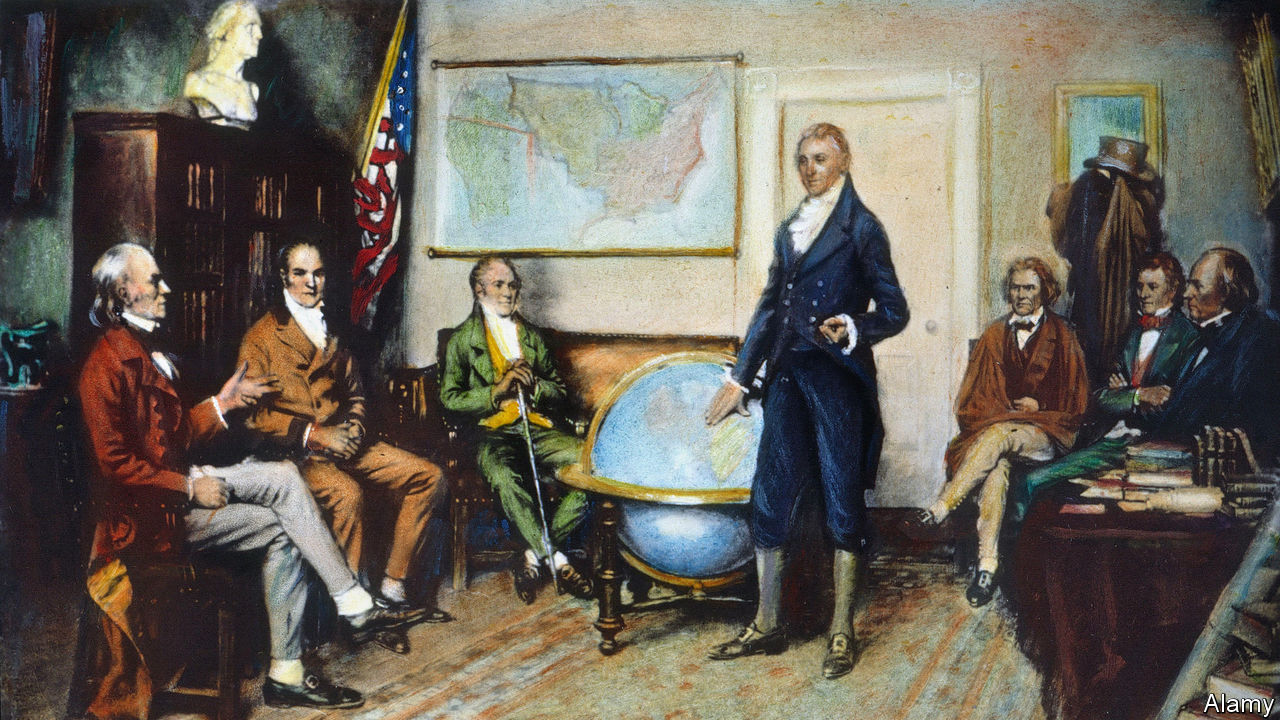
What is the Monroe Doctrine?
LAST MONTH Juan Guaidรณ, the leader of Venezuela’s national assembly, proclaimed himself the country’s acting president. He has been recognised as such by the governments of the United States, and most of western Europe and Latin America. The incumbent president, Nicolรกs Maduro, whose second term started in early January after a fraudulent election last year, has described the upheaval as a US-backed coup. On the day of Mr Guaidรณ’s declaration, Mr Maduro cautioned his supporters not to “trust the gringos”. “They don’t have friends or loyalties,” he said. “They only have interests, guts and the ambition to take Venezuela’s oil, gas and gold.” His warning echoes earlier Latin American responses to America’s history of regional intervention. Such interventions were often justified with reference to the Monroe Doctrine, a declaration made by President James Monroe in 1823. What does it say?Japan Drafts a Delicate Approach to U.S. Trade Talks
No, the Pentagon Is Not Working on Killer Robots—Yet
The U.S. Department of Defense on Feb. 12 released its roadmap for artificial intelligence, and the most interesting thing about it might be what’s missing from the report: The military is nowhere close to building a lethal weapon capable of thinking and acting on its own.New world orders? Nein Danke.
There’s a Big Obstacle to the Pentagon’s New Strategy to Speed AIto Troops
Defense officials want to accelerate the delivery of artificial-intelligence tools from the lab to the field. But it's hard to obtain the massive data streams that make AI work.How Cyber Command’s plan to ‘frustrate’ hackers is working
Gen. Paul Nakasone, the head of U.S. Cyber Command, used prepared testimony before the Senate Armed Services Committee Feb. 14 to describe an organization that has been more active in recent months and one that is conducting cyber operations in multiple places throughout the world.Chinese State Media Warns of Impending ‘High-Tech Cold War’ Fueled by A.I. Competition
U.S President Donald Trump’s executive order instructing the American government this week to prioritize the development of artificial intelligence (AI) could trigger a “new high-technology Cold War” between the United States and China, the Beijing-run Global Times cautioned on Tuesday.Atlantic Council Urges 5G National Strategy, Cites National Security
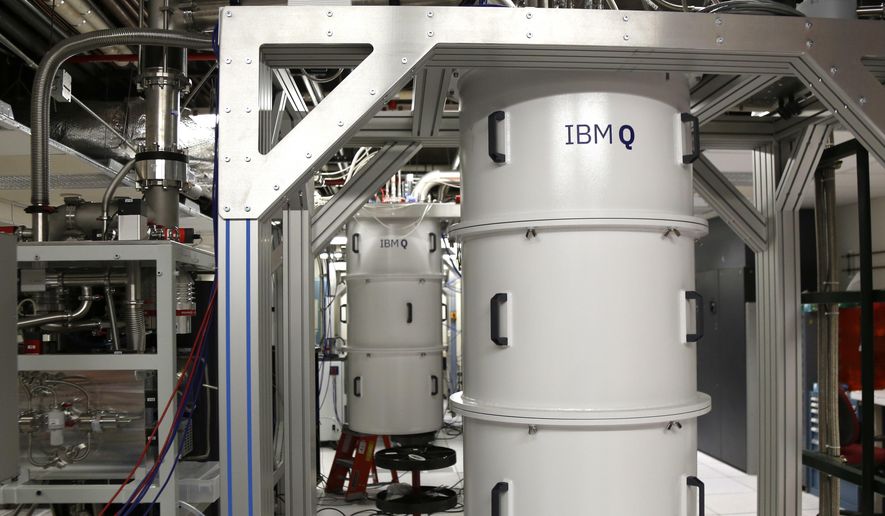
The Atlantic Council recommends accelerating a whole-of-government approach to developing a long-term national spectrum strategy which will include creating an inter-spectrum for 5G that will allow for Federal, state, and local policy synchronization of policies and procedures to rapidly and cost-effectively implement 5G.Quantum science breakthroughs could change face of national security
Angela Merkel Quits Facebook -- And Raises Concerns
THE ERA OF GENERAL PURPOSE COMPUTERS IS ENDING
Moore’s Law has underwritten a remarkable period of growth and stability for the computer industry. The doubling of transistor density at a predictable cadence has fueled not only five decades of increased processor performance, but also the rise of the general-purpose computing model. However, according to a pair of researchers at MIT and Aachen University, that’s all coming to an end.