In recent months, the Chinese-Pakistan Economic Corridor (CPEC) has left Pakistanis emboldened, Indians angry, and U.S. analysts worried. Ostensibly, CPEC will connect Pakistan to China’s western Xinjiang province through the development of vast new transportation and energy infrastructure. The project is part of China’s much-hyped Belt and Road Initiative, a grand, increasingly vague geopolitical plan bridging Eurasia that China’s powerful President Xi Jinping has promoted heavily.The Profession of Arms: A Guide for Young Army Officers
It takes courage, especially for a young officer, to check a man met on the road for not saluting properly or for slovenly appearance, but, every time he does, it adds to his stock of moral courage, and whatever the soldier may say, he has respect for the officer who does pull him up.
Read Document →The Dragon's Teeth: Assessing China's Military Modernization
PLA has focused on modernising its capabilities across all warfare domains to achieve these goals. This includes land, air, and maritime operations, nuclear, space, counter-space, electronic warfare and cyberspace operations, aiming to become a fully integrated joint force.
Read Document →Transforming the PLA: A Decade of reorganisation from SSF to ISF
PRC has engaged in a sustained and broad effort to transform the PLA from an infantry-heavy, low-technology, ground forces-centric military into a high-technology, networked force with an increasing emphasis on joint operations and naval and air power projection.
Read Document →Eyes without Borders: Exploring the World of Open Source Intelligence (OSINT) in the Digital Age
Open Source Intelligence (OSINT) is gaining prominence with the rise of social media, the digital society and the vast growth of publicly and commercially available information (PAI and CAI).
Read Document →
The PLA’s Developing Cyber Warfare Capabilities and India's Options
Informationised warfare blurs the lines between peacetime and wartime. A nation in the information age cannot wait for the hostilities to break out to collect intelligence, carryout influence operations, develop antisatellite systems or design computer software weapons.
Read Document →
Galwan and After
Why did China did this when he is under tremendous pressure in all fronts, is this China's salami slice tactics being progressed rigorously, what will be new Rules of Engagement, what will be escalatory control mechanism, who has taken this decision, will there be some pressure put by China in India's North-East through insurgency.
Read Document →
India’s Joint Doctrine for Cyberspace Operations: A Critical Review
Chief of Defence Staff (CDS) General Anil Chauhan and Secretary, Department of Military Affairs, formally released declassified versions of the Joint Doctrines for Cyberspace Operations during the Chiefs of Staff Committee meeting in New Delhi.
Read Document →
Know your Enemy General(now Field Marshal) Syed Aseem Munir
Gen SA Munir's position in the hierarchy of Pakistan was not very comfortable. The state of economy, insurgency in Pakhtoonistan and Balochistan, attack on the Jaffar Express, constant protests by supporters of Imran Khan's supporters inside and outside of parliament.
Read Document →
Decoding Operation SINDOOR: Key Aspects and Implications
Precision strikes were carried out on nine sites—four in Pakistan and five in PoK—linked to anti-India terrorist groups such as the LeT, JeM and the Hizbul Mujahideen. The targeted sites included Muridke (LeT headquarters) and Bahawalpur (JeM headquarters).
Read Document →
Chinese Cyber Exploitation in India's Power Grid - Is There a linkage to Mumbai Power Outage?
The New York Times (NYT), based on analysis by a U.S. based private intelligence firm Recorded Future, reported that a Chinese entity penetrated India’s power grid at multiple load dispatch points. Chinese malware intruded into the control systems that manage electric supply across India, along with a high-voltage transmission substation and a coal-fired power plant
Read Document →6 July 2017
*** Pakistan Can’t Afford China’s ‘Friendship’
In recent months, the Chinese-Pakistan Economic Corridor (CPEC) has left Pakistanis emboldened, Indians angry, and U.S. analysts worried. Ostensibly, CPEC will connect Pakistan to China’s western Xinjiang province through the development of vast new transportation and energy infrastructure. The project is part of China’s much-hyped Belt and Road Initiative, a grand, increasingly vague geopolitical plan bridging Eurasia that China’s powerful President Xi Jinping has promoted heavily.*** India Must Stand Up To China, The Bully Of Asia, But There’s No Need For Bravado
The bully of Asia no longer follows the dictum “Speak softly, but carry a big stick”. Having convinced itself of the inevitability of its great power status, China no longer feels the need to speak softly, and likes to brandish the stick whenever it wants to cow down others. Barring the US or EU, China no longer talks to others like an equal. It is the beginning of the arrogance of power for the world’s No 2 superpower.*** Charting a Course Beyond Mosul: No Easy Way Forward
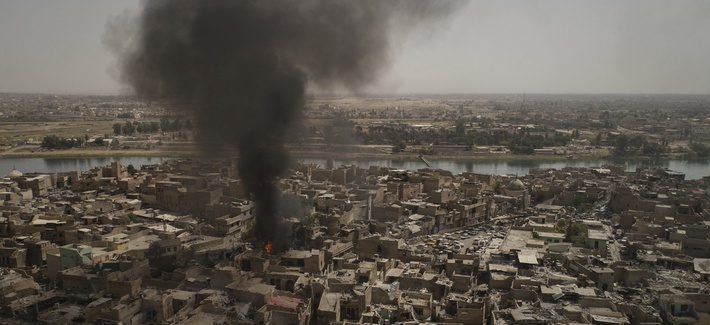
With the imminent military defeat of the Islamic State in Mosul, the government must find ways to unite to keep the specter of chaos at bay. On June 29, as Iraqi state TV proudly proclaimed "The Myth of the ISIS Caliphate Has Fallen," Prime Minister Haider al-Abadi made his way to western Mosul to give a victory address. On June 29, after months of tough urban fighting, Iraqi forces reclaimed critical pieces of the western part of the city, including the remains of the al-Nuri mosque in the Old City. Like the mosque, the Islamic State in Iraq lies in rubble, but the Mosul offensive has helped rehabilitate the security forces in the eyes of many Iraqis. Yet many battles still lie ahead, including dangerous political ones.** Disagreement: An American Tradition
THE CHINESE FACE-OFF
MIDDLE KINGDOM’S DREAM TO BECOME A ‘BIG INSECT’
Truths Mapped Out: India Cannot Afford To Have China Controlling Doklam Plateau

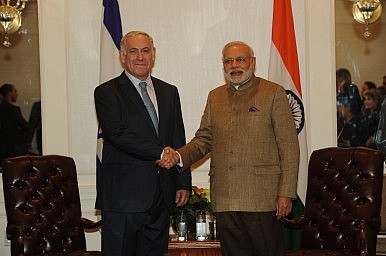
Being realistic - Narendra Modi's open friendship with Israel
India’s Costly Embrace of Israel
The standoff in Doklam
Global Flashpoints generating Indian Foreign Policy Challenges in 2017
India’s nuclear industry deserves a place in the sun
New nuclear power has become increasingly uneconomical in the West but electricity from Indian-made reactors is still competitive.4 Ways America Can Fix Afghanistan
Why Afghanistan? Why Now?
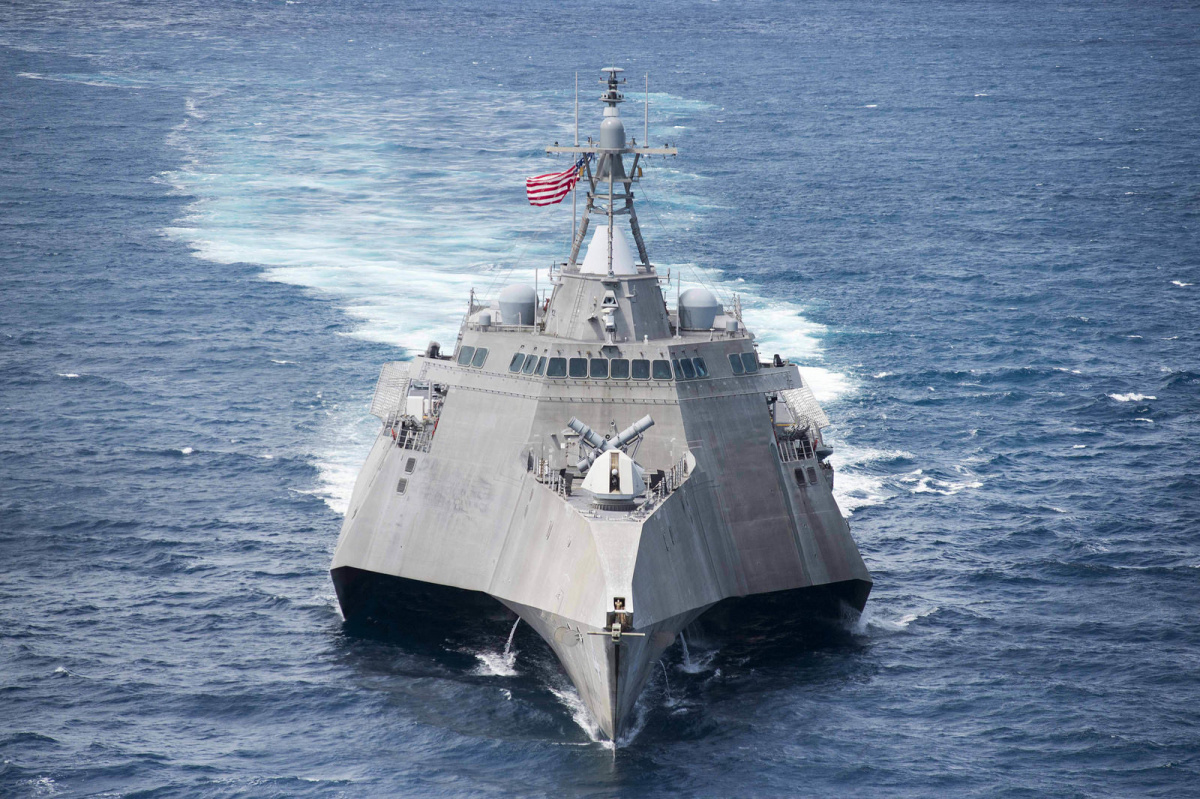
US Navy Destroyer Conducts Freedom of Navigation Operation Near China-Held Island
How ISIS Will Go On Without Mosul
Foisting Blame for Cyber-hacking on Russia
Exclusive: Cyber-criminal efforts to hack into U.S. government databases are epidemic, but this ugly reality is now being exploited to foist blame on Russia and fuel the New Cold War hysteria, reports Gareth Porter.An Electronic and Cyber Warfare Doctrine to Contain North Korea’s Provocations
A European Union Army: Objective or Chimera?
The U.S. Military's 5 Worst Defeats Ever
“Identity Intel Ops” Turn U.S. Special Operators Into Combat Detectives
Losing the Nation-State - The American Interest
Govt Study: Cyber, Nuclear Attacks Pose Equal Threats
Defense Industry in a Race to Buy Into Hot Startups
A Survey of Ongoing Wars Around the World
The Coming Laser Wars?
How Raymond Davis Helped Track Osama Bin Laden Down?
Six weeks before the killing of Osama Bin Laden, on 16 March 2011, a CIA’s private contractor Raymond Davis, who had previously worked for Erik Prince’s infamous Blackwater security firm, was released from a prison in Lahore and was secretly flown to the US.