When the U.S. slaps a nation with punitive sanctions, it tries to prevent not only American companies from doing business with the target country but also those of other states. Inevitably, these extraterritorial effects hit some countries much harder than others -- as India has just found to its cost.The Profession of Arms: A Guide for Young Army Officers
It takes courage, especially for a young officer, to check a man met on the road for not saluting properly or for slovenly appearance, but, every time he does, it adds to his stock of moral courage, and whatever the soldier may say, he has respect for the officer who does pull him up.
Read Document →The Dragon's Teeth: Assessing China's Military Modernization
PLA has focused on modernising its capabilities across all warfare domains to achieve these goals. This includes land, air, and maritime operations, nuclear, space, counter-space, electronic warfare and cyberspace operations, aiming to become a fully integrated joint force.
Read Document →Transforming the PLA: A Decade of reorganisation from SSF to ISF
PRC has engaged in a sustained and broad effort to transform the PLA from an infantry-heavy, low-technology, ground forces-centric military into a high-technology, networked force with an increasing emphasis on joint operations and naval and air power projection.
Read Document →Eyes without Borders: Exploring the World of Open Source Intelligence (OSINT) in the Digital Age
Open Source Intelligence (OSINT) is gaining prominence with the rise of social media, the digital society and the vast growth of publicly and commercially available information (PAI and CAI).
Read Document →
The PLA’s Developing Cyber Warfare Capabilities and India's Options
Informationised warfare blurs the lines between peacetime and wartime. A nation in the information age cannot wait for the hostilities to break out to collect intelligence, carryout influence operations, develop antisatellite systems or design computer software weapons.
Read Document →
Galwan and After
Why did China did this when he is under tremendous pressure in all fronts, is this China's salami slice tactics being progressed rigorously, what will be new Rules of Engagement, what will be escalatory control mechanism, who has taken this decision, will there be some pressure put by China in India's North-East through insurgency.
Read Document →
India’s Joint Doctrine for Cyberspace Operations: A Critical Review
Chief of Defence Staff (CDS) General Anil Chauhan and Secretary, Department of Military Affairs, formally released declassified versions of the Joint Doctrines for Cyberspace Operations during the Chiefs of Staff Committee meeting in New Delhi.
Read Document →
Know your Enemy General(now Field Marshal) Syed Aseem Munir
Gen SA Munir's position in the hierarchy of Pakistan was not very comfortable. The state of economy, insurgency in Pakhtoonistan and Balochistan, attack on the Jaffar Express, constant protests by supporters of Imran Khan's supporters inside and outside of parliament.
Read Document →
Decoding Operation SINDOOR: Key Aspects and Implications
Precision strikes were carried out on nine sites—four in Pakistan and five in PoK—linked to anti-India terrorist groups such as the LeT, JeM and the Hizbul Mujahideen. The targeted sites included Muridke (LeT headquarters) and Bahawalpur (JeM headquarters).
Read Document →
Chinese Cyber Exploitation in India's Power Grid - Is There a linkage to Mumbai Power Outage?
The New York Times (NYT), based on analysis by a U.S. based private intelligence firm Recorded Future, reported that a Chinese entity penetrated India’s power grid at multiple load dispatch points. Chinese malware intruded into the control systems that manage electric supply across India, along with a high-voltage transmission substation and a coal-fired power plant
Read Document →2 September 2018
US sanctions policy risks alienating India
When the U.S. slaps a nation with punitive sanctions, it tries to prevent not only American companies from doing business with the target country but also those of other states. Inevitably, these extraterritorial effects hit some countries much harder than others -- as India has just found to its cost.India and the U.S. — it’s complicated
How Can U.S.-India Relations Survive the S-400 Deal?
India keeping a cautious eye on Bhutan elections
Washington Warns of Sanctioning India Over Russian Missile System
The United States is refusing to rule out sanctions on India—a stated ally—if New Delhi goes through with a planned purchase of Russia’s new S-400 missile system this year, a top U.S. Defense Department official warned ahead of historic talks between the two countries next week. The S-400 “is a system that’s particularly troubling for a lot of reasons, and I think our strong preference … is to seek alternatives,” said Randall Schriver, the U.S. assistant secretary of defense for Asian and Pacific security affairs, during an Aug. 29 event in Washington. “If they choose to go down that route, like I said, I can’t sit here and tell you today that the waiver will necessarily be used.” The waiver Schriver referred to is a congressional loophole designed to insulate allies from ongoing U.S. sanctions against Russia.EMPIRE OF DEBT China ‘colonising smaller countries by lending them massive amounts of money they can never repay in bid for world domination’
Why China and Russia are obsessed with vast new war games
Is the U.S. in a new Cold War with China? How much worse could things get?
Is the Trade War Impacting US Views of China?
U.S. public opinion toward China has soured over the last year, amid tough talk on trade from President Donald Trump – but remains largely in line with China’s favorability rating from 2013-2016. That’s according to a new survey of U.S. public opiniontoward China by the Pew Research Center published on August 28.The survey finds that “Overall, 38% of Americans have a favorable opinion of China, down slightly from 44% in 2017.” However, last year’s 44 percent favorability rating for China was something of an outlier; from 2012 to 2016, that figure stayed between 40 and 25 percent. Meanwhile, the percentage of Americans with an unfavorable view toward China stayed constant this year at 47 percent, after ranging from 52 to 55 percent from 2013-2016.Why the US Trade War on China Is Doomed to Fail
The fourth round of Sino-U.S. trade negotiations held recently in Washington, DC ended with a whimper, and so the largest trade war in post-World War II economic history continues unabated while a nascent crisis in emerging markets has alarmed investors worldwide. Motivated by the misperception that China’s economy is in critical condition, an emboldened U.S. President Donald Trump looks determined to escalate the war. The president’s senior economic adviser, Larry Kudlow, during a recent cabinet meeting, asserted that China’s economy “looks terrible, it is heading south.” The United States, he further declared “is crushing it, having a genuine boom.”China's Hidden Totalitarianism
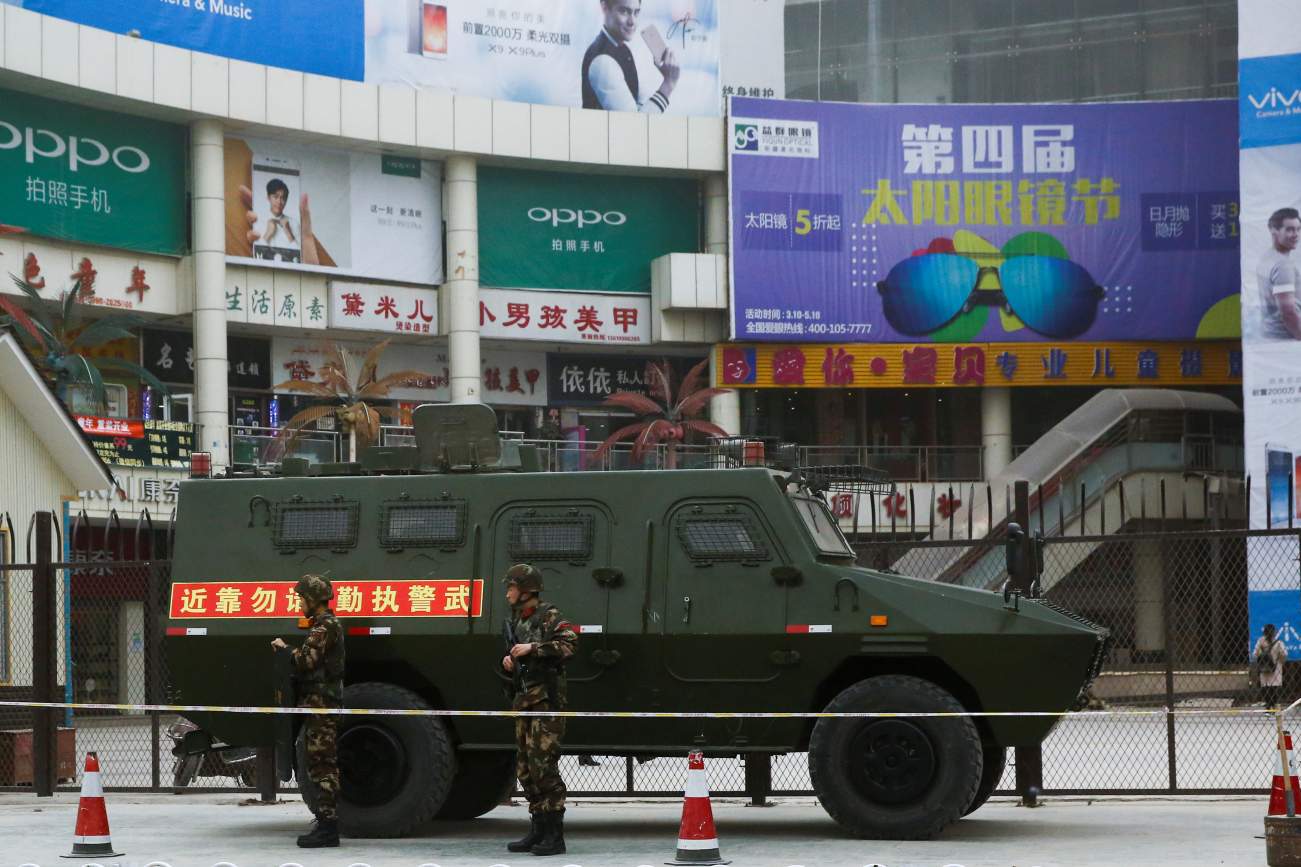
Chinese President Xi Jinping has proclaimed that his signature “Belt and Road Initiative” (BRI) that seeks to link the Chinese economy with the major continental and maritime zones of the Eurasian continent will “benefit people across the whole world,” as it will be based on the “Silk Road spirit” of “peace and cooperation, openness and inclusiveness.” The lived reality of the people of the Xinjiang Uyghur Autonomous Region—the hub of three of the six “economic corridors” at the heart of BRI—could not be further from this idyll. Rather, China has constructed a dystopic vision of governance in Xinjiang to rival that of any science-fiction blockbuster.Iran Says It Will Block Middle East Oil Exports If It Can't Ship
Understanding Terrorism Is More Than a Numbers Gam
THE FUTURE OF TERRORISM: THE PRACTITIONERS’ VIEW
Kurds Who Fought ISIS Now Hunted by Iran’s Regime
No Matter Who Wins the Syrian Civil War, Israel Loses
If you want to understand Israel’s ambivalence about the outcome of Syria’s war, look no further than Avigdor Lieberman. In 2016, Lieberman, Israel’s hawkish defense minister, condemned Bashar al-Assad, the president of Syria, as a “butcher.” He asserted Israel’s moral imperative to oppose genocide, born from the Holocaust, as a reason to oppose the Syrian government’s massacres. It is in Israel’s interest, he added, that Assad and his Iranian allies “be thrown out of Syria.” Fast forward to earlier this month. While touring Israeli air-defense units, Lieberman struck an optimistic note about Assad’s gaining strength, saying it means “there is a real address, someone responsible, and central rule” in Syria. Asked whether he believed this would decrease the possibility of clashes on Israel’s northern border, he said: “I believe so. I think this is also in Assad’s interest.”A decade after the global financial crisis: What has (and hasn’t) changed?
The Choice Facing a Declining United States
In Nairobi National Park, a succession of concrete piers rises over the heads of rhinos and giraffes, part of a $13.8 billion rail project that will link Kenya’s capital with the Indian Ocean. It’s a project with the ambition and scale of global leadership, and the site safety posters are in the language of its engineers and builders: Chinese. Four hundred miles further north, in one of Kenya’s city-sized refugee camps, there’s another sign of what global leadership used to look like: sacks of split peas, stamped USAID; a handful of young, quiet Americans working on idealistic development projects. I saw both this month, but one already looks like a relic of the past. The baton of global leadership is being passed from the U.S. to China. Land redistribution in South Africa, Trump’s tweet, and US-Africa policy
Turkey Looks for Ways Around the U.S. Sanctions on Iran
As it reinstates sanctions on Iran, the United States will try to close loopholes in the measures that Tehran has previously exploited to make it more difficult for other countries such as Turkey to continue trading with the Islamic republic. The currency and debt crises facing the Turkish economy will make banks and companies reluctant to risk defying the measures and incurring the associated costs. The Turkish administration's desire to challenge the United States on sanctions and tariffs won't outweigh these concerns for most firms and financial institutions.New IDF strategy to focus on missiles
Israel’s military-strategic advantages over its adversaries are many, but no one doubts that Israel’s air force is the true game-changer. For dozens of years already, Israel’s top decision-makers and army chiefs refer to the air force as “the insurance policy of the State of Israel and the Jewish people.” The Israel Defense Forces invests the better part of its funds, its energies and its qualitative human resources in the air force, and has become the first foreign army to have tested the United States' F-35 stealth fighter jets under real combat conditions. The missions and sorties the Israeli air force had accomplished in two weeks of fighting in the Second Lebanon War can now be carried out in a 24-hour timeframe. The air force is viewed as Israel’s awe-inspiring strategic arm and its most effective instrument of deterrence.INSIDE A FRIGHTENINGLY PLAUSIBLE NUCLEAR ATTACK SCENARIO
Few books are worthy of a one-word review, but Jeffrey Lewis’s The 2020 Commission Report is certainly one of them. With a narrative that captures the gradual de-evolution of long-running geopolitical patterns, Lewis takes readers on a dystopian literary adventure that is maddening one minute and gut-wrenching the next. What makes this book unforgettable, however, is its plausibility. Although Lewis subtitles The 2020 Commission Report as “A Speculative Novel,” the events unfold in a manner readers with any familiarity of the standoff with North Korea will find absolutely plausible. The result is a provocative military thriller that will draw the reader into a fictional world on the precipice of nuclear extinction.Reviewing The Fate of Rome
Both Thucydides and Clausewitz give great emphasis to the role of chance or luck plays in the course of military events. The former, however, uses chance in a far wider sense, as much more than just the impact of luck on a particular battle or the appearance of some factor that represents an immediate surprise to those concerned. The Greek word Thucydides uses to describe chance is tyche. Interestingly translators more often than not fail to translate tyche, but simply leave it out as being of no importance.[1] In fact, it is of enormous importance, because tyche interferes with human affairs from the lowest to the highest levels. In 431 BC, the Thebans launched a surprise attack on their smaller neighbor Platea. It should have worked. A small commando force crossed the mountain between the two cities and gained entrance into the city at dusk. The Plateans panicked and the Thebans seized control of the city. A large force was supposed to follow in its wake, but in the night an unexpected heavy spring downpour occurred; the rain extinguished the torches; the guides lost their way; and the army floundered its way to Platea only to arrive so late that the Plateans had shut the gates and captured the commando force. The unexpected, chance or tyche, robbed the Thebans of their expected victory.The Plan to End the Korean War
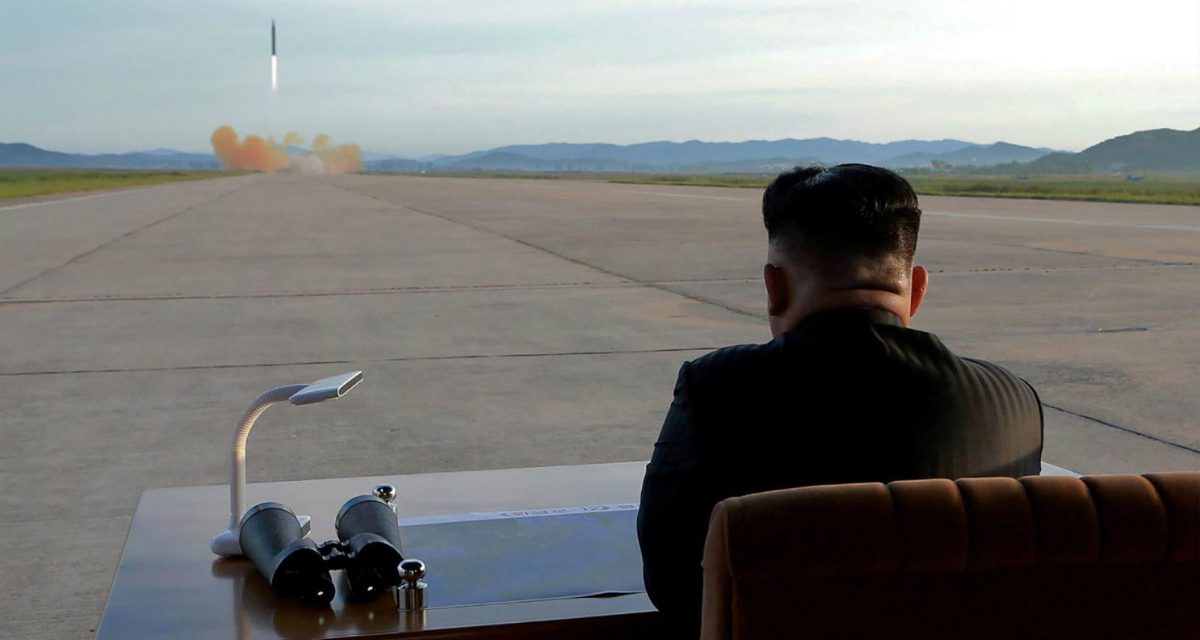
First Donald Trump called off his secretary of state’s planned trip to North Korea this week. Then Defense Secretary James Mattis suggested on Tuesday that the U.S. might no longer suspend military exercises the North Koreans view as provocative. It’s starting to look like nuclear talks are grinding to a standstill, and a top adviser to South Korea’s president has provided the most detailed description yet of one of the key sticking points: a declaration to end the Korean War. This is not the same thing as peace. But it is a step in that direction. The Korean War never really ended; the fighting just stopped with a truce in the form of the 1953 Armistice Agreement, which has governed the Korean conflict ever since. What the South Korean government has been advocating for is a political statement that the war is over, which would serve as a kind of bridge between the chronic hostility of the past and a permanent peace in the future.Google’s AI Can Help Predict Where Earthquake Aftershocks Are Most Likely
Marines 3D-print concrete barracks in just 40 hours
Why It Is Time For a U.S. Cyber Force
Since 2009, incremental improvements have been made to the nation’s ability to operate in cyberspace during this period. The establishment ofU.S. Cyber Command (USCYBERCOM) — first subordinate to U.S. Strategic Command, and then elevated to a Unified Combatant Command (UCC) — and the formation of the 133 teams that comprise the Cyber Mission Force (CMF) are chief amongst them. Yet despite all of the money and attention that has been thrown at the “cyber problem” and for all of the increased authorities and appropriations from Congress, the nation’s offensive and defensive cyber capabilities suffer from inefficiency and a lack of a unified approach,slow to non-existent progress in even the most basic of cybersecurity efforts, and a short leash that is inconsistent with the agility of actors and adversaries in cyberspace. Our adversaries continue to attack our diplomatic, information, military, economic, and political systems at speeds never before seen.AI Ethics: Silicon Valley Should Take A Seat At The DoD Table
How the US Is Preparing to Match Chinese and Russian Technology Development
Until this week, U.S. Defense Department leaders had publicly described their technology race against China and Russia mostly as a bullet list of research priorities. Now a top research-and-engineering official has added detail about efforts to surmount key technical and physical challenges. At a Wednesday event put on by the National Defense Industry Association, Mary Miller, the assistant defense secretary for research and engineering, discussed directed-energy weapons, AI, quantum science, next-generation communications, and more.The Army is testing deceptive cyber technology despite past struggles
The stark warning has been quietly presented for years in cybersecurity conferences and tucked away in slides by government officials. But that same idea has also led to tens of millions of dollars in investment in cyber deception methods, ones that trick attackers into believing that they have compromised a computer network. Yet, despite the Pentagon funding, defense researchers, the intelligence community and experts say that cyber deception capabilities are struggling to gain traction within the department. “The military does a better job than most, but it’s still just not adequate,” Scott DeLoach, head of the computer science department at Kansas State University, told Fifth Domain.