President Donald Trump says he is a free and fair trader and wants to negotiate new bilateral trade deals with nations around the globe. India and the United States have had little but good things to say about each other as “natural partners” for decades now. The United States is counting on its fellow mega-democracy to help address international strategic issues ranging from the fight against terrorism to the rise of China as a hegemon in Asia. But strategic and economic relationships are joined at the hip, and the truth is that the U.S.-India trade relationship has not kept pace with the strategic relationship. The United States and India need to step up our game when it comes to economic engagement. Our new U.S. ambassador to India, Ken Juster, recognized this in his maiden policy speech when he said, “… a strategic view of our economic relationship could eventually lead to a roadmap for a U.S.-India Free Trade Agreement.”
3 March 2018
The Experiment called Auroville
 On the last day of February 1968, some 5,000 people, young and not so young, gathered on a barren plateau of red laterite, some ten kms north of Pondicherry, the former French Establishment. It would have been a very special moment for those present that day; it was like the birth of a ‘Dream’ which had rarely been attempted; to bring people from different countries, races, religions, backgrounds in one single place to build a city together, ‘a Tower of Babel in Reverse’, in the Founder’s words.
 Alyssa Ayres on India’s Growing Global Power
By Catherine Putz
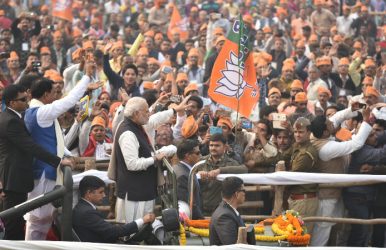 India has long desired to be counted among the world’s top powers, an aspiration that is finally at hand. In her latest book – Our Time Has Come: How India is Making Its Place in the World – Alyssa Ayres, a senior fellow at the Council on Foreign Relations, explains that while on the path to becoming a recognized great power, India has not fully abandoned its past policy positions. In the following interview, Ayres discusses India’s progress toward becoming a “leading power” and what New Delhi brings to the global table.
Gwadar coal power plant tariff sought at Rs8.9 per unit for 30 years
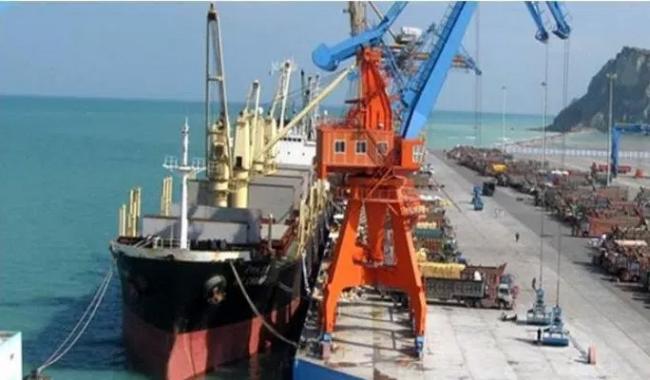 ISLAMABAD: The CIHC Pak Power Company has submitted to Nepra the petition of coal-based power plant of 300 MW at Gwadar port seeking a levelised tariff of Rs8.9 per unit for 30 years. The internal rate of return (IRR) of the project will be 17 percent. Nepra has been asked for the two-part tariff consisting Rs9.57 per unit for first 12.5 years and Rs8.49 per unit for the period from 12.5 years to 30 years. The fuel consumption of the plant will be based on the thermal efficiency of 37 percent and the coal of South Africa will be used for the power generation.
A New Strand of Islamist Extremism in Pakistan
By Farhan Zahid
The emergence of violent Barelvi extremism in Pakistan was brought sharply to the country’s attention last year when Tehreek-i-Labaik Ya Rasool Allah, an Islamist political party, staged an almost month-long sit-in that later turned violent.The party objected to an alleged change to the wording of the oath of office contained in the 2017 Election Bill, which it considered to be blasphemous, and demanded the resignation of then-Federal Minister of Law and Justice Zahid Hamid. Police operations to uproot the protesters served only to spread the protests wider, paralyzing the whole state apparatus.
Pakistan's 'FATA Spring'
By Daud Khattak
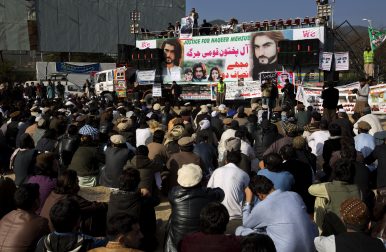 The protests, mostly by youth, in northwestern Pakistan since early February are a clear and visible indication of decades-old resentment among locals against a system based on repression, injustice, suppression of free speech, and widespread corruption in the country’s Federally Administered Tribal Areas (FATA), which are still being ruled under colonial-era laws. The protests also suggest the replacement of the traditional old guards — the Malaks or tribal elders — by the younger generation, who are educated, well-informed, politically more aware, and ready to challenge the system they believe to be denying them their due rights under the Constitution of Pakistan.
In a Fortnight: In Maldives Standoff, China Looks to Safeguard Growing Interests
By: Matt Schrader
A deepening electoral crisis in the small island nation of the Maldives, located roughly 300 miles west-southwest of India’s southern tip, has highlighted the growth of Chinese interests in a part of the world long considered India’s strategic backyard, and points the way toward likely future Sino-Indian friction, both in the Maldives and elsewhere throughout the Indian Ocean. Although the Chinese government’s public response has been muted, assertive PRC signaling around the presence of PLA Navy (PLAN) ships in the Indian Ocean may be sign that New Delhi should consider its next moves carefully.
China ASAT Test Part of Growing Space War Threat
BY: Bill Gertz
China earlier this month conducted the latest flight test of one of its newest and deadliest strategic missiles—the DN-3 anti-satellite interceptor. The test, as in the past, was masked by the Chinese military as a missile defense interceptor test. American defense officials, however, said the DN-3 is one of several direct ascent anti-satellite missiles capable of destroying most U.S. satellites. A more significant development was disclosed eight days later through intelligence made public during a Senate hearing: China is moving beyond the testing and development of space weapons and will soon deploy military units dedicated to attacking satellites and conducting space warfare. Director of National Intelligence Daniel Coats, appearing at the annual worldwide threat briefing with U.S. intelligence leaders, said China’s destructive anti-satellite weaponry “probably will reach initial operational capability in the next few years.”
China’s Asymmetric FDI Policies Threaten the Success of the Belt and Road Initiative
By Grzegorz Stec
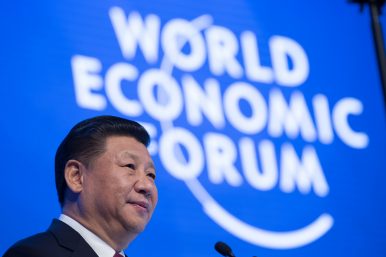 Chinese President Xi Jinping famously remarked at the 2017 World Economic Forum that “pursuing protectionism is like locking oneself in a dark room; while wind and rain may be kept outside, that dark room will also block light and air.” The remark also captured the essence of Xi’s flagship Belt and Road Initiative (BRI) which aims not only to facilitate Chinese investment abroad, but, through progressive opening up of the Chinese market, allows more foreign enterprises to invest in China. In his Belt and Road Summit Speech in May 2017, Xi stated, “We should build the Belt and Road into a road of opening up. Opening up brings progress while isolation results in backwardness.”
Nepal: Use the China Card for getting more leverage with India- K.P. Oli
By Dr. Chandrasekharan
K.P.Oli, the chairman of the UML and now the 41st Prime Minister Nepal, in an interview with the South China Morning Post, Hongkong made three very significant points in Nepal’s relations with China and India. These were
1. He wants to deepen the ties with China to explore more options and get more leverage in dealing with India and in keeping with the times.
2. He favoured a review of all special provisions of the Indo Nepal Relations, including the long established practice of Nepalese soldiers serving in Indian Armed Forces.
3. One cannot forget that Nepal has two neighbours and Nepal does not want to depend on one country or other.
China ensnares vulnerable states in a debt trap
Brahma Chellaney
 “There are two ways to conquer and enslave a country,” American statesman John Adams (U.S. president from 1797 to 1801) famously said. “One is by the sword. The other is by debt.” China has chosen the second path. Aggressively employing economic tools to advance its strategic interests, Beijing has extended huge loans to financially-weak states and ensnared some in debt traps that greatly strengthen its leverage. After establishing a growing presence in the South China Sea, Beijing seems increasingly determined to extend its influence in the Indian Ocean, not least in countries surrounding India, its regional strategic rival.
Why DoD leaders are increasingly worried about the ‘gray zone’
By Mark Pomerleau
When Russia invaded Ukraine in 2014, its primary army was known as “little green men” because the Russian soldiers wore generic green uniforms lacking any official insignia. This complicated attribution, and allowed the Kremlin to distance itself from the effort, in turn stymieing retaliation and or intervention. That conflict is an example of what’s called the “gray zone,” a term used to describe competitive actions that occur below the threshold of conflict. While it’s not a new phenomenon, experts say gray zone events have increased in recent years, raising the specter of conflict. In addition, the topic has been the subject of keynotes from senior Department of Defense leaders.
Iran and Israel Could Go to War Next Year
Raymond TanterIvan Sascha Sheehan
 If Iran uses its Iraqi Shia Militias, Afghans, and Pakistanis, as well as its own forces in attacks on Israel, there is likely to be war between Israel and Iran by 2019. See How Iran Fuels Syria War, Iraqis: twenty thousand Shia from ten groups; Non-Iranian Militia Mercenaries: Afghan, fifteen thousand to twenty thousand; Pakistan, five thousand to ten thousand; Islamic Revolutionary Guard Corps (IRGC), eight thousand to ten thousand; Iranian Regular Army, five thousand to six thousand, all estimates as of 2016.
The Confrontation Between the West and Russia: A Tale of Concentric Circles
By Nathalie Tocci
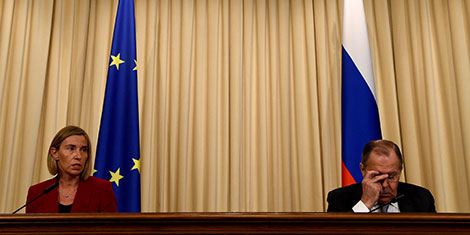 Much like Europeans do not fully grasp the angst generated by prospects of Western-incited regime change in Russia, Russians dismiss far too easily how toxic in the EU is Moscow’s political and financial backing of European extreme right-wing movements. Both are viewed as direct threats to existential interests. So long as that deep-seated mistrust regarding each other’s destructive intent toward one another prevails, channels for cooperation will remain limited, and cooperation at the global level will be ad hoc and transactional.
Grand Strategy Isn’t Grand Enough
BY ALASDAIR ROBERTS
 Grand strategy is a concept familiar to experts on foreign policy and national security. Its meaning has inflated over the years. Some critics think that it has bloated so much that it is no longer useful — but they are wrong. The real problem with grand strategy is that it is not grand enough. In the 19th century, grand strategy was about the actual fighting of wars. A commander in a single theater of operation had a strategy for defeating the enemy, and top-level commanders had a larger plan for deploying forces across many theaters. Grand strategy, one writer explained in 1904, reckoned with “the whole armed force of the nation, ashore and afloat.”
5 Myths About Trump’s North Korea Policy
In Syria, A Growing Strategic Threat to Israel — And Risk of Escalation
LEVI MAXEY
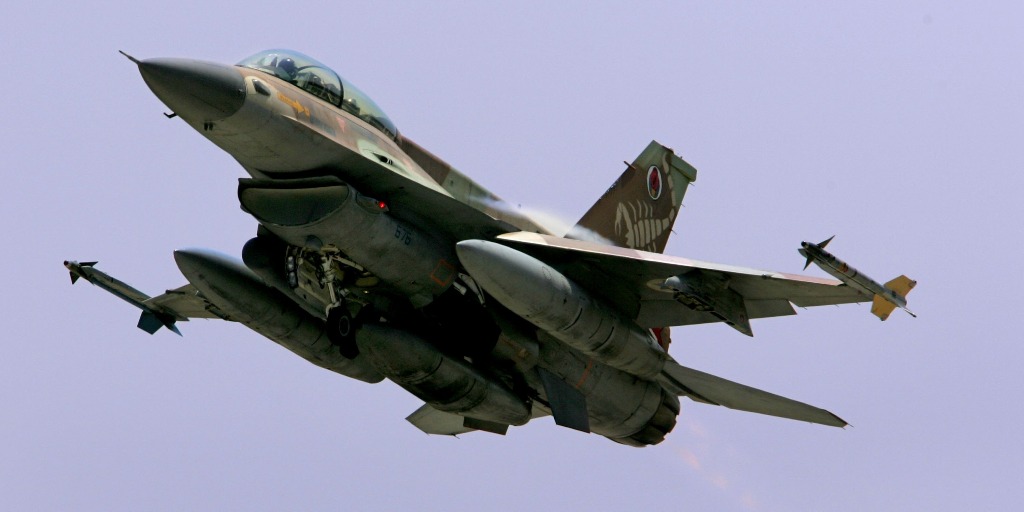 Bottom Line: As the Syrian regime consolidates power, with the help of Russia, Iran, and Iranian proxy Hezbollah, its combined forces are growing bolder, presenting an increasing strategic threat to Israel. In response, Israel has begun adjusting its policy of selective intervention, recently targeting Assad air defense systems in response to Iranian incursions. Israel’s increased military involvement in Syria, however, risks unintentional escalation with Tehran.
Breadth of learning opportunities: A fresh approach to evaluating education systems
Kate Anderson, Seamus Hegarty, Martin Henry, Helyn Kim, and Esther Care
Now more than ever, countries around the world are orienting their policies toward equipping children and youth with a broad range of skills to succeed in the 21st century. An important step in this process is examining whether school and classroom practices are aligned with the national educational goals, so that different levels of the education system are working together to provide quality learning opportunities to develop breadth of skills in students. The focus, however, tends to be on assessments of learning outcomes, but if no opportunities are available to learn the skills, how can we expect students to perform adequately? What if, in addition to evaluating an education system on the learning outcomes demonstrated by students, we also looked at the opportunities students have to learn a broad range of skills?
Tomgram: Rajan Menon, Normalizing Nukes, Pentagon-Style
Despite the dystopian fantasies about nuclear terror and destruction that hit popular culture in the Cold War era and those “duck and cover” drills kids like me experienced in school in the 1950s, the American people were generally sheltered from a full sense of the toll of a nuclear cataclysm. Consider, for instance, the U.S. military’s secret 1960 Single Integrated Operational Plan, or SIOP, for loosing the American arsenal against Russia and China at the height of the Cold War. Three thousand two hundred nuclear weapons were to be “delivered” to 1,060 targets in the Communist world, including at least 130 cities, most of which would, if all went according to plan, essentially cease to exist. Estimates of casualties ran to 285 million dead and another 40 million injured (figures that undoubtedly underplayed the effects of both mass fires and radiation). Such a strike would, theoretically at least, only have been launched in retaliation for a Soviet nuclear attack on the United States, yet the figures don’t even include U.S. casualties.
An Arms Race Toward Global Instability
 The United States is gearing up once more for a struggle between giants. On Jan. 19, the Pentagon released a new National Defense Strategy, the first in 10 years, in which it called strategic competition the "central challenge to U.S. prosperity and security" as Russian and Chinese military capabilities expand. U.S. Secretary of Defense James Mattis echoed that concern Feb. 2 in the preface of the Nuclear Posture Review, arguing that the United States could no longer afford to pursue a policy of nuclear arms reduction given the steady growth of the Chinese and Russian nuclear arsenals. The U.S. Ballistic Missile Defense Review, due for publication soon, is expected to emphasize the same key points, namely that the United States should bolster its missile defenses to better repel threats as strategic competition builds.
Why It's So Hard To Make Sense Of Trump's Foreign Policy
 Under Donald Trump, trying to predict, dissect and understand the US’s attitude to the world has become almost impossible - not that plenty of observers aren’t giving it a go. Tellingly, they’re all coming to different conclusions.Other analysts claim to identify some semblance of order, but they disagree profoundly on what that order is. To some, Trump’s “America First" theme is an isolationist rallying cry, with its implications of economic protectionism and rejection of international agreements; others see an administration even more committed to military intervention than its predecessors. And still others say that for all Trump’s sound and fury, not much has changed - that US foreign policy, for better or worse, is hewing to the same methods and objectives pursued in the Obama era.
Failure to Define Killer Robots Means Failure to Regulate Them
By Johannes Lang, Rens van Munster and Robin May Schott for Danish Institute for International Studies (DIIS)
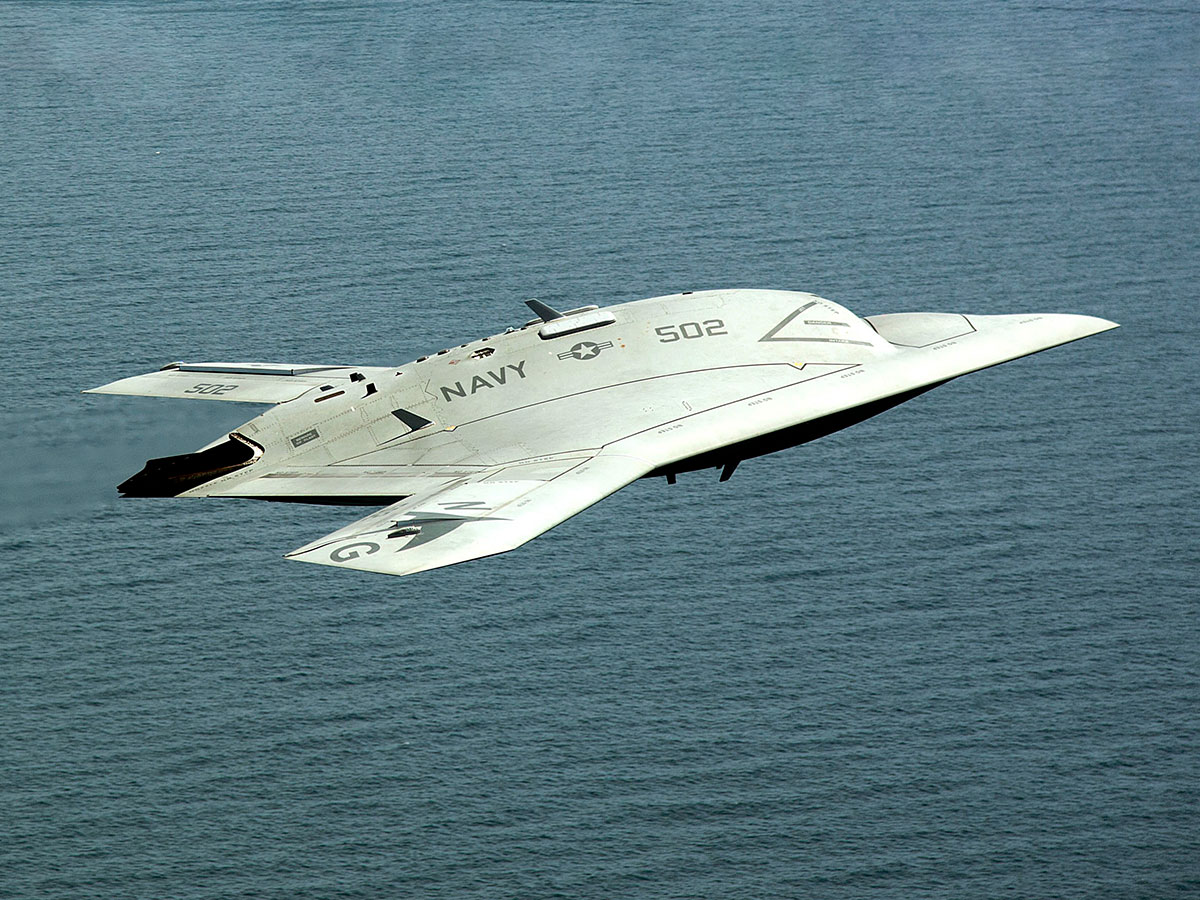 According to Johannes Lang et al, disagreements on how to define ‘autonomy’ are stalling formal UN discussions on the compliance of autonomous weapons with international humanitarian law. So what should states do to help the discussion move forward? Our authors believe that the way most likely to succeed would be to adopt a practical approach that focuses on lethal autonomous weapon systems’ critical functions, such as target selection and firing. This article was originally published by the Danish Institute for International Studies (DIIS) on 2 February 2018.
Gene therapy for telecom operators: An interview with Jon Fredrik Baksaas
The former GSMA chairman and Telenor CEO discusses what telecoms operators need to do to adapt in the new competitive landscape. Jon Fredrik Baksaas is an adviser to McKinsey on telecommunications, having gained his expertise in the sector as president and CEO of Norwegian operator Telenor for more than a decade, and as chairman of the global telecommunications industry body, the GSMA. In an interview, he explains why operators need to modify their genetic make-up if they are to grow in a new competitive landscape. They must offer services as well as connectivity, and cooperate with those traditionally seen as their rivals—other operators.
Top 5 open source projects for 2018
TOM BALL

In our increasingly collaborative world, open source technology is a top trend that is having a major impact on the development and implementation of cutting edge capabilities. Open source is when source code connected to a program is made freely available, giving users the opportunity to make modifications and to share with other users. The common alternative to this is proprietary software, source code that remains under the strict control of an organisation, team or individual, ensuring that the integral code remains private and controlled by its owner.
Reusable Rockets and the Dawn of the Next Space Age
By Rod D. Martin
 Contributor Perspectives offer insight, analysis and commentary from Stratfor’s Board of Contributors and guest contributors who are distinguished leaders in their fields of expertise.Though established aerospace firms such as Lockheed Martin Corp. and Boeing Co. have the advantage of more experience and more money on their side, upstart companies such as SpaceX and Blue Origin will continue to outpace them in innovation.
The Creation of SIOP-62
by William Burr
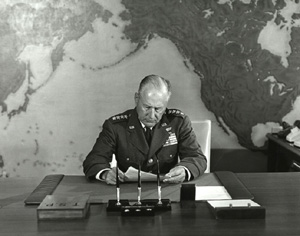 Since it was first created in 1960, the Single Integrated Operational Plan (SIOP)--the U.S. plan for nuclear war--has been one of the most secret and sensitive issues in U.S. national security policy. The essence of the first SIOP was a massive nuclear strike on military and urban-industrial targets in the Soviet Union, China, and their allies. To make such an attack possible, U.S. war planners developed a complex organizational scheme involving the interaction of targeting, weapons delivery systems and their flight paths, nuclear detonations over targets, measurements of devastation, and defensive measures, among other elements, and successive SIOPs would become even more complex. Much of this information remains highly secret and may never be declassified; it is even possible that no civilian official has actually seen the SIOP (which one author suggests amounts to a stack of computer print-outs). To ensure tight secrecy, when the first SIOP was created, its architects established a special information category--Extremely Sensitive Information (ESI)--to ensure that only those with a need-to-know would have access to the documents.