The Profession of Arms: A Guide for Young Army Officers
It takes courage, especially for a young officer, to check a man met on the road for not saluting properly or for slovenly appearance, but, every time he does, it adds to his stock of moral courage, and whatever the soldier may say, he has respect for the officer who does pull him up.
Read Document →The Dragon's Teeth: Assessing China's Military Modernization
PLA has focused on modernising its capabilities across all warfare domains to achieve these goals. This includes land, air, and maritime operations, nuclear, space, counter-space, electronic warfare and cyberspace operations, aiming to become a fully integrated joint force.
Read Document →Transforming the PLA: A Decade of reorganisation from SSF to ISF
PRC has engaged in a sustained and broad effort to transform the PLA from an infantry-heavy, low-technology, ground forces-centric military into a high-technology, networked force with an increasing emphasis on joint operations and naval and air power projection.
Read Document →Eyes without Borders: Exploring the World of Open Source Intelligence (OSINT) in the Digital Age
Open Source Intelligence (OSINT) is gaining prominence with the rise of social media, the digital society and the vast growth of publicly and commercially available information (PAI and CAI).
Read Document →
The PLA’s Developing Cyber Warfare Capabilities and India's Options
Informationised warfare blurs the lines between peacetime and wartime. A nation in the information age cannot wait for the hostilities to break out to collect intelligence, carryout influence operations, develop antisatellite systems or design computer software weapons.
Read Document →
Galwan and After
Why did China did this when he is under tremendous pressure in all fronts, is this China's salami slice tactics being progressed rigorously, what will be new Rules of Engagement, what will be escalatory control mechanism, who has taken this decision, will there be some pressure put by China in India's North-East through insurgency.
Read Document →
India’s Joint Doctrine for Cyberspace Operations: A Critical Review
Chief of Defence Staff (CDS) General Anil Chauhan and Secretary, Department of Military Affairs, formally released declassified versions of the Joint Doctrines for Cyberspace Operations during the Chiefs of Staff Committee meeting in New Delhi.
Read Document →
Know your Enemy General(now Field Marshal) Syed Aseem Munir
Gen SA Munir's position in the hierarchy of Pakistan was not very comfortable. The state of economy, insurgency in Pakhtoonistan and Balochistan, attack on the Jaffar Express, constant protests by supporters of Imran Khan's supporters inside and outside of parliament.
Read Document →
Decoding Operation SINDOOR: Key Aspects and Implications
Precision strikes were carried out on nine sites—four in Pakistan and five in PoK—linked to anti-India terrorist groups such as the LeT, JeM and the Hizbul Mujahideen. The targeted sites included Muridke (LeT headquarters) and Bahawalpur (JeM headquarters).
Read Document →
Chinese Cyber Exploitation in India's Power Grid - Is There a linkage to Mumbai Power Outage?
The New York Times (NYT), based on analysis by a U.S. based private intelligence firm Recorded Future, reported that a Chinese entity penetrated India’s power grid at multiple load dispatch points. Chinese malware intruded into the control systems that manage electric supply across India, along with a high-voltage transmission substation and a coal-fired power plant
Read Document →24 November 2018
How Indian private equity is coming of age
India and the ‘Quad’: Forging an Innovative Approach
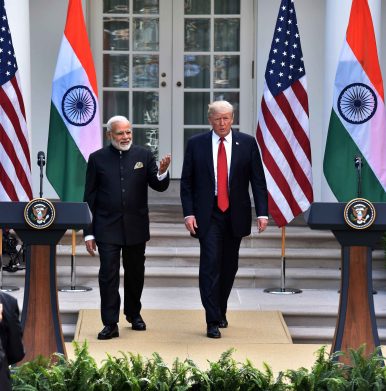
The recent meeting of the so-called Quad countries on the sidelines of 13th East Asian Summit in Singapore, along with the Trump administration’s emphasis on the free and open Indo-Pacific (FOIP) strategy, has turned the spotlight once again on the future viability of this grouping. As a strategic concept, the Quad seems to be gradually evolving with its third round of meeting this month. The participants stressed ASEAN’s centrality and committed themselves to partnering with multiple countries and forums to promote rule-based, open, free and inclusive Indo-Pacific. The U.S. national security advisor, John Bolton, rightly suggested that “this is a strategy that is still being shaped and the level of diplomatic activity has picked up.”In Afghanistan, a 17-Year Stalemate
Another devastating suicide attack in Kabul on Tuesday and an independent report on the situation in Afghanistan serve to underscore what is now a growing consensus in Washington: that the United States is making no progress toward ending the 17-year-old war there.Afghan exodus follows Taliban assaults; New Space Force cost guess; Turkeys surge to Mexican border; Expect more overlapping climate disasters; And a bit more.
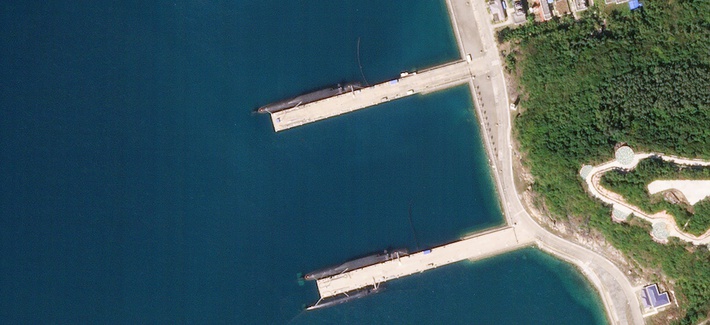
China Has More Nuclear Subs Than the West Believed
U.S. to Challenge China in Territorial Dispute Using Military, Economic Means
The limits of China’s charm offensive
In terms of China’s behaviour in the region, quite a lot. In 2013, China unilaterally declared an air defence identification zone covering the East China Sea’s disputed Senkaku/Diaoyu Islands—a move that exacerbated tensions with Japan. A year later, China began to construct large artificial islands in disputed areas of the South China Sea. In 2016, China imposed sanctions on South Korea in response to the decision to allow the United States to deploy a missile-defence system there.China’s Risky Drive into New-Energy Vehicles
Trump’s Utter Denial About Saudi Arabia and Its Crown Prince
So much for American justice. In a statement both stunning and coldhearted, President Trump on Tuesday gave Saudi Arabia a pass on the grisly murder and dismemberment of journalist Jamal Khashoggi in the name of U.S. national security. He blithely rejected a U.S. intelligence assessment as well as damning physical evidence provided by Turkey indicating that the kingdom’s de-facto ruler, Crown Prince Mohammed bin Salman, authorized the Saudi dissident’s execution, in Istanbul, on October 2nd. The President of the United States sounded more like a defense attorney—or lobbyist—for the oil-rich kingdom than a protector of American values.What Drives Israel’s Startup Success?
The Czech tech to overcome Russian jammers
In a small city, just a few hours drive from the Czech Republic capital of Prague, a quiet revolution is brewing in the field of passive surveillance. The technology developed here in Pardubice gives NATO an edge when it comes to detecting aerial and naval threats and could help international forces overcome Russia’s powerful electronic warfare capabilities.European Security Post-Merkel
Is This Bitcoin Armageddon? Popular Cryptocurrency Is Worth 75 Percent Less Than It Was A Year Ago
The Kremlin Cannot Continue to Ignore the Chaos in Chechnya
Ramzan Kadyrov has long been a headline staple beyond the bounds of the republic he rules, Chechnya. His penchant for tracksuit meetings at the Kremlin and workout videos have made him a regular media phenomenon throughout Russia and the North Caucasus, while less savory proclamations about letting the families of gay men “ deal with them ” have made rounds in the West.The Geoeconomic World Order
Future Tense - Our World in Ten
The U.S. Could Regulate AI in the Name of National Security
Artificial intelligence technology has the capability to be the most impactful software advance in history and the U.S. government has no idea how to properly regulate it.Zero Botnets Building a Global Effort to Clean Up the Internet
Trusting Technology: Smart Protection for Smart Cities
What do technological advances in Artificial Intelligence (AI) and the Internet of Things (IoT) mean for the protection of critical infrastructure (CI) of today’s increasingly complex and connected smart cities? According to Marie Baezner, Linda Maduz and Tim Prior, it means trusting technology to play a more substantial role in security infrastructure for the resilient provision of critical services. In addition, a crucial challenge will be to strike a balance between the preservation of security and the openness to exploit opportunities that come with technological advancement.Can Army Afford The Electronic Warfare Force It Wants?
Show Me The Battle: Cyber Command Needs Data Fusion, Training Sims & C2
WASHINGTON: What does Cyber Command need industry to invent ASAP? Simulators that capture the full complexity of cyber warfare and command systems that show the virtual battle raging in real time, Lt. Gen. Vincent Stewart said this morning at CyCon US, a US Army–NATO cyber conference.Understanding the Drone Threat
Last summer, fans at a San Diego Padres baseball game caught a glimpse of the future when a drone crashed into the stands. Thankfully, the operator was a hobbyist who had lost control of his drone and nobody was hurt. But the incident highlighted the drone threat, both in terms of a potential physical attack as well the capability to gather video surveillance and livestream it online, where malicious actors can exploit that footage in a number of ways.The Confusion of Clausewitz in Modern Warfare
Command Has Not Been Eroded
Admittedly, the stakes are increasing in the Surface Force, but the CO is more rather than less important in this challenging environment in the wake of high-profile accidents and the revival of great power competition.