The Profession of Arms: A Guide for Young Army Officers
It takes courage, especially for a young officer, to check a man met on the road for not saluting properly or for slovenly appearance, but, every time he does, it adds to his stock of moral courage, and whatever the soldier may say, he has respect for the officer who does pull him up.
Read Document →The Dragon's Teeth: Assessing China's Military Modernization
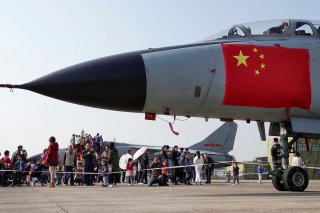
PLA has focused on modernising its capabilities across all warfare domains to achieve these goals. This includes land, air, and maritime operations, nuclear, space, counter-space, electronic warfare and cyberspace operations, aiming to become a fully integrated joint force.
Read Document →Transforming the PLA: A Decade of reorganisation from SSF to ISF
PRC has engaged in a sustained and broad effort to transform the PLA from an infantry-heavy, low-technology, ground forces-centric military into a high-technology, networked force with an increasing emphasis on joint operations and naval and air power projection.
Read Document →Eyes without Borders: Exploring the World of Open Source Intelligence (OSINT) in the Digital Age
Open Source Intelligence (OSINT) is gaining prominence with the rise of social media, the digital society and the vast growth of publicly and commercially available information (PAI and CAI).
Read Document →
The PLA’s Developing Cyber Warfare Capabilities and India's Options
Informationised warfare blurs the lines between peacetime and wartime. A nation in the information age cannot wait for the hostilities to break out to collect intelligence, carryout influence operations, develop antisatellite systems or design computer software weapons.
Read Document →
Galwan and After
Why did China did this when he is under tremendous pressure in all fronts, is this China's salami slice tactics being progressed rigorously, what will be new Rules of Engagement, what will be escalatory control mechanism, who has taken this decision, will there be some pressure put by China in India's North-East through insurgency.
Read Document →
India’s Joint Doctrine for Cyberspace Operations: A Critical Review
Chief of Defence Staff (CDS) General Anil Chauhan and Secretary, Department of Military Affairs, formally released declassified versions of the Joint Doctrines for Cyberspace Operations during the Chiefs of Staff Committee meeting in New Delhi.
Read Document →
Know your Enemy General(now Field Marshal) Syed Aseem Munir
Gen SA Munir's position in the hierarchy of Pakistan was not very comfortable. The state of economy, insurgency in Pakhtoonistan and Balochistan, attack on the Jaffar Express, constant protests by supporters of Imran Khan's supporters inside and outside of parliament.
Read Document →
Decoding Operation SINDOOR: Key Aspects and Implications
Precision strikes were carried out on nine sites—four in Pakistan and five in PoK—linked to anti-India terrorist groups such as the LeT, JeM and the Hizbul Mujahideen. The targeted sites included Muridke (LeT headquarters) and Bahawalpur (JeM headquarters).
Read Document →
Chinese Cyber Exploitation in India's Power Grid - Is There a linkage to Mumbai Power Outage?
The New York Times (NYT), based on analysis by a U.S. based private intelligence firm Recorded Future, reported that a Chinese entity penetrated India’s power grid at multiple load dispatch points. Chinese malware intruded into the control systems that manage electric supply across India, along with a high-voltage transmission substation and a coal-fired power plant
Read Document →1 May 2020
Should India Foster Ties With Taliban Despite Its Past Misdemeanors?
One Land, Two Rules (10): Three case studies on Taleban sales of state land
As the Taleban have expanded their areas of control around the country, anecdotal reports have been popping up of Taleban commissions and commanders in several provinces selling state land. However, a closer look into the three most prominent examples – Helmand, Uruzgan and Takhar – reveals a murkier picture than media reports and claims by government officials have suggested. Although it is clear that the Taleban have been involved in ‘land management’ – including redistribution, leasing and taxation of land, as well as the establishment of new bazaars and townships – there is no clear evidence that they have been systematically selling off state land. This does not mean their interventions are not problematic, not least because of the absence of a proper system of documentation or even clarity as to whether the land was given away, sold, leased or rented out. AAN’s Fazal Muzhary (with input from Christian Bleuer) notes that if the Taleban ever become part of a new government, they will need to deal with the confusion and disputes they are currently sowing.Some of the once desert land in Nad Ali district in Helmand, which local residents say was distributed by the Taleban. Photo: Alcis, 20085G Is Old News: China Wants 6G For Its Military
Modest multilateralism is in America's interest, and China’s too
WASHINGTON – Great global traumas have a way of revealing the gap between the sort of international system we might like and the sort of international system we actually have. The coronavirus pandemic is no exception.Coronavirus: What Comes Next?
How China Sees the World
On November 8, 2017, Air Force One touched down in Beijing, marking the start of a state visit hosted by China’s president and Communist Party chairman, Xi Jinping. From my first day on the job as President Donald Trump’s national security adviser, China had been a top priority. The country figured prominently in what President Barack Obama had identified for his successor as the biggest immediate problem the new administration would face—what to do about North Korea’s nuclear and missile programs. But many other questions about the nature and future of the relationship between China and the United States had also emerged, reflecting China’s fundamentally different perception of the world.Freedom and privacy in the time of coronavirus
Polarization and the Pandemic
What Coronavirus Could Mean for China
Fotros: Iran Has Killer Drones That Can Loiter over a Battlefield for a Day
The ground-combat branch of the Iranian Revolutionary Guard Corps claimed it’s acquiring long-range drones.Crisis in Yemen as Aden separatists declare self-rule
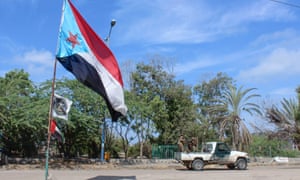
Fighters with Yemen’s separatist Southern Transitional Council drive past a separatist flag as they deploy in the southern city of Aden. Photograph: Saleh Al-Obeidi/AFP via Getty ImagesThe U.S.-Iran Showdown: Clashing Strategic Universes Amid a Changing Region
Drone Killings Don’t Work, According to This Book
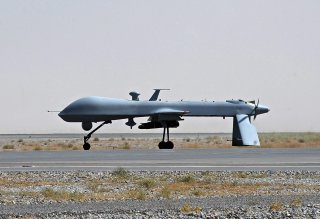
David Axe: "America isn’t supposed to assassinate people — Pres. Ronald Reagan had banned the practice. But after the 9/11 attacks, Washington started doing a lot of things it isn’t supposed to do. Assassination — “targeted killing,” in government parlance — was already standard practice in America’s disastrous campaign against Latin American drug kingpins when it also began driving post-9/11 counterterrorism and counterinsurgency strategies."