The Profession of Arms: A Guide for Young Army Officers
It takes courage, especially for a young officer, to check a man met on the road for not saluting properly or for slovenly appearance, but, every time he does, it adds to his stock of moral courage, and whatever the soldier may say, he has respect for the officer who does pull him up.
Read Document →The Dragon's Teeth: Assessing China's Military Modernization
PLA has focused on modernising its capabilities across all warfare domains to achieve these goals. This includes land, air, and maritime operations, nuclear, space, counter-space, electronic warfare and cyberspace operations, aiming to become a fully integrated joint force.
Read Document →Transforming the PLA: A Decade of reorganisation from SSF to ISF
PRC has engaged in a sustained and broad effort to transform the PLA from an infantry-heavy, low-technology, ground forces-centric military into a high-technology, networked force with an increasing emphasis on joint operations and naval and air power projection.
Read Document →Eyes without Borders: Exploring the World of Open Source Intelligence (OSINT) in the Digital Age
Open Source Intelligence (OSINT) is gaining prominence with the rise of social media, the digital society and the vast growth of publicly and commercially available information (PAI and CAI).
Read Document →
The PLA’s Developing Cyber Warfare Capabilities and India's Options
Informationised warfare blurs the lines between peacetime and wartime. A nation in the information age cannot wait for the hostilities to break out to collect intelligence, carryout influence operations, develop antisatellite systems or design computer software weapons.
Read Document →
Galwan and After
Why did China did this when he is under tremendous pressure in all fronts, is this China's salami slice tactics being progressed rigorously, what will be new Rules of Engagement, what will be escalatory control mechanism, who has taken this decision, will there be some pressure put by China in India's North-East through insurgency.
Read Document →
India’s Joint Doctrine for Cyberspace Operations: A Critical Review
Chief of Defence Staff (CDS) General Anil Chauhan and Secretary, Department of Military Affairs, formally released declassified versions of the Joint Doctrines for Cyberspace Operations during the Chiefs of Staff Committee meeting in New Delhi.
Read Document →
Know your Enemy General(now Field Marshal) Syed Aseem Munir
Gen SA Munir's position in the hierarchy of Pakistan was not very comfortable. The state of economy, insurgency in Pakhtoonistan and Balochistan, attack on the Jaffar Express, constant protests by supporters of Imran Khan's supporters inside and outside of parliament.
Read Document →
Decoding Operation SINDOOR: Key Aspects and Implications
Precision strikes were carried out on nine sites—four in Pakistan and five in PoK—linked to anti-India terrorist groups such as the LeT, JeM and the Hizbul Mujahideen. The targeted sites included Muridke (LeT headquarters) and Bahawalpur (JeM headquarters).
Read Document →
Chinese Cyber Exploitation in India's Power Grid - Is There a linkage to Mumbai Power Outage?
The New York Times (NYT), based on analysis by a U.S. based private intelligence firm Recorded Future, reported that a Chinese entity penetrated India’s power grid at multiple load dispatch points. Chinese malware intruded into the control systems that manage electric supply across India, along with a high-voltage transmission substation and a coal-fired power plant
Read Document →18 May 2016
Losing the neighbourhood
‘Pathankot handler is no. 3 in JeM’
*** How Referenda Threaten the EU
*** Ahead of the curve: The future of performance management
** Playing war games to prepare for a cyberattack
** Could Different Borders Have Saved the Middle East?

* Power and Ideology: China's Cultural Revolution
* Bull In The China Shop: The Indian Army Vs The PLA
* A U.S. Strategy Beyond the Cold War
May 16, 2016
Source Link
This piece was created in collaboration with Geopolitical Futures. George Friedman is the Founder and Chairman of Geopolitical Futures. The views expressed are the author's own.
The United States became the only global power in 1991. In the 45 years prior, it had been locked in a swirling global struggle for primacy with the Soviet Union, and at many moments it did not look like the United States was going to win. Before that, since about the turn of the 20th century, the United States was an emerging power, finding its place in a violent world.
In 1991, the United States had to come to terms with a new role. The collapse of the Soviet Union took the U.S. by surprise. Washington’s strategy during the Cold War was to create a complex alliance structure for both military and economic affairs. It embedded its forces in military alliances, and it focused on the development of trading structures designed to entice other countries away from the Soviet Union and into the U.S.-led trading system. The United States was prepared to trade economic advantage for an enhanced alliance. It was also prepared for asymmetric military alliances in which the United States provided the bulk of the resources, and its allies provided far less than they could have.
Since the United States saw itself as caught in a global struggle with strategic and moral dimensions, this imbalance made sense. What also made sense was the use of U.S. forces not only to guarantee the security of the alliance, but to act in direct military operations with minimal support from allies. From the Korean and Vietnam wars to the crises in Lebanon in 1958 and Grenada in 1983, as well as endless covert operations, the United States waged a global war of varying intensity against Communism.
The United States was driven both by national interest and by its historical reading of the Munich Agreement, which was meant to appease the Germans by allowing them to annex parts of Czechoslovakia. The failure of Munich to prevent World War II was understood by the United States as the result of appeasement and of the failure of the United States to join the Anglo-French alliance sooner. Therefore, during the Cold War, America’s strategy was to constantly refuse to reach accommodation, while attempting to increase the number of its allies. The lessons of World War II became the strategy of the Cold War. It worked in the end. A nuclear war did not erupt, and that is the measure of a successful national strategy.
Modi’s Visit to Iran: Will it provide a New Momentum to Bilateral Relations?
Japan and India’s Comparative Approaches to Meet the China Threat
Nuclearization Of Indian Ocean And Implications For South Asian Region – OpEd
Japan And India’s Comparative Approaches To Meet China Threat – Analysis
India: ‘Jihadi’ Threats In Assam – Analysis
Same Age, Different Behavior: Nuclear India And Nuclear Pakistan – Analysis
Micro-Aggression Theory, Victimhood Culture and Article 370 as a Counter Radicalization Tool
Will China Sell New Long-Range Surface-to-Air Missiles to Pakistan?
How China Remembers the Cultural Revolution
Unfolding Dimensions Of Recent Developments In South China Sea – Analysis
** Latest News About the Chinese Military
China claims support of several NSG members to block India bid
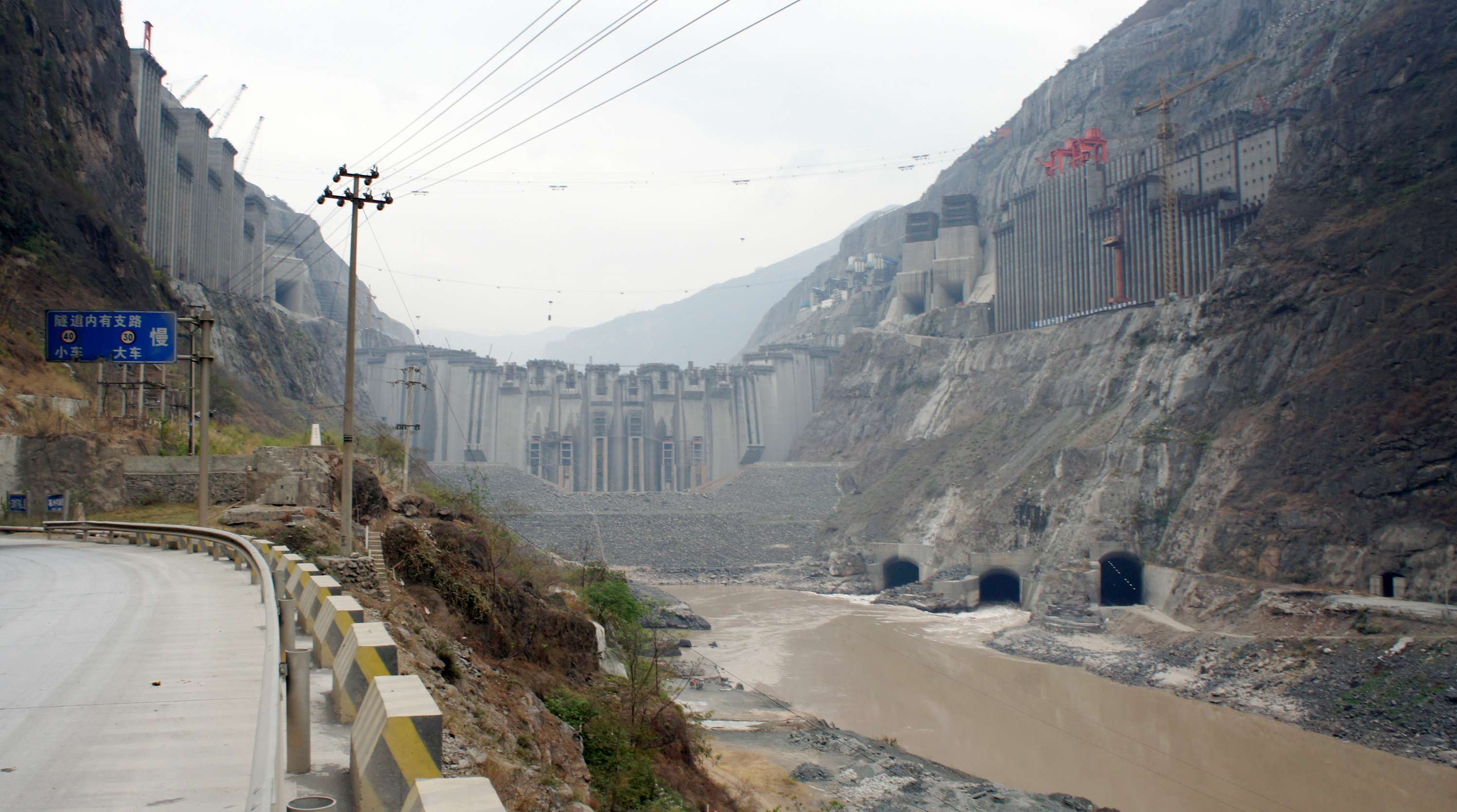
China Begins Construction of Tibet’s Biggest Dam: Suwalong Project
A Son of the Cultural Revolution
The Cultural Revolution, 50 years on It was the worst of times
Iraq: On the Edge of Chaos
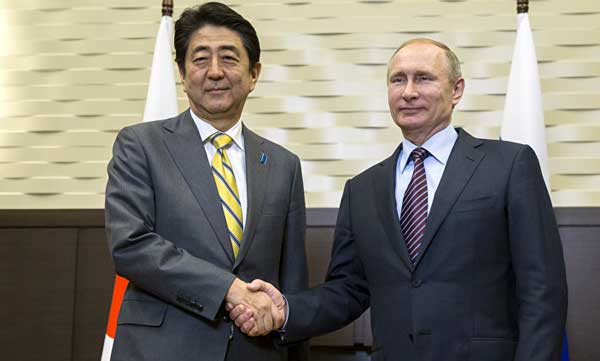
Shinzo Abe’s tenacity for reconciliation with Russia
Examining the Evidence of Russia's Involvement in a Malaysia Airlines Crash