The political discourse surrounding the deal underscores a need for India to rethink its defense acquisition processes.The Profession of Arms: A Guide for Young Army Officers
It takes courage, especially for a young officer, to check a man met on the road for not saluting properly or for slovenly appearance, but, every time he does, it adds to his stock of moral courage, and whatever the soldier may say, he has respect for the officer who does pull him up.
Read Document →The Dragon's Teeth: Assessing China's Military Modernization
PLA has focused on modernising its capabilities across all warfare domains to achieve these goals. This includes land, air, and maritime operations, nuclear, space, counter-space, electronic warfare and cyberspace operations, aiming to become a fully integrated joint force.
Read Document →Transforming the PLA: A Decade of reorganisation from SSF to ISF
PRC has engaged in a sustained and broad effort to transform the PLA from an infantry-heavy, low-technology, ground forces-centric military into a high-technology, networked force with an increasing emphasis on joint operations and naval and air power projection.
Read Document →Eyes without Borders: Exploring the World of Open Source Intelligence (OSINT) in the Digital Age
Open Source Intelligence (OSINT) is gaining prominence with the rise of social media, the digital society and the vast growth of publicly and commercially available information (PAI and CAI).
Read Document →
The PLA’s Developing Cyber Warfare Capabilities and India's Options
Informationised warfare blurs the lines between peacetime and wartime. A nation in the information age cannot wait for the hostilities to break out to collect intelligence, carryout influence operations, develop antisatellite systems or design computer software weapons.
Read Document →
Galwan and After
Why did China did this when he is under tremendous pressure in all fronts, is this China's salami slice tactics being progressed rigorously, what will be new Rules of Engagement, what will be escalatory control mechanism, who has taken this decision, will there be some pressure put by China in India's North-East through insurgency.
Read Document →
India’s Joint Doctrine for Cyberspace Operations: A Critical Review
Chief of Defence Staff (CDS) General Anil Chauhan and Secretary, Department of Military Affairs, formally released declassified versions of the Joint Doctrines for Cyberspace Operations during the Chiefs of Staff Committee meeting in New Delhi.
Read Document →
Know your Enemy General(now Field Marshal) Syed Aseem Munir
Gen SA Munir's position in the hierarchy of Pakistan was not very comfortable. The state of economy, insurgency in Pakhtoonistan and Balochistan, attack on the Jaffar Express, constant protests by supporters of Imran Khan's supporters inside and outside of parliament.
Read Document →
Decoding Operation SINDOOR: Key Aspects and Implications
Precision strikes were carried out on nine sites—four in Pakistan and five in PoK—linked to anti-India terrorist groups such as the LeT, JeM and the Hizbul Mujahideen. The targeted sites included Muridke (LeT headquarters) and Bahawalpur (JeM headquarters).
Read Document →
Chinese Cyber Exploitation in India's Power Grid - Is There a linkage to Mumbai Power Outage?
The New York Times (NYT), based on analysis by a U.S. based private intelligence firm Recorded Future, reported that a Chinese entity penetrated India’s power grid at multiple load dispatch points. Chinese malware intruded into the control systems that manage electric supply across India, along with a high-voltage transmission substation and a coal-fired power plant
Read Document →3 August 2018
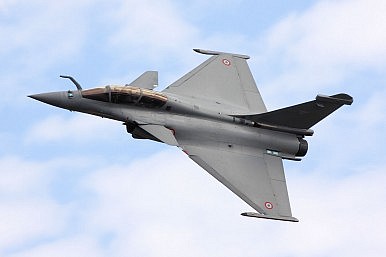
As India’s Rafale Controversy Rages, Reforms on Defense Acquisitions Needed
The political discourse surrounding the deal underscores a need for India to rethink its defense acquisition processes.India’s defense data leaked as it debated data protection law
India needs to build trust in the private sector
Arvind Subramanian has often said that India is affected by the problem of stigmatized capitalism. There is neither enough trust in the private sector nor in the ability of the government to regulate it. Political hyperbole only adds to the problem. Consequently, the government of the day is always worried that big reforms (privatization, for instance) would be seen as being pro-business and anti-poor. Against this backdrop, Prime Minister Narendra Modi has done well to make it clear that he is not afraid to stand with industrialists and they are as important as anyone else. This should inspire confidence among investors.How India must deal with Imran's Pakistan
All the Prime Minister’s Women
It was a hot day in mid-July when Salman Sufi found out that he had been fired. Until then, Sufi had been a senior member of the Punjab chief minister’s Special Monitoring Unit, where he had, among other things, developed and implemented the Punjab Protection of Women Against Violence Act in 2016. The law was controversial, not least because it allowed for speedy hearings on cases, made special provisions for the development of women’s shelters, expedited procedures that allowed for the removal of abusive men from homes, and sought to implement GPS tracking of abusers. The country’s ruling party, the Pakistan Muslim League-Nawaz (PML-N), was committed to getting the reforms through in the province of Punjab, and Sufi was there to help it do so.Imran Khan’s Shine Won’t Last as Pakistan’s Prime Minister
A New Batsman for Pakistan
Imran Khan, the cricketer who led Pakistan to a glorious World Cup victory over its former colonial ruler, England, a quarter century ago, led his political party to an equally impressive victory in Pakistan’s national elections this week. In a country as corrupt and troubled as Pakistan, a new, charismatic leader is bound to raise hopes; whether Mr. Khan can deliver is a far different question. Pakistan’s woes are many and grave. Corruption runs deep — the last elected prime minister, Nawaz Sharif, was imprisoned two weeks ago. The national debt is ballooning, the electricity grid is disintegrating and jobs are so scarce that Pakistani workers are compelled to fan out across the Middle East to take whatever work they can find. On top of that, terrorists strike often, relations with the United States are bad and politics are chronically unstable, with a tradition of military meddling.Daily Memo: US Funding Shortfalls, Exclusions from NAFTA, Skepticism of Pakistan
Pakistan, the United States, and the IMF
U.S.-Led Infrastructure Aid to Counter China in Indo-Pacific
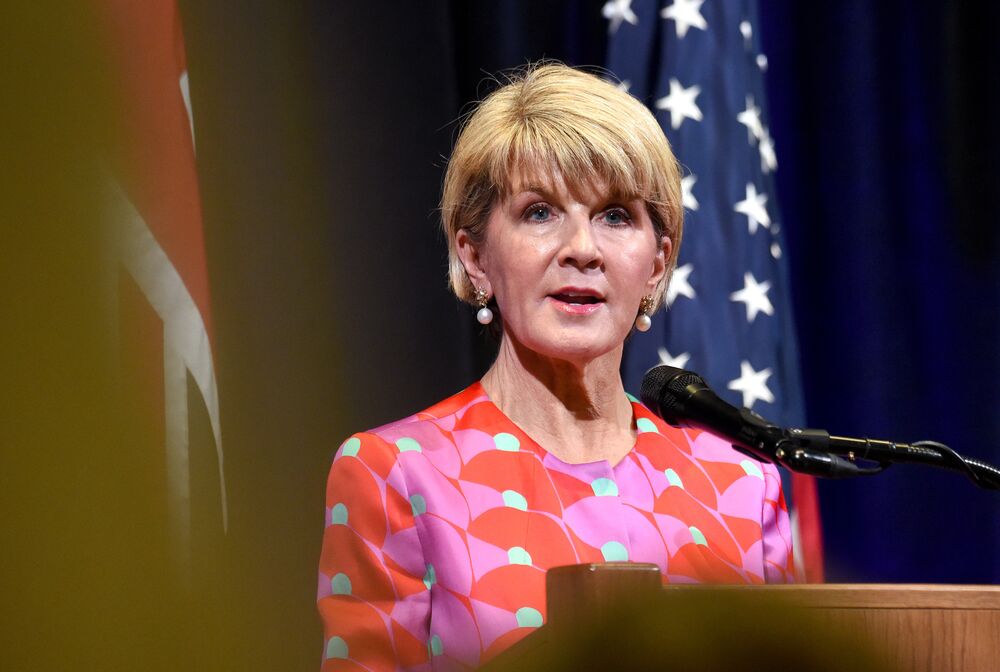
The U.S., Japan and Australia agreed to invest in infrastructure projects in the Indo-Pacific in a move that will be seen as a counter to China’s rising influence in a region that stretches from the east coast of Africa, through Australia to Hawaii in the Pacific Ocean. “This trilateral partnership is in recognition that more support is needed to enhance peace and prosperity in the Indo-Pacific region,” Australia Foreign Minister Julie Bishop said Tuesday in an emailed statement. The pact will mobilize investment in energy, transportation, tourism and technology infrastructure, according to the statement, which didn’t give any funding details.Fighting Chinese cyber-espionage could cost U.S. 5G dominance
As the U.S. government works to neutralize its Chinese counterparts’ efforts to conduct surveillance via commercial telecom products, it may unintentionally jeopardize the United States’ bid to beat China to a nationwide 5G network.
Russia is dumping US Treasuries. Will China be next?
LESSONS OF COVERT ACTION IN TIBET (1950-1972)
Censorship, Geopolitical Time Bombs, and China’s Islamophobia Problem
Iran Ramps Up Support to Taliban in Western Afghanistan
The Syrian War Is Over, and America Lost
Earlier this month, Syrian regime forces hoisted their flag above the southern town of Daraa and celebrated. Although there is more bloodletting to come, the symbolism was hard to miss. The uprising that began in that town on March 6, 2011, has finally been crushed, and the civil war that has engulfed the country and destabilized parts of the Middle East as well as Europe will be over sooner rather than later. Bashar al-Assad, the man who was supposed to fall in “a matter of time,” has prevailed with the help of Russia, Iran, and Hezbollah over his own people.NATO in Ukraine: High Strategic Stake, Irresolute Engagement
Russia Will Not Mass-Produce T-14 Armata Main Battle Tank
Truce Aside, U.S.-EU Trade Relations Are In for a Bumpy Ride
Although the European Union and the United States agreed to negotiate a trade deal that includes only manufactured goods, Washington has already put agricultural products on the table and will likely keep them there as talks continue.An American Perspective of US-German Relations
America’s Counterterrorism Gamble
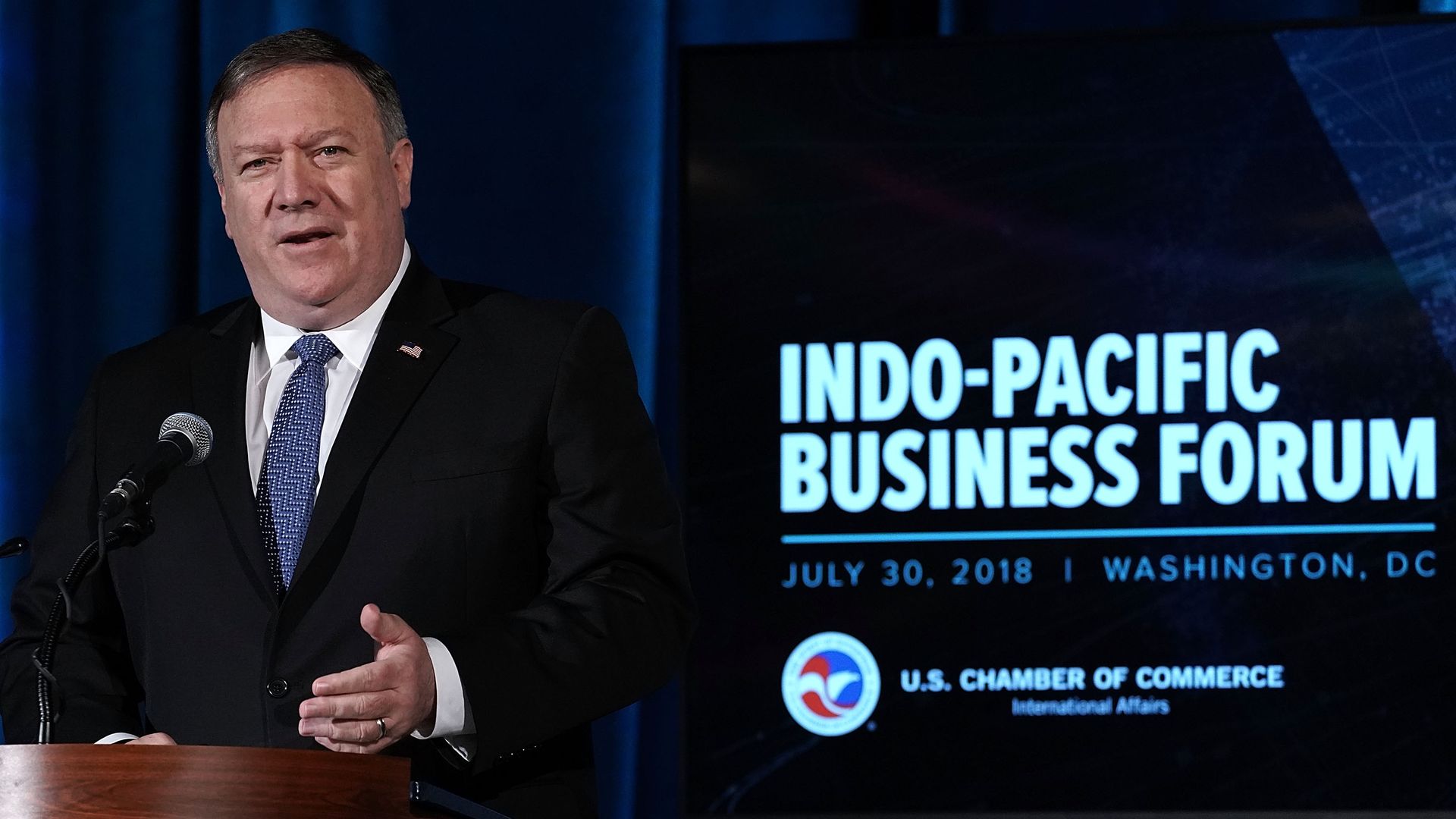
U.S. economic strategy for Indo-Pacific doesn't stack up to China's
In a speech on Monday, Secretary of State Mike Pompeo rolled out the Trump administration’s long-awaited Indo-Pacific economic strategy, outlining the Trump administration’s alternative to China’s Belt and Road initiative.Is the Threat of Nuclear Terrorism Distracting Attention from More Realistic Threats?
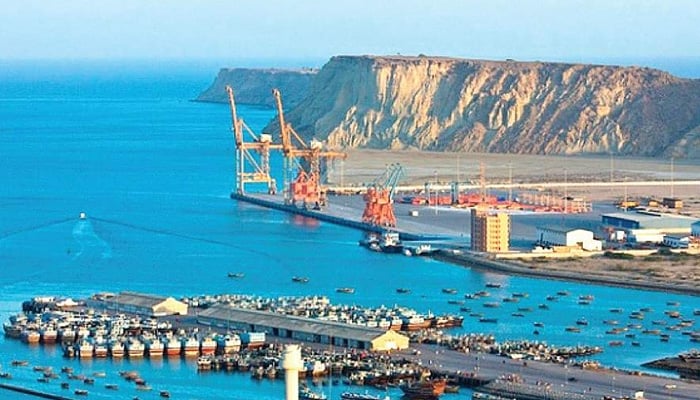
At the final Nuclear Summit of his presidency in Washington D.C. in 2016, Barack Obama said the risk of ISIS or other extremist groups acquiring nuclear weapons remains “one of the greatest threats to global security.” A number of terrorist groups, including ISIS and al-Qaeda, have expressed explicit intentions to acquire and use nuclear material. However, countries face far more pressing threats than nuclear terrorism and authorities would be better off focusing on insurgents' frequent use of conventional weapons, such as chemicals and bombs.Oh, CPEC
Mitigate threats, not workers’ ability to do their jobs
Recently, hackers stole 614GB of highly sensitive data related to a U.S. Navy project called “Sea Dragon.” The data was stored on a naval contractor’s unclassified network. The incident is still under investigation, although it is reasonable to assume that somewhere, someone’s credentials were compromised to initiate the attack. The Sea Dragon incident is only one example of external hackers taking advantage of employees’ information. Indeed, according to the 2017 Verizon Data Breach Investigations Report, 81 percent of data breaches were caused by the hijacking of user credentials by hackers to gain access to internal systems and data. It is a troubling trend that organizations, including government agencies and contractors, have struggled to defend against as they continually seek a balance between better security and giving employees the freedom necessary to accomplish their missions.Russian Jamming Poses a Growing Threat to U.S. Troops in Syria
American troops deployed in Syria are increasingly having to defend themselves against Russian jamming devices—electronic attacks with potentially lethal consequences, according to U.S. military officials and analysts. Officers who have experienced the jamming—known as electronic warfare—say it’s no less dangerous than conventional attacks with bombs and artillery. But they also say it’s allowing U.S. troops a rare opportunity to experience Russian technology in the battlefield and figure out how to defend against it.Satellite Imagery + Social Media = A New Way to Spot Emerging Nuclear Threats
A research team is training computers to find and fuse clues from wildly different rivers of digital data. Hiding illicit nuclear programs might be getting harder, thanks to new ways of gleaning and combining clues from various rivers of digital data. That’s the conclusion of new research funded in part by the U.S. Energy Department’s National Nuclear Security Administration. Satellites offer one kind of information; social media another — particularly inside countries that may be trying to flout inspections. But large volumes of satellite imagery and social media data aren’t similar. You can have one analyst examine satellite pictures and another look at social media posts to see if they align, but the process is time-consuming and generally far from comprehensive. The study’s authors developed a method for fusing different types of data in a machine-readable way to offer a much clearer picture.Why I Didn’t Sign Up to Defend the International Order
Last week, a group of prominent international relations scholars published an ad in the New York Times under the headline “Why We Should Preserve International Institutions and Order.” You can find the text and a list of signatories here. The scholars who drafted the ad are a who’s who of experts on international political economy, but the list of endorsers also includes many people who work on other aspects of international relations, including security, gender, and other topics.Tool of Peace and War: Save the Peacekeeping and Stability Operations Institute
The U.S. military is currently at war with itself, and a casualty may be a valuable Army institution that protects not only U.S. interests, but also the lives of U.S. service members.