The Profession of Arms: A Guide for Young Army Officers
It takes courage, especially for a young officer, to check a man met on the road for not saluting properly or for slovenly appearance, but, every time he does, it adds to his stock of moral courage, and whatever the soldier may say, he has respect for the officer who does pull him up.
Read Document →The Dragon's Teeth: Assessing China's Military Modernization
PLA has focused on modernising its capabilities across all warfare domains to achieve these goals. This includes land, air, and maritime operations, nuclear, space, counter-space, electronic warfare and cyberspace operations, aiming to become a fully integrated joint force.
Read Document →Transforming the PLA: A Decade of reorganisation from SSF to ISF
PRC has engaged in a sustained and broad effort to transform the PLA from an infantry-heavy, low-technology, ground forces-centric military into a high-technology, networked force with an increasing emphasis on joint operations and naval and air power projection.
Read Document →Eyes without Borders: Exploring the World of Open Source Intelligence (OSINT) in the Digital Age
Open Source Intelligence (OSINT) is gaining prominence with the rise of social media, the digital society and the vast growth of publicly and commercially available information (PAI and CAI).
Read Document →
The PLA’s Developing Cyber Warfare Capabilities and India's Options
Informationised warfare blurs the lines between peacetime and wartime. A nation in the information age cannot wait for the hostilities to break out to collect intelligence, carryout influence operations, develop antisatellite systems or design computer software weapons.
Read Document →
Galwan and After
Why did China did this when he is under tremendous pressure in all fronts, is this China's salami slice tactics being progressed rigorously, what will be new Rules of Engagement, what will be escalatory control mechanism, who has taken this decision, will there be some pressure put by China in India's North-East through insurgency.
Read Document →
India’s Joint Doctrine for Cyberspace Operations: A Critical Review
Chief of Defence Staff (CDS) General Anil Chauhan and Secretary, Department of Military Affairs, formally released declassified versions of the Joint Doctrines for Cyberspace Operations during the Chiefs of Staff Committee meeting in New Delhi.
Read Document →
Know your Enemy General(now Field Marshal) Syed Aseem Munir
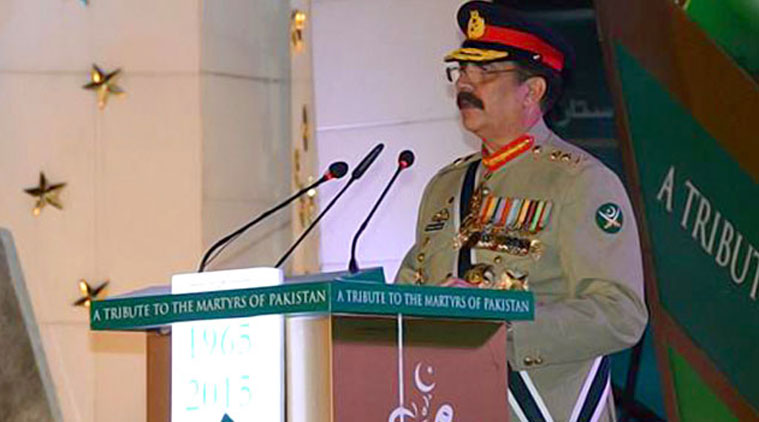
Gen SA Munir's position in the hierarchy of Pakistan was not very comfortable. The state of economy, insurgency in Pakhtoonistan and Balochistan, attack on the Jaffar Express, constant protests by supporters of Imran Khan's supporters inside and outside of parliament.
Read Document →
Decoding Operation SINDOOR: Key Aspects and Implications
Precision strikes were carried out on nine sites—four in Pakistan and five in PoK—linked to anti-India terrorist groups such as the LeT, JeM and the Hizbul Mujahideen. The targeted sites included Muridke (LeT headquarters) and Bahawalpur (JeM headquarters).
Read Document →
Chinese Cyber Exploitation in India's Power Grid - Is There a linkage to Mumbai Power Outage?
The New York Times (NYT), based on analysis by a U.S. based private intelligence firm Recorded Future, reported that a Chinese entity penetrated India’s power grid at multiple load dispatch points. Chinese malware intruded into the control systems that manage electric supply across India, along with a high-voltage transmission substation and a coal-fired power plant
Read Document →13 October 2015
WHITHER XI JINPING
Article By MEMRI Scholar Tufail Ahmad: India's Thought Cops Are Angry With Modi
October 11, 2015 Special Dispatch No.6181
Following is the full text of an article by MEMRI South Asia Studies Project director Tufail Ahmad, which was originally published by the India Facts website on October 5, 2015.[1]
"In the last week of September at Dadri not far from the Indian capital, an angry mob lynched to death Mohammad Akhlaq over allegations that a cow was slaughtered and he ate beef.
"In the 1970s and 1980s in Bihar where there was no Bharatiya Janata Party, cow slaughter was still banned and there were times when there would be conflicts over beef and policemen would visit homes.
"Beef conflicts are not new to contemporary India. Cows are not slaughtered across the Islamic world, but the reason cows are slaughtered mostly in the Indian Subcontinent is because Indian Islamists introduced the practice of cow slaughter here as a challenge to the Hindu religious practice of worshiping cows.
"Fikr-e-Nau (New Thinking), a newly launched Urdu magazine published by Pakistani Marxists – explores the issue of cow slaughter (a translation will be published soon by MEMRI).
"You can look further back into history.
"During the 16th century when the BJP and RSS did not exist, Emperor Akbar outlawed the practice of cow slaughter but the greatest Islamic scholar of the time Sheikh Ahmad Sirhindi lambasted the Mughal emperor asking why Muslims couldn't slaughter cows under a Muslim government.
"While Akbar was sensitive towards the majority Hindus' religious sensibilities, Islamists like Sheikh Sirhindi, much like the present-day commentators, were not bothered about them. Fikr-e-Nau goes on to argue that in the lands comprising Pakistan today, cow slaughter was brought by Indian Islamist organizations arriving there after the Partition in 1947.
"But the issue being debated about the Dadri lynching is not a religious one.
"At this point in time when India is at the cusp of emerging as a global power, even the most so-called right-wing Hindus hold the following view: Any person [violating] the country's rule of law should be prosecuted and jailed without delay.
"Lawmaker and prominent BJP member Tarun Vijay, in an article dated October 2, advocated this line of thinking, calling for handling this issue 'via the lawful path that the Constitution has provided' and urging the Akhilesh Yadav government to 'take serious note of this.'
"A purely secular view requires this: the socialist government of Akhilesh Yadav must act ruthlessly and quickly against anyone taking the law into their hands. However, such a course is not advocated by India's liberal-secular intelligentsia which loves to engage in religious politics instead — of late, crudely.
The Original Himalayan Blunder: How India Lost Gilgit-Baltistan
India's bureaucracy is 'worst in Asia'
Sharifs and a make-believe
Operation Malabar: A warning to China
Windows 10 Sees Faster Adoption Than Its Predecessors
by Felix Richter, Statista.com
Things have been going pretty well for Microsoft lately.
Just this week, the company unveiled its first laptop to very positive reception and Windows 10, the successor to the widely unpopular Windows 8, continues to do very well. According to data published by NetMarketShare, Windows 10, released on July 29th, has seen faster adoption post-launch than its predecessors including the immensely successful Windows 7. In September, Windows 10 was installed on 6.6 percent of all PCs, which put it ahead of the most recent version of Apple's OS X at that time (Yosemite).
This chart illustrates the adoption of Windows 7, 8 and 10 in the first months after their respective releases.

The Kunduz Wakeup Call
Afghanistan: An Opportunity for U.S.–China Cooperation?
From Turkey To The Baltics, NATO Faces Up To Russia
Can Afghan Forces Resist the Taliban?
Is Caspian Sea Fleet a Game-Changer?
Wake up India: Neglecting science could kill it one day
America's Grand Strategy to Contain China: The Trans-Pacific Partnership?
Why Russia Needs Syria
Reviewing the Week: ISW Intelligence Summary
Obama Administration Backs Down in Battle With Silicon Valley Over Encryption
October 11, 2015
Russia's Syrian entanglement: Can the West sit back and watch?
Crisis Over Ukraine Contingency Planning Memorandum Update
Private NSA Army is Attacking YOU!
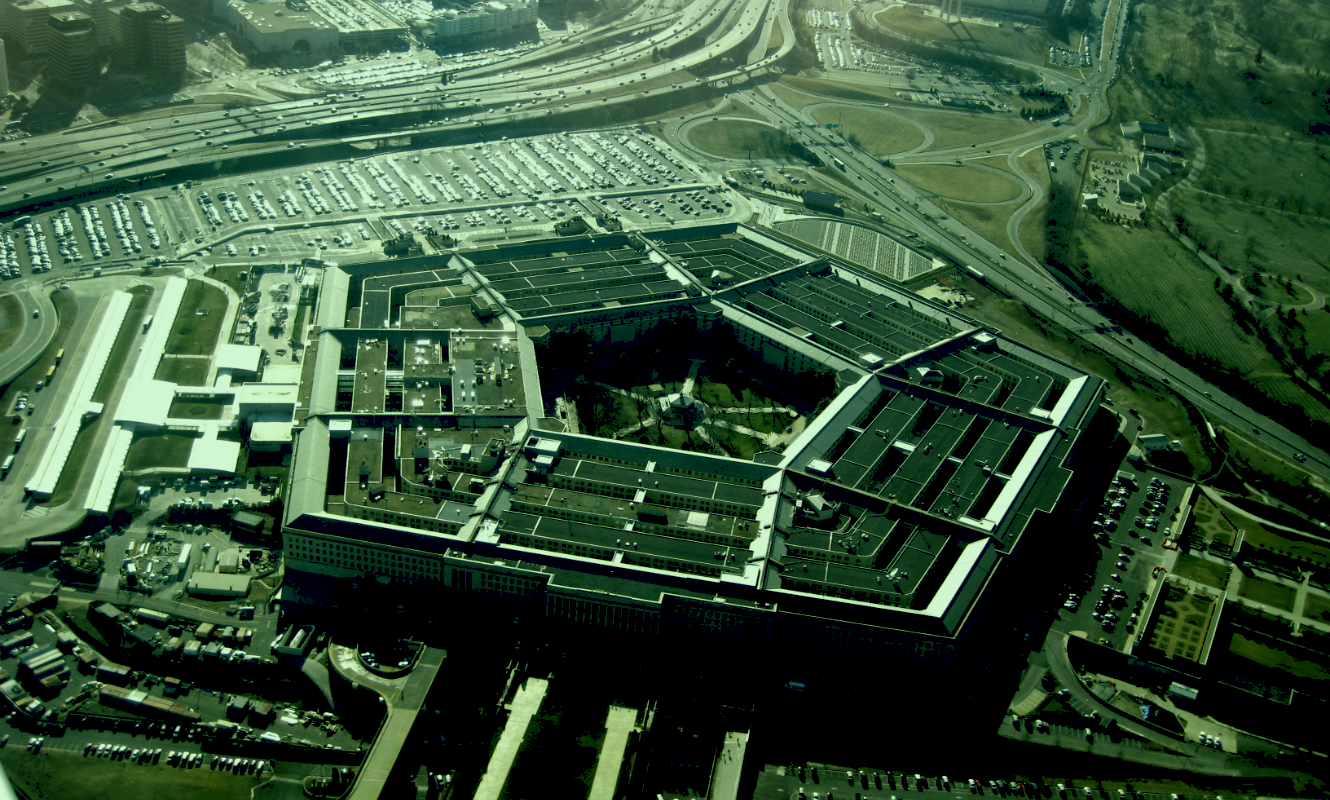
CSI: PENTAGON — WHO KILLED AMERICAN STRATEGY?
OCTOBER 12, 2015
Who killed American strategy? Discussion about American security and defense today often resembles TV shows likeCrime Scene Investigation and its numerous spinoffs. There’s a dead body, a list of suspects, and a convoluted plotline that somehow has to be resolved in one hour of screen time and commercial breaks. Like detectives on CSI, defense writers are at the scene of the proverbial crime, collecting evidence and speculating about the culprit. The dead body belongs to American strategy, horrifically murdered by an unknown assailant. Who — or what — is responsible?
The shocking twist on tonight’s episode of CSI: Pentagon is that we — the defense analytical community — killed American strategy. While American strategy certainly lived a troubled life and the list of “usual suspects” is fairly long, it was nonetheless a victim of our own unrealistic expectations and inability to deal with the messy reality of what strategy is and what it can do. Whoever killed strategy, our inability to make choices and recognize tradeoffs surely made us an accessory to the crime. And unless we come to grips with the inherent flaws, difficulties, and problems of making strategy, the killer in this crime — our adherence to a romantic, unrealistic, and empirically dubious view of strategy — will surely claim more victims.
American strategy’s troubled life
TV crime procedurals often begin with the premise that the victim had a perfect life, only to reveal later on that the victim is hiding sordid secrets that figure into the circumstances leading up to the murder. For example, the victim had a drug addiction or was behind on paying a debt to a local mobster. Sometimes the victim led a double life; countless murder mysteries often reveal that the victim was cheating on his wife and thus was being blackmailed by a prostitute or mistress. Of course, these failings and imperfections do not necessarily explain who killed the victim, but they often yield valuable clues.
Certainly American strategy had no shortage of admirers. Every government agency in DC and public policy think tank attaches the word “strategy” or “strategic” to what it does, and countless op-eds are penned saying that we need strategy. There are numerous civilian and military educational institutions where it is taught or referenced as a core subject. American strategy’s respectability and accomplishments, however, was an elaborate faรงade that concealed serious underlying problems.
Even its friends were unaware of its history of failures, such as its haphazard management of low-intensity conflictsand frequently flawed attempts to measure its adversaries’ military capabilities. A psychologist examining the victim also noted that the victim suffered from a number of psychological problems and issues, such as a tendency to mirror-image its opponents and commit to losing battles out of an emotional concern for its reputation and the blood and treasure it had already committed to the fight. Others familiar with the victim’s life observed that American strategy had an unhealthy obsession with technology and a tendency to conflate technology with the political aims that ought to have guided its use. Finally, American strategy has always been indifferent to the local politics and institutions of the foreigners that it interacts with, despite the critical nature of such forces for success and failure in its wars.
But this only scratches the surface of the problems that plagued American strategy during its tragic life. Understanding American strategy isn’t just a matter of understanding the military and its tactics and techniques. To truly understand American strategy one also needs to understand the political elites who helped make it and their incentives, tendencies, and motivations. This shady crowd was motivated largely by their own self-interest, and hadalways been in some shape or form. Why did American strategy associate with such a dangerous and unreliable crowd? Couldn’t it just put politics aside and focus on achieving the national interest? Unfortunately, one cannot have strategy without politics.
ISIL death toll at 20,000, but 'stalemate' continues
Why is government forcing LCA down Indian Air Force's throat?
The Paradox of Power in the Network Age Who, exactly, will claim the virtual high ground?
The Paradox of Power in the Network Age
Who, exactly, will claim the virtual high ground?
BY DAVID ROTHKOPFOCTOBER 9, 2015
There’s a whole lotta technophilia going on.
The wave upon wave of digital disruptions buffeting and inalterably changing global society — we have been told by a chorus of Silicon Valley CEOs, hyperventilating best-selling authors, and digital fan-boys and -girls — will be democratizing, will undercut the brutes who traditionally have wielded and abused power, will lift up the masses. This power of connection, so it goes, will transform such masses, educate them, and elevate us all above the boundaries and barriers that have separated us throughout history. Consequently, they say, we will find ourselves in a future in which we will work less and laugh more.
It’s a great era in which to be alive.
But as any student of even the very best chapters of human history might expect, with progress come new, sometimes greater challenges. That is, having all the world’s people linked to the Net can empower and educate them, but it can also expose them to new threats and potentially open the door to new kinds of exploitation and domination.
Acceleration plus amplification produces volatility. Connection breaks down barriers and brings us closer, but it also creates new vulnerabilities. Redistribution plus decentralization of power can produce the Islamic State, the world’s first open-architecture terrorist group; it has recognized that the most effective force multiplier is using modern communications techniques to let anyone join, harnessing the power of the alienation of thousands by co-branding it with a single perverse and evil message. It is a leap forward from the ways of hierarchical, closed, club-like terrorist organizations such as al Qaeda or the FARC. But it is hardly the kind of progress we wanted to be making.
5 Billion-Dollar Defense Companies That Dominate The Industry
An F-35B Lightning II from the Pax River Integrated Test Force conducts weapons environmental testing along the Atlantic Test Range on July 22, 2015.