The Profession of Arms: A Guide for Young Army Officers
It takes courage, especially for a young officer, to check a man met on the road for not saluting properly or for slovenly appearance, but, every time he does, it adds to his stock of moral courage, and whatever the soldier may say, he has respect for the officer who does pull him up.
Read Document →The Dragon's Teeth: Assessing China's Military Modernization
PLA has focused on modernising its capabilities across all warfare domains to achieve these goals. This includes land, air, and maritime operations, nuclear, space, counter-space, electronic warfare and cyberspace operations, aiming to become a fully integrated joint force.
Read Document →Transforming the PLA: A Decade of reorganisation from SSF to ISF
PRC has engaged in a sustained and broad effort to transform the PLA from an infantry-heavy, low-technology, ground forces-centric military into a high-technology, networked force with an increasing emphasis on joint operations and naval and air power projection.
Read Document →Eyes without Borders: Exploring the World of Open Source Intelligence (OSINT) in the Digital Age
Open Source Intelligence (OSINT) is gaining prominence with the rise of social media, the digital society and the vast growth of publicly and commercially available information (PAI and CAI).
Read Document →
The PLA’s Developing Cyber Warfare Capabilities and India's Options
Informationised warfare blurs the lines between peacetime and wartime. A nation in the information age cannot wait for the hostilities to break out to collect intelligence, carryout influence operations, develop antisatellite systems or design computer software weapons.
Read Document →
Galwan and After
Why did China did this when he is under tremendous pressure in all fronts, is this China's salami slice tactics being progressed rigorously, what will be new Rules of Engagement, what will be escalatory control mechanism, who has taken this decision, will there be some pressure put by China in India's North-East through insurgency.
Read Document →
India’s Joint Doctrine for Cyberspace Operations: A Critical Review
Chief of Defence Staff (CDS) General Anil Chauhan and Secretary, Department of Military Affairs, formally released declassified versions of the Joint Doctrines for Cyberspace Operations during the Chiefs of Staff Committee meeting in New Delhi.
Read Document →
Know your Enemy General(now Field Marshal) Syed Aseem Munir
Gen SA Munir's position in the hierarchy of Pakistan was not very comfortable. The state of economy, insurgency in Pakhtoonistan and Balochistan, attack on the Jaffar Express, constant protests by supporters of Imran Khan's supporters inside and outside of parliament.
Read Document →
Decoding Operation SINDOOR: Key Aspects and Implications
Precision strikes were carried out on nine sites—four in Pakistan and five in PoK—linked to anti-India terrorist groups such as the LeT, JeM and the Hizbul Mujahideen. The targeted sites included Muridke (LeT headquarters) and Bahawalpur (JeM headquarters).
Read Document →
Chinese Cyber Exploitation in India's Power Grid - Is There a linkage to Mumbai Power Outage?
The New York Times (NYT), based on analysis by a U.S. based private intelligence firm Recorded Future, reported that a Chinese entity penetrated India’s power grid at multiple load dispatch points. Chinese malware intruded into the control systems that manage electric supply across India, along with a high-voltage transmission substation and a coal-fired power plant
Read Document →1 August 2020
In a State of Flux: Maritime Order in the Indian Ocean
Brahmaputra dams: A China-India political quagmire
The Brahmaputra River runs from its origin in western Tibet through India before flowing into the sea in Bangladesh. Photo: Pfly / WikiCommonsWhy global data flow is under threat, and why Asia is in a strong position to benefit

The Schrems II case concerns a complaint that Facebook was not adequately protecting EU personal data when transferring and storing it in the US. Photo: BloombergGlobal China: Regional influence and strategy
Myanmar’s Casino Cities: The Role of China and Transnational Criminal Networks
Seeking to profit from China's lucrative but illegal gambling market, a shady web of actors has begun building resort cities in Myanmar’s Karen State to cater to Chinese gamblers. This report casts light on the actors behind Myanmar’s illegal gambling sector, their linkages to Chinese government entities and to Myanmar's armed groups and military, and how their actions could upend Myanmar’s prospects for peace.Chit Thu, commander of the Karen State Border Guard Force, has been a key figure in developing the Yatai New City Project. (Nyein Su Wai Kyaw Soe)The China-Iran Deal: A Trial Balloon with a Clear Message
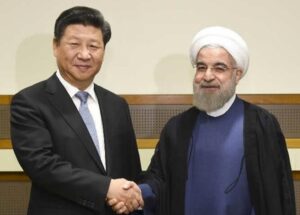
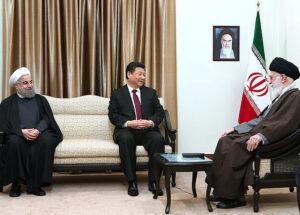
EXECUTIVE SUMMARY: Hobbled by harsh US sanctions and a global economic downturn, Iran has discovered a new weapon: hot air in the form of a cooperation deal with China that carries messages to its opponents. China, albeit far less economically impaired, sees virtue in this arrangement too.The Iran-China 25-Year Plan: A Preliminary Assessment
Combatting and Defeating Chinese Propaganda and Disinformation: A Case Study of Taiwan’s 2020 Elections
U.S.-China confrontation is like nothing we’ve seen before
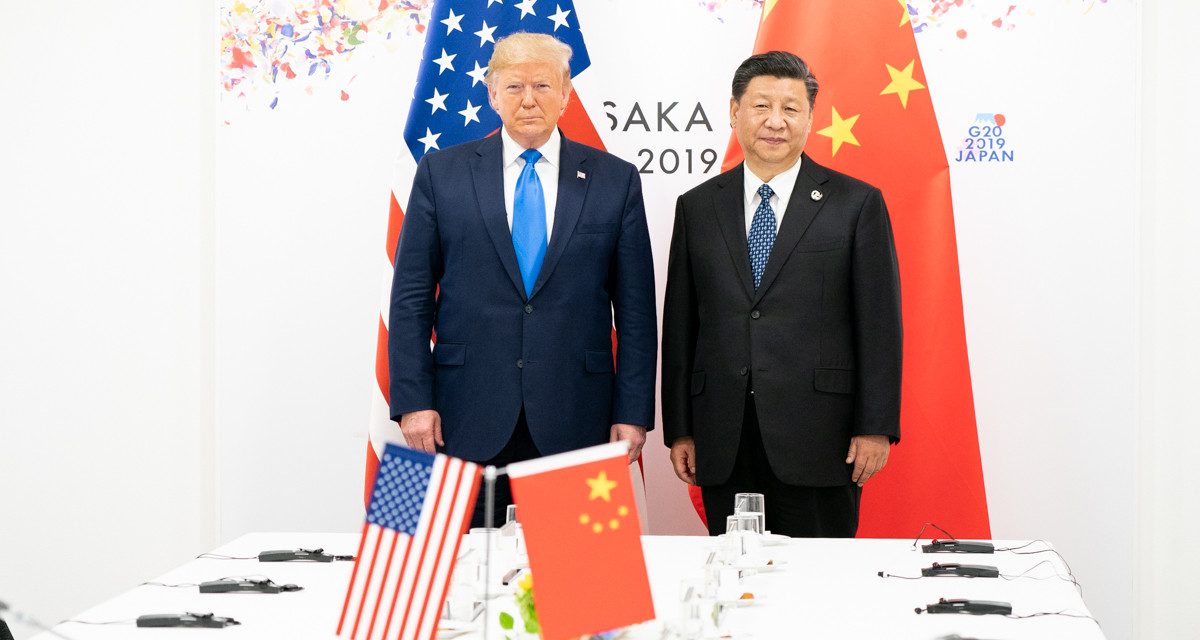
The escalating confrontation between the United States and China is so perilous because the world’s two largest economies – and the two defining countries of their times – are navigating uncharted terrain.China’s Fiscal Dilemma
BEIJING – COVID-19 hit the Chinese economy hard in the first quarter of 2020, causing real GDP to contract by 6.8% year on year. But since the city of Wuhan emerged from lockdown in early April, the economy has gradually returned to normal, and grew by 3.2% in the second quarter. According to the consensus view, China’s current potential GDP growth rate is 6%. If it achieves this in the second half of 2020, the economy could post full-year annual growth of 2.5%.
HOW CHINA WAS “LOST”: TRACING A PROBLEMATIC DISCUSSION FROM THE 1940S TO THE PRESENT
Mao Zedong proclaimed the establishment of the People’s Republic of China on October 1, 1949. Coming just a month after the Soviet Union had tested an atomic bomb—roughly four years before the Central Intelligence Agency had forecast that Moscow would have the ability to produce one—that outcome seemed to reinforce that the supposed hegemony Washington had inherited with the conclusion of World War II was dubious, if not illusory. It also had a personal resonance for George Marshall, one of the most esteemed soldier-statesmen of his generation. As Foreign Affairs executive editor Daniel Kurtz-Phelan explains in his book The China Mission: George Marshall’s Unfinished War, 1945–1947, while Marshall is chiefly remembered for the visionary plan for European reconstruction that bears his imprimatur, his beliefs about the reach of US influence were significantly forged in the crucible of a bitter disappointment: Marshall had served as America’s special envoy to China from December 1945 to January 1947, laboring, ultimately in vain, to mediate a peace between Mao’s Communist forces and Chiang Kai-shek’s Nationalist forces.South China Sea: China’s ‘dark fleet’ now targeting Sea of Japan
Congress Pushes for Sanctions on Turkey, Russia Over Libyan War
U.S. lawmakers are advancing a bill that would compel the Trump administration to levy sanctions on Russia and Turkey for fueling an escalation in the civil war in Libya, as the Defense Department has warned about the deployment of foreign mercenaries into the war zone.Did a Cyber-Weapon Blow Up an Iranian Missile Factory—And Is This Cyber-War?
An Iranian general would not rule out that a massive explosion east of Tehran last week was caused by “hacking,” amidst speculation that the incident was an act of sabotage.A Manifesto for Globalization
The Global Order After COVID-19
The End of the Middle East’s Trickle-Down Economy
Trump Can’t Ban TikTok, but He Can Hurt It
The EU Opens the Door to More China Trade
It Is Time to Abandon Dollar Hegemony
In the 1960s, French Finance Minister Valรฉry Giscard d’Estaing complained that the dominance of the U.S. dollar gave the United States an “exorbitant privilege” to borrow cheaply from the rest of the world and live beyond its means. U.S. allies and adversaries alike have often echoed the gripe since. But the exorbitant privilege also entails exorbitant burdens that weigh on U.S. trade competitiveness and employment and that are likely to grow heavier and more destabilizing as the United States’ share of the global economy shrinks. The benefits of dollar primacy accrue mainly to financial institutions and big businesses, but the costs are generally borne by workers. For this reason, continued dollar hegemony threatens to deepen inequality as well as political polarization in the United States.Zaporizhia Oblast: The Next Flash Point in Russia’s ‘Hybrid’ Aggression Against Southeastern Ukraine?
Critical Frontier: Leveraging Technology to Combat COVID-19
The COVID-19 pandemic has challenged clinicians, public health authorities, companies and governments to quickly develop new capabilities for supporting recovery, maintaining health security, and building resilience. Digital tools and strategies have become crucial in this effort.Ensuring Cyber Resilience in NATO’s Command, Control and Communication Systems
Systems of Cyber Resilience: Secure and Trusted FinTech
Cyber risk is pervasive, systemic and global in scope. In the financial services industry, it is increasingly difficult to mitigate this risk, since the modularization of financial services interlinks organizations whose cybersecurity maturity levels vary greatly. It is therefore difficult for any one firm to understand how an attacker might move laterally across a supply chain. Given that interests and priorities diverge among actors, a sector-wide baseline for cybersecurity is necessary to ensure the integrity of the global financial system. A vital step in establishing this baseline is for financial technology (FinTech) companies to uphold their obligations to system resilience. FinTech companies must protect themselves and their customers in a measurable and demonstrable way, but they are often faced with fragmented regulations and finite resources and operate in a market where skilled expertise is in short supply. This Consortium helps raise the level of FinTech cybersecurity by supporting the scaling and adoption of frameworks that provide clear and achievable cybersecurity guidelines to FinTechs to enhance the security of the wider financial services supply chain. More significantly, this work is a vital step towards creating durable partnerships that will improve the cybersecurity and resilience of the global financial system. Additional organizations - including the Cyber Risk Institute, supported by the World Economic Forum, and the Coalition to Reduce Cyber Risk – will carry this group’s recommendations forward to implementation across the financial sector globally.
A New Era for Deep Space Exploration and Development
This vision begins with a campaign to utilize Earth’s orbital environment, the surface and resources of the Moon, and cis-lunar space to develop the critical technologies, operational capabilities, and commercial space economy necessary for a sustainable human presence on the Moon, Mars, and beyond. U.S. space exploration efforts impact and aid multiple national interests, including the economy, national security, scientific advances, and diplomacy. The landscape has changed drastically since the early beginnings of the Space Age. Current space exploration efforts involve a greater number of nations and private sector actors, and as a result, the nature of leadership in space has evolved. The challenge in this new era is not simply to achieve what others cannot but to provide opportunities for others to partner with us. Although NASA is, and will remain, the primary United States Government entity for civil space exploration efforts, other departments and agencies have increasingly important roles to play in space.