A year ago, we had written this with regards to India—US collaboration in Afghanistan:The Profession of Arms: A Guide for Young Army Officers
It takes courage, especially for a young officer, to check a man met on the road for not saluting properly or for slovenly appearance, but, every time he does, it adds to his stock of moral courage, and whatever the soldier may say, he has respect for the officer who does pull him up.
Read Document →The Dragon's Teeth: Assessing China's Military Modernization
PLA has focused on modernising its capabilities across all warfare domains to achieve these goals. This includes land, air, and maritime operations, nuclear, space, counter-space, electronic warfare and cyberspace operations, aiming to become a fully integrated joint force.
Read Document →Transforming the PLA: A Decade of reorganisation from SSF to ISF
PRC has engaged in a sustained and broad effort to transform the PLA from an infantry-heavy, low-technology, ground forces-centric military into a high-technology, networked force with an increasing emphasis on joint operations and naval and air power projection.
Read Document →Eyes without Borders: Exploring the World of Open Source Intelligence (OSINT) in the Digital Age
Open Source Intelligence (OSINT) is gaining prominence with the rise of social media, the digital society and the vast growth of publicly and commercially available information (PAI and CAI).
Read Document →
The PLA’s Developing Cyber Warfare Capabilities and India's Options
Informationised warfare blurs the lines between peacetime and wartime. A nation in the information age cannot wait for the hostilities to break out to collect intelligence, carryout influence operations, develop antisatellite systems or design computer software weapons.
Read Document →
Galwan and After
Why did China did this when he is under tremendous pressure in all fronts, is this China's salami slice tactics being progressed rigorously, what will be new Rules of Engagement, what will be escalatory control mechanism, who has taken this decision, will there be some pressure put by China in India's North-East through insurgency.
Read Document →
India’s Joint Doctrine for Cyberspace Operations: A Critical Review
Chief of Defence Staff (CDS) General Anil Chauhan and Secretary, Department of Military Affairs, formally released declassified versions of the Joint Doctrines for Cyberspace Operations during the Chiefs of Staff Committee meeting in New Delhi.
Read Document →
Know your Enemy General(now Field Marshal) Syed Aseem Munir
Gen SA Munir's position in the hierarchy of Pakistan was not very comfortable. The state of economy, insurgency in Pakhtoonistan and Balochistan, attack on the Jaffar Express, constant protests by supporters of Imran Khan's supporters inside and outside of parliament.
Read Document →
Decoding Operation SINDOOR: Key Aspects and Implications
Precision strikes were carried out on nine sites—four in Pakistan and five in PoK—linked to anti-India terrorist groups such as the LeT, JeM and the Hizbul Mujahideen. The targeted sites included Muridke (LeT headquarters) and Bahawalpur (JeM headquarters).
Read Document →
Chinese Cyber Exploitation in India's Power Grid - Is There a linkage to Mumbai Power Outage?
The New York Times (NYT), based on analysis by a U.S. based private intelligence firm Recorded Future, reported that a Chinese entity penetrated India’s power grid at multiple load dispatch points. Chinese malware intruded into the control systems that manage electric supply across India, along with a high-voltage transmission substation and a coal-fired power plant
Read Document →2 September 2017
*** It’s Time to Shift Gears in Afghanistan
A year ago, we had written this with regards to India—US collaboration in Afghanistan:*** North Korea: Latest Missile Test Overflies Hokkaido, Lands in Pacific
At around 5:58 a.m. local time, North Korea launched a ballistic missile that flew over the northern Japanese island of Hokkaido before landing in the Pacific Ocean. Early indications are that the missile had a flight time of around 14 minutes, had an apogee of 550 kilometers (340 miles) and splashed down some 2,700 kilometers from its launch point. While these numbers point to a medium-range ballistic missile, the possibility remains that the North Koreans either tested an intermediate-range ballistic missile (IRBM) with an early engine cutoff or were experimenting with a heavier warhead. Alternatively, the missile could have failed before reaching its full theoretical range. The latter possibility is reinforced by reports that the missile broke into three parts before landing.Lessons of Doklam to prepare for the future
Will China resume building roads in Doklam?
Doklam: Who won?
Why a Nuclear War Between India and Pakistan Could Mean in Millions Dead
Doklam standoff: China’s understanding of India has increased
Carnegie Endowment in India: Promoting US Leadership With Indian Corporate Wealth
The influential think tank, whose goal is to safeguard ‘American interests’ globally, is also seen by Indian businesses with strong US partnerships as a way of lobbying the Indian government.Lessons from Doklam
India’s public health and the looming threat of US pharma giants
Aid and Advice Won’t Be Enough for Afghanistan
Pakistan’s New Big Threat: A Bulging Population
Afghanistan and Its Neighbors
Despite Risks, Trump Administration Moves Forward With Afghanistan Mining Plan
The United States has already spent almost half a billion dollars on Afghanistan’s mining industry with little to show, but the Trump administration still appears determined to move forward with plans to tap the country’s buried wealth.Bogus Concerns over Brahmaputra Waters
China’s arrogance and the logic of strategy
Recent developments in the border standoff saga reaffirm the observations made in Edward Luttwak’s 2012 book, The Rise of China vs The Logic of StrategyLosing the perception war at Dok La
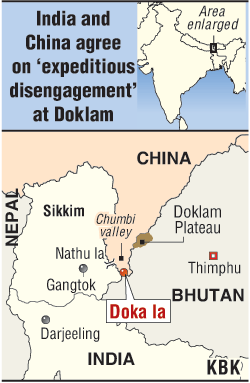
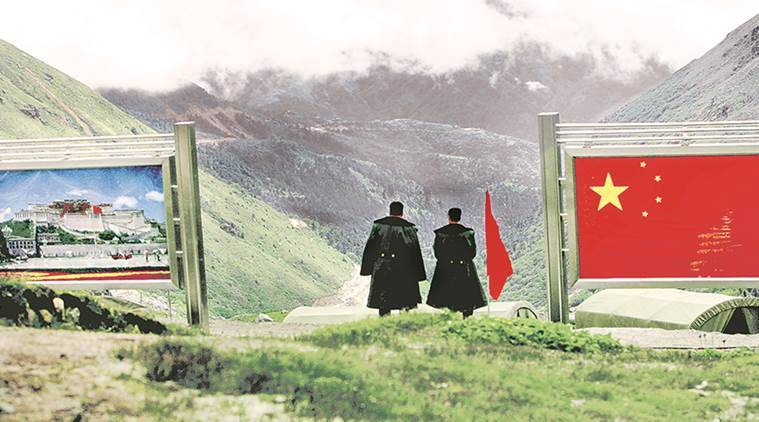
At around a quarter-to-two in the afternoon today (Aug 28), a joint statement issued by the Ministry of External Affairs in Delhi and the Zhongnanhai in Beijing announced the “expeditious disengagement” by troops eyeballing each other on the disputed Bhutanese border with China on the Doklam plateau that India is treaty-bound to protect. So far so good. Except, the Chinese spokesperson Hua Chunying also said Chinese troops would continue to patrol the Doklam region, thereby giving the impression that while the Indians had withdrawn, the PLA unit hadn’t. She then gave the rhetorical middle finger to India by adding that “China will continue to exercise sovereignty rights to protect territorial sovereignty in accordance with the rules of the historical boundary” and, by way of turning the knife, gratuitously declared that “China hopes India respects the historical boundary and works with China to protect peace along the border on the basis of mutual respect of each other’s sovereignty.” ( http://in.reuters.com/article/india-china-doklam-idINKCN1B80IC )How China Plans To Win A War In The South China Sea
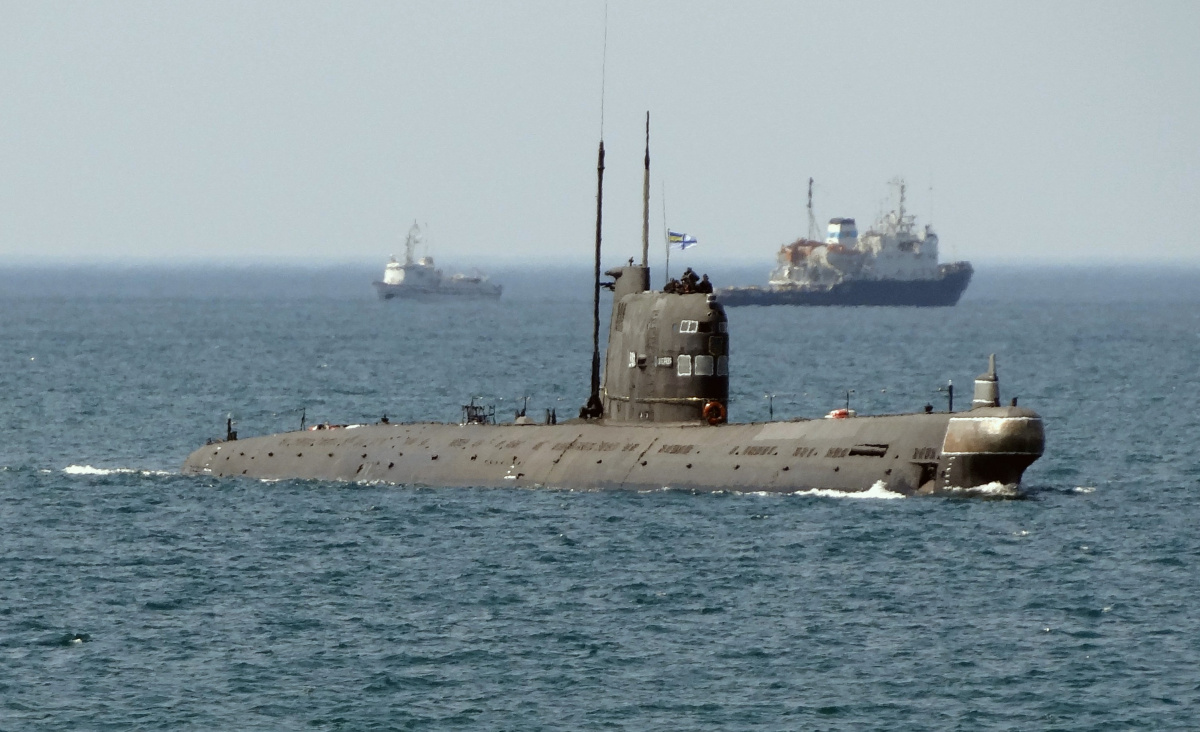
How a Russian Submarine Almost Started World War III
“And Pray, Sir, What Does Italy have to Offer?“
Stratfor: about the latest jihadist attack in Europe
Summary: Stratfor reports on the latest attack by ISIS in Europe. It’s a drumbeat of terror, slowly increasing, rooted in Europe’s large and rapidly growing Islamic population. So far the region’s governments have responded with traditional police and security measures. These have failed. What will they do next?HOW ISRAEL WON THE WAR AND DEFEATED THE PALESTINIAN DREAM
Time to Terminate Washington's Defense Welfare
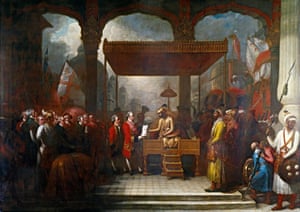
The East India Company: The original corporate raiders
One of the very first Indian words to enter the English language was the Hindustani slang for plunder: “loot”. According to the Oxford English Dictionary, this word was rarely heard outside the plains of north Indiauntil the late 18th century, when it suddenly became a common term across Britain. To understand how and why it took root and flourished in so distant a landscape, one need only visit Powis Castle.The New Era of Counterforce: Technological Change and the Future of Nuclear Deterrence
Why Do U.S. Warships Keep Having Accidents?
AI cyberattacks are coming — but what does that mean?
The next major cyberattack could involve artificial intelligence systems. It could even happen soon: At a recent cybersecurity conference, 62 industry professionals, out of the 100 questioned, said they thought the first AI-enhanced cyberattack could come in the next 12 months.