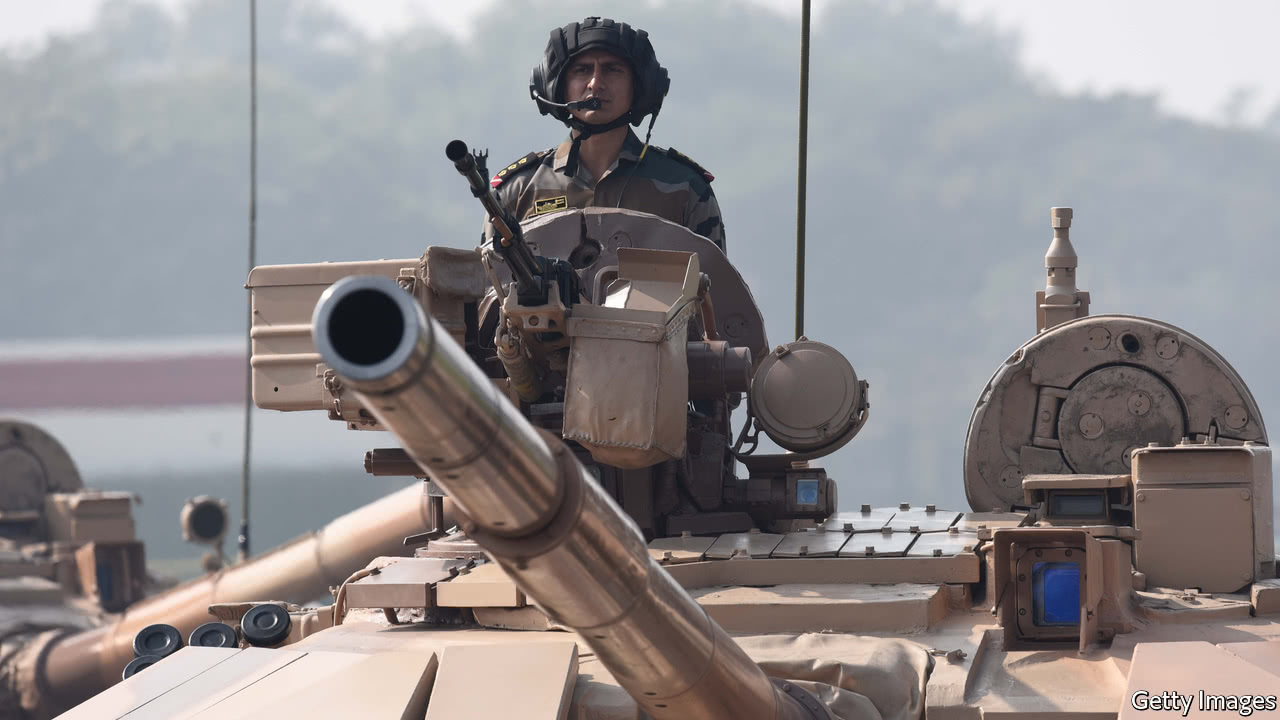
 IN FEBRUARY India quietly passed a milestone. The release of its annual budget showed that defence spending, at $62bn, has swept past that of its former colonial master, Britain. Only America, China, Saudi Arabia and Russia lavish more on their soldiers. For nearly a decade India has also been the world’s top importer of arms. In terms of active manpower and the number of ships and planes, its armed forces are already among the world’s top five.
6 May 2018
India spends a fortune on defence and gets poor value for money
IN FEBRUARY India quietly passed a milestone. The release of its annual budget showed that defence spending, at $62bn, has swept past that of its former colonial master, Britain. Only America, China, Saudi Arabia and Russia lavish more on their soldiers. For nearly a decade India has also been the world’s top importer of arms. In terms of active manpower and the number of ships and planes, its armed forces are already among the world’s top five.Taliban Control of Afghan Districts Remains Unchanged Despite Increased U.S. Military Pressure
By Bill Roggio Alexandra Gutowski
The latest report by the Special Investigator General for Afghanistan Reconstruction (SIGAR) indicates that the Taliban’s control of districts as of the end of Jan. 2018 remains virtually unchanged. The Taliban continue to maintain its grip on half of Afghanistan, despite U.S. military’s reinvigorated effort to force the group from its strongholds. The U.S. Department of Defense and Resolute Support (RS), NATO’s command in Afghanistan, provides the district control data to SIGAR. SIGAR’s data is dated as of Jan. 31, 2018. According to the SIGAR report, the Afghan government controls or influences 229 of Afghanistan’s 407 districts (56.3%). The Taliban controls or influences 59 districts (14.5%). The remaining 119 districts (29.2%) are contested.
Under the Radar: China's Coercive Air Power in the Taiwan Strait
By: Colby Ferland
 On January 4, 2018, the People’s Republic of China (PRC, China) unilaterally modified an aviation route near the centerline of the Taiwan Strait. The northbound routes on this M503 flight path violate the existing cross-Strait civil aviation agreements between each side’s respective authorities. Taiwan, and many members of the international community, view this as a coercion tactic by Beijing to limit Taiwan’s ability to operate effectively near its borders on matters of national security. Further complicating the matter is Taiwan’s exclusion from international organizations, such as the International Civil Aviation Authority (ICAO), which limits Taipei’s ability to voice its concerns without the assistance of informal allies. The move is part of Beijing’s long-term plan of forcing Taipei to the negotiation table on unfavorable terms. More alarming, however, are the implications for the future of airspace security in Taiwan, as well as America’s ability to exercise freedom of navigation around the island. In response to this occurrence, the Project 2049 Institute brought together a distinguished panel of security experts to flesh out the PRC’s coercive airspace management, Taiwan’s security, and implications for U.S. interests.
China: Magic Weapons and 'Plausible Deniability'
By Graeme Smith
This article is based on Episode 20 of The Little Red Podcast with Gerry Groot of the University of Adelaide. We’re also pleased to announce The Little Red Podcast is a finalist in this year’s Australian Podcast Awards, in the News and Current Affairs category. Xi Jinping’s radical overhaul of the Chinese bureaucracy is not, as Xinhua would have you believe, just about streamlining government administration and reducing “red tape”. A host of state agencies that once stood between the public and the Chinese Communist Party have been done away with. One of the chief beneficiaries is the United Front Work Department (UFWD), the same department whose influence operations have made headline news in Australia.
The U.S. and China Are Finally Having It Out
By Thomas L. Friedman
 With the arrival in Beijing this week of America’s top trade negotiators, you might think that the U.S. and China are about to enter high-level talks to avoid a trade war and that this is a story for the business pages. Think again. This is one for the history books. Five days of meetings in Beijing with Chinese, U.S. and European government officials and business leaders made it crystal clear to me that what’s going on right now is nothing less than a struggle to redefine the rules governing the economic and power relations of the world’s oldest and newest superpowers — America and China. This is not a trade tiff.
White House Considers Restricting Chinese Researchers Over Espionage Fears
By ANA SWANSON and KEITH BRADSHER

WASHINGTON — It sounds like something out of a science fiction movie: In April, China is said to have tested an invisibility cloak that would allow ordinary fighter jets to suddenly vanish from radar screens. This advancement, which could prove to be a critical intelligence breakthrough, is one that American officials fear China may have gained in part from a Chinese researcher who roused suspicions while working on a similar technology at a Duke University laboratory in 2008. The researcher, who was investigated by the F.B.I. but never charged with a crime, ultimately returned to China, became a billionaire and opened a thriving research institute that worked on some projects related to those he studied at Duke.
What Beijing is Building in the South China Sea
Since China began its extensive land reclamation program in the South China Sea in 2013, Beijing has focused on improving its presence and infrastructure at seven locations in the Spratly Island chain: Cuarteron Reef, Fiery Cross, Gaven, Hughes, Johnson, Mischief and Subi reefs. Of the seven locations, the Fiery Cross, Mischief and Subi reefs received particular attention in the form of large-scale airfields built there. Over time, China has also added harbors, barracks, radar and other sensors. This is in addition to communications equipment, storage bunkers and general infrastructure installed across all seven islands. Stratfor partners at AllSource Analysis have provided imagery that confirms mobile electronic warfare (EW) equipment was recently deployed to Mischief Reef.
How Do You Control 1.4 Billion People?
By ROBERT FOYLE HUNWICK
 A few months ago, you accidentally defaulted on a phone bill. The mistake affects your credit score: It’s hard to get a loan. You can no longer make jokes about Marco Rubio on Twitter; such remarks will algorithmically define you as a libertarian loon—another sort of person likely to default on social obligations. After a couple of close friends miss their student loan repayments, you can’t even travel: your social circle is now all “discredited, unable to take a single step.” This is the incipient scenario in China, whose state-backed “social credit scheme” will become mandatory for all residents by 2020. The quoted text is from a 2014 State Council resolution which promises that every involuntary participant will be rated according to their “commercial sincerity,” “social security,” “trust breaking” and “judicial credibility.”
 Iran and Israel draw closer to war than ever
 (CNN)On a January weekend in 2015, an Israeli missile streaked across the country's northern border into Syria. Among seven people killed were Jihad Mughniyeh, the son of one of Hezbollah's founders, and a senior commander from Iran's Revolutionary Guard Corps. Hezbollah's response was fierce. Rockets rained down for days on the northern Israeli countryside, with the Iranian proxy exchanging fire with Israeli forces near the border. Hezbollah fired five anti-tank missiles at an Israeli convoy on the border, killing two soldiers. As tensions soared along the border, a Spanish soldier serving as a UN peacekeeper was killed in the crossfire.
Trump should strengthen the Iran nuclear deal, not blow it up
By Max Boot
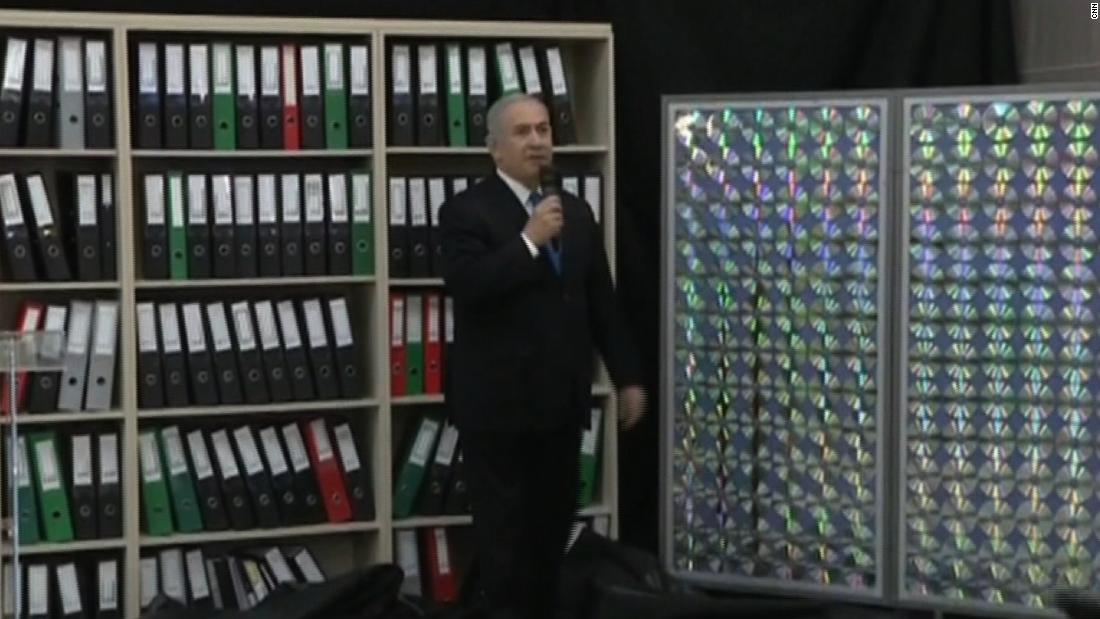
 Credit Israeli intelligence for another coup: Its agents smuggled 100,000 pages of documents out of Iran about that country’s nuclear program. The mullahs will now have to patch a major security leak. But the revelations contained in those papers are not quite as newsworthy as Prime Minister Benjamin Netanyahu claimed in a made-for-American-TV presentation on Monday. “I’m here to tell you one thing: Iran lied. Big time,” Netanyahu said. So what did Iranian leaders lie about? That they had a secret nuclear-development program called Project Amad … that was shelved in 2003.
Credit Israeli intelligence for another coup: Its agents smuggled 100,000 pages of documents out of Iran about that country’s nuclear program. The mullahs will now have to patch a major security leak. But the revelations contained in those papers are not quite as newsworthy as Prime Minister Benjamin Netanyahu claimed in a made-for-American-TV presentation on Monday. “I’m here to tell you one thing: Iran lied. Big time,” Netanyahu said. So what did Iranian leaders lie about? That they had a secret nuclear-development program called Project Amad … that was shelved in 2003. Europe Is Annoyed, Not Grateful, After Trump Delays Tariffs
By JACK EWING
 FRANKFURT — American allies did not bother to conceal their annoyance Tuesday with the Trump administration’s last-minute decision to delay punitive aluminum and steel tariffs by a month, in their view leaving a sword of Damocles hanging over the global economy. In Europe, the reprieve was seen not as an act of conciliation or generosity but instead as another 30 days of precarious limbo that will disrupt supply networks and undermine what has been an unusually strong period of growth.
Did Israel Just Kill the Iran Nuclear Deal?
 Israel claims that Tehran held onto research related to Iran's nuclear weapons program and has lied to the international community about its intentions. The announcement was timed to influence the United States and the European Union just days before the White House reaches a May 12 deadline to issue sanctions waivers in accordance with the terms of the Iran nuclear deal. Israel seeks stronger U.S. backing for its bold military moves against Iran in Syria by characterizing Tehran as unreliable and ill-intentioned. In a prime-time press conference from Tel Aviv, Israeli Prime Minister Benjamin Netanyahu announced Israeli intelligence had smuggled a cache of evidence out of Iran. Dubbed Iran's atomic archive, the 100,000 files allegedly show that Tehran sought to conceal a nuclear weapons program. Throughout his presentation, Netanyahu argued that Iran lied to the international community — and to watchdogs from the International Atomic Energy Agency (IAEA) — about the existence of a secret nuclear weapons program and sensitive research that Iran held on to for future use.
IMPROVING THE DISSEMINATION OF ARMY FINISHED INTELLIGENCE TO THE TACTICAL FORCE
Martin J. McCloud
While the fundamentals of intelligence production and dissemination remain the same, advancements in technology have significantly improved the manner and speed in which the Military Intelligence Brigade (Theater) publishes and distributes finished intelligence. As the anchor point for their respective theaters, the MIB(T) must maintain datasets that build the strategic and operational picture to inform and enable the tactical force. More importantly however, it is essential that this data is discoverable by all. The capabilities of web content management systems (WCMS) have proven to make finished intelligence securely accessible to the Intelligence Community (IC), joint force, and tactical force on multiple domains and in multiple formats. Gone are the days of posting finished intelligence products to unit specific SharePoint portals or sent out on limited email distribution lists. These practices waste valuable intelligence analyst time and must be phased out (or only used as a backup for intelligence delivery).
Russia’s Strategy in the Middle East
by Becca Wasser
 Russia’s 2015 intervention in Syria, which caught many by surprise, seemingly heralded Moscow’s triumphant return to the Middle East. But Russia had in fact been edging its way back into the region since at least 2007, emphasising political and economic relations over security relationships. While Syria may not have been the start of Russia’s involvement in the Middle East, Russia’s activity in the region has most certainly increased since September 2015. Since its intervention in Syria, Moscow has signed investment, energy and arms deals with states throughout the region. Senior Russian dignitaries – including President Vladimir Putin – have increased the tempo of their personal engagements with Middle Eastern leaders. These activities have drawn regional states closer to Russia, but significant roadblocks to the depth of these relationships remain.
US Religion Is Worth $1.2T/Year, More Than America's 10 Biggest Tech Companies, Combined
 The largely tax-free religion industry is one of the biggest in America, worth $1.2 trillion/year, a number that includes religious "healthcare facilities, schools, daycare and charities; media; businesses with faith backgrounds; the kosher and halal food markets; social and philanthropic programmes; and staff and overheads for congregations." The figure comes from The Socio-economic Contribution of Religion to American Society: An Empirical Analysis, co-authored by Georgetown's Brian J Grim and Newseum's Melissa E Grim, and published in the Interdisciplinary Journal of Research on Religion. The authors describe the estimate as "conservative" and note that while religion as a whole is declining in the US, spending on religious "social programs" has tripled since 2001, to $9T.
Freedom: The God of Modern War?
By Youri Cormier
Freedom. The term is so ubiquitous in its application to war we tend not to ask why that is. We take it as a given. Operation Enduring Freedom and Operation Iraqi Freedom are two good examples of how the concept seems encoded into American strategic objectives, yet it is not limited to countries like the U.S. where this idea is so culturally (and constitutionally) central. Crimea was not conquered by Russia, according to Russian claims, but rather the minority Russian population of Ukraine was liberated and given the opportunity for self-determination and to vote in a referendum about their collective future. While this essay will attempt to uncover why freedom appears to stoke the warrior instinct inside of us, doing so would only lead to an impasse, were it not considered within a larger set of questions. As a systematized justification for political violence, freedom was not always so predominant as it is today. Assuming human nature didn’t change over the past few decades, we then need to uncover what did.
Will the Korean Crisis Finally Bring the U.N. Into the Asian Century?
This week, Security Council ambassadors are visiting Bangladesh and Myanmar to investigate the suffering of the Rohingya. In doing so, they are facing up to one of the U.N.’s most significant failures of recent years. Both U.N. officials on the ground and council members in New York vacillated over how to respond to the ethnic cleansing campaign of Myanmar’s military against the Rohingya Muslim minorities in mid-2017. This weekend, the council saw the results of that failure when they visited a refugee camp that houses half a million of the victims.
Cyberthreats: The Vexing New Front in Modern Warfare
By Carl M. Cannon
In this series of articles running from mid-March to July, RealClearPolitics and RealClearDefense take an in-depth look at the intersection of cybersecurity, technology, and warfare in the 21st century. On the morning of September 11, 2001, Leon Panetta was testifying to a House committee about the health of Earth’s oceans when he was handed a note informing him about the attack on the World Trade Center. The session ended abruptly as people instinctively scrambled for safety, not knowing that passengers on United Airlines flight 93 were taking brave actions that may have saved the U.S. Capitol from becoming a second Ground Zero. Panetta’s stints as CIA director and secretary of defense were in the future, but he was a prominent former California congressman who’d served as budget director in Bill Clinton’s administration and as White House chief of staff. Still, he was grounded, along with everyone else in the aftermath of 9/11. So he rented a car and headed to California. As he drove, Panetta gradually grew heartened. He marveled at the “God Bless America!” signs he saw in the Midwest and at how the country seemed to be pulling together. By the time he reached his seaside hometown of Monterey, Panetta — a naturally sunny person — had begun to feel hopeful again.
Preventing, Not Just Countering, Violent Extremism
By Katerina Papatheodorou
 Editor’s Note: Programs to counter (or, if you prefer, prevent) violent extremism are much talked about but rarely implemented. The Obama administration did some initial exploratory efforts, but even these small programs are on the chopping block in the Trump administration. Katerina Papatheodorou contends that this is a mistake: High levels of extremism make these programs necessary, and there are multiple models that offer lessons for the United States.
Automated Valor
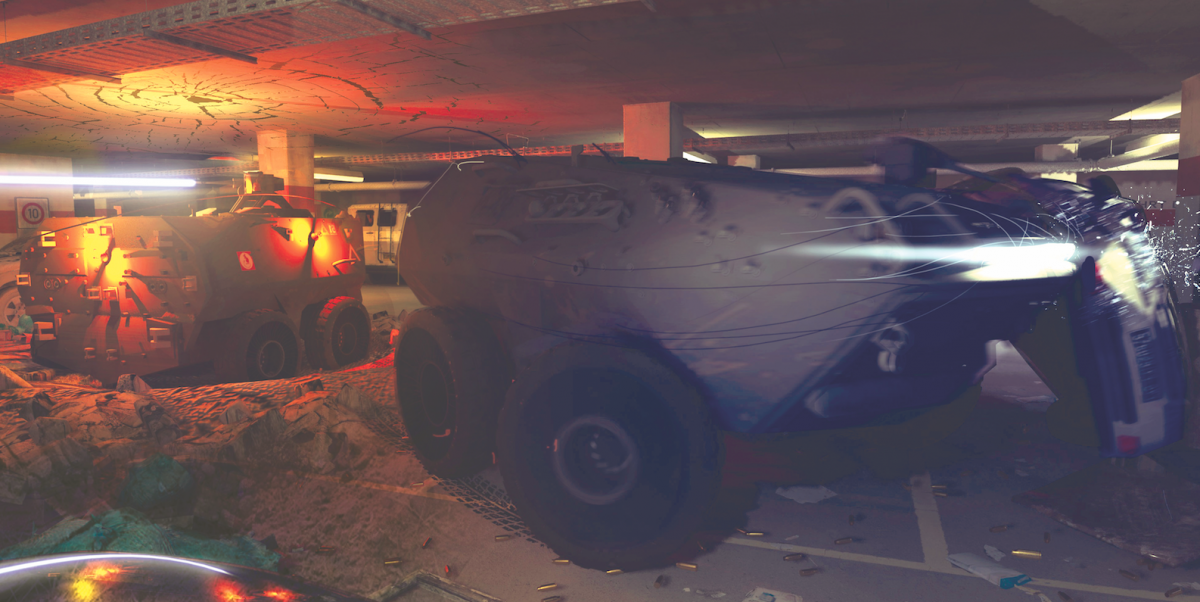 Sticky’s seat began vibrating, a resonant warning from deep inside the British Commonwealth Legion high-speed fighting vehicle, a Marathon HSFV. Then the gunner felt the closing Chinese bot swarm almost in her teeth—as if the sound were coming from her and the crew, not a fast-approaching enemy. “Move, move, move!” she shouted. The closer the threat, the more her harness tightened, shielding her behind the combat couch’s blast-resistant wings. It felt as if somebody were hammering her coffin lid down while she was paralyzed but still alive. This particular fear was a well-worn track for the 24-year-old private. To suppress the panic, she angrily gloved a salvo of 30 thumb-sized diverters skyward. She quickly followed them with a pair of four-inch pulse-mortar rounds. Those would float gently down on parachutes, shorting out anything electronic within a five-meter radius until they exhausted their batteries. Her haptic suit pinched her to let her know it was overkill for the incoming threat, but it still felt right. She could answer for it when she wasn’t as worried about dying—whenever that day might come.
How Humble Leadership Really Works
Dan Cable
When you’re a leader — no matter how long you’ve been in your role or how hard the journey was to get there — you are merely overhead unless you’re bringing out the best in your employees. Unfortunately, many leaders lose sight of this. Power, as my colleague Ena Inesi has studied, can cause leaders to become overly obsessed with outcomes and control, and, therefore, treat their employees as means to an end. As I’ve discovered in my own research, this ramps up people’s fear — fear of not hitting targets, fear of losing bonuses, fear of failing — and as a consequence people stop feeling positive emotions and their drive to experiment and learn is stifled.
How Humble Leadership Really Works
Dan Cable
When you’re a leader — no matter how long you’ve been in your role or how hard the journey was to get there — you are merely overhead unless you’re bringing out the best in your employees. Unfortunately, many leaders lose sight of this. Power, as my colleague Ena Inesi has studied, can cause leaders to become overly obsessed with outcomes and control, and, therefore, treat their employees as means to an end. As I’ve discovered in my own research, this ramps up people’s fear — fear of not hitting targets, fear of losing bonuses, fear of failing — and as a consequence people stop feeling positive emotions and their drive to experiment and learn is stifled.
ML Cavanaugh on “What will make great generalship in 2030?”
BY CHARLIE DUNLAP, J.D

On April 24, 2018 my friend, US Army Major Matt Cavanaugh, delivered the remarks below to the 2018 US Army War College (USAWC) 29th Annual Strategy Conference. This year’s theme was “Strategic Leadership 2030: Transcending Challenges in a Time of Deep Change.” One of the missions of LENS is to help to build the next generation of national security leaders, and part of doing that is giving them a voice in a variety of venues, including Lawfire. I urge you to seize this opportunity to get some insights about the future of military leadership from one of the Army’s most brilliant young thinkers.Some more context: The panel on which Matt served included USAWC Professor Chuck Allen and Dr. Sarah Sewall of the Johns Hopkins School of Advanced International Studies. It was asked to address the following questions:
A Metaphor for Contemporary Warfare
Contributor: Borgard is a Commando Gunner with Conceptual, Force Development and Doctrine experience as well as training experience at the Royal Military Academy and experience as a career management. As a military practitioner considering the future of warfare, the threat, technology and our military response within a political context, it is useful to consider how war has developed and will continue to change. By reflecting upon our history, we are better informed for the future. But, to make the future comprehensible, a metaphor can be useful. War has become more complicated, more lethal, more unpredictable and is no longer a state-based activity. The military strategic balance today is nuanced, with threats and opportunities in equal measure. If you consider the rising state threat of Russia, the unpredictability of North Korea, the mass of China, the nascent nuclear capability of Iran and the unknowns of non-state threats, we may deduce that if the UK and NATO’s military outlook were a game of chess, we’d currently be in check! Hence, the next move in the global game must avoid checkmate while manoeuvring us into a position of advantage.
F-35 Brains in an F-22 Body: Thinking Through Japan's Next-Generation Fighter Options
By Robert Farley
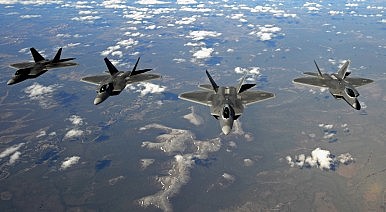 The aviation world went bonkers early this week when news emerged that Lockheed Martin has proposed offering a hybrid of the F-22 and F-35 to Japan. The fighter, which would come in addition to the purchase of at least 60 F-35s, would combine elements of the two fighters to presumably produce one of the world’s most formidable combat aircraft. Japan has previously adopted several American designs, including the F-15J and the F-2 (an outgrowth of the F-16). It sought F-22s, but could not acquire them because of the Obey Amendment, a law intended to prevent transfer of the Raptor. The future of Japan’s own stealth fighter project remains in grave doubt after news emerged last month that the country would seek external technological assistance with the program. Japan has already begun purchase of the F-35, but it wants an additional fighter to carry out interceptor duties across its airspace. The threat of incursions from China and Russia has driven this concern.