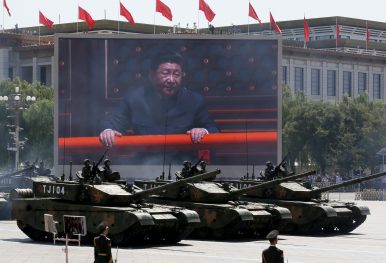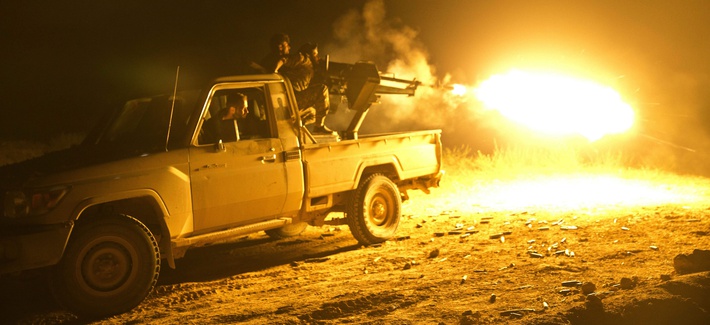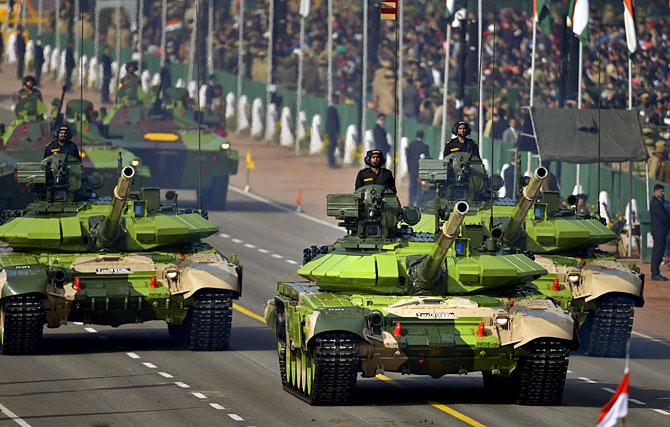
Three things have triggered this week's thought process. The wide dismay in the strategic community over the stationary defence Budget; The statement by renowned American strategic scholar Christine Fair to The Print's Srijan Shukla that the Lashkar-e-Tayiba isn't another terror organisation but a low-cost special operations unit of the Pakistani army for waging asymmetric warfare India can't match. And that India can't defeat Pakistan in a short war; The interesting findings in the book authored by the late Air Commodore Jasjit Singh, talking about how the Indian Air Force gave Israeli engineers access to its old French Mirages so they could be modified to carry the Russian R-73 air-to-air missiles. This is when their original missile, Matra-530D, had become obsolete.The Profession of Arms: A Guide for Young Army Officers
It takes courage, especially for a young officer, to check a man met on the road for not saluting properly or for slovenly appearance, but, every time he does, it adds to his stock of moral courage, and whatever the soldier may say, he has respect for the officer who does pull him up.
Read Document →The Dragon's Teeth: Assessing China's Military Modernization
PLA has focused on modernising its capabilities across all warfare domains to achieve these goals. This includes land, air, and maritime operations, nuclear, space, counter-space, electronic warfare and cyberspace operations, aiming to become a fully integrated joint force.
Read Document →Transforming the PLA: A Decade of reorganisation from SSF to ISF
PRC has engaged in a sustained and broad effort to transform the PLA from an infantry-heavy, low-technology, ground forces-centric military into a high-technology, networked force with an increasing emphasis on joint operations and naval and air power projection.
Read Document →Eyes without Borders: Exploring the World of Open Source Intelligence (OSINT) in the Digital Age
Open Source Intelligence (OSINT) is gaining prominence with the rise of social media, the digital society and the vast growth of publicly and commercially available information (PAI and CAI).
Read Document →
The PLA’s Developing Cyber Warfare Capabilities and India's Options
Informationised warfare blurs the lines between peacetime and wartime. A nation in the information age cannot wait for the hostilities to break out to collect intelligence, carryout influence operations, develop antisatellite systems or design computer software weapons.
Read Document →
Galwan and After
Why did China did this when he is under tremendous pressure in all fronts, is this China's salami slice tactics being progressed rigorously, what will be new Rules of Engagement, what will be escalatory control mechanism, who has taken this decision, will there be some pressure put by China in India's North-East through insurgency.
Read Document →
India’s Joint Doctrine for Cyberspace Operations: A Critical Review
Chief of Defence Staff (CDS) General Anil Chauhan and Secretary, Department of Military Affairs, formally released declassified versions of the Joint Doctrines for Cyberspace Operations during the Chiefs of Staff Committee meeting in New Delhi.
Read Document →
Know your Enemy General(now Field Marshal) Syed Aseem Munir
Gen SA Munir's position in the hierarchy of Pakistan was not very comfortable. The state of economy, insurgency in Pakhtoonistan and Balochistan, attack on the Jaffar Express, constant protests by supporters of Imran Khan's supporters inside and outside of parliament.
Read Document →
Decoding Operation SINDOOR: Key Aspects and Implications
Precision strikes were carried out on nine sites—four in Pakistan and five in PoK—linked to anti-India terrorist groups such as the LeT, JeM and the Hizbul Mujahideen. The targeted sites included Muridke (LeT headquarters) and Bahawalpur (JeM headquarters).
Read Document →
Chinese Cyber Exploitation in India's Power Grid - Is There a linkage to Mumbai Power Outage?
The New York Times (NYT), based on analysis by a U.S. based private intelligence firm Recorded Future, reported that a Chinese entity penetrated India’s power grid at multiple load dispatch points. Chinese malware intruded into the control systems that manage electric supply across India, along with a high-voltage transmission substation and a coal-fired power plant
Read Document →30 July 2019
Can India defeat Pakistan in war today?
Three things have triggered this week's thought process. The wide dismay in the strategic community over the stationary defence Budget; The statement by renowned American strategic scholar Christine Fair to The Print's Srijan Shukla that the Lashkar-e-Tayiba isn't another terror organisation but a low-cost special operations unit of the Pakistani army for waging asymmetric warfare India can't match. And that India can't defeat Pakistan in a short war; The interesting findings in the book authored by the late Air Commodore Jasjit Singh, talking about how the Indian Air Force gave Israeli engineers access to its old French Mirages so they could be modified to carry the Russian R-73 air-to-air missiles. This is when their original missile, Matra-530D, had become obsolete.Why India Is Mad at Trump
On Monday, early in the afternoon in Washington, D.C., and around the time most people in New Delhi were going to bed, U.S. President Donald Trump livened up a press conference with a revelation that would shake relations between the United States and India, the world’s two biggest democracies: “I was with Prime Minister [Narendra] Modi two weeks ago. He actually said, ‘Would you like to be a mediator or arbitrator?’ I said, ‘Where?’ He said, ‘Kashmir.’”What did the Pakistani prime minister’s visit with Trump achieve?
Imran Khan Mustn’t Let Trump Make Pakistan a Scapegoat
As U.S. President Donald Trump and Pakistani Prime Minister Imran Khan prepare to meet at the White House next week, U.S.-Pakistan ties hang in the balance. The U.S. agenda will clearly focus on countering terrorism. Equally important will be Pakistan’s key role in pushing the Afghan Taliban to reduce battlefield violence and engage in direct talks with the Kabul government, both of which are tough asks at this point. Beyond that, the politics of the visit will likely be boilerplate: Pakistan should do more to stabilize Afghanistan while also doing more to comply with global money laundering requirements and International Monetary Fund (IMF) benchmarks. If Trump is in a good mood, he may even invite Khan to dinner at the White House.How Pakistan Is Playing Washington—Again
This week, U.S. President Donald Trump held out extravagant hopes to Pakistani Prime Minister Imran Khan, suggesting he wanted to resume security aid, multiply bilateral trade many times over, and even try to mediate the decades-old Kashmir issue with India (claiming, falsely, that Indian Prime Minister Narendra Modi had asked him for help).How the U.S. Could Lose a War With China
If a war broke out between the United States and China, the clash between two of the world’s most powerful militaries would be horrific. And the United States could very well lose.Innovation in the New Era of Chinese Military Power
A Thucydides Fallacy: The New Model of Power Relations for Southeast Asia, the US, and China
China Outlines Space War Plans
China's strategy for developing advanced space weapons were disclosed this week in Beijing's first defense white paper issued in years.Amphibious Warfare: The Key to China's Overseas Military Ambitions
Why Unsustainable Chinese Infrastructure Deals Are a Two-Way Street
US troops return to Saudi Arabia after 16 years
US troops are returning to Saudi Arabia for the first time in 16 years as tensions with Iran rise and the kingdom finds itself increasingly isolated in Yemen.Ghani’s Missed Opportunity: The Hazara Enlightenment Movement
US Army or Islamic War College?
Iran’s threats are an attempt to negotiate
The One Percent Problem: Muslims in the West and the Rise of the New Populists
Women and the war on terror: An insider account
Terrorist definitions and designations lists
Richard Clarke is sounding the alarm about another kind of 9/11
Heatwave: Think It's Hot In Europe? The Human Body Is Already Close To Thermal Limits Elsewhere
CLIMATE CHANGE REQUIRES BIG SOLUTIONS. BUT BABY STEPS ARE THE ONLY WAY TO GO.
WHY CENTRAL BANKS NEED TO STEP UP ON GLOBAL WARMING
Where U.S. Nuclear Bombs Are Stored In Europe
Britain’s Power Play in the Persian Gulf
In calling this week for a European naval coalition to provide security for commercial ships in the vital Strait of Hormuz, the United Kingdom is seeking to both uphold the nearly moribund nuclear deal with Iran and still push back against Tehran’s seizure last week of a British-flagged tanker.Will Crypto Rogues Threaten The Geopolitical Order?
Is the Internet Making Writing Better?
Acommon refrain from writers on Twitter is that writing is hard. Often, this insight is accompanied by the rueful observation that tweeting is easy. This is, of course, the difference between informal and formal expression, between language that serves as a loose and intuitive vehicle for thought and language into which one must wrestlespeech. The first pours from political orators; the second winds around friends at a bar. But, as the linguist Gretchen McCulloch reveals in “Because Internet: Understanding the New Rules of Language,” her effervescent study of how the digital world is transfiguring English, informal writing is relatively new. Most writing used to be regulated (or self-regulated); there were postcards and diary entries, but even those had standards. It’s only with the rise of the Internet that a truly casual, willfully ephemeral prose has ascended—and become central to daily life.Why Future Jobs Will Require Data Analytics Skills
What the future holds for Cyber Command
Cyber Command’s mission and portfolio has expanded and evolved. The nature of cyberspace means the Department of Defense’s cyberwarriors are facing new challenges every day. But the future of Cyber Command, an organization whose workforce and capabilities have grown rapidly, remains uncertain.


/arc-anglerfish-arc2-prod-mco.s3.amazonaws.com/public/BHGKYWSEIJCAJMDFTESWYIQIHI.jpg)