Former Chief Economic Adviser Arvind Subramanian has said that the Indian economy is currently experiencing a “second wave” of the Twin Balance Sheet (TBS) crisis, which is behind what he terms as a “Great Slowdown”.The Profession of Arms: A Guide for Young Army Officers
It takes courage, especially for a young officer, to check a man met on the road for not saluting properly or for slovenly appearance, but, every time he does, it adds to his stock of moral courage, and whatever the soldier may say, he has respect for the officer who does pull him up.
Read Document →The Dragon's Teeth: Assessing China's Military Modernization
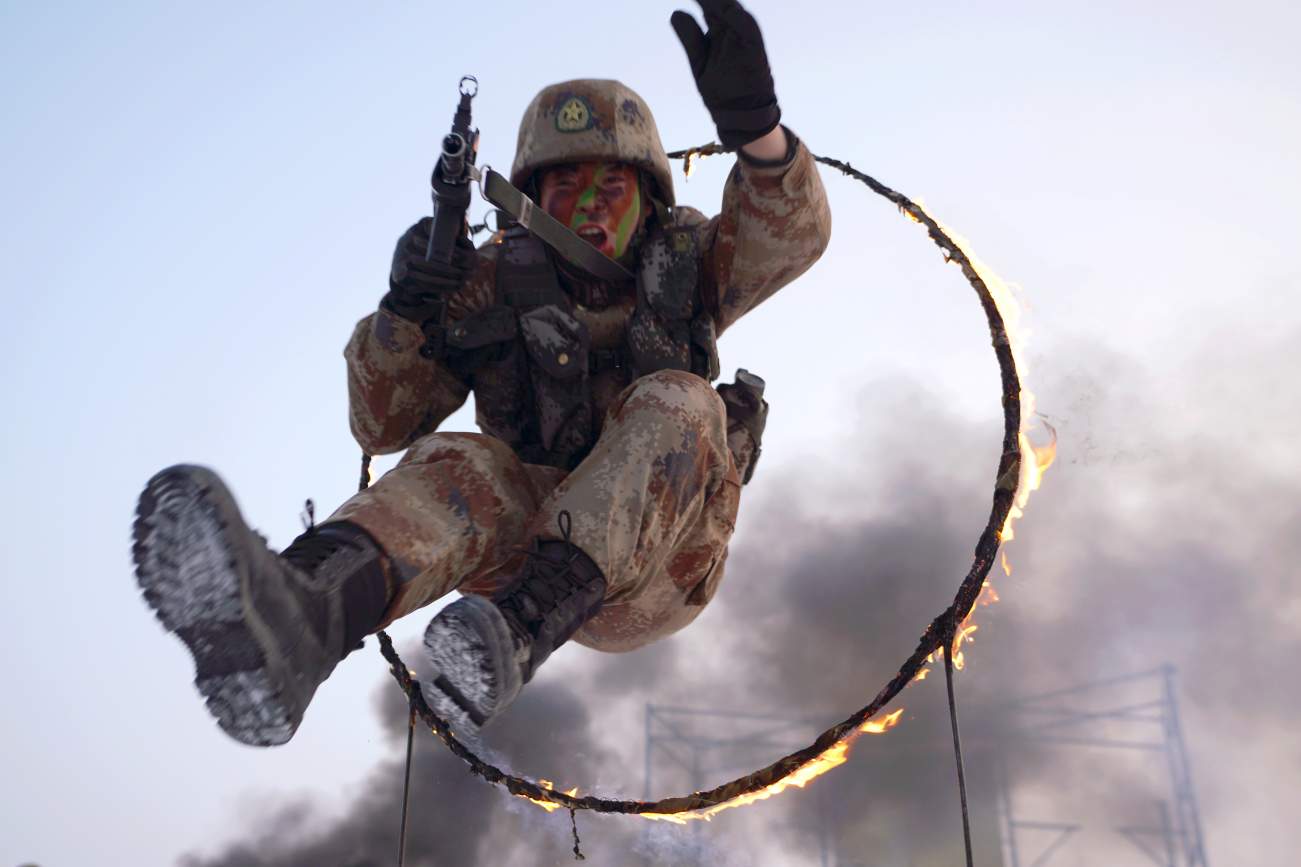
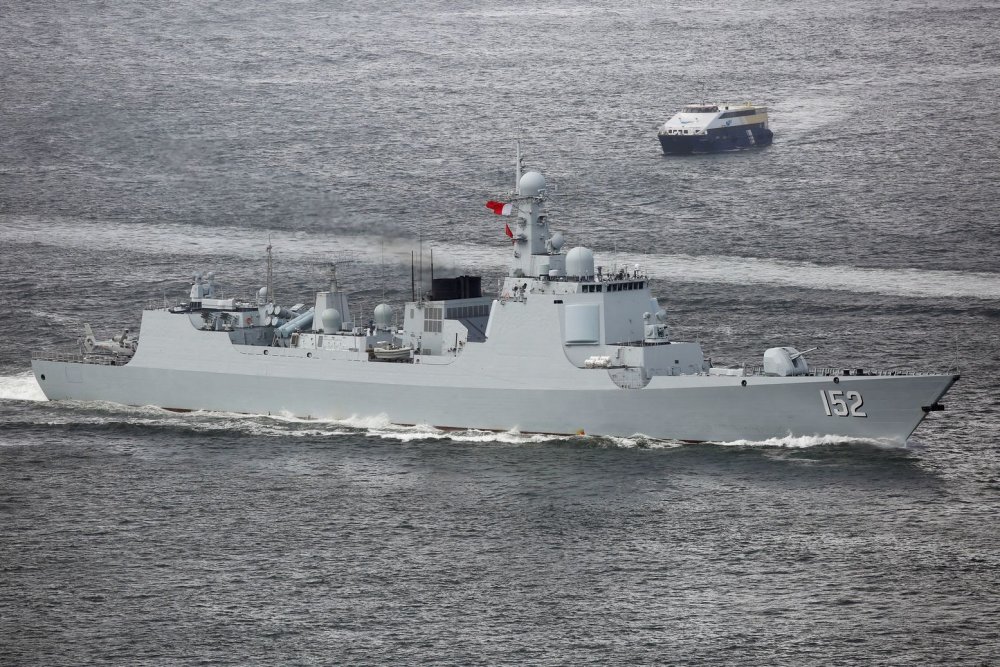
PLA has focused on modernising its capabilities across all warfare domains to achieve these goals. This includes land, air, and maritime operations, nuclear, space, counter-space, electronic warfare and cyberspace operations, aiming to become a fully integrated joint force.
Read Document →Transforming the PLA: A Decade of reorganisation from SSF to ISF
PRC has engaged in a sustained and broad effort to transform the PLA from an infantry-heavy, low-technology, ground forces-centric military into a high-technology, networked force with an increasing emphasis on joint operations and naval and air power projection.
Read Document →Eyes without Borders: Exploring the World of Open Source Intelligence (OSINT) in the Digital Age
Open Source Intelligence (OSINT) is gaining prominence with the rise of social media, the digital society and the vast growth of publicly and commercially available information (PAI and CAI).
Read Document →
The PLA’s Developing Cyber Warfare Capabilities and India's Options
Informationised warfare blurs the lines between peacetime and wartime. A nation in the information age cannot wait for the hostilities to break out to collect intelligence, carryout influence operations, develop antisatellite systems or design computer software weapons.
Read Document →
Galwan and After
Why did China did this when he is under tremendous pressure in all fronts, is this China's salami slice tactics being progressed rigorously, what will be new Rules of Engagement, what will be escalatory control mechanism, who has taken this decision, will there be some pressure put by China in India's North-East through insurgency.
Read Document →
India’s Joint Doctrine for Cyberspace Operations: A Critical Review
Chief of Defence Staff (CDS) General Anil Chauhan and Secretary, Department of Military Affairs, formally released declassified versions of the Joint Doctrines for Cyberspace Operations during the Chiefs of Staff Committee meeting in New Delhi.
Read Document →
Know your Enemy General(now Field Marshal) Syed Aseem Munir
Gen SA Munir's position in the hierarchy of Pakistan was not very comfortable. The state of economy, insurgency in Pakhtoonistan and Balochistan, attack on the Jaffar Express, constant protests by supporters of Imran Khan's supporters inside and outside of parliament.
Read Document →
Decoding Operation SINDOOR: Key Aspects and Implications
Precision strikes were carried out on nine sites—four in Pakistan and five in PoK—linked to anti-India terrorist groups such as the LeT, JeM and the Hizbul Mujahideen. The targeted sites included Muridke (LeT headquarters) and Bahawalpur (JeM headquarters).
Read Document →
Chinese Cyber Exploitation in India's Power Grid - Is There a linkage to Mumbai Power Outage?
The New York Times (NYT), based on analysis by a U.S. based private intelligence firm Recorded Future, reported that a Chinese entity penetrated India’s power grid at multiple load dispatch points. Chinese malware intruded into the control systems that manage electric supply across India, along with a high-voltage transmission substation and a coal-fired power plant
Read Document →17 December 2019
‘It’s India’s Great Slowdown, economy seems headed for ICU’: Arvind Subramanian
Former Chief Economic Adviser Arvind Subramanian has said that the Indian economy is currently experiencing a “second wave” of the Twin Balance Sheet (TBS) crisis, which is behind what he terms as a “Great Slowdown”.China grips Sri Lanka with artificial island off Colombo
No, China Is Not as Strong as It Seems
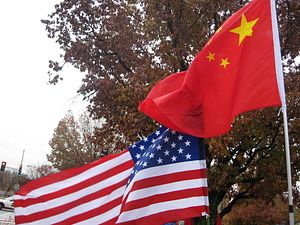
The Americans Are Coming? Washington’s China Pushback and Its Uncertainties
The hi-tech war between China and the United States
How a War with China over Taiwan Might Unfold
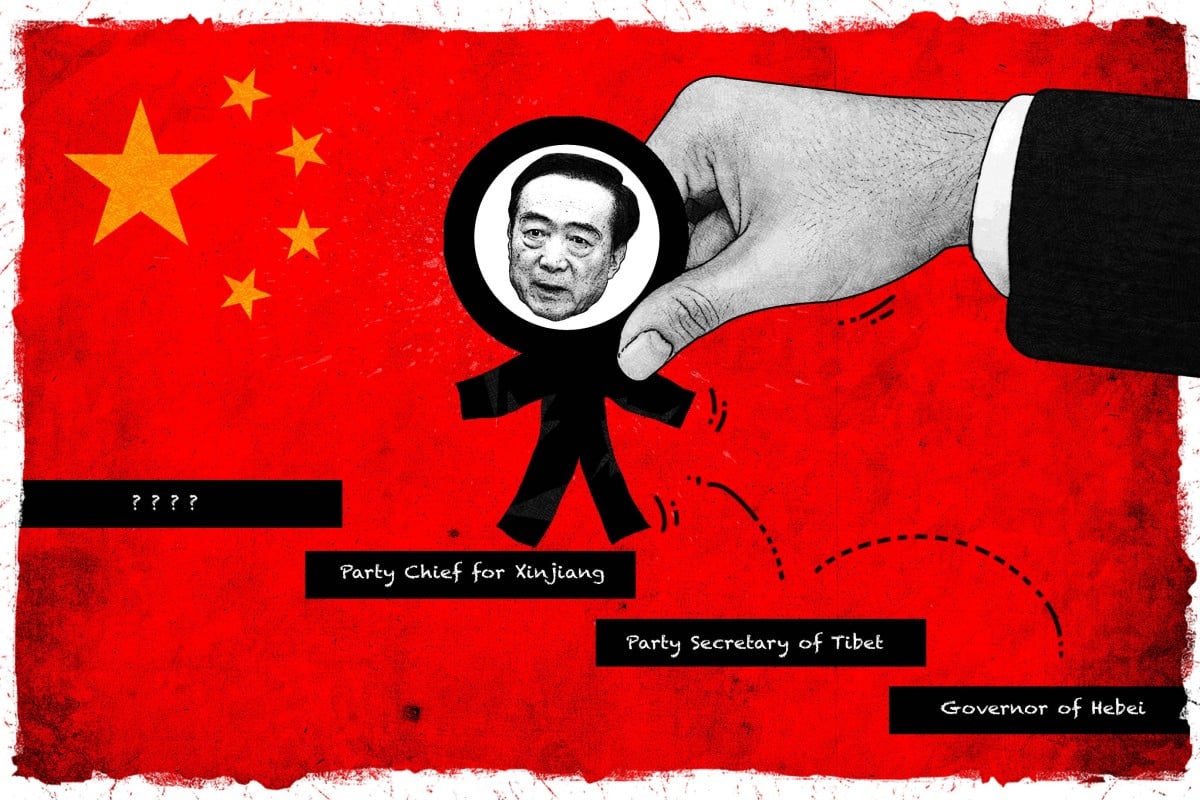
From Tibet to Xinjiang, Beijing’s man for restive regions Chen Quanguo is the prime target of US sanctions
Why China Is Weaning Itself Off American Technology
Editor’s Note: Every Wednesday, WPR Newsletter and Engagement Editor Benjamin Wilhelm curates the week’s top news and expert analysis on China.The Americans Are Coming? Washington’s China Pushback and Its Uncertainties
Is China Planning To Incite A "People's War" To Dominate The South China Sea?
Likely Israeli Cyber Attack Compromises 15-Million Iranian Bank Accounts
This Is How Terrible a War with Iran Could Get
Oil tankers have burned on the Persian Gulf, allegedly victims of Iranian attack. An American drone was shot down over Yemen by rebel forces who reportedly have enjoyed some measure of Iranian support. And now Iran is threatening to exceed hard limits placed on its nuclear program. What can we learn from the escalating Israeli raids in Syria?
Why the US should increase cyber pressure against North Korea
A new report offers several recommendations, including cyber and influence campaigns, for maintaining and even ratcheting up pressure on the North Korean regime.The shifting energy landscape and the Gulf economies’ diversification challenge
The Popular Backlash Against Migration Is Making a Global Problem Worse
The Next Nuclear Plants Will Be Small, Svelte, and Safer
For the last 20 years, the future of nuclear power has stood in a high bay laboratory tucked away on the Oregon State University campus in the western part of the state. Operated by NuScale Power, an Oregon-based energy startup, this prototype reactor represents a new chapter in the conflict-ridden, politically bedeviled saga of nuclear power plants.Why the U.S. Needs a Seat at the Table in Talks to End the War in Eastern Ukraine
What will Boris Johnson's majority mean for Brexit?
Why Did the Pentagon Accidentally Release Its Nuclear Doctrine?
The U.S. Joint Chiefs of Staff in mid-June 2019 briefly published the Pentagon’s official doctrine on the use of nuclear weapons. The joint chiefs quickly pulled the document -- Joint Publication 3-72, Nuclear Operations -- from the public website.Artificial Intelligence Isn’t an Arms Race
At the last Democratic presidential debate, the technologist candidate Andrew Yang emphatically declared that “we’re in the process of potentially losing the AI arms race to China right now.” As evidence, he cited Beijing’s access to vast amounts of data and its substantial investment in research and development for artificial intelligence. Yang and others—most notably the National Security Commission on Artificial Intelligence, which released its interim report to Congress last month—are right about China’s current strengths in developing AI and the serious concerns this should raise in the United States. But framing advances in the field as an “arms race” is both wrong and counterproductive. Instead, while being clear-eyed about China’s aggressive pursuit of AI for military use and human rights-abusing technological surveillance, the United States and China must find their way to dialogue and cooperation on AI. A practical, nuanced mix of competition and cooperation would better serve U.S. interests than an arms race approach.Stanford University finds that AI is outpacing Moore’s Law
Documentary Of The Week: Liberalism, Nationalism And Realism
Artificial Intelligence Isn’t an Arms Race
At the last Democratic presidential debate, the technologist candidate Andrew Yang emphatically declared that “we’re in the process of potentially losing the AI arms race to China right now.” As evidence, he cited Beijing’s access to vast amounts of data and its substantial investment in research and development for artificial intelligence. Yang and others—most notably the National Security Commission on Artificial Intelligence, which released its interim report to Congress last month—are right about China’s current strengths in developing AI and the serious concerns this should raise in the United States. But framing advances in the field as an “arms race” is both wrong and counterproductive. Instead, while being clear-eyed about China’s aggressive pursuit of AI for military use and human rights-abusing technological surveillance, the United States and China must find their way to dialogue and cooperation on AI. A practical, nuanced mix of competition and cooperation would better serve U.S. interests than an arms race approach.Revolt! Scientists Say They're Sick of Quantum Computing's Hype
Public opinion lessons for AI regulation
Artificial Intelligence Isn’t an Arms Race
At the last Democratic presidential debate, the technologist candidate Andrew Yang emphatically declared that “we’re in the process of potentially losing the AI arms race to China right now.” As evidence, he cited Beijing’s access to vast amounts of data and its substantial investment in research and development for artificial intelligence. Yang and others—most notably the National Security Commission on Artificial Intelligence, which released its interim report to Congress last month—are right about China’s current strengths in developing AI and the serious concerns this should raise in the United States. But framing advances in the field as an “arms race” is both wrong and counterproductive. Instead, while being clear-eyed about China’s aggressive pursuit of AI for military use and human rights-abusing technological surveillance, the United States and China must find their way to dialogue and cooperation on AI. A practical, nuanced mix of competition and cooperation would better serve U.S. interests than an arms race approach.US Military Needs Better Data On Itself To Exploit AI
Are We Ready For The First Patent Filed By Artificial Intelligence?
DEFENCE-IN-DEPTH
While much public discussion of Artificial Intelligence (AI) is focused on Terminator-like killing machines, the official UK position is that there will always be a person in (or at least on – monitoring and able to intervene) the loop making any life-or-death decisions. Unfortunately, this rather ignores defensive uses of AI in many integrated systems where any human operator monitoring and intervening in a system would render that system too slow to be effective – there is no point in having human response times involved in near-light speed processes. This means that autonomy is likely to creep in through defensive systems, whatever the stated position of any government. And since there’s no hard and fast definition of a defensive weapon, and a powerful incentive not to be left behind, the spread of autonomous systems is most unlikely to stop there.