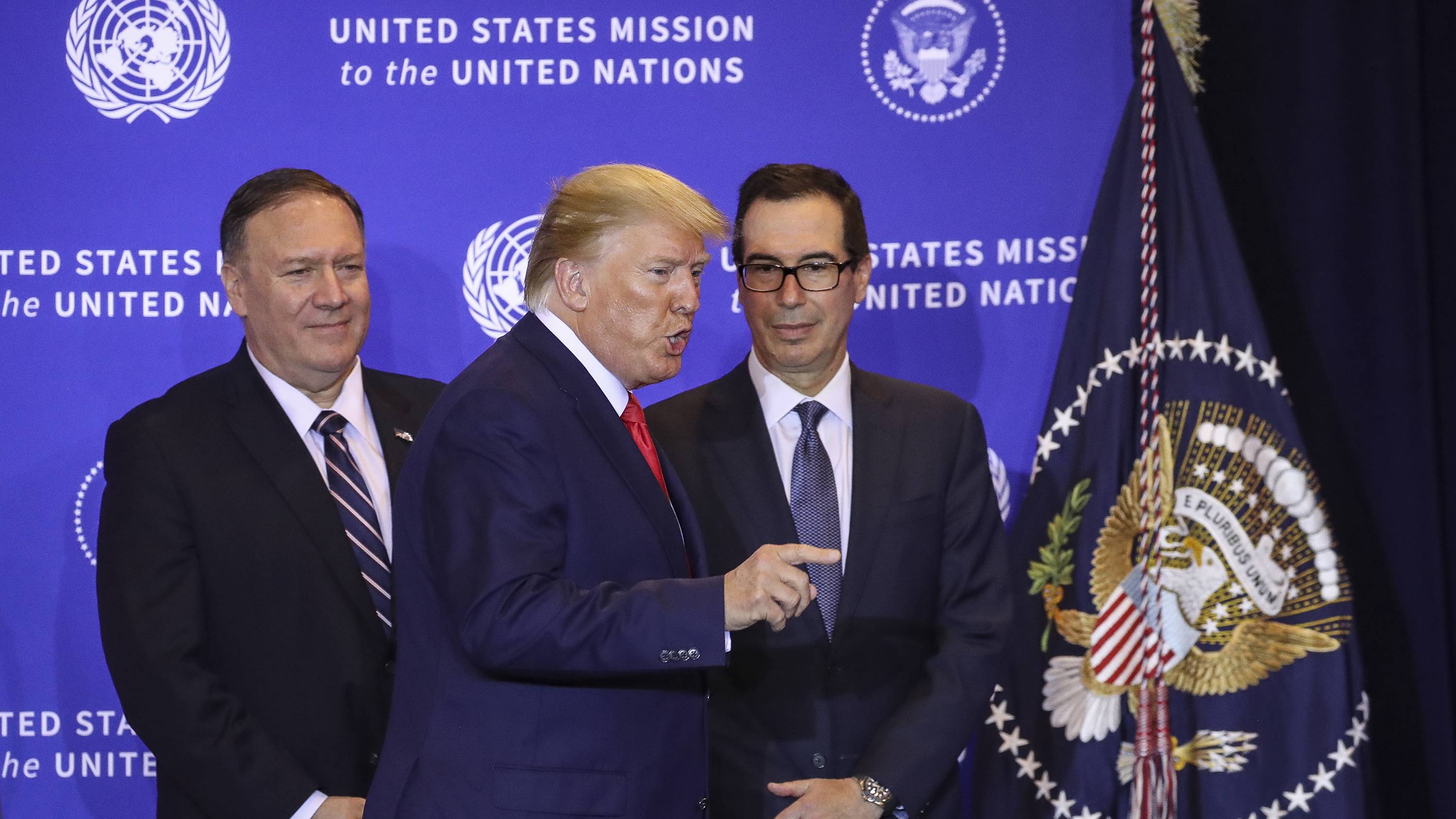
Increasingly, nothing seems to agitate the Indian strategic imagination more than the U.S.-Australia-Japan-India “quad.” Every mention of the moniker – and especially by U.S. government officials – is analyzed and, on occasion, amplified by the Indian social as well as traditional media. So, when the South China Morning Post covered a conversation between U.S. Deputy Secretary of State Stephen Biegun and former Ambassador to India Richard Verma yesterday that dwelt on the quad as well as lack of strong multilateral institutions in Asia – like NATO or the EU — many here took notice. As Tanvi Madan noted, a speech that mentions both NATO and the quad was bound to generate strong reactions.The Profession of Arms: A Guide for Young Army Officers
It takes courage, especially for a young officer, to check a man met on the road for not saluting properly or for slovenly appearance, but, every time he does, it adds to his stock of moral courage, and whatever the soldier may say, he has respect for the officer who does pull him up.
Read Document →The Dragon's Teeth: Assessing China's Military Modernization
PLA has focused on modernising its capabilities across all warfare domains to achieve these goals. This includes land, air, and maritime operations, nuclear, space, counter-space, electronic warfare and cyberspace operations, aiming to become a fully integrated joint force.
Read Document →Transforming the PLA: A Decade of reorganisation from SSF to ISF
PRC has engaged in a sustained and broad effort to transform the PLA from an infantry-heavy, low-technology, ground forces-centric military into a high-technology, networked force with an increasing emphasis on joint operations and naval and air power projection.
Read Document →Eyes without Borders: Exploring the World of Open Source Intelligence (OSINT) in the Digital Age
Open Source Intelligence (OSINT) is gaining prominence with the rise of social media, the digital society and the vast growth of publicly and commercially available information (PAI and CAI).
Read Document →
The PLA’s Developing Cyber Warfare Capabilities and India's Options
Informationised warfare blurs the lines between peacetime and wartime. A nation in the information age cannot wait for the hostilities to break out to collect intelligence, carryout influence operations, develop antisatellite systems or design computer software weapons.
Read Document →
Galwan and After
Why did China did this when he is under tremendous pressure in all fronts, is this China's salami slice tactics being progressed rigorously, what will be new Rules of Engagement, what will be escalatory control mechanism, who has taken this decision, will there be some pressure put by China in India's North-East through insurgency.
Read Document →
India’s Joint Doctrine for Cyberspace Operations: A Critical Review
Chief of Defence Staff (CDS) General Anil Chauhan and Secretary, Department of Military Affairs, formally released declassified versions of the Joint Doctrines for Cyberspace Operations during the Chiefs of Staff Committee meeting in New Delhi.
Read Document →
Know your Enemy General(now Field Marshal) Syed Aseem Munir
Gen SA Munir's position in the hierarchy of Pakistan was not very comfortable. The state of economy, insurgency in Pakhtoonistan and Balochistan, attack on the Jaffar Express, constant protests by supporters of Imran Khan's supporters inside and outside of parliament.
Read Document →
Decoding Operation SINDOOR: Key Aspects and Implications
Precision strikes were carried out on nine sites—four in Pakistan and five in PoK—linked to anti-India terrorist groups such as the LeT, JeM and the Hizbul Mujahideen. The targeted sites included Muridke (LeT headquarters) and Bahawalpur (JeM headquarters).
Read Document →
Chinese Cyber Exploitation in India's Power Grid - Is There a linkage to Mumbai Power Outage?
The New York Times (NYT), based on analysis by a U.S. based private intelligence firm Recorded Future, reported that a Chinese entity penetrated India’s power grid at multiple load dispatch points. Chinese malware intruded into the control systems that manage electric supply across India, along with a high-voltage transmission substation and a coal-fired power plant
Read Document →6 September 2020
Are the US and India on the Same Page When It Comes to the Quad?
Increasingly, nothing seems to agitate the Indian strategic imagination more than the U.S.-Australia-Japan-India “quad.” Every mention of the moniker – and especially by U.S. government officials – is analyzed and, on occasion, amplified by the Indian social as well as traditional media. So, when the South China Morning Post covered a conversation between U.S. Deputy Secretary of State Stephen Biegun and former Ambassador to India Richard Verma yesterday that dwelt on the quad as well as lack of strong multilateral institutions in Asia – like NATO or the EU — many here took notice. As Tanvi Madan noted, a speech that mentions both NATO and the quad was bound to generate strong reactions.China’s military deceit in the Himalayas could spell disaster for the region
The Taliban is Like the Khmer Rouge. Diplomacy Simply Won’t Cut It.
China’s Insurgency Card in India’s Northeast Is Overhyped
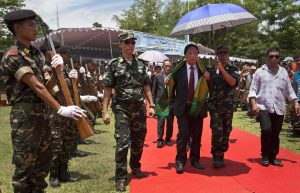
General Secretary of the NSCN (IM) Thuingaleng Muivah leaves at the end of a funeral service for Chairman Isak Chishi Swu at their headquarters in Hebron, Nagaland, India, Breaking Down the Pentagon's 2020 China Military Power Report: A Quest for PLA Parity?
Semi-Submersible Heavy Lift Vessels: A New “Maritime Relay Platform” for PLA Cross-Strait Operations?
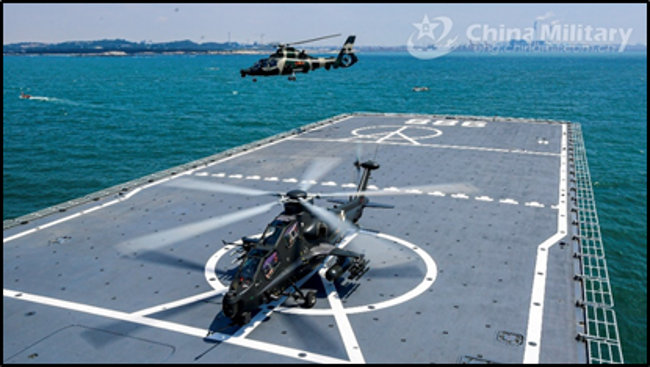
Image: A Z-9 multi-mission helicopter (background) and a WZ-10 attack helicopter (foreground), part of an unidentified aviation brigade subordinate to the PLA 73rd Group Army, conduct landing drills on the flight deck of the PLA Navy amphibious transport dock Yimengshan. The training was held in “an undisclosed sea area” on August 3. (Image source: PRC Ministry of Defense, August 12)The Strategic Implications of Chinese UAVs: Insights from the Libyan Conflict
What war with China could look like
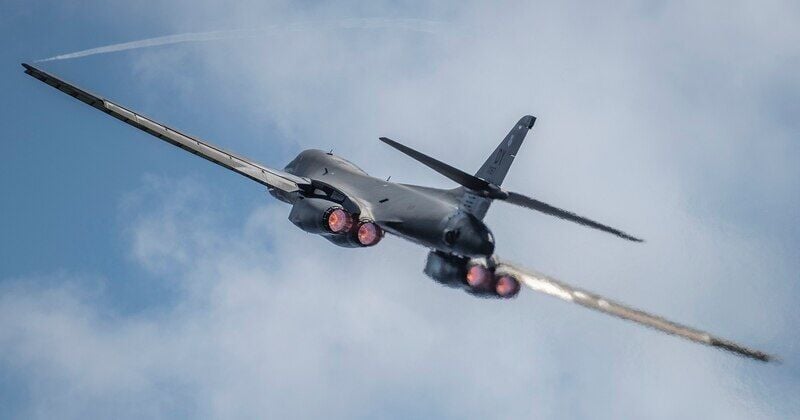
An Air Force B-1B Lancer with the 9th Expeditionary Bomb Squadron takes off at Andersen Air Force Base, Guam, May 8. It was one of two B-1s conducting a training mission over the South China Sea in support of strategic deterrence in the Indo-Pacific region.Senior Airman River Bruce, Air ForceU.S. and China Should Seek a Truce in Tech Cold War
‘I Don’t Believe China’ Is Serious About Nuke No First Use: DASD Nukes Soofer
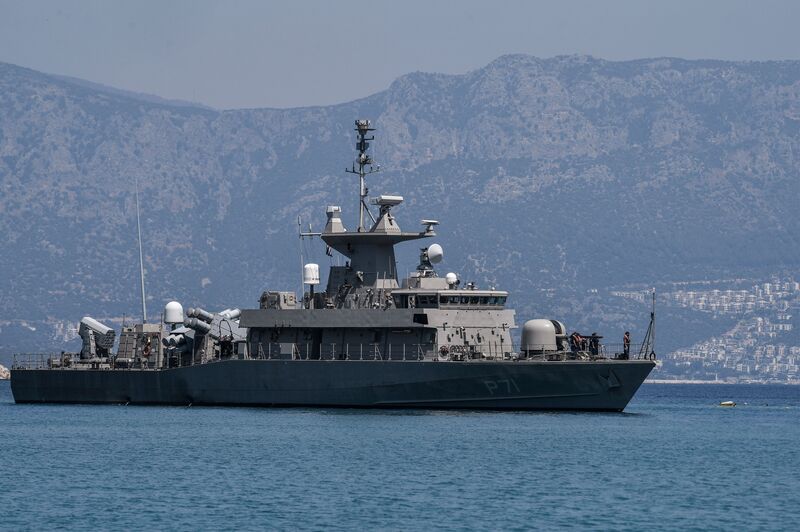
WASHINGTON: In the latest swipe in an increasingly contentious back and forth between Washington and Beijing over nuclear weapons, a senior DoD official said today: “I don’t believe China when they say they have no first use policy” for their nuclear weapons. Most Dangerous Waters in the World Are in the Mediterranean
James Stavridis is a Bloomberg Opinion columnist. He is a retired U.S. Navy admiral and former supreme allied commander of NATO, and dean emeritus of the Fletcher School of Law and Diplomacy at Tufts University. He is also an operating executive consultant at the Carlyle Group and chairs the board of counselors at McLarty Associates.Lebanon Is Paralyzed by Fear of Another Civil War
A protester wearing a scarf of the Shiite movement Hezbollah chants slogans while being flanked by Lebanese police during an anti-US demonstration near the United States' Embassy headquarters in Awkar, northeast of the capital Beirut on July 10, 2020.Europeanising ideologies: Understanding the EU’s complex relationship with ‘isms’
Is Trump a Turning Point in World Politics?
Will Donald Trump’s presidency mark a major turning point in world history, or was it a minor historical accident? Trump's electoral appeal may turn on domestic politics, but his effect on world politics could be transformational, particularly if he gains a second term.The Uncertainty Pandemic
DUELING WITH DRAGONS AND SPARRING WITH SNAKES: US STRATEGY IN AN ERA OF VARIED THREATS
What do bicycles, Syrian refuges, synthetic opioid fentanyl, hotel acquisitions, Android phones, Djiboutian ports, fishing boats, and African coups have to do with each other? They are all elements of how opponents of the United States and its Western allies have learned and adapted since the Soviet Union collapsed and the era of American unipolarity began. This is the subject of David Kilcullen’s latest book, The Dragons and the Snakes: How the Rest Learned to Fight the West. The book’s title plays on former CIA Director James Woosley’s 1993 warning to Congress about the post–Cold War challenges ahead: “We have slain a large dragon. But we live now in a jungle filled with a bewildering variety of poisonous snakes.” Kilcullen describes today’s strategic environment as one in which America and its allies face the emergence of dragons, large (China and Russia) and small (North Korea and Iran), while at the same time must continue to deal with the threat of terrorism and Woosley’s other snakes.Covid-19 has shown the world is not prepared for potential bioweapons
After Disruption: Historical Perspectives on the Future of International Order
The Developing World Could Come Out of the Pandemic Ahead
Although the virus has spread through the entire world, its effects—both on physical and economic health—have been better managed in some developing countries than in their richer counterparts. In the United Kingdom, the official death toll at the beginning of September is 40,000, whereas Bangladesh’s official count stands around 4,000, despite having over twice the U.K.’s population. And while the British economy is expected to contract by around 9 percent in 2020, Bangladesh’s GDP may fall by around 2 percent. At the same time, developing countries may also find the post-pandemic world more hospitable to their continued rise, as the global economy becomes more digitized, more multipolar, and more fluid.Op-Ed: An end to ‘endless wars’? Don’t believe it
The COVID-19 Pandemic Puts the Spotlight on Global Health Governance
The novel coronavirus caught many world leaders unprepared, despite consistent warnings that a global pandemic was inevitable. And it has revealed the flaws in a global health architecture headed by the World Health Organization, which had already been faulted for its response to the 2014 Ebola pandemic in West Africa. Will there be an overhaul of the WHO when the pandemic is over?