Because New Delhi must compensate for its military imbalance against China, it will strengthen its defense partnership with the United States despite issues of contention such as India's reliance on Iranian oil and Russian arms. If New Delhi continues to deepen its defense partnership with the United States, it will need to reassess its adherence to strategic autonomy, possibly leading to a fundamental shift in the conduct of India's foreign policy.The Profession of Arms: A Guide for Young Army Officers
It takes courage, especially for a young officer, to check a man met on the road for not saluting properly or for slovenly appearance, but, every time he does, it adds to his stock of moral courage, and whatever the soldier may say, he has respect for the officer who does pull him up.
Read Document →The Dragon's Teeth: Assessing China's Military Modernization
PLA has focused on modernising its capabilities across all warfare domains to achieve these goals. This includes land, air, and maritime operations, nuclear, space, counter-space, electronic warfare and cyberspace operations, aiming to become a fully integrated joint force.
Read Document →Transforming the PLA: A Decade of reorganisation from SSF to ISF
PRC has engaged in a sustained and broad effort to transform the PLA from an infantry-heavy, low-technology, ground forces-centric military into a high-technology, networked force with an increasing emphasis on joint operations and naval and air power projection.
Read Document →Eyes without Borders: Exploring the World of Open Source Intelligence (OSINT) in the Digital Age
Open Source Intelligence (OSINT) is gaining prominence with the rise of social media, the digital society and the vast growth of publicly and commercially available information (PAI and CAI).
Read Document →
The PLA’s Developing Cyber Warfare Capabilities and India's Options
Informationised warfare blurs the lines between peacetime and wartime. A nation in the information age cannot wait for the hostilities to break out to collect intelligence, carryout influence operations, develop antisatellite systems or design computer software weapons.
Read Document →
Galwan and After
Why did China did this when he is under tremendous pressure in all fronts, is this China's salami slice tactics being progressed rigorously, what will be new Rules of Engagement, what will be escalatory control mechanism, who has taken this decision, will there be some pressure put by China in India's North-East through insurgency.
Read Document →
India’s Joint Doctrine for Cyberspace Operations: A Critical Review
Chief of Defence Staff (CDS) General Anil Chauhan and Secretary, Department of Military Affairs, formally released declassified versions of the Joint Doctrines for Cyberspace Operations during the Chiefs of Staff Committee meeting in New Delhi.
Read Document →
Know your Enemy General(now Field Marshal) Syed Aseem Munir
Gen SA Munir's position in the hierarchy of Pakistan was not very comfortable. The state of economy, insurgency in Pakhtoonistan and Balochistan, attack on the Jaffar Express, constant protests by supporters of Imran Khan's supporters inside and outside of parliament.
Read Document →
Decoding Operation SINDOOR: Key Aspects and Implications
Precision strikes were carried out on nine sites—four in Pakistan and five in PoK—linked to anti-India terrorist groups such as the LeT, JeM and the Hizbul Mujahideen. The targeted sites included Muridke (LeT headquarters) and Bahawalpur (JeM headquarters).
Read Document →
Chinese Cyber Exploitation in India's Power Grid - Is There a linkage to Mumbai Power Outage?
The New York Times (NYT), based on analysis by a U.S. based private intelligence firm Recorded Future, reported that a Chinese entity penetrated India’s power grid at multiple load dispatch points. Chinese malware intruded into the control systems that manage electric supply across India, along with a high-voltage transmission substation and a coal-fired power plant
Read Document →11 September 2018
India Inches Closer to the U.S.
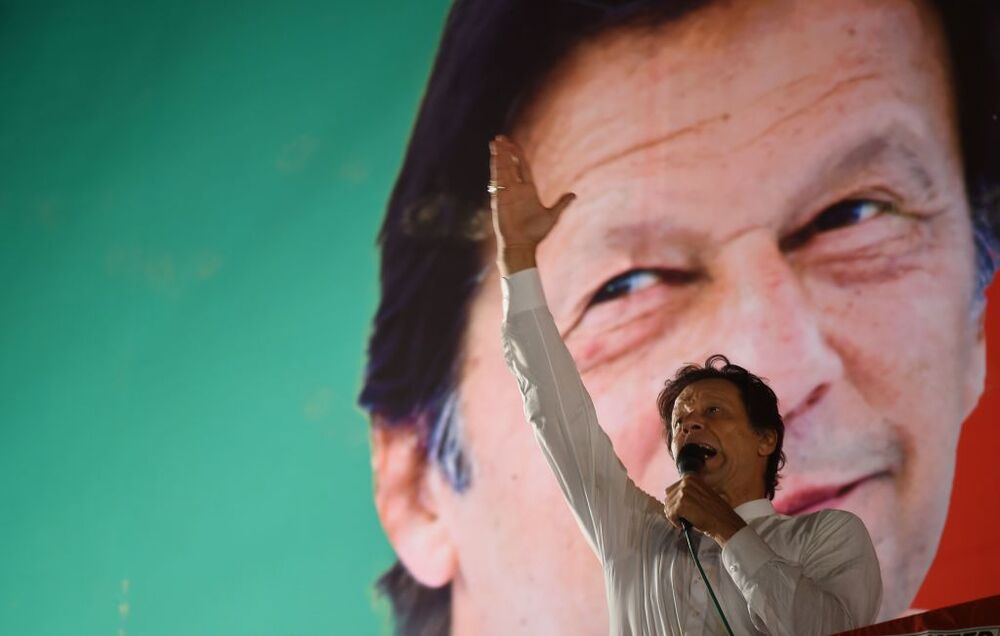
Because New Delhi must compensate for its military imbalance against China, it will strengthen its defense partnership with the United States despite issues of contention such as India's reliance on Iranian oil and Russian arms. If New Delhi continues to deepen its defense partnership with the United States, it will need to reassess its adherence to strategic autonomy, possibly leading to a fundamental shift in the conduct of India's foreign policy.Imran Khan's Party Asks Minority Pakistan Economist to Quit
Pakistan’s government asked an economist from a persecuted and minority Muslim sect to step down from an adviser role days after it defended his appointment in the face of criticism from a hard-line Islamist party. Atif Mian, a professor at Princeton University, was asked to resign from the 18-member Economic Advisory Council, Pakistan Senator Faisal Javed Khan, a member of Imran Khan’s ruling Movement for Justice party, said Friday on Twitter. A replacement will be announced later, he said. “For the sake of the stability of the government of Pakistan, I have resigned from the Economic Advisory Council, as the government was facing a lot of adverse pressure regarding my appointment from the Mullahs (Muslim clerics) and their supporters,” Mian said on Twitter.Nepal: PM Oli Continues to Disappoint:
Xi Jinping and China-North Korea Relations
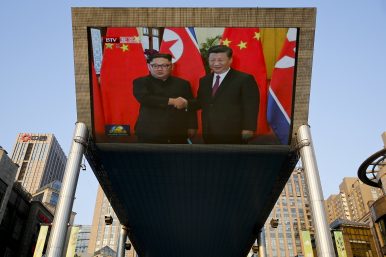
In the Chinese Communist Party (CCP), tension has always existed between principles of collective leadership and the tendency toward personality cult. As we observe an important Chinese delegation in Pyongyang during the Democratic People’s Republic of Korea’s (DRPK) 70th anniversary, Xi Jinping may be absent, but it is his personal imprint on China’s foreign affairs that bears watching. How deep does his control of the CCP run, how much trust does he place in his colleagues, and why might these things matter for his North Korean counterparts?China’s Gig Economy is Driving Close to the Edge
In the 1980s, free-marketeers, wielding pagers and zipping around the streets of China’s biggest cities in minibuses, boldly navigated the emergent gray zones of a novel economic frontier of “reform and opening.” In the 1990s and into the new millennium, a flood of migrant workers, braving semi-legal status and the contempt of city dwellers, left their provincial homes and poured into urban factories, becoming the human engine driving China’s continued growth. Now, in 2018, it is the millions of truck drivers, food delivery couriers, livestreamers, and freelancers—many still migrants—piecing together their livelihoods in China’s booming gig economy who are on the cutting edge of the country’s economic growth. Like their predecessors, these new economic pioneers highlight the tensions between engineering and sustaining growth in the world’s second-largest economy and maintaining ideological and political control over 1.4 billion people. Those tensions are manifesting in strikes and protests across the country, led by workers fed up with being at the bottom of the pile.The South China Sea Dispute Takes On New Urgency
Qatar, the ‘Israel Lobby,’ and the Secret List of 250 with Influence
A decade after the global financial crisis: What has (and hasn’t) changed?
RUSSIAN OPERATIONAL ART, NEW TYPE WARFARE, AND REFLEXIVE CONTROL
Russia’s Private Military Companies in Ukraine Are an Opportunity for Kiev
America Is Committing War Crimes and Doesn’t Even Know Why
By any reasonable assessment, the U.S. government should have stopped providing direct military support to the Saudi Arabia-led air campaign in Yemen on the day after it started. Washington’s participation began on March 26, 2015, when a White House spokesperson announced, “President Obama has authorized the provision of logistical and intelligence support to [Gulf Cooperation Council]-led military operations.” On March 26, toward the end of a Senate Armed Services Committee hearing, Sen. Kirsten Gillibrand (D-N.Y.) asked U.S. Central Command commander Gen. Lloyd Austin what the ultimate goal of the GCC air campaign in Yemen was, and for the general to estimate its likelihood of success.America Needs the Muhammad Ali Doctrine
It’s tempting to spend all one’s time commenting on the acrid stench emanating from the Trump administration—which increasingly seems like something out of a Carl Hiaasen novel—but I’m going to resist the urge and focus on grand strategy instead. Last week, I wrote about the foreign-policy elite’s tendency to view influence as an end in itself, instead of seeing it simply as a means to accomplish some desired state of affairs. This week, I want to suggest that giving up influence and sticking somebody else with a costly burden can sometimes be the epitome of strategic wisdom.The Forgotten History of the Financial Crisis
The Greek Financial Crisis May Be Over, but Greece, and the Eurozone, Will Never Be the Same
After three consecutive bailout programs, the Greek economy is growing again. But structural problems, ranging from state bureaucracy to tax evasion, remain extant.Why Russia and China Are Expanding Their Roles in Afghanistan
The shared threat of an Islamic State affiliate in Afghanistan will drive Pakistan and Russia into a closer partnership as Moscow strengthens its leverage over the Afghan negotiations. Pakistan's national security imperatives mean it will always choose to promote a sympathetic government in Kabul, even if this choice means relations with the United States deteriorate.Trump Seems to Be Writing Off African Security, but Will It Matter to the U.S.?
Brand New Left, Same Old Problems
Amazon’s Antitrust Antagonist Has a Breakthrough Idea
DARPA, Army & Team Platypus: Big Boosts For Artificial Intelligence
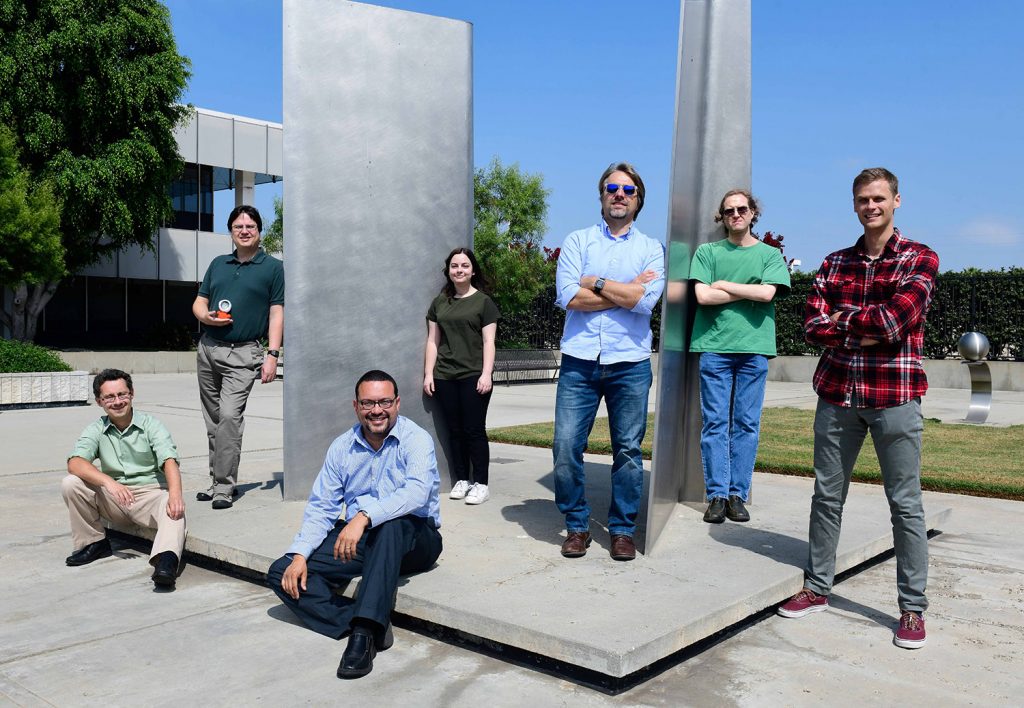
Aerospace Corporation’s “Team Platypus” won $100,000 grand prize in an Army competition to apply artificial intelligence and machine learning to electronic warfare. WASHINGTON: This afternoon, DARPA announced a five-year, $2 billion “AI Next” program to invest in artificial intelligence, with 2019 AI spending alone jumping 25 percent to $400 million. It’s all part of a big Pentagon push to compete with China. The vision is for future weapons and sensors, robots and satellites, to work together in a global “mosaic,” DARPA director Steven Walker told reporters. Rather than rely on slow-moving humans to coordinate the myriad systems, he said, you’re “building enough AI into the machines so that they can actually communicate and network (with each other) at machine speed in real time.”Artificial Intelligence – A Counterintelligence Perspective: Part II
In the first part of this series on the counterintelligence implications of artificial intelligence (AI), I discussed AI and counterintelligence at a high level and described some features of each that I think are particularly relevant to understanding the intersection between the two fields. That general discussion leads naturally to one particular counterintelligence question related to AI: How do we identify, understand and protect our most valuable AI assets? To do that, it is important to remember that AI systems operate as part of a much larger digital ecosystem. My focus here is on AI assets in general rather than particular applications of AI. Obviously, certain AI systems, such as those used in military, intelligence and critical-infrastructure settings, require special attention from a counterintelligence perspective, but I won’t focus on those specifically in this post.Senate Hearing on Social Media and Foreign Influence Operations: Progress, But There’s A Long Way to Go
Wednesday’s hearing before the Senate intelligence committee on “Foreign Influence Operations’ Use of Social Media Platforms” was, as Chairman Richard Burr called it, the “capstone” of the committee’s inquiry into Russian interference in the 2016 election. Committee members focused on what had been learned and what had changed over the course of the investigation, presaging future action in broad terms only. As a result, the hearing was much less dramatic than any of the committee’s previous three hearings on the matter—there were no stunning revelations about the extent of activity of foreign actors on the platforms, and the bulk of the day’s media coverage on the Hill focused on confirmation hearings for Judge Brett Kavanaugh’s nomination to the Supreme Court. But the lack of fireworks does not mean the hearing was not productive. It provided useful—if largely sound-bite-free—insight into how the lawmakers and tech companies are coming to grips with the new challenges that online platforms pose for democracies.We trained an algorithm to detect cancer in just two hours
Doctors across the world are beginning to rely on artificial intelligence algorithms to help accelerate diagnostics and treatment plans, with the goal of making more time to see more patients, with greater precision. We all can understand—at least conceptually—what it takes to be a doctor: years of medical school lectures attended, stacks of textbooks and journals read, countless hours of on-the-job residencies. But the way AI has learned the medical arts is less intuitive. In order to get more clarity on how algorithms learn these patterns, and what pitfalls might still lurk within the technology, Quartz partnered with Leon Chen, co-founder of medical AI startup MD.ai, and radiologist Luke Oakden-Rayner, to train two algorithms and understand how it matches with a medical professional as it learns. One detects the presence of tumorous nodules, and the second gauges the potential of it being malignant.Don’t @ me, bro: the need for social media on the battlefield
Army engineers want to use Facebook and Twitter on the front lines. Believe it and retweet it. The engineers say commanders could benefit from having a finer understanding of the social media landscape in a conflict zone. “Social media is a new channel that offers massive amounts of information,” said Reginald Hobbs, branch chief of the multilingual computing and analytics groups at the U.S. Army Research Laboratory. “In the past people would be consumers of information. Social media makes people producers of information, and the Army can leverage that.” In their search to turn social information into a tactical tool, Army scientists recently wrote a paper on “social sensing” accepted for publication by the IEEE Computer Society. Still in its infancy, the science here faces some challenges: The volume of information is vast, and it’s largely unstructured. But researchers say they are making headway.BA apologizes after 380,000 customers hit in cyber attack
SIX LEADERSHIP FALLACIES
Can the US military still innovate quickly?
WASHINGTON — In the era of great power competition, the speed at which competing militaries are capable to innovate and evolve could determine who would win in a war. In light of the need for speed, military innovation experts at the Defense News Conference tackled the question of whether the Department of Defense can still move quickly to develop new technologies and capabilities. While the conversation surrounding innovation tends to revolve around the development of new technology, other organizational changes are arguably more important for military innovation. Col. Liam Collins, director of the Modern War Institute, said that while new technologies play a role, they are not the driving force of innovation.CURB YOUR ENTHUSIASM: THE CASE FOR THE CYNICAL MILITARY LEADER
Yesterday, ML Cavanaugh offered a hearty endorsement of American generalship. He argued that “successful commanders must always travel a dark road of despair to get to the dawn that attends strategic gains. From Pershing to Petraeus, the natural optimism required for this difficult path is a large part of what has made America’s top supreme commanders effective and victorious.” He concluded that America was “better off with generals imbued with the right touch of ‘indefatigable optimism.’ Because without this trait, America would be doomed to defeat after defeat—indeed, the country likely wouldn’t even exist.”It’s Not the Size of Your Defense Budget, It’s How You Use It
At the NATO summit in Brussels that took place on July 11-12, the emphasis of discussions was once again on US President Trump’s accusations against European NATO partners that they are not spending enough of their financial resources on defense budgets. These accusations weren’t new, of course, though the persistent repetition of demands by the US administration for other NATO members to spend more on defense, and the latest demands of defense budgets being increased to 4% of GDP throughout NATO, have caused this rhetoric to also start shaping the debates on the future of defense in several European countries.France and Italy Each Go Their Own Way on Libya
The competition among European powers in Libya will continue to undermine attempts to solve the country's underlying political crises. The rise of far-right parties in Italy will force Rome to deepen its involvement in Libya as it seeks to reduce migrant flows and protect its economic interests — both of which center on western Libya. French President Emmanuel Macron's quest to reassert Paris' international role and the consequences of Libyan insecurity to France's former African colonies will oblige Paris to continue backing a strong military force in Libya through a figure such as Khalifa Hifter. Because France and Italy both view Libya as a natural sphere of influence, their conflicting goals will compound the competition over the country.Why U.N. Peacekeeping Operations Must Not Become Counterterrorism Missions
From Bosnia to Rwanda, United Nations peacekeepers have always faced tough choices that come with operating in complex, dangerous environments. Today, the climate is no less challenging. Record fatalities and injuries for U.N. personnel have increased pressure from some quarters to embolden U.N. peacekeeping operations and political missions with stronger, more aggressive mandates. But recent decisions made by the permanent members of the U.N. Security Council, such as a mandate to support a regional, non-U.N. counterterrorism unit in Mali, the G5 Sahel Joint Force, risk plunging blue helmets into the quicksand of unwinnable wars. This short-term thinking poses considerable long-term risks that could destroy U.N. peacekeeping as we know it.