The Profession of Arms: A Guide for Young Army Officers
It takes courage, especially for a young officer, to check a man met on the road for not saluting properly or for slovenly appearance, but, every time he does, it adds to his stock of moral courage, and whatever the soldier may say, he has respect for the officer who does pull him up.
Read Document →The Dragon's Teeth: Assessing China's Military Modernization
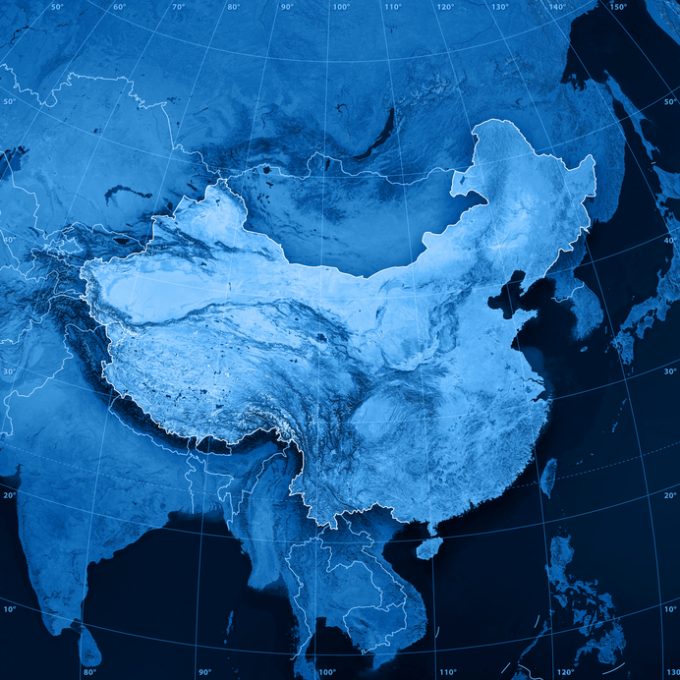
PLA has focused on modernising its capabilities across all warfare domains to achieve these goals. This includes land, air, and maritime operations, nuclear, space, counter-space, electronic warfare and cyberspace operations, aiming to become a fully integrated joint force.
Read Document →Transforming the PLA: A Decade of reorganisation from SSF to ISF
PRC has engaged in a sustained and broad effort to transform the PLA from an infantry-heavy, low-technology, ground forces-centric military into a high-technology, networked force with an increasing emphasis on joint operations and naval and air power projection.
Read Document →Eyes without Borders: Exploring the World of Open Source Intelligence (OSINT) in the Digital Age
Open Source Intelligence (OSINT) is gaining prominence with the rise of social media, the digital society and the vast growth of publicly and commercially available information (PAI and CAI).
Read Document →
The PLA’s Developing Cyber Warfare Capabilities and India's Options
Informationised warfare blurs the lines between peacetime and wartime. A nation in the information age cannot wait for the hostilities to break out to collect intelligence, carryout influence operations, develop antisatellite systems or design computer software weapons.
Read Document →
Galwan and After
Why did China did this when he is under tremendous pressure in all fronts, is this China's salami slice tactics being progressed rigorously, what will be new Rules of Engagement, what will be escalatory control mechanism, who has taken this decision, will there be some pressure put by China in India's North-East through insurgency.
Read Document →
India’s Joint Doctrine for Cyberspace Operations: A Critical Review
Chief of Defence Staff (CDS) General Anil Chauhan and Secretary, Department of Military Affairs, formally released declassified versions of the Joint Doctrines for Cyberspace Operations during the Chiefs of Staff Committee meeting in New Delhi.
Read Document →
Know your Enemy General(now Field Marshal) Syed Aseem Munir
Gen SA Munir's position in the hierarchy of Pakistan was not very comfortable. The state of economy, insurgency in Pakhtoonistan and Balochistan, attack on the Jaffar Express, constant protests by supporters of Imran Khan's supporters inside and outside of parliament.
Read Document →
Decoding Operation SINDOOR: Key Aspects and Implications
Precision strikes were carried out on nine sites—four in Pakistan and five in PoK—linked to anti-India terrorist groups such as the LeT, JeM and the Hizbul Mujahideen. The targeted sites included Muridke (LeT headquarters) and Bahawalpur (JeM headquarters).
Read Document →
Chinese Cyber Exploitation in India's Power Grid - Is There a linkage to Mumbai Power Outage?
The New York Times (NYT), based on analysis by a U.S. based private intelligence firm Recorded Future, reported that a Chinese entity penetrated India’s power grid at multiple load dispatch points. Chinese malware intruded into the control systems that manage electric supply across India, along with a high-voltage transmission substation and a coal-fired power plant
Read Document →29 June 2018
DIAGNOSING ISLAM'S DISQUIET
In Search of the Real Indo-Pacific
Global powers show renewed interest in the Indo-Pacific region, but should resist piling on with geopolitical intentions The 2018 Shangri-La Dialogue in Singapore might as well have been renamed the “Indo-Pacific Dialogue.” In the plenaries and the panels, in the Q&As, corridors, and coffee breaks, not even the imminent Trump-Kim summit hosted by Singapore could compete with the “Indo-Pacific” among the attendees. Although the toponym itself is old, its sudden popularity is new, reflecting new geopolitical aspirations for the region.Time for America to Leave Afghanistan
How China Got Sri Lanka to Cough Up a Port
HAMBANTOTA, Sri Lanka — Every time Sri Lanka’s president, Mahinda Rajapaksa, turned to his Chinese allies for loans and assistance with an ambitious port project, the answer was yes. Yes, though feasibility studies said the port wouldn’t work. Yes, though other frequent lenders like India had refused. Yes, though Sri Lanka’s debt was ballooning rapidly under Mr. Rajapaksa. Over years of construction and renegotiation with China Harbor Engineering Company, one of Beijing’s largest state-owned enterprises, the Hambantota Port Development Project distinguished itself mostly by failing, as predicted. With tens of thousands of ships passing by along one of the world’s busiest shipping lanes, the port drew only 34 ships in 2012.China's Belt and Road Initiative, Five Years In
Despite its success in the developing world, Beijing's approach to the Belt and Road Initiative has raised concerns over corrupt practices and financial sustainability in several recipient countries. Beijing's ambitious outreach, and its hidden agenda for strategic expansion riding on the initiative, ill continue to fuel skepticism, suspicions and resistance among core powers. Ultimately, given the sheer scale of the Belt and Road Initiative, snags, delays and cancellations are to be expected. Inside a Heist of American Chip Designs, as China Bids for Tech Power
Beijing’s Drive Towards Global Technological Supremacy
National security experts agree that the long-term threat China poses to U.S. national security is significant. It may be hard to see that often as the world focuses on North Korea and Iran and the immigration issue in the U.S., but last week on Capitol Hill, Senator Marco Rubio addressed the Chinese threat head on. ‘They have made very clear that their central ambition is to displace the United States as the world’s most powerful nation. And essential to that ambition is a plan that’s called Made in China 2025. The plan is to displace American manufacturing and dominate key sectors that will define the 21stcentury,’ Senator Rubio told attendees at the Capitol Hill National Security Forum, hosted by himself and his colleagues, Chairman Michael McCaul, Congressman Dutch Ruppersberger and Senator Chris Coons. CAN TRUMP BUILD A TECH WALL AROUND CHINA?
To hear one Silicon Valley investor tell it, China’s authoritarian tech culture—wherein employees work for 14 hours a day, six or seven days a week, and sometimes see their children for only minutes each day—represents the pinnacle of achievement. “If a Chinese company schedules tasks for the weekend, nobody complains about missing a Little League game or skipping a basketball outing with friends,” Michael Moritz wrote in a column in the Financial Times in January. “Little wonder it is a common sight at a Chinese company to see many people with their heads resting on their desks taking a nap.”Trump, Kissinger and the Search for a New World Order
The United States' return to aloofness, China's rise, Europe's fragmentation and the growing strategic alignment between Moscow and Beijing are all destabilizing the international system. Basing the world order on Westphalian principles is necessary to reinject enough flexibility and pragmatism into the global system amid a new, competitive era of great power politics, according to veteran diplomat Henry Kissinger. The potential for a U.S.-China understanding on the fate of the Korean Peninsula will serve as a critical testing ground for this emerging world order. An Extraordinarily Expensive Way to Fight ISIS
The tale of a 2017 bombing raid in the Libyan desert that pitted stealth bombers and 500-pound bombs against 70 ragtag fighters.Merkel's Toughest Adversary in Europe
In southern Syria, the US faces a Russia-Israel challenge
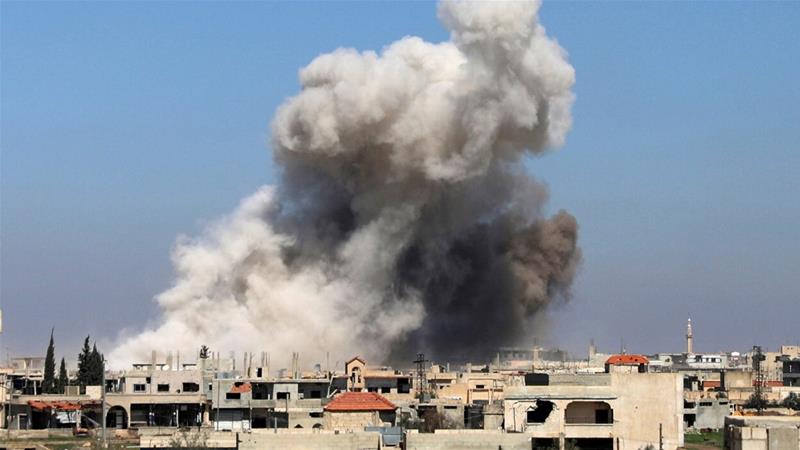
Dynamics in the southern front in Syria have reached a tipping point. Russian-Israeli coordination is taking precedence over the ceasefire agreement that US President Donald Trump and Russian President Vladimir Putin reached on the sidelines of the G20 summit last year. Iran and the United States are both facing increasing pressure in the area, while both the Syrian regime and the Syrian armed opposition are on alert over a potential clash to settle the question of who controls the southwest border areas.Wargaming Moscow’s Virtual Battlefield
The U.S. – Russia relationship is a complicated one, to say the least. While investigations into potential collusion carry the headlines in Washington, there is a fragile balancing act going on behind the scenes. Take the gas and energy market as one small example. U.S. Energy Secretary Rick Perry is due to meet today with Russia’s Energy Minister Alexander Novak at the World Gas Conference in Washington. Despite the fact that tensions between the two nations are incredibly strained, the U.S. may need Russia’s support in it’s efforts to isolate Iran from the world oil market. State of the Trade Wars
Russia’s Allies Do Not Want to Take Part in Syrian Operation
Bending the Internet: Russia Catches Up on Internet Control
After taking a hands-off approach to cyberspace in his first decade in office, Russian President Vladimir Putin has cracked down on internet use over the past few years. His administration has made it easier for authorities to suppress opposition movements online and to filter undesirable content by steadily empowering the Federal Service for the Supervision of Communications, Information Technology and Mass Media. It has also proposed the development of an alternative internet, demonstrating Russia's broader ambition to break from the traditional network model Western countries have long championed and dominated. The end of the rules-based global order
The rules-based order that had guided much of the world since World War II has broken down. It has most definitely fractured on global trade, and, after a tumultuous G-7 meeting this month, followed by an unprecedented summit meeting in Singapore, appears to be changing for global diplomacy as well. Another major fault line in the West has been immigration policy and recent political developments in Germany suggest that this may be an area that soon sees drastic change in Europe. Sceptics have long argued that the rules that have prevailed for seven decades were established by the US and its allies, and have, in a clever way, been “imposed” on all other countries through a framework of post-war institutions, and have generally been framed to benefit the educated elite. The argument goes that this imposition has alienated many countries that have been left out of the development process and many segments of society within their own countries. What we are now seeing is a “reaction” from those excluded segments. At the same time, it is open season for countries that have always nurtured nationalistic pride—such as Russia and China—to join the party.Turkey’s Warning
Rosneft in Kurdistan: A Neglected but Critical Aspect of Russian Regional Strategy
What War Games Tell Us About the Use of Cyber Weapons in a Crisis
Recent U.S. war games have shown that decision makers are surprisingly reluctant to use cyber weapons during a crisis scenario that escalates into armed conflict. Why? Last week, Jason Healey argued that “there is now a well-documented instance of cyber deterrence,” pointing to a report of conversations within the Obama administration. Some White House officials argued against a cyberattack, citing asymmetric vulnerabilities in tit for tat engagements within the cyber domain. Healey highlights a powerful example of cyber restraint within the Obama administration, but is it deterrence? The United States has also exercised restraint in the nuclear domain, but it is unclear even now whether that restraint is a result of adversary deterrence efforts or a normative nuclear taboo. So what is driving the cyber restraint Healey identified?Job Training in the Digital Age: Learning to Do, Not Think
How to protect your organization against 5 common browser security threats
How the Army is virtually prepping for real cyberattacks
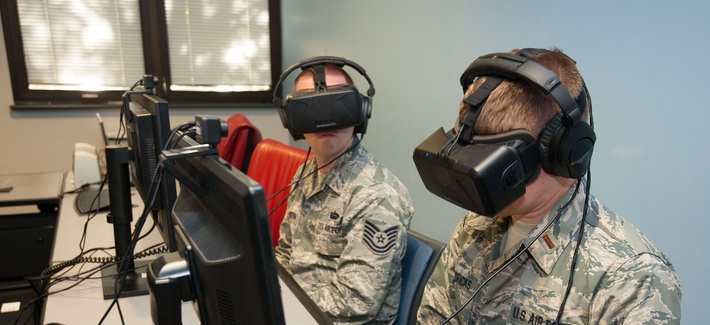
Deep in the heart of Texas, attackers closed in on banks. They swarmed hospitals. Wearing combat boots and camouflage uniforms, soldiers mounted a defense. But instead of being crouched behind buildings, the troops were hunched over keyboards. It was in this digital battlefield where Army and Air Force soldiers participated in a training exercise to defend critical infrastructure from crippling cyberattacks, a recognition that the U.S. military is fighting in a new domain. The Army Reserve Cyber Operations Group conducted the Cyber X-Games 2018 in San Antonio, Texas, bringing together 72 soldiers and contractors for the exercise. The in mid-June games focused on protecting areas like finance, public utilities and health care from attackers.DoD makes significant updates to cyber operations doctrine
The Joint Staff has updated the Department of Defense’s cornerstone cyber operations doctrine, one that reflects major changes in the cyber landscape, including the authorities and responsibilities given to the head of U.S. Cyber Command. The document is dated June 8, but it was published to DoD’s web site June 20. Joint Publication 3-12, first issued in 2013 and declassified and released to the public in 2014, defines the roles and authorities necessary for the DoD on cyber operations-related matters.Can industry help government make sense of artificial intelligence?
National security and defense officials are expressing concerns that the U.S. as a whole lacks a strategy for artificial intelligence on par with America’s competitors, so the House Armed Services Committee is engaging with key stakeholders in this space to establish an artificial intelligence commission. Rep. Elise Stefanik, R-N.Y., held a closed Emerging Threats and Capabilities Subcommittee roundtable on AI with various experts and members of industry, according to a release from the committee. Stefanik earlier this year introduced a bill (since included in the annual defense policy legislation) seeking to develop a commission to review advances in AI, identify AI needs and make recommendations to organize the federal government for threats in AI.Preventing the Global Cyberwar: Why We Need a Digital Geneva Convention
In today's cybersecurity climate, no person, company or agency has immunity. As cybercriminals obtain funding to no end and as their tools become more advanced and prevalent, we are seeing hacking move from a niche crime conducted by a small group of highly technical individuals becoming a mainstream misconduct. With cybercrime having the potential for significant global impact, we've seen governments themselves jumping in to steal intellectual property, tamper with elections or interrupt operations of public utilities, energy companies and nuclear plants. In fact, 12 percent of breaches were attributed to nation states, according to Verizon's 2018 Data Breach Investigations Report.Infographic Of The Day: A Network Map Of The World's Air Traffic Connections
What War Games Tell Us About the Use of Cyber Weapons in a Crisis
Recent U.S. war games have shown that decision makers are surprisingly reluctant to use cyber weapons during a crisis scenario that escalates into armed conflict. Why? The second battle of Libya during World War II. A British brigadier commanding tank units in Tobruk instructs officers on an operation, using a sand table for demonstration purposes. British Army/Wikimedia Balancing Authority and Responsiblity
1) Without a formal role, an extra officer joins a headquarters company and dives right in. His rank ensures he’s listened to, but his directions run counter to the rhythm of the shop. Soon the shop is in disarray.How the Army is virtually prepping for real cyberattacks
Deep in the heart of Texas, attackers closed in on banks. They swarmed hospitals. Wearing combat boots and camouflage uniforms, soldiers mounted a defense. But instead of being crouched behind buildings, the troops were hunched over keyboards. It was in this digital battlefield where Army and Air Force soldiers participated in a training exercise to defend critical infrastructure from crippling cyberattacks, a recognition that the U.S. military is fighting in a new domain. The Army Reserve Cyber Operations Group conducted the Cyber X-Games 2018 in San Antonio, Texas, bringing together 72 soldiers and contractors for the exercise. The in mid-June games focused on protecting areas like finance, public utilities and health care from attackers.