The Donald Trump administration has over the past few months seemingly started to work in a steadfast manner to come to some sort of a conclusion in Afghanistan—America’s longest running war, now in its 17th year. Trump is going to be the third US president to attempt to put an end to the American military’s quagmire in the country it entered after the 9/11 attacks in 2001. There is a palpable fear among diplomats in New Delhi and Nato (North Atlantic Treaty Organization) capitals that Trump may suddenly decide to withdraw American troops from Afghanistan and they might learn about this from his Twitter timeline. India, one of the most important stakeholders in the country, has little influence over Kabul’s future trajectory as far as security goes; much of it lies with Washington.The Profession of Arms: A Guide for Young Army Officers
It takes courage, especially for a young officer, to check a man met on the road for not saluting properly or for slovenly appearance, but, every time he does, it adds to his stock of moral courage, and whatever the soldier may say, he has respect for the officer who does pull him up.
Read Document →The Dragon's Teeth: Assessing China's Military Modernization
PLA has focused on modernising its capabilities across all warfare domains to achieve these goals. This includes land, air, and maritime operations, nuclear, space, counter-space, electronic warfare and cyberspace operations, aiming to become a fully integrated joint force.
Read Document →Transforming the PLA: A Decade of reorganisation from SSF to ISF
PRC has engaged in a sustained and broad effort to transform the PLA from an infantry-heavy, low-technology, ground forces-centric military into a high-technology, networked force with an increasing emphasis on joint operations and naval and air power projection.
Read Document →Eyes without Borders: Exploring the World of Open Source Intelligence (OSINT) in the Digital Age
Open Source Intelligence (OSINT) is gaining prominence with the rise of social media, the digital society and the vast growth of publicly and commercially available information (PAI and CAI).
Read Document →
The PLA’s Developing Cyber Warfare Capabilities and India's Options
Informationised warfare blurs the lines between peacetime and wartime. A nation in the information age cannot wait for the hostilities to break out to collect intelligence, carryout influence operations, develop antisatellite systems or design computer software weapons.
Read Document →
Galwan and After
Why did China did this when he is under tremendous pressure in all fronts, is this China's salami slice tactics being progressed rigorously, what will be new Rules of Engagement, what will be escalatory control mechanism, who has taken this decision, will there be some pressure put by China in India's North-East through insurgency.
Read Document →
India’s Joint Doctrine for Cyberspace Operations: A Critical Review
Chief of Defence Staff (CDS) General Anil Chauhan and Secretary, Department of Military Affairs, formally released declassified versions of the Joint Doctrines for Cyberspace Operations during the Chiefs of Staff Committee meeting in New Delhi.
Read Document →
Know your Enemy General(now Field Marshal) Syed Aseem Munir
Gen SA Munir's position in the hierarchy of Pakistan was not very comfortable. The state of economy, insurgency in Pakhtoonistan and Balochistan, attack on the Jaffar Express, constant protests by supporters of Imran Khan's supporters inside and outside of parliament.
Read Document →
Decoding Operation SINDOOR: Key Aspects and Implications
Precision strikes were carried out on nine sites—four in Pakistan and five in PoK—linked to anti-India terrorist groups such as the LeT, JeM and the Hizbul Mujahideen. The targeted sites included Muridke (LeT headquarters) and Bahawalpur (JeM headquarters).
Read Document →
Chinese Cyber Exploitation in India's Power Grid - Is There a linkage to Mumbai Power Outage?
The New York Times (NYT), based on analysis by a U.S. based private intelligence firm Recorded Future, reported that a Chinese entity penetrated India’s power grid at multiple load dispatch points. Chinese malware intruded into the control systems that manage electric supply across India, along with a high-voltage transmission substation and a coal-fired power plant
Read Document →18 August 2018
Opinion | India’s narrative faces trouble in Afghanistan
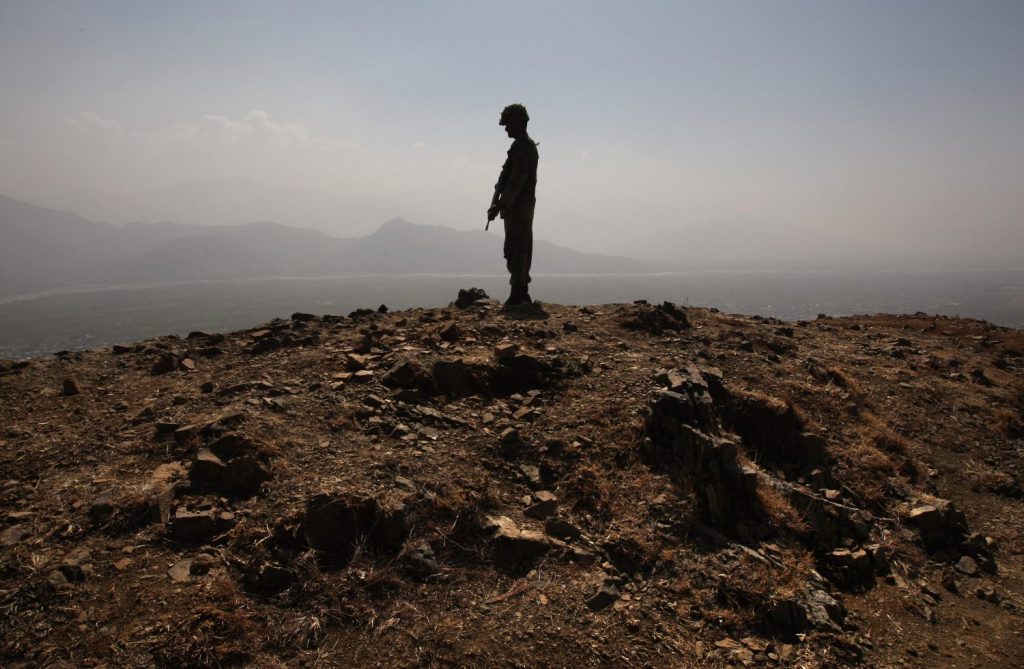
The Donald Trump administration has over the past few months seemingly started to work in a steadfast manner to come to some sort of a conclusion in Afghanistan—America’s longest running war, now in its 17th year. Trump is going to be the third US president to attempt to put an end to the American military’s quagmire in the country it entered after the 9/11 attacks in 2001. There is a palpable fear among diplomats in New Delhi and Nato (North Atlantic Treaty Organization) capitals that Trump may suddenly decide to withdraw American troops from Afghanistan and they might learn about this from his Twitter timeline. India, one of the most important stakeholders in the country, has little influence over Kabul’s future trajectory as far as security goes; much of it lies with Washington.With ad-hoc regulation, India is missing out on a big opportunity in drones
India’s evolving response to China’s ‘stealth threat’
Relations between Washington and Islamabad? It’s Complicated
This analysis is Cipher Brief Level I Member Only content. It can be accessed via login or by signing up to become a Cipher Brief Member. Joining this high-level, security-focused community is only $10/month (for an annual $120/yr membership). Cipher Brief Members engage in high-level conversations about national and global security issues every day. If you’re not already a member, you should be. If you are experiencing any issues with signing up or signing in, please drop an email to support@thecipherbrief.com.The Taliban Takes on Islamic State: Insurgents Vie for Control of Northern Afghanistan
The Battle for Ghazni: A Wake-Up Call?
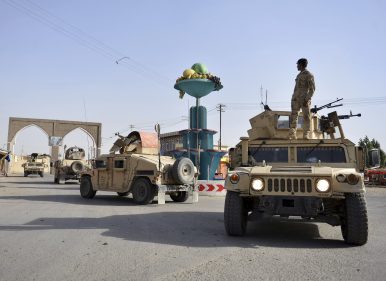
Ghazni, Afghanistan’s twelfth largest city with a population of more than 150,000, is in crisis. On Friday, heavily armed Taliban fighters launched a major assault, reminiscent of previous assaults on major Afghan cities, including Kunduz in 2015 and Lashkar Gah. Ghazni, while smaller than both those cities population-wise, isn’t peripheral—far from it. It sits on Highway 1, the Afghan national ring road, just about 150 kilometers from the capital city of Kabul, on the way to Kandahar, Afghanistan’s second-largest city. This month’s siege underlines just how precarious the Afghan government’s control of even the country’s major population nodes has become.The Pakistan-China relationship is likely to maintain a familiar trajectory.
As economic pressure mounts for Pakistan, it is becoming clear that the new government under Prime Minister Imran Khan will have to borrow $12 billion from the International Monetary Fund (IMF) to ease pressure on dwindling foreign reserves and repay overseas loans. Pakistan is reeling from an economic crisis and the IMF is its savior of last resort. But there’s a twist in this tale. U.S. Secretary of State Mike Pompeo has announced that Washington would block an IMF bailout package for Pakistan if it is used to repay Chinese loans borrowed under the multibillion-dollar China-Pakistan Economic Corridor (CPEC). Pompeo underlined that U.S. taxpayer dollars were part of IMF funding and therefore the U.S. government would not allow a bailout package for Pakistan that could be used to repay Chinese creditors or the government of China.Trump’s Afghanistan Strategy Is Falling Apart as the Taliban Surge on the Battlefield
It’s Trump-Taliban Decision Time in Afghanistan: How To End America’s Longest War?
Bangladesh- Protests of Students: Need for Caution?
Xi Jinping's Path for China
The Coming Chinese Storm
Mark Kelton, the CIA’s Former Deputy Director for Counterintelligence writes that “the Chinese intelligence storm bearing down on the U.S. has long since announced itself, building from that portentous breeze to a truly gale force. It is a secret assault on America that is without parallel since the assault mounted by Moscow in the 1930’s and 40’s.[1] As was the case during that so-called “Golden Age” of Soviet espionage, Beijing’s ongoing intelligence campaign has garnered no more than episodic public attention, and then only when a spy is arrested or a high-profile cyber-attack is detected.”Myanmar: China-Myanmar Economic Corridor- Another “Hambantota” in the Making?
A Reappraisal of China-Iran Ties After US JCPOA Withdrawal
Risky Business: A Case Study of PRC Investment in Tajikistan and Kyrgyzstan
‘No Such Thing’: China Denies U.N. Reports of Uighur Detention Camps
GENEVA — China issued a blanket denial on Monday of accusations from United Nations experts that it had detained more than a million ethnic Uighur Muslims in re-education camps in the western region of Xinjiang. Beijing has progressively tightened security in Xinjiang since an eruption of violence there in 2009, but the crackdown has escalated since 2016, when a new Communist Party secretary for the region began widely expanding security services and surveillance. Gay McDougall, a member of the United Nations Committee on the Elimination of Racial Discrimination, spoke of the region on Friday as becoming “something resembling a massive internment camp,” with mass detention, re-education and disappearances.China Advances Signals Intelligence
From laboratory in far west, China’s surveillance state spreads quietly
Plunge in Lira, Turkey’s Currency, Fuels Fears of Financial Contagion
Turkey’s currency fell to another record low on Monday, hitting stocks in Europe and Asia and raising fears that the country is on the verge of an economic meltdown that could spread to other emerging markets. The crisis, caused by soaring inflation, economic mismanagement by the Turkish government and tensions with the United States, has raised concerns over whether emerging economies that have benefited in recent years from foreign investment may also be vulnerable. Rising interest rates in the United States and in Europe have made investors less tolerant of emerging markets. Foreign investors piled money into Turkish assets for years, lured by what appeared to be a stable economy and higher returns. But as interest rates rise in countries seen as safer, the relative attractiveness of riskier investments wanes. A crisis like the one in Turkey may be all it takes to send them fleeing.Crisis and Conviction: US Grand Strategy in Trump’s Second Term
In the spring of 2014, before Donald Trump’s presidency was even a rumor, I began an article about the sources of U.S. grand strategy. By “grand strategy,” I mean a state’s way of orchestrating means and ends to achieve security over the long haul. I argued that the habitual ideas and pervasive influence of the U.S. foreign policy establishment make the fundamentals of American statecraft hard to change. What former advisor Ben Rhodes called the “Blob” and what former National Security Council official Michael Anton called the “priesthood” defines and dominates the ecosystem in which foreign policy is made. It exerts its influence through its expertise and its advantageous structural position as a “revolving door” between government, academia, think tanks, foundations, and corporations, reinforced by the feedback loop of allies’ demands for American patronage. In turn, the establishment successfully advances the view that the only prudent and legitimate grand strategy for the United States is “primacy,” the pursuit and sustainment of unrivalled dominance.Laws of Armed Conflict in Gaza
Take it from the military: Climate security is national security
How prepared is the U.S. to fend off cyber warfare? Better at offense than defense
Cyberwar and Security in the Trump Era
German cyberwarriors assert right to ‘hack back’ when attacked
COLOGNE, Germany – German authorities believe they are on firm legal footing to retaliate against cyber attacks by unleashing digital or conventional counterattacks, according to a series of recent written responses by government officials to lawmakers. The documents shed light on some of the legal considerations of cyber-warfare mulled in Berlin, just as the Bundeswehr moves toward full operational capability of a new command devoted to cyber operations. Some of the assertions outlined in a missive last month are surprisingly hawkish for a country reflexively averse to the use of military force. While acknowledging certain gray areas in responding to potentially crippling cyber attacks, officials also made clear that defending the country would afford the security services broad leeway under international law.AI Will Change the Balance of Power
We live in the cognitive age—an era when we will begin replicating, and exceeding, the prowess of the human mind in specific domains of expertise. While the implications of artificial intelligence (AI) are broad, as we head deeper into this new era, we will find that AI combined with myriad exponential technologies will carry us inexorably toward a different form of warfare that will unfold at speeds we cannot fully anticipate—a form of warfare we call hyperwar. Historically, the balance of power between belligerents has been dictated in great measure by the relative size of their armies. Knowledge of terrain, skill, and technology all have been multipliers for smaller forces, but quantity has had a quality all its own. If one sets aside consideration of nuclear weapons, which allow small states such as Israel and North Korea to hold their opponents at bay, the outcomes of conventional conflicts are determined primarily by a country’s ability to field a larger force, sustained over a longer period of time—the costs of which are enormous.THE ULTRA-PURE, SUPER-SECRET SAND THAT MAKES YOUR PHONE POSSIBLE
FRESH FROM CHURCH on a cool, overcast Sunday morning in Spruce Pine, North Carolina, Alex Glover slides onto the plastic bench of a McDonald’s booth. He rummages through his knapsack, then pulls out a plastic sandwich bag full of white powder. “I hope we don’t get arrested,” he says. “Someone might get the wrong idea.” GLOVER IS A recently retired geologist who has spent decades hunting for valuable minerals in the hillsides and hollows of the Appalachian Mountains that surround this tiny town. He is a small, rounded man with little oval glasses, a neat white mustache, and matching hair clamped under a Jeep baseball cap. He speaks with a medium‑strength drawl that emphasizes the first syllable and stretches some vowels, such that we’re drinking CAWWfee as he explains why this remote area is so tremendously important to the rest of the world.Google wants to know everything about you: Google tracks your movements, even when you tell it not to
Army CEMA Teams Advance Information, Electronic and Cyber Warfare
After completing 10 training rotations, the Army's Cyber-Electromagnetic Activities (CEMA) teams are building on the experience of readying warfighters in information, electronic and cyber warfare. The U.S. Army’s efforts to bring electronic warfare, information warfare and cyber capabilities into expeditionary forces is succeeding, Army leaders report. To better support tactical commanders, the service developed a pilot program in 2015 to add such capabilities to brigade combat teams (BCTs). In addition to providing equipment, abilities and authorities to BCTs, the service deployed cyber electromagnetic activities (CEMA) teams to support the initiative known as CEMA Support to Corps and Below (CSCB). The CEMA teams, under the guidance of the U.S. Army Cyber Command, provide training to brigade combat teams (BCTs) through National Training Center (NTC) rotations at exercises and home-base training. So far the CEMA teams have completed 10 rotations at these combat training centers.Why America Loses Every War It Starts
Since the official end of the Cold War in 1991, remarkably, the United States has been at war or engaged in significant military conflicts and interventions for over two-thirds of the intervening years. Tens of thousands of American soldiers, Marines, sailors, and airmen have been killed or wounded in these conflicts.