The Profession of Arms: A Guide for Young Army Officers
It takes courage, especially for a young officer, to check a man met on the road for not saluting properly or for slovenly appearance, but, every time he does, it adds to his stock of moral courage, and whatever the soldier may say, he has respect for the officer who does pull him up.
Read Document →The Dragon's Teeth: Assessing China's Military Modernization
PLA has focused on modernising its capabilities across all warfare domains to achieve these goals. This includes land, air, and maritime operations, nuclear, space, counter-space, electronic warfare and cyberspace operations, aiming to become a fully integrated joint force.
Read Document →Transforming the PLA: A Decade of reorganisation from SSF to ISF
PRC has engaged in a sustained and broad effort to transform the PLA from an infantry-heavy, low-technology, ground forces-centric military into a high-technology, networked force with an increasing emphasis on joint operations and naval and air power projection.
Read Document →Eyes without Borders: Exploring the World of Open Source Intelligence (OSINT) in the Digital Age
Open Source Intelligence (OSINT) is gaining prominence with the rise of social media, the digital society and the vast growth of publicly and commercially available information (PAI and CAI).
Read Document →
The PLA’s Developing Cyber Warfare Capabilities and India's Options
Informationised warfare blurs the lines between peacetime and wartime. A nation in the information age cannot wait for the hostilities to break out to collect intelligence, carryout influence operations, develop antisatellite systems or design computer software weapons.
Read Document →
Galwan and After
Why did China did this when he is under tremendous pressure in all fronts, is this China's salami slice tactics being progressed rigorously, what will be new Rules of Engagement, what will be escalatory control mechanism, who has taken this decision, will there be some pressure put by China in India's North-East through insurgency.
Read Document →
India’s Joint Doctrine for Cyberspace Operations: A Critical Review
Chief of Defence Staff (CDS) General Anil Chauhan and Secretary, Department of Military Affairs, formally released declassified versions of the Joint Doctrines for Cyberspace Operations during the Chiefs of Staff Committee meeting in New Delhi.
Read Document →
Know your Enemy General(now Field Marshal) Syed Aseem Munir
Gen SA Munir's position in the hierarchy of Pakistan was not very comfortable. The state of economy, insurgency in Pakhtoonistan and Balochistan, attack on the Jaffar Express, constant protests by supporters of Imran Khan's supporters inside and outside of parliament.
Read Document →
Decoding Operation SINDOOR: Key Aspects and Implications
Precision strikes were carried out on nine sites—four in Pakistan and five in PoK—linked to anti-India terrorist groups such as the LeT, JeM and the Hizbul Mujahideen. The targeted sites included Muridke (LeT headquarters) and Bahawalpur (JeM headquarters).
Read Document →
Chinese Cyber Exploitation in India's Power Grid - Is There a linkage to Mumbai Power Outage?
The New York Times (NYT), based on analysis by a U.S. based private intelligence firm Recorded Future, reported that a Chinese entity penetrated India’s power grid at multiple load dispatch points. Chinese malware intruded into the control systems that manage electric supply across India, along with a high-voltage transmission substation and a coal-fired power plant
Read Document →5 May 2014
It's Not All Russia's Fault
TIME OF TRANSITIONS
Believing in India again
Whenever a ruling establishment crumbles in India, its official language also loses authority.
It is a matter of confidence, credibility and trust. Whatever be the political hue of the next government and whoever its leader, the challenge will be to reinvigorate investor confidence in the political stewardship of the economy, restore the credibility of the executive and rebuild trust in the sanctity of policy and contracts. Else, the much-needed investment in infrastructure and manufacturing will not be forthcoming and the numbers of un- and underemployed will continue to mount. The social consequences will most likely limit the new government to one term.
Corruption scandals have hogged the headlines, but arguably the most damaging effect on investor sentiment over the past several years has been the activism of the tax authorities and the twists and turns in the interpretation of policies and contracts. A fly on the wall of the board rooms of Vodafone, Nokia, Microsoft, BP, Shell, Posco, Tesco, Walmart and many more would be struck by the paradoxical tenor of conversation. The directors would be in agreement about the potential of the country. All would accept that notwithstanding the slowdown in growth and the lacklustre leadership over the past three years, the fundamentals remain intact and India remains on track to be an economic giant. They would endorse the view that relative to opportunities elsewhere, India is an attractive destination and that it would be imprudent to push it off their agenda. That said, they would collectively hesitate to put their signature on further new investments, other than perhaps for amounts required to sustain existing activities. They would substantiate their hesitation by allusions to the arbitrariness of the tax charges on MNCs, the announcement by the BJP to reverse the UPA government’s policy on multi-brand retail, the unilateral tightening of contractual conditions that assured petroleum companies market-related prices for gas and the right to market it freely, the labyrinthine approval procedures that have bogged down major mining and power sector projects, the reluctance of the bureaucracy to take decisions for fear of attracting a vigilance enquiry and the long lead times in judicial decisions. The thread linking all such conversations would be the loss of confidence and trust in public institutions.
Cornell Professor Eswar Prasad’s wonderfully written book, The Dollar Trap: How the US Dollar Tightened its Grip on Global Finance, brings into sharp relief the positive impact that confidence and trust in public institutions has had on the direction of capital flows in our globalised and connected world. And, by implication, the negative consequences of loss of confidence and trust. Prasad writes that, notwithstanding recurring bouts of financial crisis in America that should have led to an outflow of capital, rising interest rates and a falling dollar, US treasury securities and dollar denominated assets have continued to be a favourite haven for investors. In September 2008, for instance, following the collapse of Lehman Brothers, US financial markets went into a downward spiral, the credit markets froze and Dow Jones was on the skids. Economic fundamentals suggested there would be a run on the dollar. What happened was just the opposite. There was a net inflow of half a trillion dollars into US treasury securities, nearly all of it from private investors and the dollar rose in value against all other currencies. In July 2011, the government came within a day of declaring a technical default on its debt. The credit rating agency Standard and Poors did, in fact, downgrade US government debt from AAA to AA+ on August 2. There should have been a flight of capital away from dollar assets. Instead there was an inflow of nearly $180 billion in August and September, and again mostly from the private sector. In December 2012, the economy once more headed towards a “fiscal cliff”. The US Congress was at an impasse over the government’s borrowing limits. Economists wondered whether this would push the dollar off its perch and deliberated on the extent of the spike in interest rates. The dollar remained steady and the yield on US treasury bills continued to range around 2 per cent.
It didn’t begin with Netanyahu
http://indianexpress.com/article/opinion/editorials/it-didnt-begin-with-netanyahu/
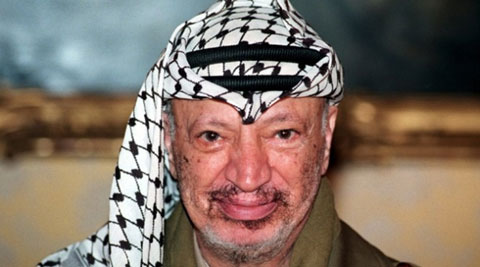
US Secretary of State John Kerry stated recently that Yasser Arafat had already recognised a Jewish state. (Reuters)
Israel is a Jewish state, or the nation-state of the Jewish people, because it was established according to the UN’s two-state resolution — Jewish and Arab states — and because it is the self-determination of the majority of Israel’s citizens. Israel does not need Palestinian recognition of its Jewish character, and has never made such a demand of Egypt and Jordan. So why has Israel been insistent on recognition of its Jewish character from the Palestinians?
US Secretary of State John Kerry stated recently that Yasser Arafat had already recognised a Jewish state. He is right. It is important to understand that recognition. In the mid-1970’s, Henry Kissinger formulated the conditions for dialogue between the PLO and the US. These included an explicit and unconditional rejection of terror and recognition of Israel. The issue became relevant only in the late-1980s. The PLO’s status was damaged after its expulsion to Tunisia and the outbreak of the First Intifada. It attempted to return to centrestage through dialogue with the US. Swedish foreign minister Stan Anderson was enlisted to mediate.
In November 1988, the Palestinian National Council convened in Algiers — remembered primarily for its declarations of independence. The same council, for the first time, recognised UN Resolutions 181, 242 and 338. The developments were positive, but the decisions did not satisfy the US. Anderson didn’t give up. He invited five leading Jews to Stockholm to meet Arafat. Arafat denounced terrorism and declared his acceptance of the UN resolutions. Apparently, this was the first time the words “Jewish State” came out of Arafat’s mouth. But the US demanded a more explicit declaration, refusing to grant Arafat a visa to speak before the UN. On December 13, a special session was held in Geneva so that Arafat could speak. Once again, the US was not satisfied. George Shultz, then secretary of state, was not prepared to deviate from the explicit wording the US demanded. After consultations, Arafat convened a press conference denouncing terrorism and recognising UN Resolutions 242 and 338. He once again declared the solution was “two states for two peoples”, and a “Jewish state” in Israel. Arafat gave his statements in English, reading exactly what Shultz had given him. This time, he met US demands. On the same day, December 15, Shultz announced that the US president had decided to open a dialogue with the PLO.
The dialogue was short and futile. At the first outbreak of terror, the PLO refused to denounce it. Iraq invaded Kuwait. Arafat supported Saddam Hussein. The dialogue came to an abrupt end. Only the Oslo Accords brought the PLO back to centrestage. But the Fatah Conference in 2009, at which Abu Mazen (Mahmoud Abbas) stood at its head, unanimously decided to refute the idea of a “Jewish State”. It’s worthwhile to note the wording of the announcement: “Complete resistance, with no way back, to the recognition of Israel as a ‘Jewish State’, to protect the rights of refugees and the rights of minorities on the other side of the Green Line”. Arafat himself reneged on his recognition of a Jewish state.
COSTLY LESSON
US in the world
Your Honour, I rise in — partial — defense of Mr. Obama.
There has been a festival of commentary of late bemoaning the pusillanimous foreign policy of President Obama. If only we had a president who rode horses shirtless, wrestled a tiger or took a bite out of a neighbouring country, we’d all feel much safer. Your Honour, I rise in — partial — defense of Mr. Obama.
Let me start by asking a question I’ve asked about other countries: Is American foreign policy today the way it is because Obama is the way he is (cerebral, cautious, dispassionate) or is Obama the way Obama is on foreign policy because America is the way America is today (burned by two failed wars and weakened by a great recession) and because the world is the way the world is (increasingly full of failed states and enfeebled US allies)?
The answer is some of both, but I’d put a lot more emphasis on the latter. Foreign policy, our ability and willingness to act in the world, is about three things: interests, values and leverage. Do we have an interest in getting involved in Syria or Crimea, are our values engaged, and — if either is true — do we have the leverage to sustainably tilt things our way at a price we can afford?
I’d argue that a lot of what makes America less active in the world today is a product first of all of our own diminished leverage because of actions taken by previous administrations. The decisions by the Bush I and Clinton teams to expand Nato laid the seeds of resentment that helped to create Putin and Putinism.
Most presidents make their name in foreign policy by taking on strong enemies; but most of what threatens global stability today are crumbling states. Exactly how many can we rescue at one time? I’d love to help Ukrainian reformers build a functioning democracy, but the reason that is so daunting a task is because their own politicians wasted two decades looting their own country, so the leverage required to foster change — $30 billion in bailout funds — is now massive.
Who Is Afraid of Pakistan’s ISI Intelligence Agency?
The Wrong Enemy: America in Afghanistan, 2001-2014 by Carlotta Gall
Inside China: General hits U.S. in Africa
Obama's Key Message in Asia: If China Wants a Fight, We've Got Your Back By Ashok Sharma
Obama’s New Ukraine – OpEd
Israeli Air Force Reveals Some New Details of How Its Monitors Events in Syria
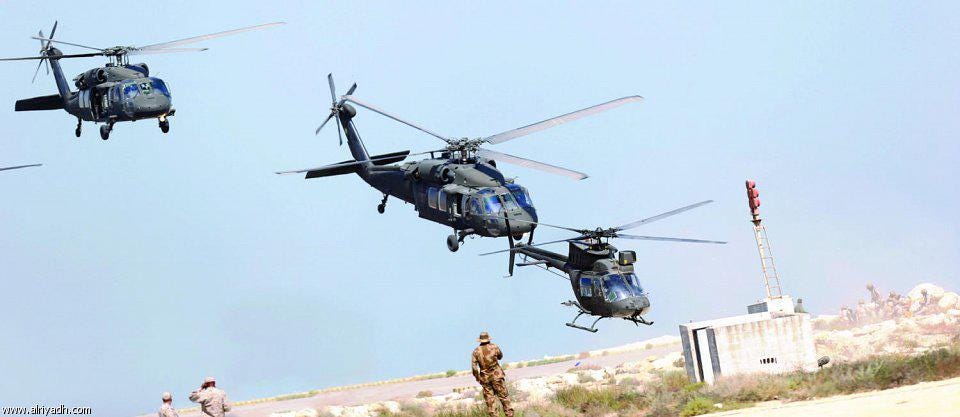
Copters, Marines and Secret Missiles—Saudi Arabia Just Pulled Off Its Biggest War Game Ever
The northern theater simulated a skirmish with Iraq. The southern sector played out battles with Shi’a militants from Yemen. It was in the east that Saudi forces conducted the kinds of maneuvers they might use in a war with Iran.Tensions in the Saudi-American Relationship
Episodic feelings from the Saudi side that the relationship is in crisis are not accidental; they are structural. They are inherent in the very nature of an asymmetric alliance between a stronger power and a weaker power. Glenn Snyder, the late international relations scholar, encapsulated this dynamic in hisreflection that the weaker power in such alliances is always caught between the opposing fears of “entrapment and abandonment.” In the past, when Washington was more bellicose toward Iran, the Saudis worried that they would pay the price of Iranian retaliation for any U.S. attack on Iran. Now, with Americans and Iranians sitting at negotiating tables with each other, Saudi elites worry that their interests will be neglected, if not actively sold out, by their U.S. ally. In October 2013, the chairman of the foreign affairs committee of the Saudi Consultative Council, the appointed and non-binding Saudi version of a parliament, said “I am afraid there is something hidden…If America and Iran reach an understanding, it may be at the cost of the Arab world and the Gulf states, particularly Saudi Arabia.”