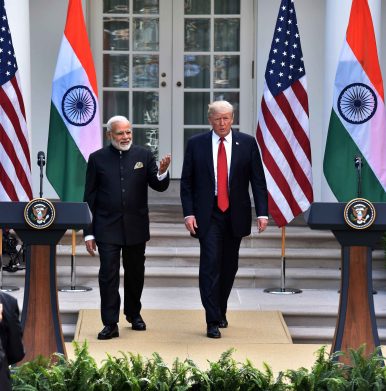
Ankit Panda offers a concise summary of what the COMCASA agreement, which ensures cooperation on communications technology and policy, means for the future of U.S.-India relations. It clears up one of the last big roadblocks for U.S.-Indian interoperability, making arms transfers easier and paving the way for improved cooperation on innovation and production. The U.S. Department of Defense has also suggested that India (along with Indonesia and Vietnam) will not be sanctioned under CAATSA for purchasing Russian military equipment.The Profession of Arms: A Guide for Young Army Officers
It takes courage, especially for a young officer, to check a man met on the road for not saluting properly or for slovenly appearance, but, every time he does, it adds to his stock of moral courage, and whatever the soldier may say, he has respect for the officer who does pull him up.
Read Document →The Dragon's Teeth: Assessing China's Military Modernization
PLA has focused on modernising its capabilities across all warfare domains to achieve these goals. This includes land, air, and maritime operations, nuclear, space, counter-space, electronic warfare and cyberspace operations, aiming to become a fully integrated joint force.
Read Document →Transforming the PLA: A Decade of reorganisation from SSF to ISF
PRC has engaged in a sustained and broad effort to transform the PLA from an infantry-heavy, low-technology, ground forces-centric military into a high-technology, networked force with an increasing emphasis on joint operations and naval and air power projection.
Read Document →Eyes without Borders: Exploring the World of Open Source Intelligence (OSINT) in the Digital Age
Open Source Intelligence (OSINT) is gaining prominence with the rise of social media, the digital society and the vast growth of publicly and commercially available information (PAI and CAI).
Read Document →
The PLA’s Developing Cyber Warfare Capabilities and India's Options
Informationised warfare blurs the lines between peacetime and wartime. A nation in the information age cannot wait for the hostilities to break out to collect intelligence, carryout influence operations, develop antisatellite systems or design computer software weapons.
Read Document →
Galwan and After
Why did China did this when he is under tremendous pressure in all fronts, is this China's salami slice tactics being progressed rigorously, what will be new Rules of Engagement, what will be escalatory control mechanism, who has taken this decision, will there be some pressure put by China in India's North-East through insurgency.
Read Document →
India’s Joint Doctrine for Cyberspace Operations: A Critical Review
Chief of Defence Staff (CDS) General Anil Chauhan and Secretary, Department of Military Affairs, formally released declassified versions of the Joint Doctrines for Cyberspace Operations during the Chiefs of Staff Committee meeting in New Delhi.
Read Document →
Know your Enemy General(now Field Marshal) Syed Aseem Munir
Gen SA Munir's position in the hierarchy of Pakistan was not very comfortable. The state of economy, insurgency in Pakhtoonistan and Balochistan, attack on the Jaffar Express, constant protests by supporters of Imran Khan's supporters inside and outside of parliament.
Read Document →
Decoding Operation SINDOOR: Key Aspects and Implications
Precision strikes were carried out on nine sites—four in Pakistan and five in PoK—linked to anti-India terrorist groups such as the LeT, JeM and the Hizbul Mujahideen. The targeted sites included Muridke (LeT headquarters) and Bahawalpur (JeM headquarters).
Read Document →
Chinese Cyber Exploitation in India's Power Grid - Is There a linkage to Mumbai Power Outage?
The New York Times (NYT), based on analysis by a U.S. based private intelligence firm Recorded Future, reported that a Chinese entity penetrated India’s power grid at multiple load dispatch points. Chinese malware intruded into the control systems that manage electric supply across India, along with a high-voltage transmission substation and a coal-fired power plant
Read Document →4 October 2018
COMCASA and the Future of India's Defense Industrial Base
Ankit Panda offers a concise summary of what the COMCASA agreement, which ensures cooperation on communications technology and policy, means for the future of U.S.-India relations. It clears up one of the last big roadblocks for U.S.-Indian interoperability, making arms transfers easier and paving the way for improved cooperation on innovation and production. The U.S. Department of Defense has also suggested that India (along with Indonesia and Vietnam) will not be sanctioned under CAATSA for purchasing Russian military equipment.India’s Coal Imports Are An Economic Reality, And Why Coal Sector Efficiency Gains Since 2014 Should Be Acknowledged
Coal sector reform and fine-tuning of CIL operations are key, while imports for the economy as a whole are not going away anytime soon.Parliamentary Elections Loom in Afghanistan
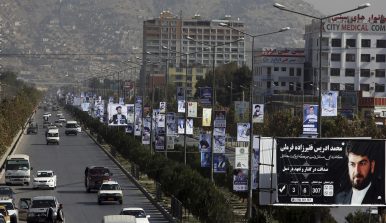
Afghans are scheduled to head to the polls on October 20 to cast ballots in elections for the lower house of parliament and district councils. The election, originally slated for 2015, is more than three years late, and with less than a month to go, it is beset with crises big and small.The Maldives’ New Government: Mission Impossible?
Just days after Maldivians poured into the streets of the Maldivian capital, Male, to celebrate the defeat of the archipelago’s autocratic President Abdulla Yameen in the September 23 presidential elections, the mood in the country turned somewhat somber. After initially conceding defeat to joint opposition candidate Ibrahim Mohamed Solih, Yameen appeared to be preparing to subvert the election verdict to hold on to power.A photomontage shows a businessman against a backdrop depicting the digital age.
Taiwanese electronic firms are still more advanced than mainland China's in developing most cutting-edge technologies, but they are increasingly linked to mainland supply chains.The impact of Chinese students in the US, charted and mapped
The Financial Times reports today that earlier this year Stephen Miller, president Trump’s hard-line advisor, had tried to convince the president to ban all Chinese students from entering the US.Donald Trump’s new NAFTA is the blueprint for his trade war with China
U.S.-China relations: Is it time to end the engagement?
Principles for managing U.S.-China competition
Avoiding war: Containment, competition, and cooperation in U.S.-China relations
Flying High: Japan Strengthens African Ties
Russian Naval Infantry Stretches Its Muscles in the Baltic
North and South Korea’s New Military Agreement
At the Pyongyang summit between North Korean leader Kim Jong Un and South Korean President Moon Jae-in, held from September 18-20, 2018, a declaration was signed by the ranking military officials of the two Koreas. This agreement is intended to prevent military confrontation on the Korean Peninsula. Specifically it establishes buffer zones, based on the Military Demarcation Line (MDL) (a.k.a. the Armistice Line) on land, and on the Northern Limit Line (NLL) at sea. Optimists see the agreement as a useful step toward better relations; pessimists see it as a step too far, given the continuing military tensions on the Korean Peninsula. A balanced appraisal suggests that it is too soon to decide.NATO Ops Center Goes 24/7 To Counter Russians: Gen. Scaparrotti
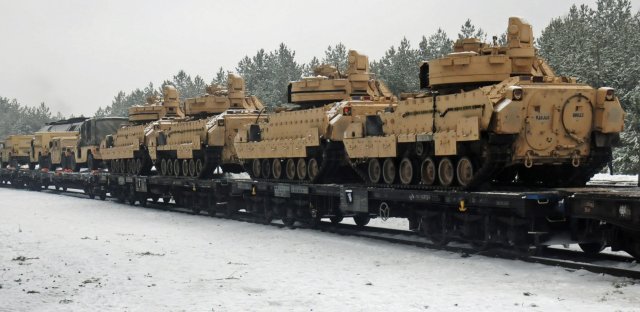
NATO is dusting off Cold War concepts such as deterrence, rapid reinforcement and battle readiness as it faces a Russian destabilization campaign. Our contributor James Kitfield is traveling with Gen. James Dunford, chairman of the Joint Chiefs, as the Marine general attends the NATO summit in Warsaw. Kitfield spoke with Gen. Curtis Scaparrotti, NATO’s Supreme Allied Commander, about the Russian threat in the former Soviet and Russian vassal state. One of James’ cab drivers described Warsaw as a speed bump between Berlin and Moscow, just to put everything in perspective. Scaparrotti wasn’t quite as vivid, but he made clear in unequivocal terms that Russia is America’s top threat. — the editorsAssessment of Russia’s Cyber Relations With the U.S. And Its Allies
How to make Russia back off in the Middle East
For the first time in decades, Israel finds itself on the receiving end of Russian threats. The tensions follow the downing last week of a Russian Ilyushin IL-20 military aircraft, and the deaths of its 15 crew members, by Syrian air-defense batteries responding to Israeli airstrikes on Iranian weapons shipments in Syria.America's Military Is Losing Its Counterinsurgency Operations Capabilities
Ever wonder why or how the U.S. military forgets how to do counterinsurgency and stability operations? We are witnessing the process happen in real time.Shale Oil Propels U.S. Crude Export Increase
US car makers can’t win Trump’s trade war
There’s no such thing as an “American” car anymore. Thanks to globalization, almost every car sold and built in the US is an amalgam of parts from a supply chain stretching from Bangkok, Thailand, to Smyrna, Tennessee.What Sort of World Are We Headed for?
Lately, international relations hands such as Patrick Porter, Graham Allison, Thomas Wright, Robert Kagan, Rebecca Lissner, Mira Rapp-Hooper, yours truly, and a host of others have been caught up in a lively discussion about the current world order. Much of the debate has centered around whether that order was, is, or will be “liberal.” IR theory mavens out there could spend several days sifting through the various contributions and pondering who makes the better case. But to be honest, I’m not entirely convinced it would be worth your time.A Path to De-Globalization?
A No-Deal Brexit Will Destroy the British Economy
A country should theoretically be able to leave the European Union without wrenching economic dislocation and without doing long-lasting damage to relations with its closest neighbors. And that might still happen. British Prime Minister Theresa May and the EU’s leaders could still negotiate a deal that limits the economic damage and preserves strong political ties.Give Today's Children A Chance
Blockchain and AI: A winning combo
Artificial Intelligence (AI) and Blockchain is the current craze right now. Why is AI important? Which AI Blockchain projects are there — and which of these will you need to focus on?What Do the Trump Administration’s Changes to PPD-20 Mean for U.S. Offensive Cyber Operations?
The White House has reportedly made it easier for U.S. Cyber Command to conduct offensive cyber operations, leading some observers to fret that it will create undue risks of escalation. Those concerns might be overblown. Even If You Hate Zuckerberg Now, You’ll Love Him Later
A certain distaste for Facebook’s chief Mark Zuckerberg underlies much of the recent reaction to the company’s annus horribilis. Just last week, the company announced a data breach affecting 50 million people, right on the heels of Instagram’s prominent founders leaving Facebook. Whether it’s a hack or a corporate battle, Zuckerberg does not get the benefit of the doubt, let alone the awe and reverence afforded to comparable company-creating CEOs like Steve Jobs and Jeff Bezos. Not a week goes by that someone doesn’t mention Zuckerberg’s 14-year-old messages about his first 4,000 users: “they ‘trust me’” as proof of his venality.Yantra-Vigyaan Advaita: The Non-Dualism Of Science And Technology
India’s future lies in envisioning an era of big tech — technological goals so audacious that they inspire awe and stir the youth to rise up to the challenge.To Go Boldly Where Many Have Gone Before
It is in India’s interest for ISRO to replicate Mangalyaan’s success with Gaganyaan’s human mission by 2022, and prepare for the next milestone: an Indian crew on the moon. The Army’s Body Armor May Be Too Heavy For Soldiers In Combat, Report Finds
The U.S. Army should authorize commanders to allow combat troops to leave the service’s heavy, over-designed body armor behind on certain missions to increase physical performance, according to a new report from the Center for a New American Security.Want Better Peacekeeping Ops? Add Women
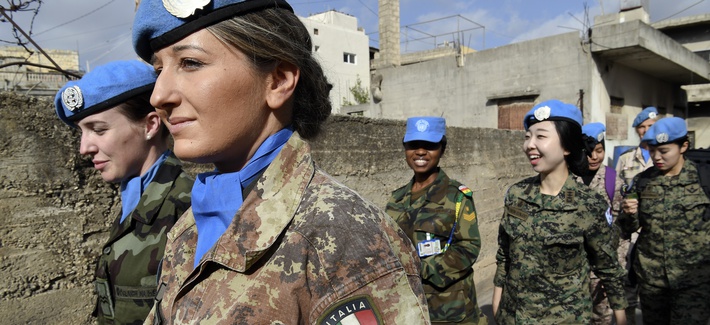
Women are routinely underrepresented in peacekeeping operations, even though their participation has been shown to improve mission effectiveness and advance stability.