The Profession of Arms: A Guide for Young Army Officers
It takes courage, especially for a young officer, to check a man met on the road for not saluting properly or for slovenly appearance, but, every time he does, it adds to his stock of moral courage, and whatever the soldier may say, he has respect for the officer who does pull him up.
Read Document →The Dragon's Teeth: Assessing China's Military Modernization
PLA has focused on modernising its capabilities across all warfare domains to achieve these goals. This includes land, air, and maritime operations, nuclear, space, counter-space, electronic warfare and cyberspace operations, aiming to become a fully integrated joint force.
Read Document →Transforming the PLA: A Decade of reorganisation from SSF to ISF
PRC has engaged in a sustained and broad effort to transform the PLA from an infantry-heavy, low-technology, ground forces-centric military into a high-technology, networked force with an increasing emphasis on joint operations and naval and air power projection.
Read Document →Eyes without Borders: Exploring the World of Open Source Intelligence (OSINT) in the Digital Age
Open Source Intelligence (OSINT) is gaining prominence with the rise of social media, the digital society and the vast growth of publicly and commercially available information (PAI and CAI).
Read Document →
The PLA’s Developing Cyber Warfare Capabilities and India's Options
Informationised warfare blurs the lines between peacetime and wartime. A nation in the information age cannot wait for the hostilities to break out to collect intelligence, carryout influence operations, develop antisatellite systems or design computer software weapons.
Read Document →
Galwan and After
Why did China did this when he is under tremendous pressure in all fronts, is this China's salami slice tactics being progressed rigorously, what will be new Rules of Engagement, what will be escalatory control mechanism, who has taken this decision, will there be some pressure put by China in India's North-East through insurgency.
Read Document →
India’s Joint Doctrine for Cyberspace Operations: A Critical Review
Chief of Defence Staff (CDS) General Anil Chauhan and Secretary, Department of Military Affairs, formally released declassified versions of the Joint Doctrines for Cyberspace Operations during the Chiefs of Staff Committee meeting in New Delhi.
Read Document →
Know your Enemy General(now Field Marshal) Syed Aseem Munir
Gen SA Munir's position in the hierarchy of Pakistan was not very comfortable. The state of economy, insurgency in Pakhtoonistan and Balochistan, attack on the Jaffar Express, constant protests by supporters of Imran Khan's supporters inside and outside of parliament.
Read Document →
Decoding Operation SINDOOR: Key Aspects and Implications
Precision strikes were carried out on nine sites—four in Pakistan and five in PoK—linked to anti-India terrorist groups such as the LeT, JeM and the Hizbul Mujahideen. The targeted sites included Muridke (LeT headquarters) and Bahawalpur (JeM headquarters).
Read Document →
Chinese Cyber Exploitation in India's Power Grid - Is There a linkage to Mumbai Power Outage?
The New York Times (NYT), based on analysis by a U.S. based private intelligence firm Recorded Future, reported that a Chinese entity penetrated India’s power grid at multiple load dispatch points. Chinese malware intruded into the control systems that manage electric supply across India, along with a high-voltage transmission substation and a coal-fired power plant
Read Document →16 August 2018
The political stature and clout of the Taliban is rising in Afghanistan
Inside Bangladesh’s Bloody War on Drugs
China’s New Missile Force: New Ambitions, New Challenges
The Chinese GULAG: U.N. says it has credible reports that China holds million Uighurs in secret camps
China, The Language Of Virtue, And The Global Order
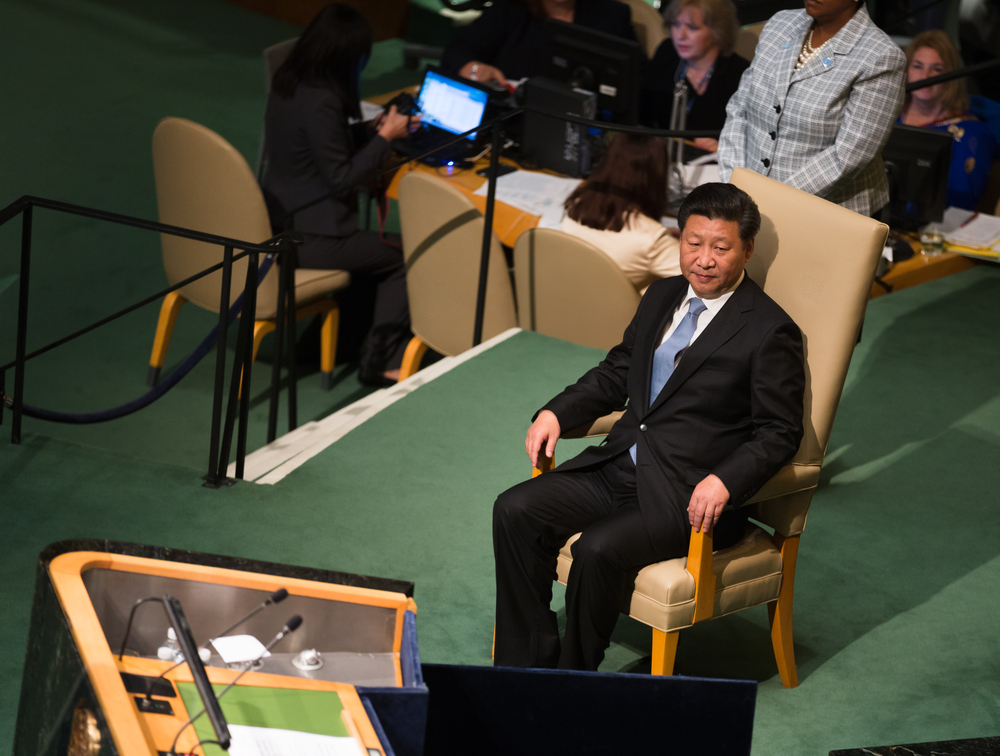
From a Western viewpoint, never has the international scene looked more provisional, more uncertain. Some of the confusion is self-inflicted (Trump, Brexit). Some results from a century of political failure and social crisis inflicted for the most part by outsiders (the Middle East). Western weakness has been exploited (Ukraine, Crimea). Western control of global economic governance is challenged by the greatly increased size and trading weight of developing economies. Foremost among these of course is China. China Reveals Test of New Hypersonic Missile
China has conducted a flight test of a new hypersonic missile capable of carrying a nuclear warhead against advanced missile defenses, according to U.S. officials. The flight test of the Xingkong-2 or Starry Sky-2 missile was disclosed by Chinese state media and touted as an ultra high-speed missile capable of thwarting missile defense systems. The officials confirmed the test was carried out over northeast China and reported in U.S. intelligence channels earlier this week. Such tests are closely monitored as part of the renewed focus by the Pentagon and U.S. intelligence agencies on China’s growing military power. Video released by Chinese state television showed the new weapon being launched atop of a ballistic missile.China Doesn't Want to Play by the World's Rules
U.S. President Donald Trump’s most recent threat to target all $505 billion in annual Chinese imports to the United States is only the latest development in the looming U.S.-China trade war. While Trump and his team are preparing for an economic competition focused largely on tariffs, policymakers must prepare for a multi-domain competition rooted in Chinese political posturing, domestic propaganda, and economic coercion targeting American firms operating in China. These unconventional challenges will demand a comprehensive U.S. response.Critiquing Islamist Fundamentalism Is No 'Attack' on Muslim Women
The Potemkin Village Is Falling Down: The Kremlin’s efforts to pretend that the Russian military is a modern, capable force are not working
Russia developing new tank warfare tactics in Syria
Why Germany Should Get the Bomb
TEN BIGGEST NATIONAL SECURITY THREATS FACING U.S.
For the past month, Axios has been interviewing people who have been trusted with the nation’s most sensitive secrets. The group includes seven former directors or deputy directors of the CIA, two former U.S. intelligence chiefs, a former Secretary of Homeland Security, two White House homeland security advisers, and a former Director of the National Counterterrorism Center. We wanted to know, in this time of acute geopolitical stress, which global threat worried them most, and which threats they thought weren’t getting the attention they deserved. The project was led by David Lawler, Jonathan Swan and Evan Ryan. Given your overwhelming response to our Deep Dives, they’ll soon break into special editions, so you’ll also get a regular Saturday edition of Axios AM. Covert Action, Military Operations and the DoD–CIA Debate
Europe's Trade Coup Leaves China Isolated Daniel Gros, Project Syndicate
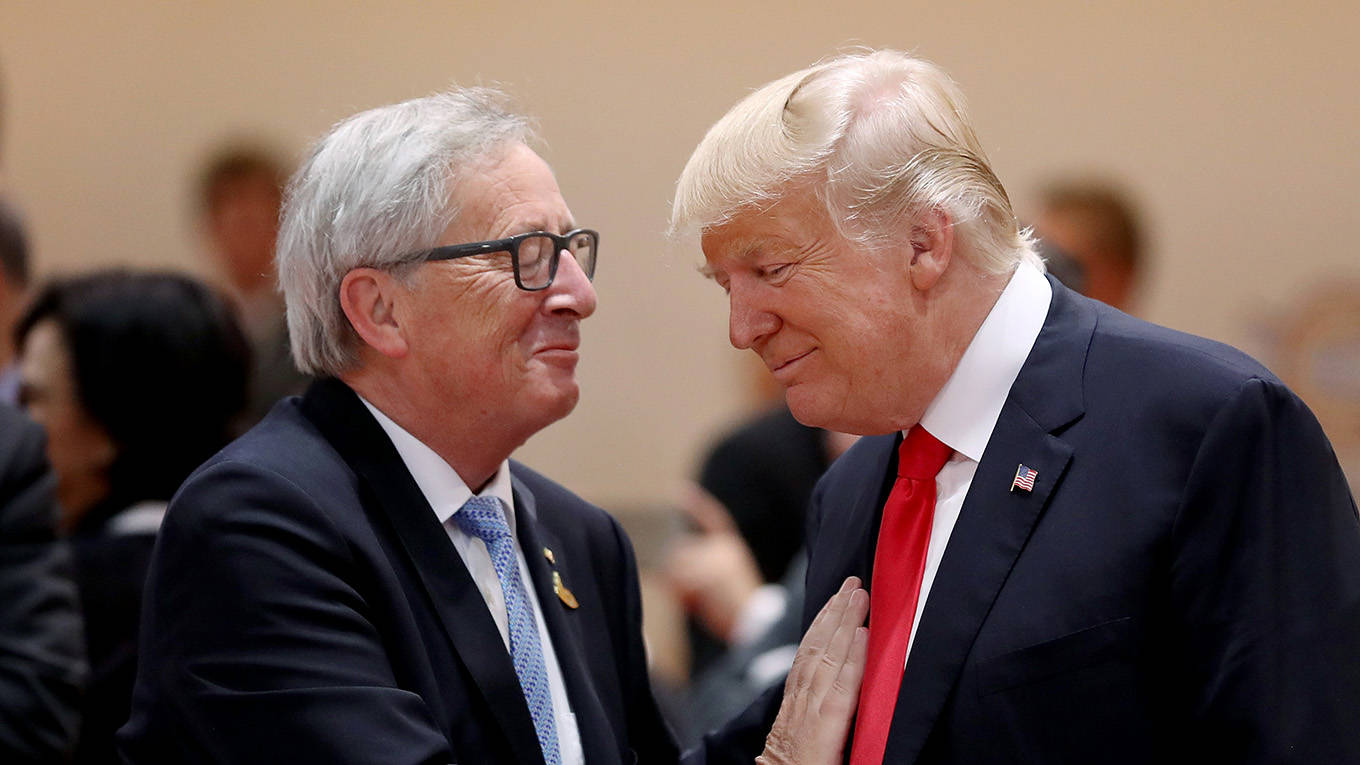
At the core of the recent US-EU trade agreement is the understanding that the two sides will “work together" toward zero tariffs and non-tariff barriers. But the potential for a free-trade deal isn’t the point; the end to the escalation of tit-for-tat tariffs is what matters – and not just to the US and Europe. BRUSSELS – All has gone quiet on the transatlantic trade front, with last month’s agreement between US President Donald Trump and European Commission President Jean-Claude Juncker having dispelled fears of an all-out tariff war. The deal was surprising, but perhaps it shouldn’t have been.Is Germany's Heat Wave a Preview of the Future?
Can I Ruin Your Dinner Party? One of the two pillars of the West is in jeopardy.
The Elites Refuse to Understand Why Brexit Won
More than two years have passed since Britain voted for Brexit. Ever since that moment, the vote to leave the European Union has routinely been framed as an aberration; a radical departure from ‘normal’ life. Countless journalists, scholars, and celebrities have lined up to offer their diagnosis of what caused this apparent moment of madness among the electorate. Russia-backed social media accounts. Shady big tech firms like Cambridge Analytica. Austerity. The malign influence of populist ‘Brexiteers’ like Boris Johnson and Nigel Farage. The Brexit campaign exceeding its legal spending limit. Or a much-debated claim, written on the side of a bus, that Brexit would allow Britain to redirect its millions of pounds worth of contributions to the EU into its own creaking health service. Typical is a recent piece by a (British) columnist in the New York Times who argues: “Britain is in this mess principally because the Brexiteers—led largely by Mr. Johnson—sold the country a series of lies in the lead up to the June 2016 referendum.”A Better Army? German Voters Don't Care For It
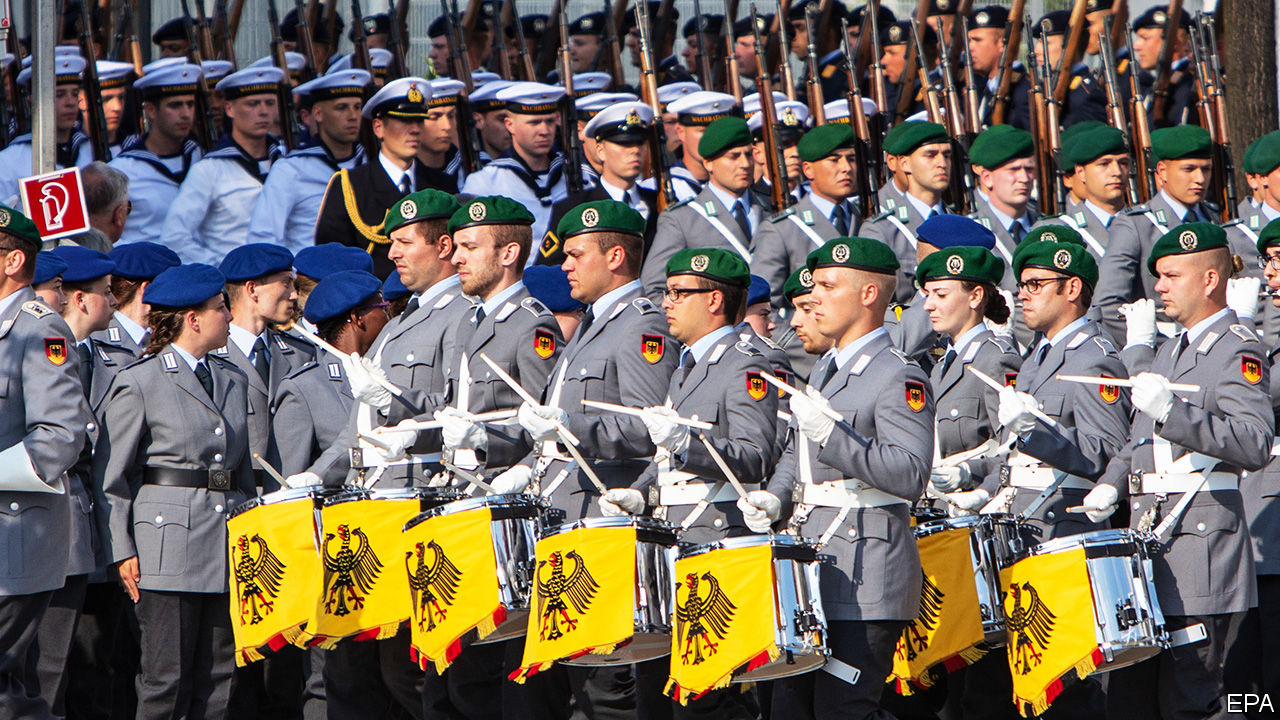
IF A war were to break out in Europe, its early stages might look something like NATO’s recent exercise on the Letzlinger Heath, some 100km (60 miles) west of Berlin. The war game imagined an enemy (Russia, say) sweeping across the northern European plain and into a NATO member state (Estonia, say). In the front line of resistance was NATO’s new Very High Readiness Joint Task Force (VJTF), whose rotating leadership will pass to the Bundeswehr, Germany’s armed forces, next year. The scenario was earnestly rehearsed by an array of allied forces whose common language was English. A commander’s voice crackled over the radio, ordering troops to retake the town of Schnรถggersburg and its airport. The air grew thick with dust and cordite as Leopard 2 tanks raced across the scrubby landscape, with howitzer fire providing cover and helicopters circling overhead. Fire-fights broke out across the rooftops, then Norwegian tanks rolled through the cleared streets and on to the airport. “I have spent 30 weeks in training with my troops and I can tell you: we will fulfil our mission,” affirmed Brigadier-General Ullrich Spannuth with evident pride.INTERNET-OF-THINGS (IOT) MALWARE DISCOVERED TRYING TO ATTACK SATELLITE SYSTEMS OF AIRCRAFT AND SHIPS; BLACK HAT 2018 SPEAKER DETAILS HIS SUCCESSFUL HACK OF AN IN-FLIGHT COMMERCIAL AIRCRAFT WIFI NETWORK
DeepLocker: Artificially Enhanced Malware Is Coming; And, It Is The Equivalent Of A Digital…Weapon Of Mass Disruption
Think Space Force is a joke? Here are four major space threats to take seriously
WASHINGTON — Vice President Mike Pence on Thursday announced the Trump administration is laying the groundwork a new Space Force and eventually a separate military branch, dedicated to space. While the merits of a new organization are debatable, U.S. national security space systems are vulnerable to a wide array of threats, ranging from cyberattacks and jamming to anti-satellite missiles, according to a Center for Strategic and International Studies report published earlier this year. Russia and China, and to a lesser degree North Korea and Iran, are all threatening America’s military through its dependence on space. “Given our dependence and that of our allies and partners on space, the loss of critical assets today could prove decisive to our ability to monitor critical events like missile launches or nuclear tests, or to successfully prosecute a military campaign,” retired Air Force Gen. Robert Kehler, the former chief of U.S. Strategic Command, said in the forward to the report. “Urgent action is needed.”Rapid Equipping Force to deliver new electronic warfare platforms
Sgt. Jessie Albert, an electronic warfare specialist assigned to 2nd Battalion, 35th Infantry Regiment, 3rd Brigade Combat Team, 25th Infantry Division, trains on the Wolfhound Radio Direction Finding System at Schofield Barracks, Hawaii, on April 11, 2018. The electronic warfare specialists use direction finding to gain a line-of-bearing to the target. (U.S. Army photo by Staff Sgt. Armando R. Limon, 3rd Brigade Combat Team, 25th Infantry Division) Army Forces Command will receive a new fleet of tactical vehicles specifically outfitted for electronic warfare this fall. As part of the Army’s efforts to restore electronic warfare capability and respond to capability gaps, the service’s Rapid Equipping Force will provide Army Forces Command with what’s known as Electronic Warfare Tactical Vehicles. The vehicles will be self-contained and independent, a notice from the REF stated. Soldiers inside the vehicle would operate the advanced EW system, which was developed in response to a battlefield need to sense and jam enemy communications and networks.The Great War’s greatest killer
The British special operators who terrorized Japanese forces
In 1943 and 1944, specially chosen units of the British Empire were sent into the jungles of Burma on “Chindit” expeditions that went deep behind Japanese lines and assaulted railways, logistic hubs, and bridges to cripple Japanese forces and force them to redirect forces from other fronts. Most soldiers sent into the jungle were wounded, killed, or fell ill, but they made the Japanese pay. British officers Brig. Gen. Mike Calvert, Lt. Col. Shaw, and Maj James Lumley discuss tactics after the capture of Mogaung in Burma in June 1944 during the second Chindit expedition. The first Chindit expedition, Operation Longcloth, was effected by the 77th Indian Infantry Brigade when they marched into Japanese-occupied Burma in 1943. They attacked Japanese supply depots as well as rail and communication lines.The Battle of 73 Easting: The True Story Behind Desert Storm’s Most Intense Tank Battle
When Army Lt. Gen. H. R. McMaster was elevated to become PresidentTrump’s national security advisor in 2017, the media was awash with references to his role in the biggest tank fight of Desert Storm, the Battle of 73 Easting. While these stories conveyed the basic outcome of the fight, they did little to illuminate how the battle unfolded or what set the stage before the first cannon shot screamed out of his tank. What turned out to be an amazing and thrilling victory, could easily have been the biggest disaster of Desert Storm. Twenty-eight years ago this month I was at the Grafenwoehr training center in Germany where my unit, Eagle Troop of the 2nd Squadron, 2nd Armored Cavalry Regiment (2nd ACR), was conducting a series of field maneuvers and live fire exercises. The 2nd ACR was one of three cavalry regiments then providing frontline defense against the Warsaw Pact,patrolling the borders between West and East Germany in the north and West Germany and Czechoslovakia in the south.