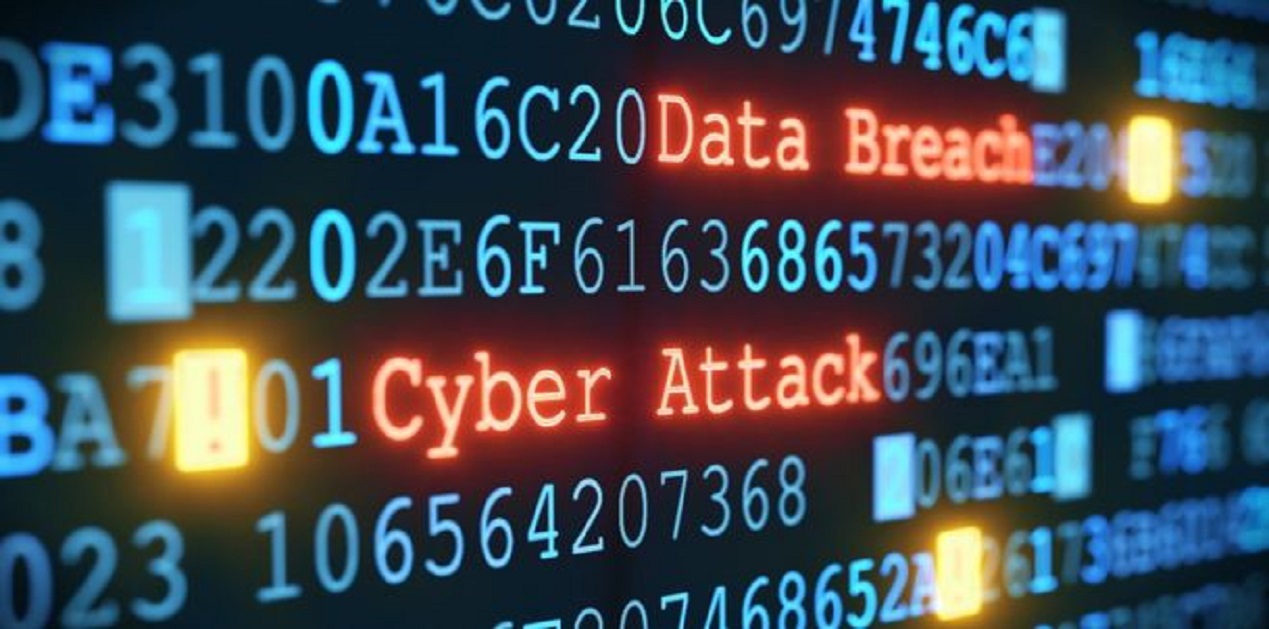
Immediately after the first gulf war in the early 1990’s the theories of Revolution in Military Affairs (RMA) and Information Warfare were being studied all over the world as a new kind of warfare. During that time, a course on Information Warfare was conducted at the National Defense University of USA. The course participants were from senior officers of the armed forces, representatives of Department of Defence and Department of State and policy makers from the government. Rand Corporation of US was conducting this course. Continue reading.......The Profession of Arms: A Guide for Young Army Officers
It takes courage, especially for a young officer, to check a man met on the road for not saluting properly or for slovenly appearance, but, every time he does, it adds to his stock of moral courage, and whatever the soldier may say, he has respect for the officer who does pull him up.
Read Document →The Dragon's Teeth: Assessing China's Military Modernization
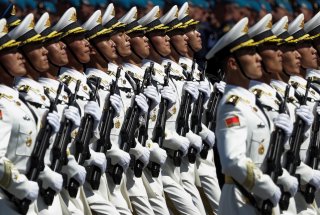
PLA has focused on modernising its capabilities across all warfare domains to achieve these goals. This includes land, air, and maritime operations, nuclear, space, counter-space, electronic warfare and cyberspace operations, aiming to become a fully integrated joint force.
Read Document →Transforming the PLA: A Decade of reorganisation from SSF to ISF
PRC has engaged in a sustained and broad effort to transform the PLA from an infantry-heavy, low-technology, ground forces-centric military into a high-technology, networked force with an increasing emphasis on joint operations and naval and air power projection.
Read Document →Eyes without Borders: Exploring the World of Open Source Intelligence (OSINT) in the Digital Age
Open Source Intelligence (OSINT) is gaining prominence with the rise of social media, the digital society and the vast growth of publicly and commercially available information (PAI and CAI).
Read Document →
The PLA’s Developing Cyber Warfare Capabilities and India's Options
Informationised warfare blurs the lines between peacetime and wartime. A nation in the information age cannot wait for the hostilities to break out to collect intelligence, carryout influence operations, develop antisatellite systems or design computer software weapons.
Read Document →
Galwan and After
Why did China did this when he is under tremendous pressure in all fronts, is this China's salami slice tactics being progressed rigorously, what will be new Rules of Engagement, what will be escalatory control mechanism, who has taken this decision, will there be some pressure put by China in India's North-East through insurgency.
Read Document →
India’s Joint Doctrine for Cyberspace Operations: A Critical Review
Chief of Defence Staff (CDS) General Anil Chauhan and Secretary, Department of Military Affairs, formally released declassified versions of the Joint Doctrines for Cyberspace Operations during the Chiefs of Staff Committee meeting in New Delhi.
Read Document →
Know your Enemy General(now Field Marshal) Syed Aseem Munir
Gen SA Munir's position in the hierarchy of Pakistan was not very comfortable. The state of economy, insurgency in Pakhtoonistan and Balochistan, attack on the Jaffar Express, constant protests by supporters of Imran Khan's supporters inside and outside of parliament.
Read Document →
Decoding Operation SINDOOR: Key Aspects and Implications
Precision strikes were carried out on nine sites—four in Pakistan and five in PoK—linked to anti-India terrorist groups such as the LeT, JeM and the Hizbul Mujahideen. The targeted sites included Muridke (LeT headquarters) and Bahawalpur (JeM headquarters).
Read Document →
Chinese Cyber Exploitation in India's Power Grid - Is There a linkage to Mumbai Power Outage?
The New York Times (NYT), based on analysis by a U.S. based private intelligence firm Recorded Future, reported that a Chinese entity penetrated India’s power grid at multiple load dispatch points. Chinese malware intruded into the control systems that manage electric supply across India, along with a high-voltage transmission substation and a coal-fired power plant
Read Document →20 July 2020
Cyber Wargame - An Indian Scenario
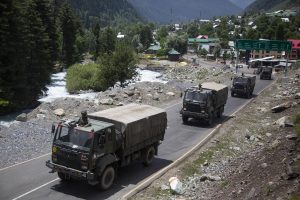
Immediately after the first gulf war in the early 1990’s the theories of Revolution in Military Affairs (RMA) and Information Warfare were being studied all over the world as a new kind of warfare. During that time, a course on Information Warfare was conducted at the National Defense University of USA. The course participants were from senior officers of the armed forces, representatives of Department of Defence and Department of State and policy makers from the government. Rand Corporation of US was conducting this course. Continue reading.......Indian, Chinese Soldiers Disengaging After Deadly Clash in Ladakh
Indian and Chinese front-line troops are disengaging in the western sector of their disputed border, but the process is intricate and requires constant verification, an Indian army spokesman said Thursday.China's Incursions into India Are Really All about Tibet
India’s National Security Strategy 2020 Inescapable Imperatives-- “China Containment”
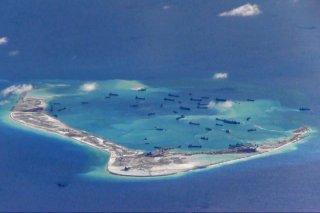
Can China's Military Bases In the South China Sea Be Defended From Attack?
Look Closely: This Picture Holds the Key to China's Dominance in the South China Sea
Can China's Military Bases In the South China Sea Be Defended From Attack?
Here's What You Need to Remember: In any military confrontation with the United States, China’s at-sea outposts would almost certainly be quickly rolled back by waves of airstrikes and cruise missile attacks, devastating People’s Liberation Army facilities and stranding the personnel manning them. How Significant Is the New U.S. South China Sea Policy?
Banning Huawei’s 5G tech in the UK was the easy bit. Now it gets messy
In January, the UK had the Huawei problem solved. After extensive analysis from the National Cyber Security Center (NCSC), prime minister Boris Johnson decided that although the Chinese company was “high-risk” it could still have a place in developing 5G networks. But with caveats: it would be limited to 35 per cent of the market and excluded from the most sensitive elements.The Beidou Satellite Network and the “Space Silk Road” in Eurasia
The Security Component of the BRI in Central Asia, Part One: Chinese and Regional Perspectives on Security in Central Asia
China and Russia: Economic Unequals
China in the Gulf: A New Partnership with Iran?
Maritime Power And The Pandemic: US’ Loss; China’s Gain? – Analysis
This Is the Missile Iran Would Use To Carry Nukes—If It Had Them
The Undeclared War Against Iran
Aseries of violent attacks, involving explosions and fires, has been hitting Iran. The incidents have been too frequent and intense to be random accidents. They are part of an organized effort. Republicans Scale Back Convention Plans in Florida Due to Coronavirus
What If the U.S. Army Built Flying Armored Cars?
Nuclear Battleships: The Navy Had 4 Big Ideas to Bring Back the Battleship
Here's What You Need to Remember: The Navy came to the conclusion that if the country was going to get its money’s worth from the four battleships, the vessels had to concentrate on their unique abilities: firing massive artillery shells at the enemy.Pompeo Downplays Possibility of Summit With North Korea
U.S. Secretary of State Mike Pompeo downplayed the possibility of another summit between President Donald Trump and North Korean leader Kim Jong Un before the U.S. presidential election, saying Trump would only want to engage if there were real prospects of progress.Why Did Israel Build Nuclear Weapons (And Keep It a Secret)?
75 Years After Trinity: The Human Cost of Nuclear Tests
The landscape at the former Semipalatinsk Nuclear Test Site in northeastern Kazakhstan where more than 450 nuclear tests were conducted.Credit: Photo courtesy of the Center for International Security and PolicyThe Fastest Way Out of the Pandemic
G20, Heal Thyself
The CIA, Covert Action and Operations in Cyberspace
The Politics and Science of the Future
In a world of complexity, interconnectedness, uncertainty, and rapid social, economic and political transformations, policy-makers increasingly demand scientifically robust policy-advice as a form of guidance for policy-decisions. As a result, scientists in academia and beyond are expected to focus on policy-relevant research questions and contribute to the solution of complicated, oftentimes transnational, if not global policy problems. Being policy-relevant means to supply future-related, forward-looking knowledge – a task that does not come easy to a profession that traditionally focuses on the empirical study of the past and present, values the academic freedom of inquiry, and often sees its role in society as confronting and challenging power and hierarchy.