There has been cyber security stories in 2017. This year when cyber security’s role in global politics became undeniableand the threats kept coming. Social media continued to be a battleground for voters but didn’t seem to play a significant role in the British, French or German elections. Ransomware is still the most common attachment in spam emails and the trojan became more potent on Macs and Androids. And the role of antivirus companies even became a global controversy.
The Profession of Arms: A Guide for Young Army Officers
It takes courage, especially for a young officer, to check a man met on the road for not saluting properly or for slovenly appearance, but, every time he does, it adds to his stock of moral courage, and whatever the soldier may say, he has respect for the officer who does pull him up.
Read Document →The Dragon's Teeth: Assessing China's Military Modernization
PLA has focused on modernising its capabilities across all warfare domains to achieve these goals. This includes land, air, and maritime operations, nuclear, space, counter-space, electronic warfare and cyberspace operations, aiming to become a fully integrated joint force.
Read Document →Transforming the PLA: A Decade of reorganisation from SSF to ISF
PRC has engaged in a sustained and broad effort to transform the PLA from an infantry-heavy, low-technology, ground forces-centric military into a high-technology, networked force with an increasing emphasis on joint operations and naval and air power projection.
Read Document →Eyes without Borders: Exploring the World of Open Source Intelligence (OSINT) in the Digital Age
Open Source Intelligence (OSINT) is gaining prominence with the rise of social media, the digital society and the vast growth of publicly and commercially available information (PAI and CAI).
Read Document →
The PLA’s Developing Cyber Warfare Capabilities and India's Options
Informationised warfare blurs the lines between peacetime and wartime. A nation in the information age cannot wait for the hostilities to break out to collect intelligence, carryout influence operations, develop antisatellite systems or design computer software weapons.
Read Document →
Galwan and After
Why did China did this when he is under tremendous pressure in all fronts, is this China's salami slice tactics being progressed rigorously, what will be new Rules of Engagement, what will be escalatory control mechanism, who has taken this decision, will there be some pressure put by China in India's North-East through insurgency.
Read Document →
India’s Joint Doctrine for Cyberspace Operations: A Critical Review
Chief of Defence Staff (CDS) General Anil Chauhan and Secretary, Department of Military Affairs, formally released declassified versions of the Joint Doctrines for Cyberspace Operations during the Chiefs of Staff Committee meeting in New Delhi.
Read Document →
Know your Enemy General(now Field Marshal) Syed Aseem Munir
Gen SA Munir's position in the hierarchy of Pakistan was not very comfortable. The state of economy, insurgency in Pakhtoonistan and Balochistan, attack on the Jaffar Express, constant protests by supporters of Imran Khan's supporters inside and outside of parliament.
Read Document →
Decoding Operation SINDOOR: Key Aspects and Implications
Precision strikes were carried out on nine sites—four in Pakistan and five in PoK—linked to anti-India terrorist groups such as the LeT, JeM and the Hizbul Mujahideen. The targeted sites included Muridke (LeT headquarters) and Bahawalpur (JeM headquarters).
Read Document →
Chinese Cyber Exploitation in India's Power Grid - Is There a linkage to Mumbai Power Outage?
The New York Times (NYT), based on analysis by a U.S. based private intelligence firm Recorded Future, reported that a Chinese entity penetrated India’s power grid at multiple load dispatch points. Chinese malware intruded into the control systems that manage electric supply across India, along with a high-voltage transmission substation and a coal-fired power plant
Read Document →6 January 2018
Five Biggest Cyber Security Stories of 2017
There has been cyber security stories in 2017. This year when cyber security’s role in global politics became undeniableand the threats kept coming. Social media continued to be a battleground for voters but didn’t seem to play a significant role in the British, French or German elections. Ransomware is still the most common attachment in spam emails and the trojan became more potent on Macs and Androids. And the role of antivirus companies even became a global controversy.
Behind the ‘enemy’ line: the borders of J&K
India needs to work harder, both in its own backyard and in its near-abroad
It's Time to End Pakistan's Double Game
Staying the Course in Afghanistan How to Fight the Longest War
The New Geopolitics of Central Asia: China Vies for Influence in Russia's Backyard
What will it mean for Kazakhstan?
A NEW SILK ROAD
Stratfor: Iran’s Mullahs face their greatest challenge
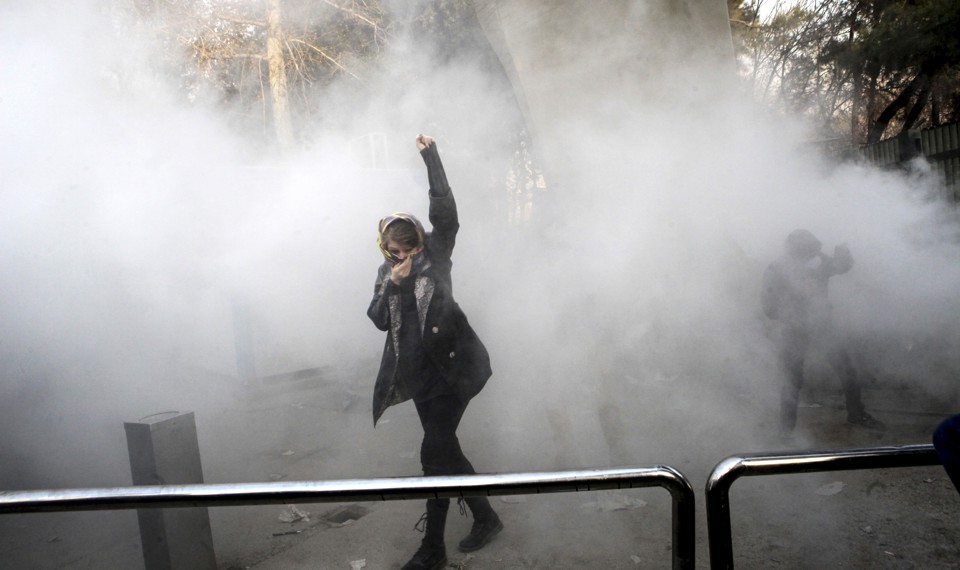
Summary: Iran’s Mullahs led it to a draw with Iraq, withstood four decades of sanctions, Israeli assassination of their nuclear scientists, and the collapse of oil prices after 2008. Now Stratfor describes the Mullahs’ greatest challenge: their own people.Unrest in Iran. Stratfor/AFP/Getty Images.The Crisis in Iran: A Broader Perspective
The Battle for Iran Change will not come easily, peacefully, or soon.
Protest movements in the Middle East face enormous repressive hurdles and rarely have happy endings. Even when protesters “succeed” in toppling an autocrat, they’ve rarely succeeded in ending autocracy. In Iran, the obstacles to success are daunting. Whereas most Middle Eastern countries are ruled by secular autocrats focused on repressing primarily Islamist opposition, Iran is an Islamist autocracy focused on repressing secular opposition. This dynamic—unarmed, unorganized, leaderless citizens seeking economic dignity and pluralism, versus a heavily armed, organized, rapacious ruling theocracy that espouses martyrdom—is not a recipe for success. Waiting for the Bomb to Drop
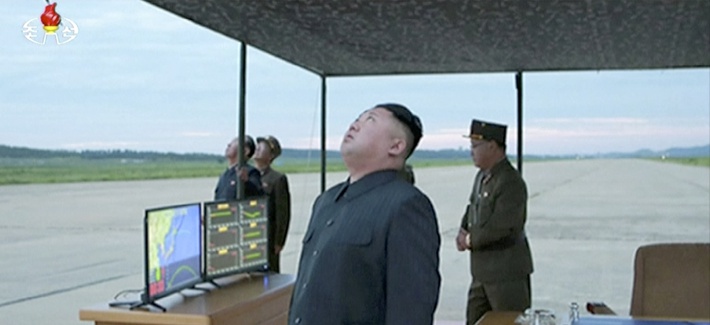
The decision to move the American embassy to Jerusalem makes a war in Korea more likely. Not because there is any direct connection between the two, nor because it was a bad idea, recognizing as it did the simple fact that the western part of Jerusalem has been Israel’s capital for over 70 years and will most assuredly remain so. The dangerous bit, rather, was when pundits and diplomats wrung their hands and predicted calamity and (far more predictably) nothing happened. The Arab street grumbled, while Cairo, Riyadh, and Abu Dhabi looked the other way, and Donald Trump could be forgiven for thinking that his instincts had been proven entirely correct.Don’t panic: Fears of nuclear escalations and cyber warfare are overblown
Preventive Priorities Survey 2018
The Center for Preventive Action’s annual Preventive Priorities Survey (PPS) evaluates ongoing and potential conflicts based on their likelihood of occurring in the coming year and their impact on U.S. interests. The PPS aims to help the U.S. policymaking community prioritize competing conflict prevention and crisis mitigation demands.What If... Conceivable Crises: Unpredictable in 2017, Unmanageable in 2020?
The Predictable Volatility of Iran and North Korea
America Still Needs an Asia Strategy
Ukraine: Will the Centre Hold?
While the war in Ukraine’s eastern region of Donbas rumbles on, the regions of Polissya and Zakarpattya in the country’s west are corroded by systemic state corruption. Resentment toward Kyiv in these peripheral regions is pushing many into the shadow economies and exacerbating state fragility.Speak to the Heartland: Lessons from Kissinger’s Defense of Dรฉtente
Researchers Found Two Major Security Flaws In Processors That Affect Most Of The World's Computers
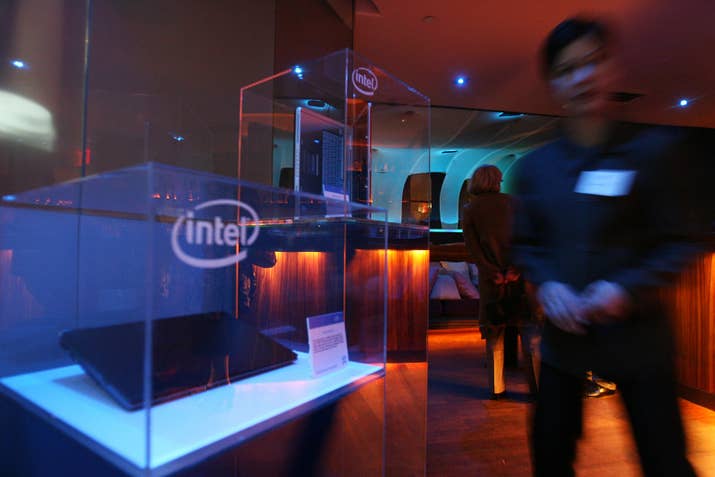
Cybersecurity researchers have discovered two flaws in microprocessors that could grant hackers access to the entire memory stored on practically any computer in the world. On a website created to explain the flaws, researchers wrote that they "don't know" if hackers have exploited the bug. Researchers said they named one flaw "Meltdown" because it "basically melts security boundaries which are normally enforced by the hardware." The name "Spectre" for the second flaw came from the fact that there is no easy fix, which means it will likely "haunt us for quite some time."Google discovers ‘serious’ flaws in Intel and other chips
Report: Most agencies vulnerable to phishing
Nearly half of federal agency email domains have adopted policies to collect data on unauthorized emails, a move mandated by the Department of Homeland Security in October, according to a report by cybersecurity company Agari. The new policies do not block malicious emails or prevent employees from receiving phishing emails, but instead allow email domain owners, such as CIOs, to receive reports on unauthorized messages sent through their domain.To fight cyber crime, we need swords, not just shields
The Labs that protect against on line warfare
Going Underground: The U.S. Government’s Hunt for Enemy Tunnels
TRADOC chief: Army needs to break free from ‘tyranny of training’
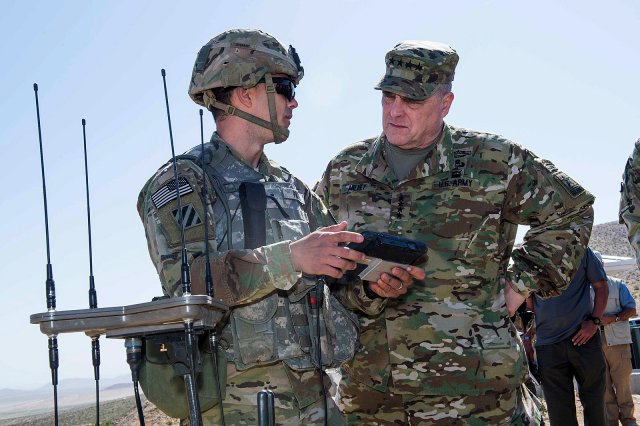
When the U.S. Army first needed to figure out how to make its AirLand Battle concept operational to focus more on the central plains of Europe and the threat from the Soviet Union after the Vietnam War, it used training to drive the combined-arms maneuver concept into the service, according to Gen. David Perkins, the commander of the Army’s Training and Doctrine Command. mAnd now the Army is poised to use training again to bring its new Multi-Domain battle concept to life. But the service’s approach, Perkins said at the Interservice/Industry Training, Simulation and Education Conference on Tuesday, must be different from what it did post-Vietnam when the Army stood up exquisite combat training centers, beginning first with the National Training Center in California, which used top-of-the line equipment and instrumentation and duplicated a world-class opposing force.2018 Forecast: Can The Army Reinvent Itself?
WASHINGTON: Over the next few weeks, US Army leaders will make major decisions about the Futures Command they’re standing up this summer. The new organization will be the biggest departure in how the Army buys weapons in 40 years. Important as it is, however, it’s also just one of many changes the Army must make in 2018. One of the unsung stories of 2017 was how the US Army made big down payments towards progress on multiple fronts: new weapons, new concepts, new organizations. But reinventing a huge institution takes years, and the post-Cold War Army in particular has tended to take two steps forward and 1.9 steps back. Under the irrepressibly energetic Gen. Mark Milley, who became chief of staff in 2015, the largest service seems to be overcoming inertia at last. The challenge is keeping the momentum.