The Profession of Arms: A Guide for Young Army Officers
It takes courage, especially for a young officer, to check a man met on the road for not saluting properly or for slovenly appearance, but, every time he does, it adds to his stock of moral courage, and whatever the soldier may say, he has respect for the officer who does pull him up.
Read Document →The Dragon's Teeth: Assessing China's Military Modernization
PLA has focused on modernising its capabilities across all warfare domains to achieve these goals. This includes land, air, and maritime operations, nuclear, space, counter-space, electronic warfare and cyberspace operations, aiming to become a fully integrated joint force.
Read Document →Transforming the PLA: A Decade of reorganisation from SSF to ISF
PRC has engaged in a sustained and broad effort to transform the PLA from an infantry-heavy, low-technology, ground forces-centric military into a high-technology, networked force with an increasing emphasis on joint operations and naval and air power projection.
Read Document →Eyes without Borders: Exploring the World of Open Source Intelligence (OSINT) in the Digital Age
Open Source Intelligence (OSINT) is gaining prominence with the rise of social media, the digital society and the vast growth of publicly and commercially available information (PAI and CAI).
Read Document →
The PLA’s Developing Cyber Warfare Capabilities and India's Options
Informationised warfare blurs the lines between peacetime and wartime. A nation in the information age cannot wait for the hostilities to break out to collect intelligence, carryout influence operations, develop antisatellite systems or design computer software weapons.
Read Document →
Galwan and After
Why did China did this when he is under tremendous pressure in all fronts, is this China's salami slice tactics being progressed rigorously, what will be new Rules of Engagement, what will be escalatory control mechanism, who has taken this decision, will there be some pressure put by China in India's North-East through insurgency.
Read Document →
India’s Joint Doctrine for Cyberspace Operations: A Critical Review
Chief of Defence Staff (CDS) General Anil Chauhan and Secretary, Department of Military Affairs, formally released declassified versions of the Joint Doctrines for Cyberspace Operations during the Chiefs of Staff Committee meeting in New Delhi.
Read Document →
Know your Enemy General(now Field Marshal) Syed Aseem Munir
Gen SA Munir's position in the hierarchy of Pakistan was not very comfortable. The state of economy, insurgency in Pakhtoonistan and Balochistan, attack on the Jaffar Express, constant protests by supporters of Imran Khan's supporters inside and outside of parliament.
Read Document →
Decoding Operation SINDOOR: Key Aspects and Implications
Precision strikes were carried out on nine sites—four in Pakistan and five in PoK—linked to anti-India terrorist groups such as the LeT, JeM and the Hizbul Mujahideen. The targeted sites included Muridke (LeT headquarters) and Bahawalpur (JeM headquarters).
Read Document →
Chinese Cyber Exploitation in India's Power Grid - Is There a linkage to Mumbai Power Outage?
The New York Times (NYT), based on analysis by a U.S. based private intelligence firm Recorded Future, reported that a Chinese entity penetrated India’s power grid at multiple load dispatch points. Chinese malware intruded into the control systems that manage electric supply across India, along with a high-voltage transmission substation and a coal-fired power plant
Read Document →22 April 2020
Can Southeast Asia Fend Off the One-Two Punch of COVID-19?
How Coronavirus Will Impact the Middle East
Why Tackling Corruption Is Crucial to the Global Coronavirus Response
The dusty border town of Taftan in western Pakistan is a frequent stopover for religious pilgrims. Many members of the country’s Shiite minority pass through it en route to visit holy sites in neighboring Iran. But after Iran emerged as one of the countries hit hardest by the coronavirus, the Pakistani government set up a quarantine camp in Taftan to prevent further movement, inadvertently turning the town into an epicenter for the spread of COVID-19. Testing in the camp is sporadic at best, while health facilities are abysmal. Many pilgrims reportedly paid bribes to escape back into Pakistan, and as recently as the end of March, hundreds of people were still crossing the border at Taftan, despite rules to prevent them. Some officials in the region believe that 95 percent of Pakistan’s coronavirus cases are due to “mismanagement” at the Taftan camp.China’s Aircraft Carriers: Bark or Bite?
China’s Economy Shrinks, Ending a Nearly Half-Century of Growth
BEIJING — The coronavirus outbreak has brought China’s extraordinary, nearly half-century-long run of growth to an end — a stark reminder of the enormous task ahead for world leaders trying to restart the global economy.China’s Coming Upheaval
Over the past few years, the United States’ approach to China has taken a hard-line turn, with the balance between cooperation and competition in the U.S.-Chinese relationship tilting sharply toward the latter. Most American policymakers and commentators consider this confrontational new strategy a response to China’s growing assertiveness, embodied especially in the controversial figure of Chinese President Xi Jinping. But ultimately, this ongoing tension—particularly with the added pressures of the new coronavirus outbreak and an economic downturn—is likely to expose the brittleness and insecurity that lie beneath the surface of Xi’s, and Beijing’s, assertions of solidity and strength.The Spies Who Predicted COVID-19
Moscow Using Pandemic to Shore Up Alliance With Serbia Against NATO and China
The Pandemic Won’t Make China the World’s Leader Few Countries Are Buying the Model or the Message From Beijing
Iran and Coronavirus
The Coronavirus Threatens Saudi Arabia’s Global Ambitions The Kingdom Tallies the Costs of the Pandemic Lockdown
In late February, Saudi Arabia abruptly suspended all visas for umrah, the year-round pilgrimage to Mecca, the holiest city in Islam. Umrah is less important than the hajj, a pilgrimage that happens in the last month of the lunar year and is required of all able-bodied Muslims at least once in their lives, but it still draws nearly eight million annual visitors.European Parliaments in Times of Coronavirus
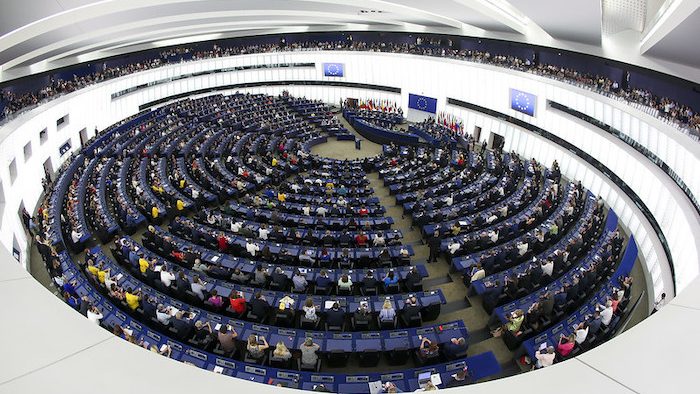
Parliaments perform key tasks in democracies. The Coronavirus disease has led to lockdowns around the world. Measures undertaken by Member States have had an unprecedented impact on public life. Are governments then the main players calling the shots, removing parliaments to the side-lines? A stock-taking exercise shows that in a majority of EU parliaments, MPs are in the process of finding ways to debate – at least the most important crisis measures – and increasingly meet online. It is clear that governments are at the centre stage in this time of emergency. This becomes problematic if there is no clear end to this ‘state of danger’ and when (new) crisis measures are no longer democratically debated.When to re-open the economy
This week, the president says he is facing the hardest decision of his career: when to reopen the nation’s economy. Governors face the same dilemma for their states.Can History’s Biggest Stimulus Stave Off a Coronavirus Depression?
Most Americans learned in school that the New Deal, President Franklin Delano Roosevelt’s sweeping response to the Great Depression, was a turning point in U.S. history. For 90 years, the progressive projects and reforms collected under its rubric defined the role that government could play in society and the manner in which government spending could be used to combat economic crises. The New Deal set the standard for big government intervention. Then came the pandemic of 2020.COVID-19: Why Did Global Health Governance Fail?
How COVID-19’s Economic Crisis Could Slowly Break Up OPEC
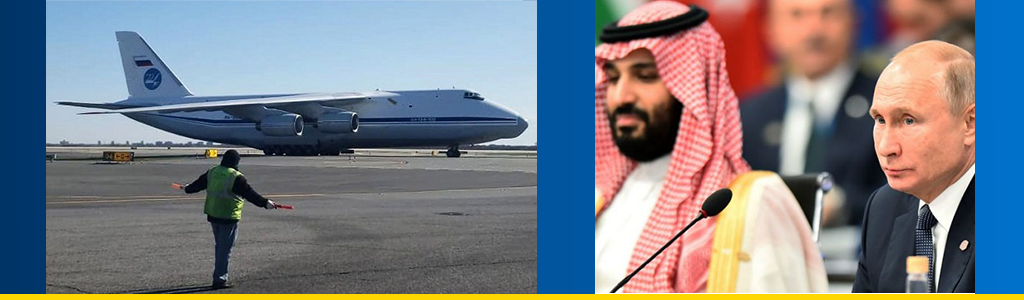
Oil Crisis Tests Putin’s Skill to Project Strength
NEW YORK: Russian President Vladimir Putin refuses to yield under pressure. That is a matter of pride for Putin himself and a key aspect of his appeal to Russian elites and the public alike. The trick is preserving that reputation in the real world, where leaders routinely miscalculate and pivot while remaining loathe to admitting mistakes. The plunge in oil prices because of the COVID-19 pandemic and the collapse of the OPEC+ agreement on production cuts provide the most recent test.The biggest lockdown threat: Hunger, hunger, everywhere
It’s the End of the World Economy as We Know It
A container ship in Qingdao, China. Countries might re-examine their reliance on far-flung supply chains.Credit...CHINATOPIX, via Associated PressSouth Korea Offers a Lesson in Best Practices
Managing the Coronavirus Crisis at the National Level: Not only "What," but "How"
The coronavirus is not about to vanish from our lives, so the quest for a one-shot silver bullet in the form of an "exit strategy" is dangerously misguided. Instead, we will have to learn to manage our lives as individuals, families, and workers under the constraints of the coronavirus; the same applies to running the country, the economy, and other aspects of society. We therefore must build an organizational structure for the sustained management of the crisis, which will include a wide range of governmental, civic, and professional actors.Israel has thus far managed the coronavirus crisis quite successfully; at the same time, there have been some serious mishaps and failings, such as the lags in closing the loop in testing, contagion in nursing homes, and the unmonitored entry of hundreds of infected travelers from abroad. However, we are in the midst of a struggle of unprecedented complexity, and what is important now is not after-the-fact criticism, but a sober appraisal of what lies ahead, and the garnering of the best possible capabilities to deal with it.