September 03, 2015
http://thediplomat.com/2015/09/should-we-stop-calling-kazakhstan-an-autocracy/
 Kazakhstan celebrated Constitution Day on August 30, marking 20 years since the country’s constitution was approved by a referendum in the extended wake of the Soviet Union’s dissolution. In remarks made during a conference marking the holiday and reported by Tengrinews, Kazakh president Nursultan Nazarbayev celebrated Kazakhstan’s stability and pushed back against those that call Kazakhstan an autocracy:
I know that we are often accused of autocracy. But how can one talk about autocracy, when every 4 or 5 years people vote to elect their president and parliament at free alternative elections. We are told to move faster towards democracy practiced by western countries, from the USA to Europe. We understand it all well. Democracy is a path towards development of humanity. We are making our way there. But we also have to consider that our country is an Asian society. Our traditions differ from Western ones. Our cultural and religious views are different. That is why we must pave our way carefully.
In the full remarks, as posted on the president’s official website, Nazarbayev prefaces his defense by highlighting how far Kazakhstan has come since 1995. He says that after the Soviet Union collapsed Kazakhstan was desperately poor, had no experience in self-governing, and had few options. Nazarbayev does not mention Tajikistan specifically, but the reference is certainly implied as he notes how other CIS states experienced conflicts or civil war. A further implication garnered from Nazarbayev’s remarks is that if Kazakhstan had rushed into setting up some idealized version of a Western democracy, it would have disintegrated into chaos.
“Nation-building can not be done on the basis of a strict timetable and utopian plans,” Nazarbayev said, urging others to take into consideration Kazakhstan’s system, history, culture, and traditions.
On social media, Central Asian watchers and human rights activists pushed back in turn on Nazarbayev’s comments. While Kazakhstan does, indeed, hold routine elections, the OSCE repeatedly has reported that the elections lack genuine choice. Of the most recent presidential election, held in April, the OSCE election monitoring mission’s final report said:
Preparations for the 26 April election were efficiently administered, however, necessary reforms for holding genuine democratic elections still have to materialize. The predominant position of the incumbent and the lack of genuine opposition limited voter choice. A restricted media environment stifled public debate and freedom of expression. Election day generally proceeded in an orderly manner, but serious procedural deficiencies and irregularities were noted throughout the voting, counting and tabulation processes.
In a new book, Democracy in Central Asia: Competing Perspectives and Alternative Strategies, Mariya Y. Omelicheva, an associate professor of political science at the University of Kansas, explores how Central Asian regimes understand democracy and why Western efforts to promote democracy in the region have been fumbling, insensitive, and ultimately unsuccessful. In her interview with The Diplomat, Omelicheva said that Central Asians (both governments and the people) “believe that democracy cannot be transferred from one context to another.” Instead, “they embrace a ‘culturally sensitive’ understanding of democracy that take into account historical and cultural experiences of the peoples of the region.”
Whereas Western democracies–those in Europe and the United States–see democracy as universal, Central Asians perceive it as more contextualized. Strong leadership and economic stability are highly valued by Central Asians. Omelicheva conducted surveys throughout the region, which seemed to confirm that a majority of people there embrace “traditional values” that factor into support for strong leadership:
Central Asians, for example, noted the importance of respect for seniority, reverence for parents and older people, and acceptance of gender hierarchies. They also pointed out the importance of “love for motherland.” Less than a quarter of survey participants said that individualism and competitiveness (the two traits associated with democratic consciousness) were among the human qualities they possessed or found important.
This is perhaps what Nazarbayev meant when he said, “I would suggest our friends study our system, history, culture and traditions of the Asian society deeply.” Is one person’s strong leader another person’s autocrat? Many of those who use “autocrat” to describe Nazarbayev are deeply versed in Central Asian history and culture–they just also believe that a free press defines an open society, dissent and debate are necessary for generating better policies, and people ought to be able to practice their religions as they wish. Nazarbayev, put another way, is borrowing a Western policy and advising a kind of “strategic patience” in this regard.
Meanwhile, in neighboring Uzbekistan, the state has decided that political science–the study of government systems, political behavior and activity–is simply not relevant. As reported by RFE/RL, Uzbekistan recently announced the removal of political science from university curriculums, denouncing it as a Western import:
Ultimately, the [Education] ministry determined that “the literature in this field is solely based on Western publications” and doesn’t take into account “our own specific model of development, the Uzbek model.”
Seems to me to be an excellent argument for more Central Asian political scientists, not fewer.
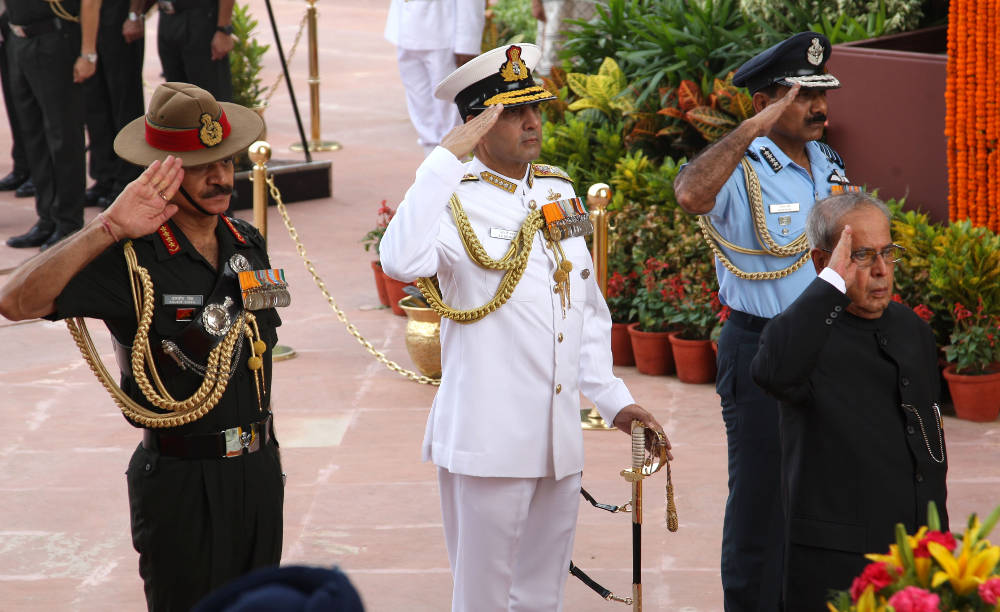 This political decision to commemorate the 1965 war is a departure from earlier practice when Congress-led governments preferred to keep a low profile about India’s rich military history, and this was most evident in 1995 – when the P.V. Narasimha Rao government chose (wrongly, in my view) to stay away from the 50th anniversary recall of World War II and the United Progressive Alliance-II ensured that the 40th anniversary of the 1971 war was muted.