The Profession of Arms: A Guide for Young Army Officers
It takes courage, especially for a young officer, to check a man met on the road for not saluting properly or for slovenly appearance, but, every time he does, it adds to his stock of moral courage, and whatever the soldier may say, he has respect for the officer who does pull him up.
Read Document →The Dragon's Teeth: Assessing China's Military Modernization
PLA has focused on modernising its capabilities across all warfare domains to achieve these goals. This includes land, air, and maritime operations, nuclear, space, counter-space, electronic warfare and cyberspace operations, aiming to become a fully integrated joint force.
Read Document →Transforming the PLA: A Decade of reorganisation from SSF to ISF
PRC has engaged in a sustained and broad effort to transform the PLA from an infantry-heavy, low-technology, ground forces-centric military into a high-technology, networked force with an increasing emphasis on joint operations and naval and air power projection.
Read Document →Eyes without Borders: Exploring the World of Open Source Intelligence (OSINT) in the Digital Age
Open Source Intelligence (OSINT) is gaining prominence with the rise of social media, the digital society and the vast growth of publicly and commercially available information (PAI and CAI).
Read Document →
The PLA’s Developing Cyber Warfare Capabilities and India's Options
Informationised warfare blurs the lines between peacetime and wartime. A nation in the information age cannot wait for the hostilities to break out to collect intelligence, carryout influence operations, develop antisatellite systems or design computer software weapons.
Read Document →
Galwan and After
Why did China did this when he is under tremendous pressure in all fronts, is this China's salami slice tactics being progressed rigorously, what will be new Rules of Engagement, what will be escalatory control mechanism, who has taken this decision, will there be some pressure put by China in India's North-East through insurgency.
Read Document →
India’s Joint Doctrine for Cyberspace Operations: A Critical Review
Chief of Defence Staff (CDS) General Anil Chauhan and Secretary, Department of Military Affairs, formally released declassified versions of the Joint Doctrines for Cyberspace Operations during the Chiefs of Staff Committee meeting in New Delhi.
Read Document →
Know your Enemy General(now Field Marshal) Syed Aseem Munir
Gen SA Munir's position in the hierarchy of Pakistan was not very comfortable. The state of economy, insurgency in Pakhtoonistan and Balochistan, attack on the Jaffar Express, constant protests by supporters of Imran Khan's supporters inside and outside of parliament.
Read Document →
Decoding Operation SINDOOR: Key Aspects and Implications
Precision strikes were carried out on nine sites—four in Pakistan and five in PoK—linked to anti-India terrorist groups such as the LeT, JeM and the Hizbul Mujahideen. The targeted sites included Muridke (LeT headquarters) and Bahawalpur (JeM headquarters).
Read Document →
Chinese Cyber Exploitation in India's Power Grid - Is There a linkage to Mumbai Power Outage?
The New York Times (NYT), based on analysis by a U.S. based private intelligence firm Recorded Future, reported that a Chinese entity penetrated India’s power grid at multiple load dispatch points. Chinese malware intruded into the control systems that manage electric supply across India, along with a high-voltage transmission substation and a coal-fired power plant
Read Document →15 January 2016
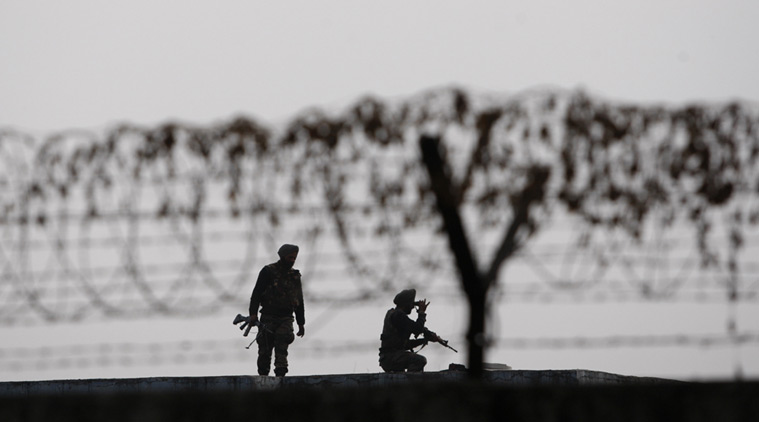
Bringing back the Dead: Why Pakistan Used the Jaish-e-Mohammad to Attack an Indian Airbase
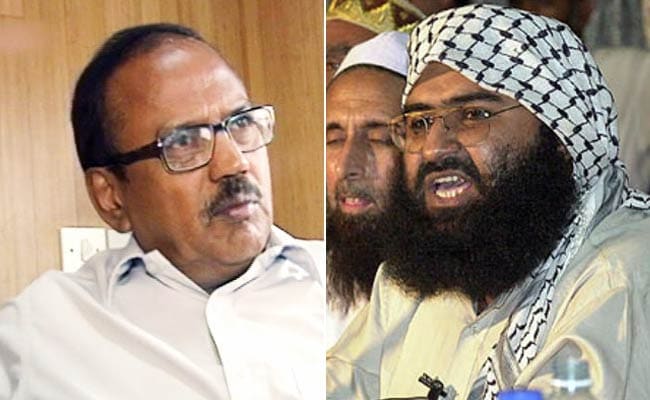
The Paths of NSA Ajit Doval and Masood Azhar Cross Again
Return to the Stilwell Road: Reopening a mythical trade route
Pathankot air base attack: Guns, a dagger and perfume, what the terrorists carried
Simply put: Aims and hurdles of cleaning the Ganga
The government’s Namami Gange programme seeks to tackle the problem at several levels at the same time.
Written by Amitabh Sinha | Updated: January 13, 2016
It isn’t walking on water, but still a very difficult job — one that India has been trying unsuccessfully to accomplish for the last three decades. AMITABH SINHAlists the steps the government has planned to make India’s holiest river pollution-free
Much of the effort to clean the Ganga over the last 30 years has been centred around creating sewage treatment capacities in major urban centres along the river. Besides the fact that a lot of this capacity has remained underutilised or non-functional, the discharge of urban sewage is only one of several interventions required to rid the holy river of pollution.
The government’s Namami Gange programme seeks to tackle the problem at several levels at the same time. “Rejuvenation” of the Ganga includes reviving ‘Aviral Dhara’, or continuous flow in stretches that have gone dry due to natural or man-made reasons, regenerating the river ecology, making the river an important inland waterway, reviving it as a habitat for dolphins and gharials, and spreading awareness about the need to keep the Ganga clean.
But the first step no doubt is to restart the effort to clean the river that runs for some 2,500 km through five states, and is said to provide direct livelihood to almost 13 million Indians.
SOURCES: ‘Ganga River Basin Management Plan, 2015’, prepared by the consortium of 7 IITs; National Mission for Clean Ganga; ‘Ganga Rejuvenation, Challenges and Required Interventions’, GoI. Graphic: Mithun Chakraborty
Treating Urban Sewage
Uttarakhand, Uttar Pradesh, Bihar, Jharkhand and West Bengal together generate over 7,300 million litres of sewage per day that flows directly or indirectly into the river. About half of this comes from Tier I and Tier II towns like Kanpur, Allahabad and Varanasi. Currently, the five states together have the capacity to treat only about 3,300 million litres of sewage — or about 45 per cent of the total. The rest flows into the river untreated. This colossal volume might actually be even greater, because large parts of major urban centres like Kanpur and Varanasi are not even connected to the sewage network, and their waste remains unaccounted for.
To talk or not to talk…
Are We Hostage to A Terrorist Agenda?
So the jinxes doesn’t go away. Like a visitation that can’t be wished away they keep haunting both India and Pakistan and the peace narrative the two neighbours take periodical pains to construct.
What a difference one week can make in the political calculus between India and Pakistan.
December 25 was a D-Day for all those peaceniks who refused to lose their quantum of hope even in the darkest of times. That was the day PM Modi landed, impromptu and previously-unannounced, in Lahore to give Nawaz Sharif and his clan the Christmas gift of a life-time. It all looked so hunky-dory, so impeccable and spic-span for the India-Pakistan bilateral scenario in the New Year, 2016.
But on January 2, the vaulting momentum was violently arrested in its tracks by a bunch of terrorists. Their assault against the Indian Air Force base at Pathankot, within hailing distance of the Pakistan border, blighted the political landscape like a blast from the blue. Suddenly, all bets were off; the rosy prospects of a week ago wilted under shadows of gloom. It seemed like a solar eclipse snuffing all the light out of the political landscape.
But for a very welcome change, the Indian news media didn’t lose its poise under the unexpected strain. It didn’t take the hackneyed line of instantly pointing the finger at Pakistan. That befuddled the Pakistani pundits. It was something novel, something totally different from the temptation to plunge into instantaneous denunciation of Pakistan for its presumed involvement in yet another episode of terrorism on Indian soil.
No doubt the media restraint was taking its cue from the measured and carefully calibrated stance of the Indian government. Delhi didn’t point the accusing finger at Islamabad either. Instead, it dignified its response to the tragedy by insisting that it was too early to know the perpetrators of the dastardly crime.
Delhi’s message between the lines was none other than a signal to Islamabad that, buoyed by the salutary impact of Modi’s masterly Santa-diplomacy, it was ready to give Pakistan the benefit of doubt. ‘Come clean,’ the message seemed to suggest, ‘either prove your innocence or if we furnish you evidence of imprints of Pakistani non-state actors in the crime then bring them to book.’
Pakistan Is Caught in the Middle of the Conflict Between Iran and Saudi Arabia
Omar Waraich @OmarWaraich Jan. 11, 2016
It has large Sunni and Shi‘ite populations and needs the cooperation of both Riyadh and Tehran
After severing ties with Iran — following the torching of the Saudi embassy in Tehran by protesters angered by the execution of a dissident Shi‘ite Saudi cleric — Saudi Arabia is courting Pakistan’s support in its widening dispute with its long-standing regional rival.
In their first foreign trips this year, Adel al-Jubeir, the Saudi Foreign Minister, and Prince Mohammed bin Salman, the deputy crown prince and Defense Minister, traveled to Islamabad last week, within days of each other, meeting civilian leadership but also, crucially, Pakistan’s powerful generals.
Since announcing a 34-country “Islamic military alliance” last November, Saudi Arabia has been seeking the inclusion of the Muslim world’s second most populous country and sole nuclear power. The Pakistanis said they were initially surprised to learn of the coalition, but a Foreign Ministry spokesman reluctantly acknowledged Islamabad’s membership.
A senior Pakistani official also told TIME, “We are part of the coalition, but we will only be acting in our national interest.”
Following meetings with Prince Mohammed bin Salman on Sunday, the Pakistan army issued a statement asserting “that any threat to Saudi Arabia’s territorial integrity would evoke a strong response from Pakistan.” Pakistan’s Prime Minister Nawaz Sharif struck a more conciliatory tone, suggesting that Islamabad was willing to play the role of mediator between Saudi Arabia and Iran.
What “One Belt, One Road” Could Mean for China’s Regional Security Approach
by Guest Blogger for Elizabeth C. Economy
January 12, 2016
In November, when the Islamic State group executed Chinese hostage Fan Jinghui, a Chinese advertising consultant and self-identified “wanderer,” Chinese netizens quickly vented their frustration over the government’s limited response. One Weibo user wrote, “It’s time for China as a big power to stand up and act.” Although Chinese censors temporarily blocked keywords such as “hostage” and “IS,” the burst of online sentiment raised questions about how the Chinese government would react to the mounting threat posed by terrorism both abroad and within its borders. In particular, would the specter of the Islamic State lead China to change its regional security strategy as it expands its trade and investment presence under its “One Belt, One Road” initiative?
China’s “One Belt, One Road” (OBOR) policy is an ambitious effort to link the country through infrastructure, telecommunications, and finance to Central Asia, the Middle East, Africa, and Europe. Over the next ten years, Beijing aspires to achieve 2.5 trillion dollars in annual trade with the nations involved in OBOR. Chinese policy analysts are well aware of the security concerns posed by the project. Tsinghua University professor Zhao Kejin has noted, “As China becomes more involved in economic globalization and closely integrated with the world – especially with the ‘Road and Belt’ initiative and its underlying projects – ISIS is not an issue the country can get around.”
China has long claimed that it faces an externally supported terrorist threat inside its borders, particularly in the predominantly Muslim autonomous region of Xinjiang. With approximately 70 percent of the trade between China and Central Asia passing through Xinjiang, its stability is vital to the success of the Silk Road Economic Belt. Yet the region has been the site of significant ethnic violence. After the Paris attacks, leaders cited a Septemberattack on a mine in northwest Xinjiang that killed fifty people as evidence of China’s domestic terrorist threat and Chinese foreign minister Wang Yi stated, “China is also a victim of terrorism.” However, a debate persists between foreign observers and Chinese officials over the sources of regional unrest and what constitutes terrorism.
China is building its first military base in Africa. America should be very nervous.
James Poulos
REUTERS, January 12, 2016
Africa is likely to become one of the biggest stories of 2016, and not because of some horrific new disease or harrowing new war. Instead, an unprecedented new dynamic is about to shape the continent. The U.S. and China, major powers with a minor footprint, are both poised for much deeper and more direct involvement in African affairs.
And rather than finding themselves on a crash course, they're facing a more complex — and, for America, unnerving — situation. Thanks to the much different challenges and priorities facing both powers, African intervention is shaping up as a feast for China and a famine for the U.S.
Look to Djibouti for big clues about why. News is quietly breaking that China has sealed a deal to build its first military base in that little country, a former French colony strategically located across from Yemen on the Red Sea, squeezed between Eritrea and Somalia. Confirming years of under-the-radar suspicions, AFRICOM commander Gen. David Rodriguez told The Hill that the "logistics hub" and airfield will let China "extend their reach" into Africa over the course of an initial 10-year contract. Currently, The Hill observed, China can't do much more than stage some naval patrols out of Djibouti ports.
Given China's breakneck expansion into Africa, that's just not good enough. In Africa, China has found not just a market for money but for jobs and land — crucial components of sustained economic growth. As December's Forum on China-Africa Cooperation revealed, the Middle Kingdom wants to ensure privileged access to that kind of future. Although it's hard to unravel the details, Beijing used the Forum to pledge $60 billion in loans and export credits.
No, the Chinese aren't about to lap the U.S. in investment anytime soon, but the financials have taken on an extra edge at a moment when Beijing needs all the good news it can get. "China operates in Africa with greater aplomb and with more nuanced and mutually beneficial relationships than America's corporations and its federal [government]," as one private equity analyst noted at the Council on Foreign Relations. "The USG's most visible diplomatic effort in Africa, Power Africa, is sputtering. American businesses haven't sufficiently picked up the slack."
Why Saudi Arabia May Be the Next Syria
The Islamic State group (ISIS) is running up against a wall. As national coalitions take a larger role in the fight against ISIS, the group will become increasingly unable to operate on as large a scale as it has in years past, and it will be pushed out of its previously held territories – its decline may take years or even decades, but it will ultimately decline. But although ISIS may deplete its resources and feel increasing pressure from the international community, its members will not simply disappear as the group loses momentum. ISIS is largely comprised of foreign fighters with limited ties to the countries they fight in, and in the event of a relocation, one country in particular looks like a promising alternative – Saudi Arabia. With internal unrest, the threat of oil-driven economic instability and a history of conflict with its neighbors, the House of Saud is ripe for insurgency and would be the ideal next location for jihadists looking for a new rallying point. As ISIS loses steam and is pushed out of its old stomping grounds, Saudi Arabia is in danger of becoming the next ground zero for terrorism in the region.
Internal Risk Factors
Saudi Arabia has always faced unique demographic and socio-economic challenges. Out of a population of approximately 28 million people, immigrants make up nearly a third of entire population and over three-quarters of the labor force. Approximately 70% of the population is under the age of 30, and within that age group, unemployment is close to 30%. Nationals and non-nationals alike live under Sharia law with strict Wahhabi principles dictated by the royal family and the religious leadership of the ulema, which often cause strains within the immigrant population as well as the native population. While some within the kingdom push for modernization, the ultra-conservatives consistently call for increased rigidity in religious practice, causing friction within the royal family and the Saudi population as a whole. The recent ascension of King Salman last year has only added fuel to the fire as the internal politics of the royal family add another layer of uncertainty, opening the door for terrorist groups who might take advantage of the instability.
The army of the desperate
Jan 11, 2016, Talmiz Ahmad
The ISIS’ allure is that it is fighting these Arab tyrants across the region, even as it fulfils the longing of its adherents to participate in a cause that is founded on their own history and traditions
Last year, as he addressed the congregation from the pulpit of the mosque in Mosul, the self-styled caliph Abu Bakr al-Baghdadi invited all Muslims to migrate to the Islamic State “because hijra to the land of Islam is obligatory”. He described his territory as one where “the Arab and non-Arab, the white man and black man, the easterner and the westerner are all brothers, (where) their blood mixes and becomes one, under a single flag and goal.”
The number of those who responded to this call is staggering: the Islamic State of Iraq and Syria (ISIS) is said to have 200,000 fighters, of whom a third are already battle-hardened. Most of them are from Iraq and Syria, but at least 30,000 are foreigners from 80 countries; about 7,000 are from Europe, including 2,500 women. Till last year, when controls at the Turkey-Syria border were lax, a few hundred young recruits used to cross over to join ISIS every day. Most of the men are aged between 15-20 years, while the minimum age of women is only slightly higher. The men are paid a salary of $500-650 per month. A marriage bureau facilitates marriages, while a counselling office handles marital difficulties.
Not surprisingly, most of the recruitment is done online. ISIS employs the latest social media and the most talented IT specialists, putting its messages across in different languages through hard-to-detect tools such as Kik, WhatsApp and Skype. It has its own Facebook (“Muslimbook”), mobile phone app and a videogame in which American soldiers in Iraq are targeted. Given the centrality of digital technology, the distinguished Arab commentator Abdel Bari Atwan refers to the ISIS as “The Digital State” and says that without the Internet ISIS would not have recruited its army or succeeded in its territorial conquests.
Most fighters are allured through slick recruitment films, such as one titled There is No Life Without Jihad, which has interviews with three jihadis from different backgrounds talking about their battles, as also the comfortable home life they have in the ISIS. One jihadi says there is “no cure for depression (like) the honour of coming to jihad”. ISIS does not only want fighters; people with different skills are welcome: “There is a role for everybody,” the video says.
Messages projected are of two kinds: Those that use the street slang of young people (“jihadi-cool”) and focus on the “brotherhood” of the gang, showing the ISIS as a place where you can “belong”, and the other that focuses on battles and the killing of hostages and enemy forces, and exalts martyrdom as the highest achievement of the jihadi fighter.
THE ISLAMIC STATE VS. AL-QAEDA: THE WAR WITHIN THE JIHADIST MOVEMENT
DAVEED GARTENSTEIN-ROSS, NATHANIEL BARR AND BRIDGET MORENG
JANUARY 13, 2016
The post-Arab Spring period has seen extraordinary growth in the global jihadist movement. In addition to theIslamic State seizing a vast swathe of territory spanning Syria and Iraq and al-Qaeda establishing itself as a potent military force in the Syrian civil war, instability and unfulfilled expectations in numerous countries — including Egypt, Libya, Mali, Tunisia, and Yemen — have presented jihadists with unprecedented opportunities.
But even as the jihadist movement experiences rapid growth, it has also endured unprecedented internal turmoil. The Islamic State’s emergence marks the first time that leadership over the global jihadist movement has been seriously contested. Since that group’s expulsion from the al-Qaeda network in February 2014, a fierce competition between the Islamic State and al-Qaeda has defined the militant landscape. The United States has an opportunity to exploit and aggravate fissures within the jihadist community, but to do so successfully, it is essential to understand the differences in the modus operandi of these two rival jihadist groups.
Two Models of Revolutionary Warfare
Though al-Qaeda and the Islamic State share the same ultimate goal — establishing a global caliphate ruled by an austere version of sharia (Islamic law) — each group maintains a distinct approach to revolutionary warfare. Al-Qaeda has come to favor covert expansion, unacknowledged affiliates, and a relatively quiet organizational strategy designed to carefully build a larger base of support before engaging in open warfare with its foes. By contrast, the Islamic State believes that the time for a broader military confrontation has already arrived, and has loudly disseminated its propaganda to rally as many soldiers as possible to its cause. The group combines shocking violence with an effective propaganda apparatus in an effort to quickly build its base of support.
The Maoist and focoist schools of revolutionary thought provide a useful framework for understanding these groups’ differing strategies. Al-Qaeda exhibits a revolutionary strategy that is both implicitly and explicitly based on the works of Mao Tse-tung, while the Islamic State’s approach is more consonant with the focoist writings of Ernesto “Che” Guevara and Rรฉgis Debray.
One Map That Explains the Dangerous Saudi-Iranian Conflict
https://theintercept.com/2016/01/06/one-map-that-explains-the-dangerous-saudi-iranian-conflict/
The Kingdom of Saudi Arabia executed Shiite Muslim cleric Nimr al-Nimr on Saturday. Hours later, Iranian protestors set fire to the Saudi embassy in Tehran. On Sunday, the Saudi government, which considers itself the guardian of Sunni Islam, cut diplomatic ties with Iran, which is a Shiite Muslim theocracy.
To explain what’s going on, the New York Times provided a primer on the difference between Sunni and Shiite Islam, informing us that “a schism emerged after the death of the Prophet Muhammad in 632” — i.e., 1,383 years ago.
But to the degree that the current crisis has anything to do with religion, it’s much less about whether Abu Bakr or Ali was Muhammad’s rightful successor and much more about who’s going to control something more concrete right now: oil.
In fact, much of the conflict can be explained by a fascinating map created by M.R. Izady, a cartographer and adjunct master professor at the U.S. Air Force Special Operations School/Joint Special Operations University in Florida.
What themap shows is that, due to a peculiar correlation of religious history and anaerobic decomposition of plankton, almost all the Persian Gulf’s fossil fuels are located underneath Shiites. This is true even in Sunni Saudi Arabia, where the major oil fields are in the Eastern Province, which has a majority Shiite population.
As a result, one of the Saudi royal family’s deepest fears is that one day Saudi Shiites will secede, with their oil, and ally with Shiite Iran.
This fear has only grown since the 2003 U.S. invasion of Iraq overturned Saddam Hussein’s minority Sunni regime, and empowered the pro-Iranian Shiite majority. Nimr himself said in 2009 that Saudi Shiites would call for secession if the Saudi government didn’t improve its treatment of them.

The map shows religious populations in the Middle East and proven developed oil and gas reserves. Click to view the full map of the wider region. The dark green areas are predominantly Shiite; light green predominantly Sunni; and purple predominantly Wahhabi/Salafi, a branch of Sunnis. The black and red areas represent oil and gas deposits, respectively.
ISIS guide teaches jihadis how to blend in
JANUARY 11, 2016
ISIS warning ... Islamic State has urged its fighters to follow its guidelines to avoid being captured.
SHAVE your beard, wear western-style clothes and act Christian.
These are some of Islamic State’s tips to help jihadists blend in as they plan attacks in western countries.
The 62-page Safety & Security Guidelines for Lone Wolf Mujahideen (Jihadis) provides an unsettling glimpse at the lengths Islamic State recruits will go to in their attempt to avoid detection by intelligence services.
The guide recommends that would-be attackers establish cells with four or five members working with only each other and having no link with any other group, to avoid a mass neutralisation.
Guide for ISIS attacks ... the front cover of the guide features the Statue of Liberty and other global landmarks in ruins. Picture: Supplied
“If you are the one who established many independent cells or independent small groups, if you get caught, you could be the reason all those groups and cells get dismantled. So your responsibility at that time would be to put yourself in security, by going to the front lines of the open battlefields in Afghanistan or Iraq, or to enlist for a martyrdom operation, so that your secret goes with you. That’s because your mere presence is a danger to all these established cells and groups,” the guide reads.
Experts: Ukrainian cyberattack on power supply a 'wake-up call' for US
Obama prefers special ops to combat forces in the war on terrorism. It's not working.
Thomas thus becomes the third Joint Special Operations commander in a row to ascend to lead SOCOM and Votel becomes the latest special ops veteran elevated to a senior command, following the precedent set by Gen. Stanley McChrystal, who went from Joint Special Operations Command to director of the Pentagon's Joint Staff to command in Afghanistan.
This may sound like Pentagon inside baseball, but it actually reflects an important trend: the extent to which President Obama depends on Special Operations forces, especially the joint command, which specializes in direct action missions: kicking down doors and killing or capturing terrorists. Army Special Forces, popularly known as Green Berets, by contrast, specialize in the less sexy mission of working “by, with and through” indigenous forces. No career Green Beret officer has ever been put in charge of SOCOM.
Having become president by strongly opposing the Iraq war, Obama is loath to commit ground forces to combat. But it's a different story with special operations forces. Wherever the president sees a terrorist threat, his preferred solution is to use drones or special ops troops to stage “surgical” strikes against “high-level targets.”
And how is this strategy working? Thomas told a West Point interviewer last spring that in the war on terrorism “we're losing across the board.” That's not because of any lack of valor or skill on the part of the troops Thomas commands. Special operators can eliminate individual terrorist leaders such as Osama bin Laden, but they cannot eliminate the organizations those leaders run.
Since Bin Laden's death in 2011, the terrorist threat has only gotten worse. Al Qaeda central, in Pakistan, has been weakened but its affiliates, in Yemen, Syria and elsewhere are stronger than ever. Meanwhile Islamic State has emerged from the ruins of Al Qaeda in Iraq, whose founder, Abu Musab Zarqawi, was killed by special forces in 2006. Islamic State not only administers a “caliphate” sprawling across the borders of Iraq and Syria, but it is also proliferating from Libya to Afghanistan and inspiring killers from Paris to San Bernardino.
What the administration has been missing all along in the fight against Islamic extremists is a comprehensive counterinsurgency plan.-
ISIS Has Built A Secure Messaging App
JANUARY 12, 2016 BY PATRICK TUCKER
Facebook and other big tech companies aren’t the only ones who can create apps for encrypted communication.
ISIS has a new Android app for exchanging secure messages, joining another app that distributes propaganda and recruiting material, according to a counterterrorism network called the Ghost Security Group.
Last month, Ghost Security and others,observed ISIS members using private messages on the Telegram app and direct messages on Twitter to send followers to a site (since vanished) to download the Amaq Agency app.
“The application’s primary purpose is for propaganda distribution. Using the app you are able to follow the most recent news and video clips.” Ghost Security representatives told Defense One. The Amaq Agency has known ties to Islamic State and issued statements in support of the attackers in the recent California shootings before all the details were publicly available. .
Shortly after, Ghost Security discovered a separate app called Alrawi.apk, or just “the Alrawi app,” Initially, they believed it to resemble the Amaq Agency app. But on Jan. 11, they discovered “encrypted communications features although rudimentary to Telegram or other more-company created ones,” a Ghost Security representative told Defense One in an email.
The app joins ISIS’ other known methods of communication to individuals and groups. Among their favorite is Telegram, the a messaging app created by Pavel Durov, a Russian entrepreneur residing in Germany. Telegram allows encrypted communication to individuals, similar to Facebook’sWhatsApp; as well as a public broadcasting capability.
Immediately after the Paris attacks in November, credited toISIS-affiliated gunmen, Telegram suspended 78 public ISIS-related channels in 12 languages. But Durov has made no promises that private chats could be shut down.
Towards a Principled Approach to Engagement with Non-state Armed Groups for Humanitarian Purposes
White House Raises Encryption Threat in Silicon Valley Summit
https://theintercept.com/2016/01/08/white-house-raises-encryption-threat-in-silicon-valley-summit/a
Top Obama administration officials are holding a summit meeting on counterterrorism on Friday in Silicon Valley with top tech executives, including Apple CEO Tim Cook. The White House delegation includes Chief of Staff Denis McDonough, Attorney General Loretta Lynch, FBI Director James Comey, and Director of National Intelligence James Clapper. “The goal here is to find additional ways to work together to make it even harder for terrorists or criminals to find refuge in cyberspace,” White House Press Secretary Josh Earnest said at a news briefing.
The highly controversial topic of encryption is very much on the agenda, according to excerpts from a White House briefing distributed to participants of the summit, obtained by The Intercept. Read the excerpts below.
In addition to using technology to recruit and radicalize, terrorists are using technology to mobilize supporters to attack and to plan, move money for, coordinate, and execute attacks. The roles played by terrorist leaders and attack plotters in this activity vary, ranging from providing general direction to small groups to undertake attacks of their own design wherever they are located to offering repeated and specific guidance on how to execute attacks. To avoid law enforcement and the intelligence community detecting their activities, terrorists are using encrypted forms of communications at various stages of attack plotting and execution. We expect terrorists will continue to use technology to mobilize, facilitate, and operationalize attacks, including using encrypted communications where law enforcement cannot obtain the content of the communication even with court authorization. We would be happy to provide classified briefings in which we could share additional information.
IS THE U.S. MILITARY’S PLAN TO KEEP ITS EDGE FATALLY FLAWED?
ROBERT HADDICK, JANUARY 13, 2016
As 2015 came to a close, U.S. Deputy Secretary of Defense Robert Work described the Pentagon’s emerging third offset strategy at an event sponsored by the Center for a New American Security (War on the Rocks and CNAS have collaborated on the Beyond Offset series at this website). In a sharp break from the past 15 years, Work focused on the frightening prospect of conventional war against major near-peer competitors such as China and Russia. “This talk is all about conventional deterrence,” Work explained, a condition he believed is weakening due to the diffusion of advanced military technology around the world.
As with the previous two offset strategies (the Eisenhower administration’s focus on nuclear weapons in the 1950s and the precision munitions revolution of the 1970s), the third offset aims to achieve a new era of U.S. military-technical dominance. The need for such U.S. dominance should be indisputable — it would be foolish to simply spend more on legacy and increasingly uncompetitive systems and concepts when competitors like China will be able to match that spending and with lower unit costs.
Secretary Work should be commended for pushing this project. However, his speech (or, more precisely, what he did not discuss) revealed at least four concerns that raise doubts about the third offset initiative. The project is still in its childhood, with much presumably still under development. Yet these concerns are foundational and overshadow the technological points that were the center of Work’s remarks.
It’s the Access, Stupid
The third offset’s description doesn’t appear to address the central problem facing U.S. military forces. Work’s speech focused on the third offset’s five technology-related initiatives:
“Learning machines” that take advantage of “big data” and iterative processes to improve performance,
Human–machine collaboration, whereby equipment and software improve the presentation of data so humans can make better decisions,
Assisted human operations, where machines will directly boost the physical and mental performance of humans,
Human–machine combat teaming, where manned and unmanned systems will work in groups, exploiting the advantages of both, and
Autonomous weapons that will be resistant to adversary cyber and electronic warfare effects.
Companies, Scientists, and Activists Worldwide Call On Global Leaders to Protect Strong Encryption
https://theintercept.com/2016/01/11/companies-scientists-and-activists-worldwide-call-on-global-leaders-to-protect-strong-encryption/
Nearly 200 experts, companies, and activists in 42 countries have signed a letter demanding that world leaders take a stand in support of encryption technology, which protects nearly every internet transaction from banking and health records to emails and web browsing.
The letter, organized by Access Now, comes in response to the challenges being mounted against strong encryption by administrations — in the U.S. and worldwide — concerned that the technology gives criminals and terrorists a “safe space” to communicate and commit crimes with impunity.
“We’re seeing threats come up all over the world,” said Amie Stepanovich, U.S. policy manager for Access Now, to The Intercept. “This is a response to that — to draw clear lines in the sand between what is and isn’t acceptable when it comes to the government acting on encryption.”
“We urge you to protect the security of your citizens, your economy, and your government by supporting the development and use of secure communications tools and technologies, rejecting policies that would prevent or undermine the use of strong encryption, and urging other leaders to do the same,” reads the letter.
In the U.S., FBI and DOJ officials have repeatedly described encryption as a major obstacle to public safety, shadowing criminal communications from view — but when asked for real-life examples of encryption thwarting major investigations, they haven’t produced credible evidence.
When it comes to uncrackable end-to-end encryption, technologists have been nearly unanimous that trying to build government access into encryption technology would be more dangerous than beneficial — allowing criminals and other nation-states the potential for that same access — and that there’s no going back, anyway.
Apple’s Tim Cook Lashes Out at White House Officials for Being Wishy-Washy on Encryption
https://theintercept.com/2016/01/12/apples-tim-cook-lashes-out-at-white-house-officials-for-being-wishy-washy-on-encryption/
Apple CEO Tim Cook lashed out at the high-level delegation of Obama administration officials who came calling on tech leaders in San Jose last week, criticizing the White House for a lack of leadership and asking the administration to issue a strong public statement defending the use of unbreakable encryption.
The White House should come out and say “no backdoors,” Cook said. That would mean overruling repeated requests from FBI director James Comey and other administration officials that tech companies build some sort of special access for law enforcement into otherwise unbreakable encryption. Technologists agree that any such measure could be exploited by others.
But Attorney General Loretta Lynch responded to Cook by speaking of the “balance” necessary between privacy and national security – a balance that continues to be debated within the administration.
The exchange was described to The Intercept by two people who were briefed on the meeting, which the White House called to discuss a variety of counterterrorism issues with representatives from Apple, Facebook, Twitter, Cloudflare, Google, Drop Box, Microsoft, and LinkedIn.
The Washington Post reported in September that the White House had decided not to pursue legislation against unbreakable encryption. But the intelligence community’s top lawyer was quoted in an email saying that that the administration should be “keeping our options open…in the event of a terrorist attack or criminal event where strong encryption can be shown to have hindered law enforcement.”
And Comey has been urging technology companies to voluntarily alter “their business model” and stop offering end-to-end encryption by default.
If you're reading this with Internet Explorer, stop in the name of security
Facebook Messenger is everywhere, but what is it for?
Facebook Messenger topped 800 million users and was the fastest growing app in 2015. To capitalize on the large audience, Facebook is redefining the app to become something closer to a platform than a messaging service.
By Corey Fedde, Staff January 8, 2016
When announced in 2011, Facebook’s decision to create a separate messaging app drew skepticism, but today users now total more than 800 million.
The Facebook Messenger app was the fastest growing app of 2015, according to a study by research firm Nielsen, which found that the app grew its user base 31 percent from 2014. Facebook Messenger user base still trails behind the 900 million users of WhatsApp, a messaging service that is also owned by Facebook.
Still, Messenger is approaching a state of near ubiquity, so the social media company is seeking to change and redefine it. Despite the name, plans allude to a future beyond Facebook messages.
"One of the things we have to work on this year is this perception or mindset that Messenger is only to speak with your Facebook friends," vice president of messaging products David Marcus told Reuters.
Last year, Facebook took steps to open Messenger up to more than just Facebook friends. In June 2015, Facebook allowed users without Facebook accounts – registration was done with a name, phone number, and photo. Messenger users can also reach out to others, even if they aren’t Facebook friends.
For 2016, Facebook plans on continuing this trend, according to a statement by Mr. Marcus. Attracting more users and retaining them with more options for communication, including video chat, emojis, and GIFs, Facebook aims to make SMS and texting extinct.
Think about it: SMS and texting came to the fore in the time of flip phones. Now, many of us can do so much more on our phones; we went from just making phone calls and sending basic text-only messages to having computers in our pockets. And just like the flip phone is disappearing, old communication styles are disappearing too. With Messenger, we offer all the things that made texting so popular, but also so much more.