The Profession of Arms: A Guide for Young Army Officers
It takes courage, especially for a young officer, to check a man met on the road for not saluting properly or for slovenly appearance, but, every time he does, it adds to his stock of moral courage, and whatever the soldier may say, he has respect for the officer who does pull him up.
Read Document →The Dragon's Teeth: Assessing China's Military Modernization
PLA has focused on modernising its capabilities across all warfare domains to achieve these goals. This includes land, air, and maritime operations, nuclear, space, counter-space, electronic warfare and cyberspace operations, aiming to become a fully integrated joint force.
Read Document →Transforming the PLA: A Decade of reorganisation from SSF to ISF
PRC has engaged in a sustained and broad effort to transform the PLA from an infantry-heavy, low-technology, ground forces-centric military into a high-technology, networked force with an increasing emphasis on joint operations and naval and air power projection.
Read Document →Eyes without Borders: Exploring the World of Open Source Intelligence (OSINT) in the Digital Age
Open Source Intelligence (OSINT) is gaining prominence with the rise of social media, the digital society and the vast growth of publicly and commercially available information (PAI and CAI).
Read Document →
The PLA’s Developing Cyber Warfare Capabilities and India's Options
Informationised warfare blurs the lines between peacetime and wartime. A nation in the information age cannot wait for the hostilities to break out to collect intelligence, carryout influence operations, develop antisatellite systems or design computer software weapons.
Read Document →
Galwan and After
Why did China did this when he is under tremendous pressure in all fronts, is this China's salami slice tactics being progressed rigorously, what will be new Rules of Engagement, what will be escalatory control mechanism, who has taken this decision, will there be some pressure put by China in India's North-East through insurgency.
Read Document →
India’s Joint Doctrine for Cyberspace Operations: A Critical Review
Chief of Defence Staff (CDS) General Anil Chauhan and Secretary, Department of Military Affairs, formally released declassified versions of the Joint Doctrines for Cyberspace Operations during the Chiefs of Staff Committee meeting in New Delhi.
Read Document →
Know your Enemy General(now Field Marshal) Syed Aseem Munir
Gen SA Munir's position in the hierarchy of Pakistan was not very comfortable. The state of economy, insurgency in Pakhtoonistan and Balochistan, attack on the Jaffar Express, constant protests by supporters of Imran Khan's supporters inside and outside of parliament.
Read Document →
Decoding Operation SINDOOR: Key Aspects and Implications
Precision strikes were carried out on nine sites—four in Pakistan and five in PoK—linked to anti-India terrorist groups such as the LeT, JeM and the Hizbul Mujahideen. The targeted sites included Muridke (LeT headquarters) and Bahawalpur (JeM headquarters).
Read Document →
Chinese Cyber Exploitation in India's Power Grid - Is There a linkage to Mumbai Power Outage?
The New York Times (NYT), based on analysis by a U.S. based private intelligence firm Recorded Future, reported that a Chinese entity penetrated India’s power grid at multiple load dispatch points. Chinese malware intruded into the control systems that manage electric supply across India, along with a high-voltage transmission substation and a coal-fired power plant
Read Document →18 November 2019
Tiger Triumph: US-India Military Relations Get More Complex
DESERTIFICATION IS DEVOURING INDIA. BUT THERE’S HOPE IN THE DUNES
In monsoon season, farmers in Maharashtra’s Dhule district are torn between hoping for a downpour and dreading it. The barren area needs water — but as the already dry ground becomes increasingly degraded, rainwater could erode the shallow topsoil that remains and destroy the few plants still able to grow there.Why India's financial system is vulnerable to hacks
A recent cyber-attack on a nuclear power plant has sparked a debate on the country's ability to protect itself in a cyber-war. But experts say Indians should be more worried about the vulnerability of its financial systems. The BBC's Ayeshea Perera finds out more.Prolonged Patience: Elections in Afghanistan
The results are still being debated and turnout was low. But Afghanistan’s democracy remains the lone source of hope for the country.Pakistan’s Sit-In Protests Come to an End, But Key Issues Remain Unresolved
China’s Pacific Challenge
China’s outreach to Pacific island states is gaining steam, to the chagrin of other regional powers.China: The Great Rebalancing
WTO Reform: Will China Be Part of the Problem or Part of the Solution?
China’s centrally managed economy continues to pose challenges for the international trading system. Will Beijing acknowledge that fact?Look Out, Israel: China May Have Stolen The Iron Dome
A cybersecurity firm reports that Chinese hackers have stolen technical data for the Iron Dome rocket-defense system from Israeli computers.China, Vietnam will never agree on South China Sea
While Hanoi threatens an arbitral complaint at The Hague, Beijing avers its competing sea claims are rooted in ‘historical fact’The World’s Migration and Refugee Challenge in 2019
The migration and refugee crisis is getting worse. Though the sudden influx of migrants into Europe in 2015/2016 did not repeat itself today’s overall figures speak for themselves: 26 million refugees worldwide, 800 thousand apprehensions at the US-Mexican border, 184 thousand asylum applications in Germany in 2018, 120 thousand in France and 581 thousand in the European Union. The Venezuelan crisis where 5 million persons left the country spills over into the EU where a growing number of Venezuelans and Latin Americans apply for asylum. The living conditions of migrants are appalling as hundreds of thousands survive illegally in the EU, many of them in dreary tent cities or squatting on streets.Beating Nazi Germany's Enigma Code Won The Allies World War II
Nothing seemed to work. The Allied codebreakers tried every possible trick and combination, but these new ciphers defied all attempts at decryption. On February 1, 1942, British analysts discovered they could no longer read intercepted radio communications between German U-boat captains and their commanding officer, Vice Admiral Karl Dรถnitz. Overnight, a vital part of the United Kingdom’s super-secret cryptanalytic program—Ultra—had been plunged into darkness.River of the Dammed
In October, Ethiopian Prime Minister Abiy Ahmed won the Nobel Peace Prize for his work in starting peace negotiations with Eritrea. But his country is still in the middle of another major dispute that threatens regional stability. This one is over the waters of the Nile River, specifically, Ethiopia’s plans to build the Grand Ethiopian Renaissance Dam on the river’s Blue Nile tributary. Egypt considers the dam to be a looming threat to its very survival. Ethiopia, on the other hand, sees the undertaking as essential for its development and has vowed to continue the project no matter the ramifications.Could The Latest Threat To America's Aircraft Carriers Be From A Russian Anti-Tank Missile?
Could Russian Kornet Anti-Tank Guided Missiles (ATGMs) attack the USS Abraham Lincoln, a Nimitz-class aircraft carrier?The Indo-Pacific: A Survival Guide for ‘Hobbits’
Counting the Cost of Financial Warfare: Recalibrating Sanctions Policy to Preserve U.S. Financial Hegemony
Trump’s Abandonment Of Syria’s Kurds: A Catalyst For Division In Europe? – Analysis
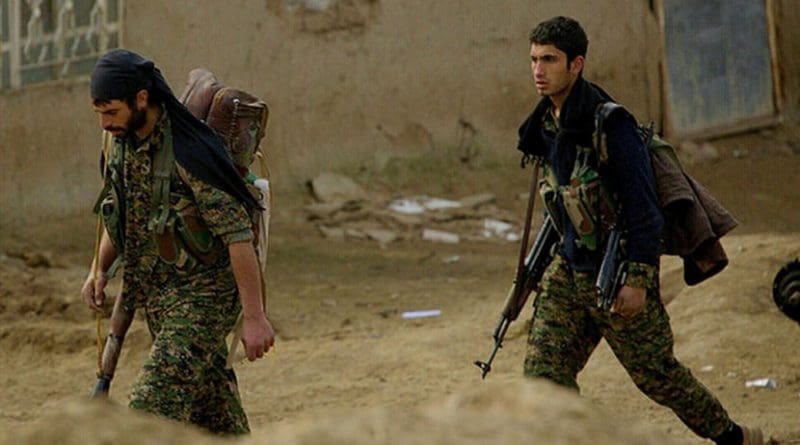
On 6 October, after a phone call with his Turkish counterpart, US President Donald Trump ordered the withdrawal of US forces from Kurdish-held areas in Syria. The move allowed Turkish President Erdogan to launch his long sought-after military operation against the Kurdish People’s Protection Units (YPG)—a group that formed the backbone of the US-led campaign against the so-called Islamic State (IS) in Syria, but is considered a terrorist organisation in Turkey. Trump’s decision will not only have long-term consequences with regard to Syria, West Asia, and foreign relations in general, but is also likely to impact European politics.What does a Chinese superpower look like? Nothing like the U.S.
Bolivia’s Lithium Isn’t The New Oil
The recent ouster of Bolivian President Evo Morales has sparked plenty of theories, especially on the left. One of the most prominent has been the idea that the military’s intervention is a coup intended to ensure U.S. control of a critical global resource: lithium.Trump’s Boasts of an Economic ‘Boom’ Are Misplaced and Misguided
The End of Antibiotics?
Are We Witnessing the End of Multilateralism?
The United Nations' ability to carry out its mission has been severely constrained in recent years by its member states. And many of its agencies are now facing funding shortages that could severely curtail their work. In fact, multilateralism of all stripes is under strain, from the International Criminal Court to the World Trade Organization.The Challenge of Operating Integrated Manned and Unmanned Systems
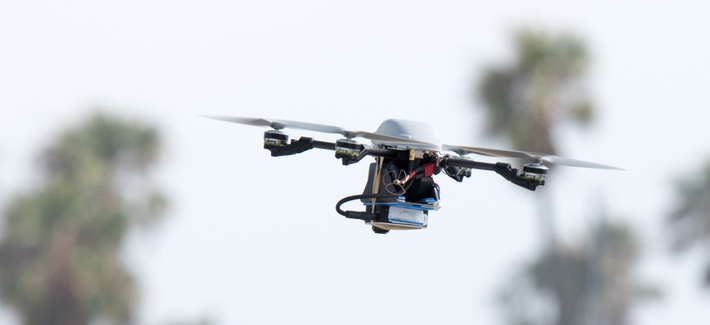
The concept of a ‘wingman’ is as old as military aviation itself. Providing mutual support within a formation, the purpose of a wingman was established to protect the flight lead and provide him or her with the additional mental capacity to manage the formation, operate the aircraft, and make decisions.US Is Moving Too Slowly to Harness Drones and AI, Former SOCOM Commander Says
AUSTIN, Texas — It’s been more than a decade since Adm. Mike Mullen, then-Joint Chiefs chairman, predicted that the F-35 Joint Strike Fighter would be the last manned fighter jet.Russia and China may not be the top cyberthreats
While Russia and China pose significant threats, especially in the cyber domain, one expert worries that lesser known actors might be a more immediate concern.Let’s Encrypt Doubled Internet’s Percentage Of Secure Websites In Four Years
The percentage of websites protected with HTTPS secure encryption –indicated by the lock icon in the address bar of most browsers–has jumped from just over 40% in 2016 to 80% today.Why agencies need to work together to defend forward
There is currently not a whole-of-government approach to the Department of Defense’s “defend forward” strategy and, according to Brandon Valeriano, a senior adviser to the Cyber Solarium Commission and the chair of armed politics at the Marine Corps University, there needs to be.AI and Quantum Supremacy Will Not Defeat Revolutionary Warfare
3 Major Reforms NATO Needs To Keep From Collapsing
NATO is doing a relatively poor job, buttressed by a static decision-making process, a bureaucracy resistant to change, and unaccountable member states who are happy to cheap-ride and get away with it.