The Profession of Arms: A Guide for Young Army Officers
It takes courage, especially for a young officer, to check a man met on the road for not saluting properly or for slovenly appearance, but, every time he does, it adds to his stock of moral courage, and whatever the soldier may say, he has respect for the officer who does pull him up.
Read Document →The Dragon's Teeth: Assessing China's Military Modernization
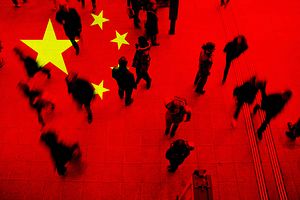
PLA has focused on modernising its capabilities across all warfare domains to achieve these goals. This includes land, air, and maritime operations, nuclear, space, counter-space, electronic warfare and cyberspace operations, aiming to become a fully integrated joint force.
Read Document →Transforming the PLA: A Decade of reorganisation from SSF to ISF
PRC has engaged in a sustained and broad effort to transform the PLA from an infantry-heavy, low-technology, ground forces-centric military into a high-technology, networked force with an increasing emphasis on joint operations and naval and air power projection.
Read Document →Eyes without Borders: Exploring the World of Open Source Intelligence (OSINT) in the Digital Age
Open Source Intelligence (OSINT) is gaining prominence with the rise of social media, the digital society and the vast growth of publicly and commercially available information (PAI and CAI).
Read Document →
The PLA’s Developing Cyber Warfare Capabilities and India's Options
Informationised warfare blurs the lines between peacetime and wartime. A nation in the information age cannot wait for the hostilities to break out to collect intelligence, carryout influence operations, develop antisatellite systems or design computer software weapons.
Read Document →
Galwan and After
Why did China did this when he is under tremendous pressure in all fronts, is this China's salami slice tactics being progressed rigorously, what will be new Rules of Engagement, what will be escalatory control mechanism, who has taken this decision, will there be some pressure put by China in India's North-East through insurgency.
Read Document →
India’s Joint Doctrine for Cyberspace Operations: A Critical Review
Chief of Defence Staff (CDS) General Anil Chauhan and Secretary, Department of Military Affairs, formally released declassified versions of the Joint Doctrines for Cyberspace Operations during the Chiefs of Staff Committee meeting in New Delhi.
Read Document →
Know your Enemy General(now Field Marshal) Syed Aseem Munir
Gen SA Munir's position in the hierarchy of Pakistan was not very comfortable. The state of economy, insurgency in Pakhtoonistan and Balochistan, attack on the Jaffar Express, constant protests by supporters of Imran Khan's supporters inside and outside of parliament.
Read Document →
Decoding Operation SINDOOR: Key Aspects and Implications
Precision strikes were carried out on nine sites—four in Pakistan and five in PoK—linked to anti-India terrorist groups such as the LeT, JeM and the Hizbul Mujahideen. The targeted sites included Muridke (LeT headquarters) and Bahawalpur (JeM headquarters).
Read Document →
Chinese Cyber Exploitation in India's Power Grid - Is There a linkage to Mumbai Power Outage?
The New York Times (NYT), based on analysis by a U.S. based private intelligence firm Recorded Future, reported that a Chinese entity penetrated India’s power grid at multiple load dispatch points. Chinese malware intruded into the control systems that manage electric supply across India, along with a high-voltage transmission substation and a coal-fired power plant
Read Document →7 March 2020
Is Trump Risking the Bedrock Principle of the U.S.-India Partnership?
Whither al-Qaeda in the Arabian Peninsula?
Trump and Modi Embrace, But Remain Digitally Divided
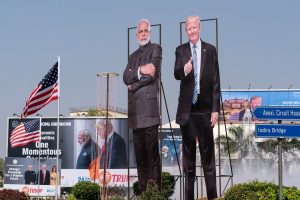
U.S. President Donald Trump traveled to India last week for a series of meetings with Indian Prime Minister Modi and his administration. The populist strongmen embraced — literally — with Trump attending a campaign-style rally of cheering fans at the largest cricket stadium in the world. On the core issues that are sowing democratic discord, the two strongmen seemed united. Trump insidiously praised Modi’s religious tolerance despite Modi’s recent track record clearly indicating otherwise.International Criminal Court Approves Afghanistan Investigation
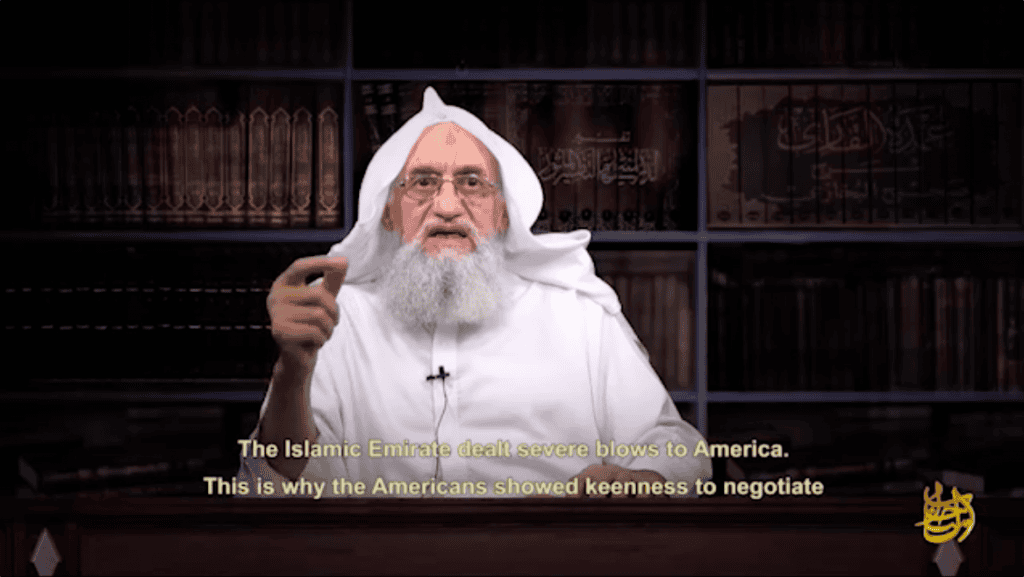
Appeals judges at the International Criminal Court gave the green light Thursday for prosecutors to open an investigation targeting the Taliban, Afghan forces, and U.S. military and CIA personnel for war crimes and crimes against humanity.Analysis: Taliban leader declares victory after U.S. agrees to withdrawal deal
CPEC – China’s most ambitious project in Pakistan has become a corridor to nowhere
Blindsided on the Supply Side
Is Vietnam Sending Its Maritime Militia to China’s Coast?
China’s Proposed Immigration Changes Spark Xenophobic Backlash Online
While China is struggling with the coronavirus pandemic, the country’s Ministry of Justice has sparked another controversy over some proposed changes in China’s immigration policy. The policy proposed by Chinese officials has been slammed by Chinese internet users on the country’s social media outlets WeChat and Weibo since the ministry began seeking public consultations through departmental websites and social media in late February.As Coronavirus Spreads, Iranian Doctors Fear the Worst
Iranian Deputy Health Minister Iraj Harirchi wipes the sweat off his face, during a press conference with the Islamic republic's government spokesman Ali Rabiei in Tehran on Feb. 24. He confirmed on Feb. 25 that he has tested positive for the novel coronavirus, amid a major outbreak in Iran. 'We’ll have the first global cyber warfare this year’: Nouriel Roubini
Photo Essay: Algeria’s Forgotten Borderlands
The eastern regions of Algeria have long been marginalized. From 2000 onwards the authorities engaged in what they called a National Spatial Plan to reduce regional disparities and create a greater balance between urban and rural areas. Despite such efforts, and others since independence in 1962, severe imbalances remain. No plan has lived up to expectations or prevented a feeling of exclusion in border areas. In many towns on the road from Algiers to M’Daourouche, those with whom I spoke complained about sharp disparities between the large prosperous cities of Algeria’s north and the rest of the country.Tribalism Is Killing Liberalism
Qassem Soleimani and Iran’s Unique Regional Strategy
Abstract: In recent years, Iran has projected its power across the Middle East, from Lebanon and Syria to Iraq and Yemen. One of the keys to its success has been a unique strategy of blending militant and state power, built in part on the model of Hezbollah in Lebanon. The acknowledged principal architect of this policy is Major General Qassem Soleimani, the long-serving head of Iran’s Quds (“Jerusalem”) Force. Without question, Soleimani is the most powerful general in the Middle East today; he is also one of Iran’s most popular living people, and has been repeatedly touted as a possible presidential candidate.What Comes Next in the Standoff Between the U.S. and Iran?
Europe’s Morality Is Dying at the Greek Border
This week, Greece’s northern border with Turkey and the Bulgarian-Turkish borderlands, too, have witnessed brutal, violent scenes reminiscent of war zones. Thousands of desperate migrants fleeing war zones—including mothers with babies in their arms—are storming barbed-wire fences to get into European Union territory to apply for political asylum, while Greek security forces in anti-riot gear beat them back and shoot rubber bullets and billowing clouds of tear gas at them. On the easternmost Greek islands, such as Lesbos, the Greek coast guard and navy have been turning away dinghies of half-frozen, frightened refugees. More than 32,000 migrants have been arrested at the Greek land border.Europe and NATO’s Shame Over Syria and Turkey
What Washington Can Learn About Elections—From Abroad
Competitive elections may be a hallmark of democracy, but in severely polarized political contexts they can exacerbate tensions that end up ripping apart democratic norms and institutions. They can trigger unfounded accusations of fraud, fuel claims of an election that has been stolen, and drive losing candidates and their supporters to reject legitimate results—sometimes violently. Those dangers are unfortunately evident in the United States as the country moves into what is likely to be the most divisive presidential election in decades. Political attacks across the partisan divide are conducted with an extraordinary rancor, and fights over basic procedural issues, such as voter registration and the purging of voter rolls, are intensifying. In a recent poll, nearly 40 percent of Americans said that if the candidate they supported lost, they would have little or no confidence in the integrity of the election process.REPORT - Harvard Project on Climate Agreements
Geopolitical and Market Implications of Renewable Hydrogen: New Dependencies in a Low-Carbon Energy World
To accelerate the global transition to a low-carbon economy, all energy systems and sectors must be actively decarbonized. While hydrogen has been a staple in the energy and chemical industries for decades, renewable hydrogen is drawing increased attention today as a versatile and sustainable energy carrier with the potential to play an important piece in the carbon-free energy puzzle. Countries around the world are piloting new projects and policies, yet adopting hydrogen at scale will require innovating along the value chains; scaling technologies while significantly reducing costs; deploying enabling infrastructure; and defining appropriate national and international policies and market structures.The Value of Carbon Capture, Utilization, and Sequestration
The EU’s White Paper on AI: A Thoughtful and Balanced Way Forward
Pandemic Disease Is a Threat to National Security
On January 13, 2017, national security officials assembled in the White House to chart a response to a global pandemic. A new virus was spreading with alarming speed, causing global transportation stoppages, supply-chain disruptions, and plunging stock prices. With a vaccine many months away, U.S. health-care infrastructure was severely strained.Trump’s Bureaucratic Arson
What Is a Moral Foreign Policy?
No Time to Waste: Achieving the UN’s Sustainability Goals
The Rise and Fall of Mubarak in Egypt Is a Cautionary Tale for Sisi
When I landed in Cairo in late January 2011 to cover the growing wave of demonstrations that had mobilized Egyptians, I was unsure whether or not the protest movement could topple then-President Hosni Mubarak. After all, he had been ruling for almost three decades, enjoyed Western backing and commanded a robust security apparatus.How Tech Could Help the World Prepare for the Next Epidemic
Peace in cyberspace is still possible, let’s make it an international priority
The number of threats facing the digital landscape are increasing, placing the industry at a crossroads