The Profession of Arms: A Guide for Young Army Officers
It takes courage, especially for a young officer, to check a man met on the road for not saluting properly or for slovenly appearance, but, every time he does, it adds to his stock of moral courage, and whatever the soldier may say, he has respect for the officer who does pull him up.
Read Document →The Dragon's Teeth: Assessing China's Military Modernization
PLA has focused on modernising its capabilities across all warfare domains to achieve these goals. This includes land, air, and maritime operations, nuclear, space, counter-space, electronic warfare and cyberspace operations, aiming to become a fully integrated joint force.
Read Document →Transforming the PLA: A Decade of reorganisation from SSF to ISF
PRC has engaged in a sustained and broad effort to transform the PLA from an infantry-heavy, low-technology, ground forces-centric military into a high-technology, networked force with an increasing emphasis on joint operations and naval and air power projection.
Read Document →Eyes without Borders: Exploring the World of Open Source Intelligence (OSINT) in the Digital Age
Open Source Intelligence (OSINT) is gaining prominence with the rise of social media, the digital society and the vast growth of publicly and commercially available information (PAI and CAI).
Read Document →
The PLA’s Developing Cyber Warfare Capabilities and India's Options
Informationised warfare blurs the lines between peacetime and wartime. A nation in the information age cannot wait for the hostilities to break out to collect intelligence, carryout influence operations, develop antisatellite systems or design computer software weapons.
Read Document →
Galwan and After
Why did China did this when he is under tremendous pressure in all fronts, is this China's salami slice tactics being progressed rigorously, what will be new Rules of Engagement, what will be escalatory control mechanism, who has taken this decision, will there be some pressure put by China in India's North-East through insurgency.
Read Document →
India’s Joint Doctrine for Cyberspace Operations: A Critical Review
Chief of Defence Staff (CDS) General Anil Chauhan and Secretary, Department of Military Affairs, formally released declassified versions of the Joint Doctrines for Cyberspace Operations during the Chiefs of Staff Committee meeting in New Delhi.
Read Document →
Know your Enemy General(now Field Marshal) Syed Aseem Munir
Gen SA Munir's position in the hierarchy of Pakistan was not very comfortable. The state of economy, insurgency in Pakhtoonistan and Balochistan, attack on the Jaffar Express, constant protests by supporters of Imran Khan's supporters inside and outside of parliament.
Read Document →
Decoding Operation SINDOOR: Key Aspects and Implications
Precision strikes were carried out on nine sites—four in Pakistan and five in PoK—linked to anti-India terrorist groups such as the LeT, JeM and the Hizbul Mujahideen. The targeted sites included Muridke (LeT headquarters) and Bahawalpur (JeM headquarters).
Read Document →
Chinese Cyber Exploitation in India's Power Grid - Is There a linkage to Mumbai Power Outage?
The New York Times (NYT), based on analysis by a U.S. based private intelligence firm Recorded Future, reported that a Chinese entity penetrated India’s power grid at multiple load dispatch points. Chinese malware intruded into the control systems that manage electric supply across India, along with a high-voltage transmission substation and a coal-fired power plant
Read Document →4 May 2019
5 Big Ideas for the Indian Foreign Ministry's New Indo-Pacific Desk
Afghanistan Opens Loya Jirga Grand Assembly To Discuss Peace Talks
From 9/11 to Sri Lanka: the terrorists’ deadly message we have failed to grasp
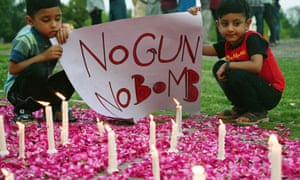
The funerals are over, the investigation continues and the blame game begins and media attention shifts away. This time the victims were Catholic worshippers and patrons of luxury hotels in Sri Lanka. A month ago they were Muslim worshippers in New Zealand, shot by a white supremacist as they prayed.SWJ Primer: Chinese Cyber Espionage and Information Warfare
Huawei leak reflects China’s growing importance as a partner for post-Brexit Britain
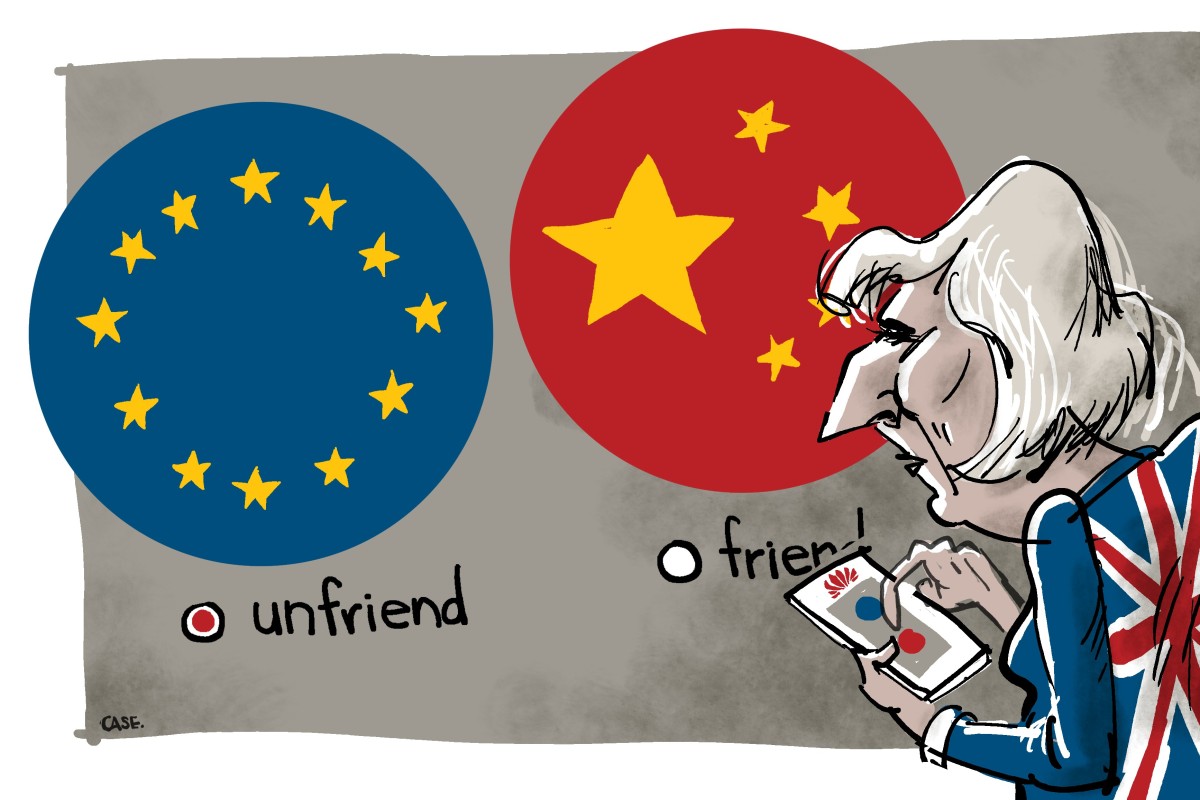
They also made it clear that, as with so many other things in the UK, the decision seemed to have been made in solitude by Prime Minister Theresa May. This will probably be the basis for interesting discussions when the almost simultaneously announced state visit of US President Donald Trump takes place in early June.The critical frontier: Reducing emissions from China’s Belt and Road
Is China the World’s Loan Shark?
WASHINGTON — Representatives from more than 150 countriesbegan to gather in Beijing on Friday for a grand forum to celebrate China’s grand Belt and Road Initiative. Since its formal unveiling in 2013, B.R.I. — a vast, worldwide web of infrastructure-development projects mostly funded or sponsored by the Chinese government — has generated both tremendous enthusiasm and tremendous anxiety.Can China Rise Peacefully?
(Editor’s Note: The following is the new concluding chapter of Dr. John J. Mearsheimer’s book The Tragedy of the Great Power Politics. A new, updated edition was released on April 7 and is available via Amazon.)Against ‘Nationalism’
The Estelada (Catalan separatist flag) flutters during a protest the day after a banned independence referendum in Barcelona, Spain, October 2, 2017. (Enrique Calvo/Reuters)The term is too evocative, and its connotations too various, to function as shorthand for political ideas that need to be unambiguous.Can the EU Save the Internet?
Instead of breaking news, op-eds, and sports results, Europeans visiting the website of the venerable Chicago Tribune are seeing what has become an all-too-familiar notification: “Unfortunately, our website is currently unavailable in most European countries.”What Effects Will Tighter U.S. Sanctions on Iran’s Oil Have?
The United States announced it will no longer exempt a small set of countries, including China, from its oil sanctions regime against Iran. CFR’s Amy Myers Jaffe, an expert on global energy policy, assesses the impact on the oil market and the potential reactions from both Tehran and Beijing. Oil prices ticked up a few percentage points after the announcement. Do you expect prices to remain higher, or is there enough supply in the market to cover a drop in Iranian exports?The Most Indebted Countries In The World
“Stabilising” the Middle East: A Historical Perspective
The relevance of “continuities” in relation to the history of the region and its inhabitants has been evident throughout most of its millenary past, and from a wide range of different angles. For instance, the Epic of Gilgamesh (c. 2100 BCE), a literary product of Mesopotamia, encompasses a number of themes and motifs (including, among others, the flood myth adopted in the narrative of Noah’s ark) later included in the Bible and other religious books.Cellphones now outnumber the world’s population
Huawei Poses a 5G Threat, but Nationalization Is Not the Answer
Telecommunications workers install a new antenna system for AT&T’s 5G wireless network in downtown San Diego, Calif., April 23, 2019. (Mike Blake/Reuters)It’s a mystery why free-market advocates are urging the Trump administration to establish a ‘wholesale regime’ for wireless service.Rehanging Rembrandt
The new electronic warfare tool cyber units will need
Industry leaders are warning that the targets U.S. Cyber Command will pursue in the future may not be connected to the internet or even accessible through the traditional, IP-based operations that the command has historically exploited in the past.Can the Pentagon sell Silicon Valley on AI as ethical war?
The CIWS is a fast-firing defensive weapon. The challenges of target identification and autonomous response are central to ethical questions around the use of AI in war. Silicon Valley is wrestling with a Pentagon-shaped ethical question, and April 25 the arena for this particular fight was a wood-paneled ballroom at Stanford University, which hosted a listening session of the Defense Innovation Board. The Board exists to advise the secretary of defense on modern technology, and for nearly two hours it heard members of the public express their fears and hopes about applying robot brains to modern warfare.What Insurgency Will Look Like in 2030
The author of “Ghost Fleet” has some guesses — and some questions that U.S. defenders will have to answer.Online Information Operations Cross Platforms. Tech Companies' Responses Should Too.
In March, Facebook took down more than 2,600 pages, groups and accounts engaged in sweeping coordinated information operations on its platforms—an important step in the platform’s effort to prevent malign actors from spreading content designed to polarize and mislead. However, when our team at the Alliance for Securing Democracy took a close look at the small number of blocked pages and groups about which Facebook and its partner, the Digital Forensic Research Lab (DRFLab), shared information, we found that related accounts on Twitter, YouTube, and Instagram continue to operate, spreading falsehoods. Despite the promises of better communication and reform, there is a concerning lack of coordination between Facebook and its peers. Can Courts Clear the Fog of War?
What constitutes an act of war? A military invasion, sure. Hostile acts by smaller armed formations, sure. The blowing up of a bridge by commandos or the poisoning of water, very likely. But a cyberattack? Zurich, one of the world’s leading insurers, claims that’s the case. The confectionary giant Mondelez, one of its customers, argues the opposite. This isn’t an abstract discussion: Two years ago, Mondelez was laid low by NotPetya, a computer virus unleashed by Russia against Ukrainian targets. Now the two companies are battling out the definition of war in court—and regardless of how the ruling turns out, a new fog of war is still settling over society.Military spending around the world is booming
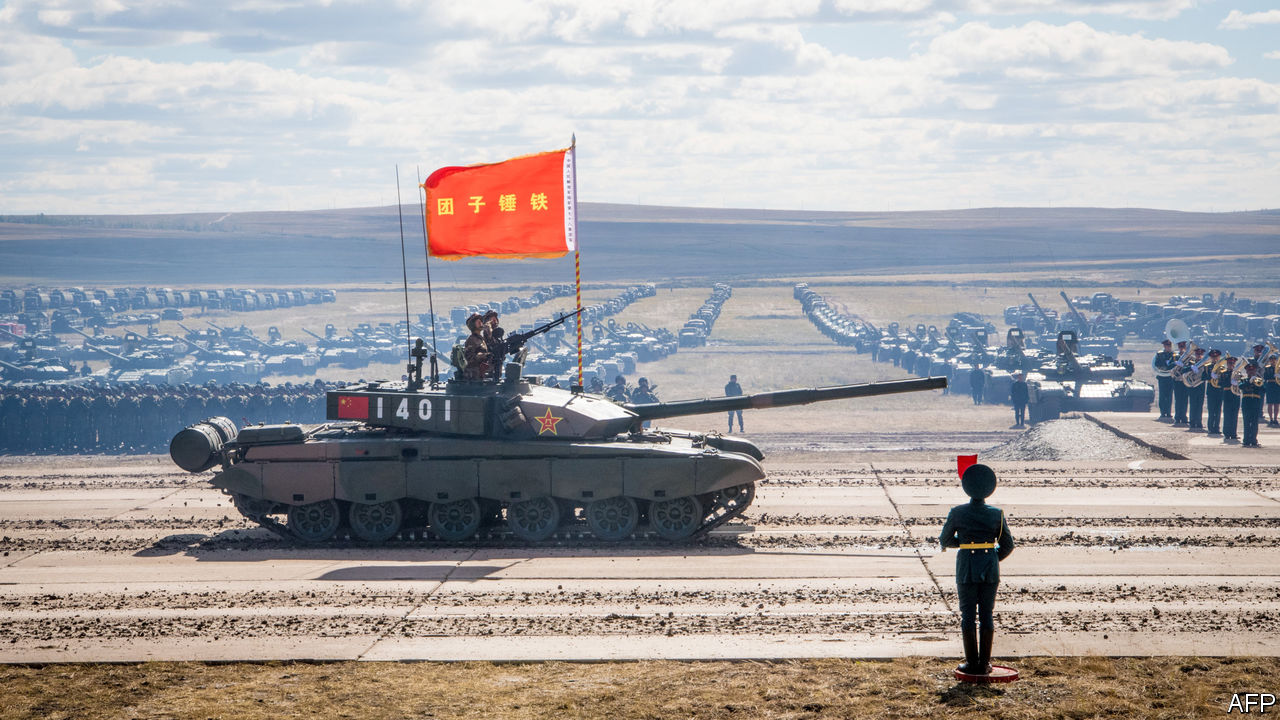
THE WORLD is arming itself to the teeth. That is the conclusion of a new report published on April 29th by the Stockholm International Peace Research Institute (SIPRI), a think-tank. Global military spending last year rose to $1.8trn, says SIPRI—the highest level in real terms since reliable records began in 1988, during the cold war, and 76% higher than in 1998, when the world was enjoying its “peace dividend”. Military spending as a share of global GDP has fallen in recent years, but that offers little reassurance in a world of rising geopolitical tension.The U.S. Military: Like the French at Agincourt?
Early on a Sunday morning in 1932, a fleet of some 150 fighters, dive-bombers and torpedo planes struck the naval base at Pearl Harbor. The ships lying at anchor on Battleship Row sustained direct hits. Also hit were the base’s fuel storage tanks and the Army Air Corps planes parked nearby at Hickam Field.The Utility of Proxy War
Editor’s Note: Both the United States and its adversaries back proxies around the world to advance their interests. Often the goal is to achieve important policy objectives yet avoid the costs, human and political, of outright war. Tyrone Groh, a professor at Embry-Riddle and a retired Air Force officer, argues that the supposed costlessness of proxy wars is deceptive. Too often proxies ignore their sponsors, and sponsors must invest heavily in maintaining control.