The Profession of Arms: A Guide for Young Army Officers
It takes courage, especially for a young officer, to check a man met on the road for not saluting properly or for slovenly appearance, but, every time he does, it adds to his stock of moral courage, and whatever the soldier may say, he has respect for the officer who does pull him up.
Read Document →The Dragon's Teeth: Assessing China's Military Modernization
PLA has focused on modernising its capabilities across all warfare domains to achieve these goals. This includes land, air, and maritime operations, nuclear, space, counter-space, electronic warfare and cyberspace operations, aiming to become a fully integrated joint force.
Read Document →Transforming the PLA: A Decade of reorganisation from SSF to ISF
PRC has engaged in a sustained and broad effort to transform the PLA from an infantry-heavy, low-technology, ground forces-centric military into a high-technology, networked force with an increasing emphasis on joint operations and naval and air power projection.
Read Document →Eyes without Borders: Exploring the World of Open Source Intelligence (OSINT) in the Digital Age
Open Source Intelligence (OSINT) is gaining prominence with the rise of social media, the digital society and the vast growth of publicly and commercially available information (PAI and CAI).
Read Document →
The PLA’s Developing Cyber Warfare Capabilities and India's Options
Informationised warfare blurs the lines between peacetime and wartime. A nation in the information age cannot wait for the hostilities to break out to collect intelligence, carryout influence operations, develop antisatellite systems or design computer software weapons.
Read Document →
Galwan and After
Why did China did this when he is under tremendous pressure in all fronts, is this China's salami slice tactics being progressed rigorously, what will be new Rules of Engagement, what will be escalatory control mechanism, who has taken this decision, will there be some pressure put by China in India's North-East through insurgency.
Read Document →
India’s Joint Doctrine for Cyberspace Operations: A Critical Review
Chief of Defence Staff (CDS) General Anil Chauhan and Secretary, Department of Military Affairs, formally released declassified versions of the Joint Doctrines for Cyberspace Operations during the Chiefs of Staff Committee meeting in New Delhi.
Read Document →
Know your Enemy General(now Field Marshal) Syed Aseem Munir
Gen SA Munir's position in the hierarchy of Pakistan was not very comfortable. The state of economy, insurgency in Pakhtoonistan and Balochistan, attack on the Jaffar Express, constant protests by supporters of Imran Khan's supporters inside and outside of parliament.
Read Document →
Decoding Operation SINDOOR: Key Aspects and Implications
Precision strikes were carried out on nine sites—four in Pakistan and five in PoK—linked to anti-India terrorist groups such as the LeT, JeM and the Hizbul Mujahideen. The targeted sites included Muridke (LeT headquarters) and Bahawalpur (JeM headquarters).
Read Document →
Chinese Cyber Exploitation in India's Power Grid - Is There a linkage to Mumbai Power Outage?
The New York Times (NYT), based on analysis by a U.S. based private intelligence firm Recorded Future, reported that a Chinese entity penetrated India’s power grid at multiple load dispatch points. Chinese malware intruded into the control systems that manage electric supply across India, along with a high-voltage transmission substation and a coal-fired power plant
Read Document →5 August 2019
The Need for Dรฉtente: Cyberwarfare in India/Pakistan Conflict
India in the Era of Cyber Wars
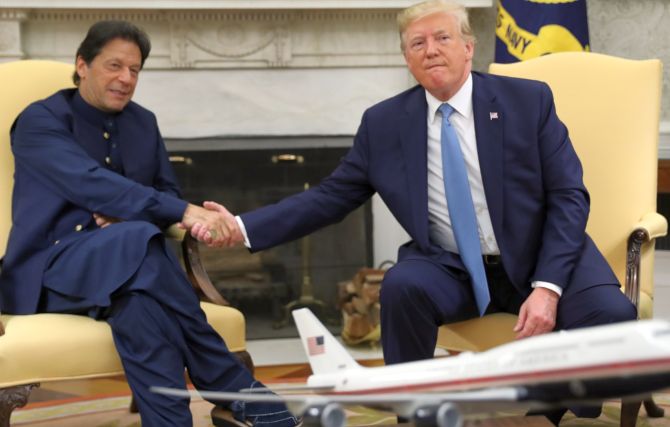
Few options for India as Trump and Imran do the tango
'Imran Khan, or more accurately his army and ISI chiefs who accompanied him, have pulled off a coup. 3 things to know about India’s space programme
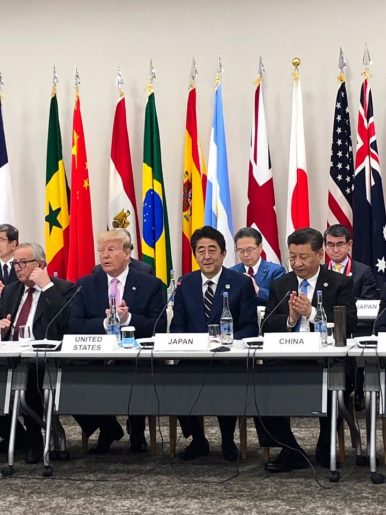
The Biggest Threat to the US Indo-Pacific Strategy? Washington Itself.
It is an open secret that U.S. implementation of the Indo-Pacific Strategy has been rocky at best. Nagging questions about the strategy’s purpose, whether it can be sustained, if it even constitutes a strategy, and why allies and partners apparently must choose between Washington and Beijing hang a dark cloud over U.S. plans.Populism Takes Asia
Asia’s Great Huawei Debate
China's Plan to Win Over Cambodia
Stratcom: China Rapidly Building Up Nuclear Forces
Dear China, We Have to Talk About Your Nukes
U.S. President Donald Trump recently called for ambitious new arms control accords that not only extend the New START agreement with Russia, but also bring China into trilateral nuclear diplomacy. Trump should be commended for his apparent desire to avoid an unnecessary and costly arms race, and for the foresight that China is an increasingly important part of nuclear calculus and U.S. grand strategy.China's role in the Asian century of globalization
Next year, in purchasing power parity (PPP) terms, Asian economies will become larger than the rest of the world combined for the first time since the 19th century. Not only is Asia growing richer; as it becomes more integrated, it is also coalescing as a constructive force for global governance.The Right Way to Deal With Huawei
The U.S.-China-Israel Technology Triangle
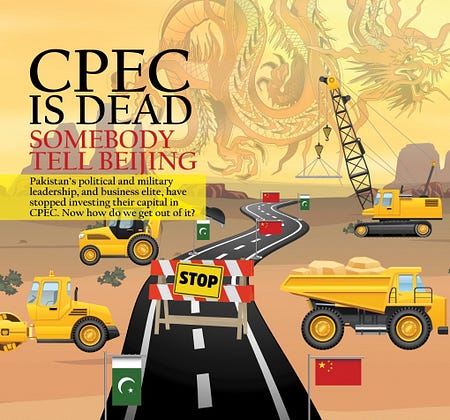
Since the 1980s, Israel has had robust technological cooperation and trade with the U.S. while often, in deference to U.S. security concerns, limiting the sale of some technologies to China. This delicate strategy is becoming harder to maintain as China becomes more interested in Israeli tech and tensions between Washington and Beijing grow.CPEC is dead. Somebody tell Beijing.
It’s over. If ever there was a thought within Pakistan’s leadership — political, military, and business — that Beijing could replace Washington as the foreign capital with the most influence in Islamabad, that idea is now firmly dead. We just have not gotten around to telling China yet.Iran Across the Border:Israel's Pushback in Syria
Of all the threats in Israel’s strategic landscape, none have loomed larger in recent years than Iran’s ambitions and developing military capabilities in neighboring Syria and Lebanon. Exploiting regional turmoil as well as the 2015 nuclear agreement, the IRGC’s elite Qods Force has embarked on an ambitious plan to build in Syria a formidable military front facing Israel, joining Hezbollah’s huge arsenal of rockets in Lebanon. In response, Israel launched a military campaign that has succeeded in thwarting large portions of Tehran’s plans. While the direct Iran-Israel showdown definitely carries the potential for a major military collision, Israel believes its campaign has thus far enhanced its deterrence, thereby distancing war.The Hormuz Crisis Shows U.S. Alliances Are Weak
The matter of a naval mission to the Persian Gulf is a test of whether the U.S. – or at least Donald Trump – has any serious allies in Europe other than, perhaps, U.K. Prime Minister Boris Johnson. Germany, at least, isn’t on board.Economic Growth and the US Presidential Election
The Inequality of Nations
Cyber Threats from the U.S. and Russia Are Now Focusing on Civilian Infrastructure
Don’t Squander the Techno-Revolution
Post-American Networks
How the Army will approach cyber 10 years from now
The Army Cyber Institute (ACI) at West Point serves as the service’s think tank, helping the Army identify and address key cyber problems to come.The Dying Art of Instruction in the Digital Classroom
Is it possible to lose a foundation stone of one’s culture without even having identified it as such? This year will be my last year teaching at the university; I’ve decided to throw in the towel three years before retirement age. There are a number of reasons behind this decision, but one is definitely the changed situation in the classroom. Even at post-graduate level, it is getting more and more difficult to feel that one has the attention of students or that something really useful is happening during the lessons.Why quantum computing could make today's cybersecurity obsolete
Quantum computers are exponentially more powerful than even the most advanced digital machines. At the heart of this power are quantum bits, or “qubits”. While digital bits are binary – having a value of either 1 or 0 – qubits can exist in multiple states at once.How A.I. Could Be Weaponized to Spread Disinformation
U.S. Offensive Cyber Operations against Economic Cyber Intrusions: An International Law Analysis – Part I
Three Ways Cities and States Can Ward Off Ransomware Attacks