The Profession of Arms: A Guide for Young Army Officers
It takes courage, especially for a young officer, to check a man met on the road for not saluting properly or for slovenly appearance, but, every time he does, it adds to his stock of moral courage, and whatever the soldier may say, he has respect for the officer who does pull him up.
Read Document →The Dragon's Teeth: Assessing China's Military Modernization
PLA has focused on modernising its capabilities across all warfare domains to achieve these goals. This includes land, air, and maritime operations, nuclear, space, counter-space, electronic warfare and cyberspace operations, aiming to become a fully integrated joint force.
Read Document →Transforming the PLA: A Decade of reorganisation from SSF to ISF
PRC has engaged in a sustained and broad effort to transform the PLA from an infantry-heavy, low-technology, ground forces-centric military into a high-technology, networked force with an increasing emphasis on joint operations and naval and air power projection.
Read Document →Eyes without Borders: Exploring the World of Open Source Intelligence (OSINT) in the Digital Age
Open Source Intelligence (OSINT) is gaining prominence with the rise of social media, the digital society and the vast growth of publicly and commercially available information (PAI and CAI).
Read Document →
The PLA’s Developing Cyber Warfare Capabilities and India's Options
Informationised warfare blurs the lines between peacetime and wartime. A nation in the information age cannot wait for the hostilities to break out to collect intelligence, carryout influence operations, develop antisatellite systems or design computer software weapons.
Read Document →
Galwan and After
Why did China did this when he is under tremendous pressure in all fronts, is this China's salami slice tactics being progressed rigorously, what will be new Rules of Engagement, what will be escalatory control mechanism, who has taken this decision, will there be some pressure put by China in India's North-East through insurgency.
Read Document →
India’s Joint Doctrine for Cyberspace Operations: A Critical Review
Chief of Defence Staff (CDS) General Anil Chauhan and Secretary, Department of Military Affairs, formally released declassified versions of the Joint Doctrines for Cyberspace Operations during the Chiefs of Staff Committee meeting in New Delhi.
Read Document →
Know your Enemy General(now Field Marshal) Syed Aseem Munir
Gen SA Munir's position in the hierarchy of Pakistan was not very comfortable. The state of economy, insurgency in Pakhtoonistan and Balochistan, attack on the Jaffar Express, constant protests by supporters of Imran Khan's supporters inside and outside of parliament.
Read Document →
Decoding Operation SINDOOR: Key Aspects and Implications
Precision strikes were carried out on nine sites—four in Pakistan and five in PoK—linked to anti-India terrorist groups such as the LeT, JeM and the Hizbul Mujahideen. The targeted sites included Muridke (LeT headquarters) and Bahawalpur (JeM headquarters).
Read Document →
Chinese Cyber Exploitation in India's Power Grid - Is There a linkage to Mumbai Power Outage?
The New York Times (NYT), based on analysis by a U.S. based private intelligence firm Recorded Future, reported that a Chinese entity penetrated India’s power grid at multiple load dispatch points. Chinese malware intruded into the control systems that manage electric supply across India, along with a high-voltage transmission substation and a coal-fired power plant
Read Document →17 July 2018
When We Raised Taxes to Fund Wars
Blackwater founder makes new pitch for mercenaries to take over Afghan war
What can we expect in China in 2018?
China's Game Plan to Ease Out US- Suceeding?
Reeducation Returns to China
China, the U.S. and the Race for Space
Chinese Cyber-Spy Hackers Target Cambodia as Elections Loom
China Pursuing Dominance of Northern Sea Route
Huawei’s Smart Cities and CCP Influence, At Home and Abroad
Hard Edges of China’s Soft Power Projection Meeting Increasing Resistance
Global Religion and the United Front: The Case of Mongolia
Oil Geopolitics and Iran’s Response
At first glance, last week’s Vienna Group meeting—that is the Organization of Petroleum Exporting Countries (OPEC) plus non-OPEC producers including Russia—seemed to have resolved some thorny issues. The producer group confidently announced it would increase oil production to stabilize the global oil market. Iran, which had previously threatened to boycott any agreement in protest, appeared to acquiesce to the joint OPEC production increase communique. That may have seemed like a win for the Trump administration, which had hoped to box Iran in to the negotiating table on a host of issues, including conflict resolution in Yemen and Syria, when it cancelled the nuclear deal and reimposed sanctions on Iranian oil exports. Iran had suggested OPEC take a more strident stance on the U.S. policy. Not unexpectedly, U.S. Gulf allies, under pressure from U.S. President Donald Trump’s tweets and back door diplomacy, offered a moderate approach, which will include significant production increases by Saudi Arabia, among others.The Surprising Promise of the Trump-Putin Summit
Russia continues to sow discord, US warns
Russia continues to conduct an information warfare campaign in the United States, a top Department of Homeland Security official told lawmakers, raising concerns about foreign influence just months before the 2018 midterm elections. Christopher Krebs, under secretary for national protection , testified before Congress July 11 that the Russian government has “focused on identifying divisive issues and sowing discord” in the United States through a campaign of information warfare. Krebs said the department was confident that a Russian campaign to target American critical infrastructure “is still ongoing” and that Russian agents “are actively pursuing their ultimate long-term campaign objectives.”Putin: The one-man show the West doesn’t understand
This assessment of Russian President Vadimir Putin was written by Fiona Hill, at the time a senior fellow and director of the Center for the United States and Europe at The Brookings Institution; it was originally published in April 2016. Approximately a year later, Hill joined the Trump administration as the deputy assistant to the president and senior director for Europe and Russia on the National Security Council staff. Her research on and views of the Russian president seem especially relevant now, in the run up to the Helsinki meeting between Putin and Trump scheduled for July 16. What Putin wants in Helsinki
Trump’s NATO
The Russians Living In Our Heads
Russia, America and NATO: Where Are They Headed?
NATO Summit: The Important Issues
Why Is Israel Simulating Attacks on Its Own Nuclear Reactors?
‘Continuing War by Other Means’: The Case of Wagner, Russia’s Premier Private Military Company in the Middle East
U.S. Needs a National Strategy for Artificial Intelligence, Lawmakers and Experts Say
Policymakers and technology experts said without a broad national strategy for driving artificial intelligence forward, the U.S. risks letting global competitors direct the growth of the budding industry. The Trump administration has taken a largely hands-off approach in regards to AI, arguing it’s still too early for the government to get involved in the technology and any attempts at oversight could stifle its growth. But in a panel hosted Wednesday by Politico, experts were quick to point out the difference between burdening industry with regulations and addressing the issues at hand today.Details on an Air Force drone? $200 on the dark web
The goods included sensitive U.S. Air Force documents of an unmanned aerial vehicle, tank platoon tactics and manuals to defeat roadside bombs. These are among the delicate American military details that have been put up for sale on the dark web, according to a research firm. For the Department of Defense, the report lays raises questions about basic cyber-hygiene in the U.S. military apparatus as the material came from hacks through known vulnerabilities. Recorded Future, a private research firm based in Massachusetts, said in a July 11 report that it found the swath of documents while monitoring criminal activities on the dark web. In a speech this morning, the top information officer at the Department of Defense, Dana Deasy, said that good digital security can minimize security risk. “Countless cyber-incident reports show that the overwhelming majority of cyber incidents are preventable with basic cyber hygiene and data safeguards,” he said.Army to unveil details about new Futures Command in biggest reorganization in 45 years
The U.S. Army will unveil details about its largest reorganization in 45 years Friday, senior service officials said, as they create a new organization in an attempt to adapt more quickly to technology and address expensive failures in weapons acquisitions. Army Futures Command is being established in part to address concerns about the more than $32 billion the Army has spent since 1995 on programs that it canceled early with little to nothing to show for them. The new power center will be on par with other influential Army organizations, such as Training and Doctrine Command and Forces Command, and commanded by a four-star general. The move marks the largest reorganization at Army headquarters since 1973, when the Army sought to reorient itself after the Vietnam War and created both Training and Doctrine Command and Forces Command. Their commanders have often gone on to hold even more powerful jobs, including chairman of the Joint Chiefs of Staff and chief of staff of the Army.The Long Awaited A-10 vs. F-35 Flyoff Is Off to a Sketchy Start
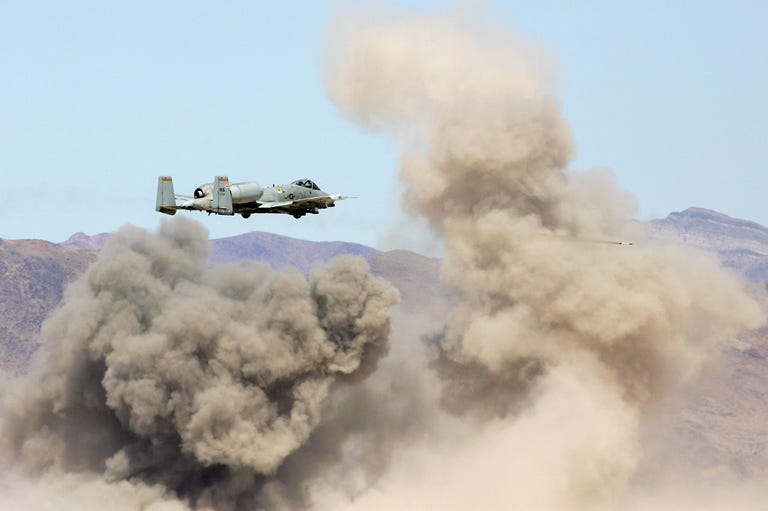
The U.S. Air Force’s eagerly anticipated flyoff between the A-10 Warthog and F-35 Joint Strike Fighter has begun. The eagerly awaited competition, which pits the two planes against one another to determine which is the better close air support platform, began last week and wraps up tomorrow, July 12th. Critics charge that the Air Force is not only hiding the exercises from the public but is also heavily skewing the testing to ensure that the new F-35 is presented in the best possible light.William Lind looks at our fake military in action
The mice of the Washington foreign policy establishment are trying to nibble around the edges of President Trump’s successful summit with North Korea’s Kim Jong Un. One of their squeaks is that the President gave up too much when he ordered the suspension of major U.S.-South Korean military exercises. The June 16 New York Times reported that: “’You could probably cancel a single major exercise, like this one (Ulchi Freedom Guardian, planned for August) without doing major damage to the alliance and its readiness,’ said Robert Daly, director of the Kissinger Institute on China and the United States at the Wilson Center.A Captain describes the mess of our military & how to fix it
The military readiness crisis has become a focal point of current policy debates. Secretary of Defense James Mattis, testifying before the House Armed Services Committee in 2017 stated “it took us years to get into this situation. It will require years of stable budgets and increased funding to get out of it.”The Republican Congress obliged and convened in April 2018 to lay the groundwork for the FY19 defense budget. All policy proposals rhyme with more: more troops, more weapons, more ships, and more planes.Comparing Russia’s Military Modernization by Region-Balanced Efforts Across All Fronts
The View From Olympus 3: Some 4GW Resources
For those wishing to learn more about the intellectual framework I call the Four Generations of Modern War, some useful resources are available. The first is “the canon,” a series of seven books which, if read in the given order, will take the reader from the First Generation into the Fourth (my colleague Major Greg Thiele, USMC, has an article on the canon in the June 2013 Marine Corps Gazette). The books are: 1) The Enlightened Soldier: Scharnhorst and the Militaerische Gesellschaft in Berlin, 1801-1805 by Charles E. White, (Praeger, Westpower, CT, 1989) Scharnhorst was the key figure in the Prussian military reform movement that rebuilt the Prussian Army after the disastrous defeat of 1806. Without Scharnhorst’s reforms, the German Army would probably not have been able to develop Third Generation war in World War I, more than 100 years later. This is a history not only of adaptation and innovation in the First Generation, but of the importance of ideas in war as well. When I taught a course on the canon for Marine captains at Quantico, one of them said to me, “This book explains why we are reading all the other books.”