On Pakistan's seventy-first independence day, the country faces an economic crisis and a terrorism crisis. Whether prime minister–designate Imran Khan can deliver on his promise of a “naya Pakistan” hinges on whether he can address each. The Profession of Arms: A Guide for Young Army Officers
It takes courage, especially for a young officer, to check a man met on the road for not saluting properly or for slovenly appearance, but, every time he does, it adds to his stock of moral courage, and whatever the soldier may say, he has respect for the officer who does pull him up.
Read Document →The Dragon's Teeth: Assessing China's Military Modernization
PLA has focused on modernising its capabilities across all warfare domains to achieve these goals. This includes land, air, and maritime operations, nuclear, space, counter-space, electronic warfare and cyberspace operations, aiming to become a fully integrated joint force.
Read Document →Transforming the PLA: A Decade of reorganisation from SSF to ISF
PRC has engaged in a sustained and broad effort to transform the PLA from an infantry-heavy, low-technology, ground forces-centric military into a high-technology, networked force with an increasing emphasis on joint operations and naval and air power projection.
Read Document →Eyes without Borders: Exploring the World of Open Source Intelligence (OSINT) in the Digital Age
Open Source Intelligence (OSINT) is gaining prominence with the rise of social media, the digital society and the vast growth of publicly and commercially available information (PAI and CAI).
Read Document →
The PLA’s Developing Cyber Warfare Capabilities and India's Options
Informationised warfare blurs the lines between peacetime and wartime. A nation in the information age cannot wait for the hostilities to break out to collect intelligence, carryout influence operations, develop antisatellite systems or design computer software weapons.
Read Document →
Galwan and After
Why did China did this when he is under tremendous pressure in all fronts, is this China's salami slice tactics being progressed rigorously, what will be new Rules of Engagement, what will be escalatory control mechanism, who has taken this decision, will there be some pressure put by China in India's North-East through insurgency.
Read Document →
India’s Joint Doctrine for Cyberspace Operations: A Critical Review
Chief of Defence Staff (CDS) General Anil Chauhan and Secretary, Department of Military Affairs, formally released declassified versions of the Joint Doctrines for Cyberspace Operations during the Chiefs of Staff Committee meeting in New Delhi.
Read Document →
Know your Enemy General(now Field Marshal) Syed Aseem Munir
Gen SA Munir's position in the hierarchy of Pakistan was not very comfortable. The state of economy, insurgency in Pakhtoonistan and Balochistan, attack on the Jaffar Express, constant protests by supporters of Imran Khan's supporters inside and outside of parliament.
Read Document →
Decoding Operation SINDOOR: Key Aspects and Implications
Precision strikes were carried out on nine sites—four in Pakistan and five in PoK—linked to anti-India terrorist groups such as the LeT, JeM and the Hizbul Mujahideen. The targeted sites included Muridke (LeT headquarters) and Bahawalpur (JeM headquarters).
Read Document →
Chinese Cyber Exploitation in India's Power Grid - Is There a linkage to Mumbai Power Outage?
The New York Times (NYT), based on analysis by a U.S. based private intelligence firm Recorded Future, reported that a Chinese entity penetrated India’s power grid at multiple load dispatch points. Chinese malware intruded into the control systems that manage electric supply across India, along with a high-voltage transmission substation and a coal-fired power plant
Read Document →23 August 2018
Pakistan at Seventy-One: the Search for a New Pakistan
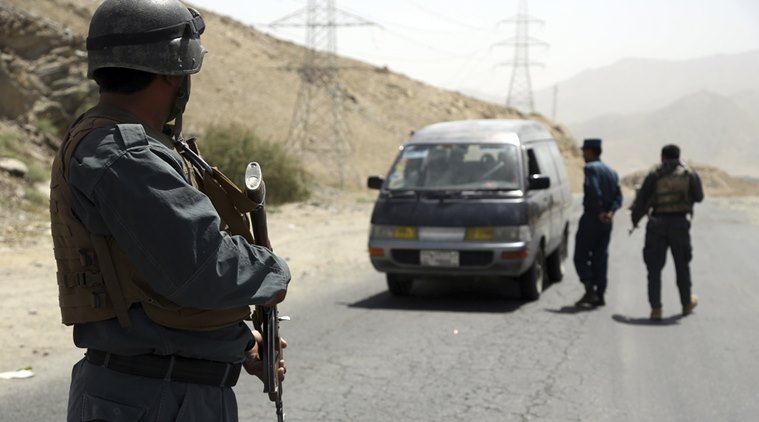
On Pakistan's seventy-first independence day, the country faces an economic crisis and a terrorism crisis. Whether prime minister–designate Imran Khan can deliver on his promise of a “naya Pakistan” hinges on whether he can address each. Raja Mandala: The churn after Ghaz
The recent Taliban offensive against Ghazni, a strategically located city in southeastern Afghanistan, with alleged support from the Pakistan army, has underlined all the difficulties of finding a negotiated settlement in a nation torn by four decades of conflict. The bloody siege of Ghazni, coming nearly a year after US President Donald Trump announced a new strategy to win the war, might turn out to be a definitive moment in the evolution of the conflict. As the Taliban gets bolder in its attacks and the intensity of its violence spikes to unprecedented levels, Trump is under some pressure to take a fresh look.China's Stake in the Myanmar Peace Process
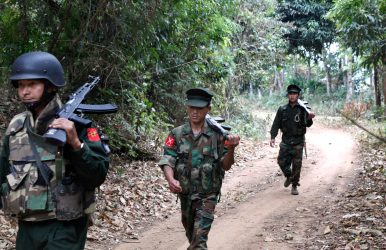
There are good reasons why the Chinese government covered the costs of attending the third Myanmar Union Peace Conference for the ethnic armed organizations (EAOs) of the Federal Political Negotiation and Consultative Committee (FNPCC). The members of the FNPCC include the EAOs who make up the Northern Alliance, which has been fighting with the Tatmadaw (Myanmar’s armed forces) and attacking commercial interests like casinos in northern Shan state and Kachin state, on the border with China. The members of the Northern Alliance, which was formed in December 2016 in response to increased pressure from the Myanmar military, are the Arakan Army (AA), the Kachin Independence Army (KIA), the Myanmar National Democratic Alliance Army (MNDAA), and the Ta’ang National Liberation Army (TNLA).Charting Asia’s Research Ascendancy
In 1996, only five years after the end of the Cold War, the United States and its allies made up all five of the most industrious creators of scientific knowledge. This past January, however, China made headlines as its publication rate surpassed that of the United States. According to the National Science Foundation and MIT Technology Review, China published 426,000 research papers in 2016 compared to the 409,000 published in the United States. U.S. leadership in scientific research since the turn of the 20th century allowed it to be the first to develop the nuclear bomb and land a man on the moon. Its innovative technological research and development unequivocally boosted the U.S. economy. But the gap between the United States and the rest of the world is quickly closing, especially with the recent rapid growth of Asia’s research capacity.The Chinese nuclear tests, 1964–1996
How China steals U.S. secrets
China is hacking the same countries it trades with
At the United Nations headquarters in Nairobi, Kenya, bands of marauding monkeys often climb over the towering fences and roam the acres of closely mowed grass. But this June, another type of uninvited guest entered the U.N. premises. Equipment located thousands of miles away at Tsinghua University, in the heart of Beijing, China, began to probe the U.N. networks in Kenya, according to research by Recorded Future, a cybersecurity research firm. The researchers observed “network reconnaissance activities,” originating from the Tsinghua servers.Assessing PLA Capability Development Western Theatre Command
The Rise and Fall of Soft Power
Nearly three decades ago, American political scientist and former Clinton administration official Joseph Nye put forth an idea in the pages of Foreign Policy. He called it soft power, a concept that caught fire and went on to define the post-Cold War era. Nye argued that, although the United States seemed relatively weaker than it had been at the end of World War II, the country still had a unique source of power to bring to bear. Beyond using military power “to do things and control others,” Nye later explained, “to get others to do what they otherwise would not,” the United States could draw on its soft power—its noncoercive power—to cement its leadership position in the world.Spending speed bumps hit China’s massive Belt and Road project
The Freeman Chair China Report, August 2018
Why Japan Truly Failed at Pearl Harbor (And What China May Learn From It)
In short, this is a rival who seems to have learned from Yamamoto: don’t jab a sleeping giant, and if you do, don’t steel his resolve. Let him slumber until it’s late in the contest, and you may prevail. China may have learned the true lessons of Pearl Harbor. Let’s do the same—and get ready. Russia Considers Its Next Moves in Syria
To reap the rewards of its investment in Syria and to stabilize the conflict before it escalates further, Russia will try to implement a risky multipronged plan, the success of which is far from certain.Ukrainian company debuts simple anti-tank drone
Military airplanes started as unarmed scouts in 1909. By 1911, pilot Lieutenant Giulio Gavotti, flying a plane for the Kingdom of Italy, decided to bring some grenades with him for a mission above Libya, and then drop them near a Turkish camp target below. While Gavotti’s flight didn’t cause any casualties, it set the stage for subsequent rapid adaptations of a new form of flying scout into a new kind of flying attack. Consider, then, the “Demon” aircraft, from Ukrainian dronemaker Matrix UAV. Taking an existing quadcopter model, the Demon modification attaches an RPG to the fuselage, which makes it roughly the 21st century equivalent of a satchel full of explosives stuffed into the cockpit.Countries Most at Risk From a Currency Crisis
What do the Turkish lira, the Iranian rial, the Russian ruble, the Indian rupee, the Argentine peso, the Chilean peso, the Chinese yuan and the South African rand all have in common? They’ve all declined steadily this year, and some have depreciated dramatically in the past two weeks alone. The Turkish lira, for example, dropped steeply late last week. At nearly $200 billion, almost 50 percent of Turkey’s gross external debt is denominated in dollars. (Turkey’s General Directorate of Public Finance, which, unlike BIS, accounts for financial borrowers, puts that figure at nearly 60 percent.) But this isn’t the whole story. The whole story is that each of these countries is sitting on a ticking time bomb of U.S. dollar-denominated debt.What Does the New Caspian Sea Agreement Mean For the Energy Market?
A landmark agreement signed between the Caspian Sea states of Russia, Azerbaijan, Iran, Kazakhstan and Turkmenistan is the culmination of over two decades of negotiations, but it won't resolve all the lingering issues between the countries. The division and distribution of energy resources within the Caspian Sea will remain a major sticking point, requiring further negotiations that Russia and Iran will seek to prolong. Russia, in particular, will work on the sidelines of the agreement to prevent projects like the Trans-Caspian Gas Pipeline from materializing and potentially compromising its energy market position in Europe.It's Trump's war ... and it's not going well
Venezuela’s Oil Industry Is in Deep Trouble, but Things Could Get Even Worse
Pentagon Prohibits Personnel From Using GPS Services in All ‘Operational Areas’
The device-agnostic policy applies to smartphones, tablets, fitness trackers, smartwatches and all other applications with geolocation features. The Defense Department on Monday issued an order barring all personnel from using geolocation services on their personal and government-issued devices in all “operational areas.” The policy, which applies to smartphones, tablets, fitness trackers, smartwatches and all other applications with geolocation features, goes into effect immediately. “The rapidly evolving market of devices, applications, and services with geolocation capabilities … presents significant risk to Department of Defense personnel both on- and off-duty, and to our military operations globally,” Deputy Defense Secretary Patrick Shanahan wrote Friday in a memo to top Pentagon brass.With hacking of US utilities, Russia could move from cyberespionage toward cyberwar
Even before the revelation July 23 that Russian government hackers had penetrated the computer systems of U.S. electric utilities and could have caused blackouts, government agencies and electricity industry leaders were working to protect U.S. customers and society as a whole. These developments, alarming as they might seem, are not new. But they highlight an important distinction of conflict in cyberspace: between probing and attacking. Russian hackers who penetrated hundreds of U.S. utilities, manufacturing plants and other facilities last year gained access by using the most conventional of phishing tools, tricking staffers into entering passwords, officials say.After the Bitcoin Boom: Hard Lessons for Cryptocurrency Investors
How weaponized AI creates a new breed of cyber-attacks
The Art of War What the German and American Armies Can Learn from Each Other for the Education of Future Field Grade Officers
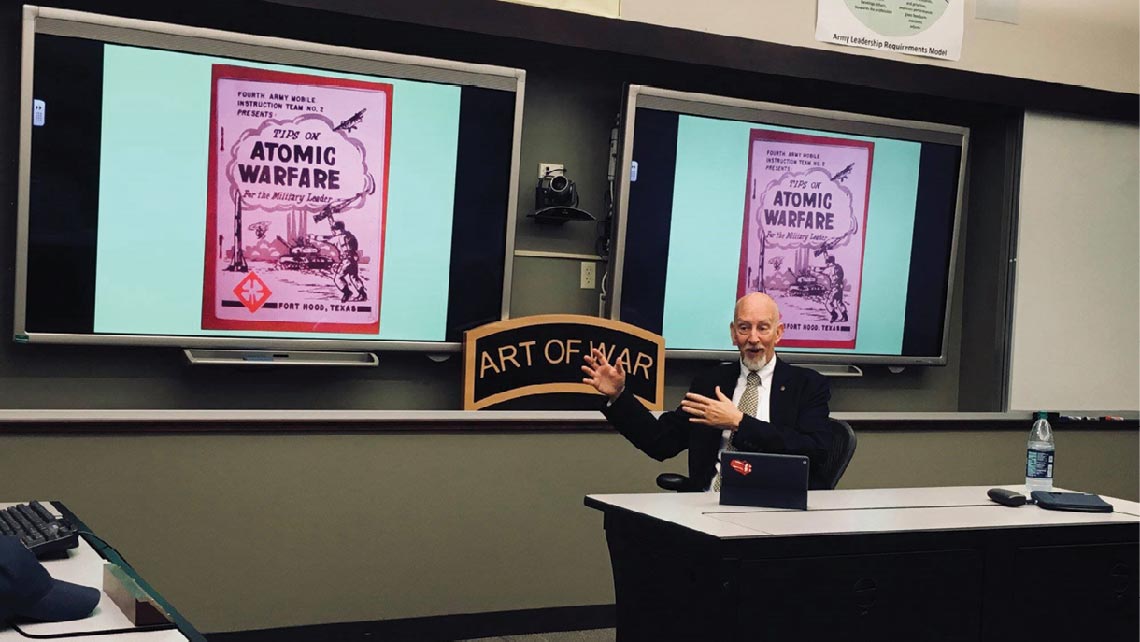
Professor Brian McAllister Linn of Texas A&M, author of Elvis’s Army: Cold War GIs and the Atomic Battlefield, conducts a seminar 4 May 2018 at Fort Leavenworth, Kansas, with the 2017/18 Art of War Scholars on the U.S. Army’s post-World War II transformation to an “atomic army.” hat experience and history teach is this—that people and governments never have learned anything from history, or acted on principles deduced from it.FBI Issues Warning About The Potential For A Global ATM ‘Cash-Out’
The Web is still a DARPA weapon.
The Evolution of War
War evolves. From technology and tactics to the strategic imperatives shaping the future of conflict, we explore the evolution of war since World War I in this episode of the Stratfor Podcast. Stratfor Senior Military Analyst Omar Lamrani and Director of Analyst Operation Paul Floyd join Editorial Director Ben Sheen to explore why and how military strategies have changed over the last 100 years and what war between nations will look like in the future.