The Profession of Arms: A Guide for Young Army Officers
It takes courage, especially for a young officer, to check a man met on the road for not saluting properly or for slovenly appearance, but, every time he does, it adds to his stock of moral courage, and whatever the soldier may say, he has respect for the officer who does pull him up.
Read Document →The Dragon's Teeth: Assessing China's Military Modernization
PLA has focused on modernising its capabilities across all warfare domains to achieve these goals. This includes land, air, and maritime operations, nuclear, space, counter-space, electronic warfare and cyberspace operations, aiming to become a fully integrated joint force.
Read Document →Transforming the PLA: A Decade of reorganisation from SSF to ISF
PRC has engaged in a sustained and broad effort to transform the PLA from an infantry-heavy, low-technology, ground forces-centric military into a high-technology, networked force with an increasing emphasis on joint operations and naval and air power projection.
Read Document →Eyes without Borders: Exploring the World of Open Source Intelligence (OSINT) in the Digital Age
Open Source Intelligence (OSINT) is gaining prominence with the rise of social media, the digital society and the vast growth of publicly and commercially available information (PAI and CAI).
Read Document →
The PLA’s Developing Cyber Warfare Capabilities and India's Options
Informationised warfare blurs the lines between peacetime and wartime. A nation in the information age cannot wait for the hostilities to break out to collect intelligence, carryout influence operations, develop antisatellite systems or design computer software weapons.
Read Document →
Galwan and After
Why did China did this when he is under tremendous pressure in all fronts, is this China's salami slice tactics being progressed rigorously, what will be new Rules of Engagement, what will be escalatory control mechanism, who has taken this decision, will there be some pressure put by China in India's North-East through insurgency.
Read Document →
India’s Joint Doctrine for Cyberspace Operations: A Critical Review
Chief of Defence Staff (CDS) General Anil Chauhan and Secretary, Department of Military Affairs, formally released declassified versions of the Joint Doctrines for Cyberspace Operations during the Chiefs of Staff Committee meeting in New Delhi.
Read Document →
Know your Enemy General(now Field Marshal) Syed Aseem Munir
Gen SA Munir's position in the hierarchy of Pakistan was not very comfortable. The state of economy, insurgency in Pakhtoonistan and Balochistan, attack on the Jaffar Express, constant protests by supporters of Imran Khan's supporters inside and outside of parliament.
Read Document →
Decoding Operation SINDOOR: Key Aspects and Implications
Precision strikes were carried out on nine sites—four in Pakistan and five in PoK—linked to anti-India terrorist groups such as the LeT, JeM and the Hizbul Mujahideen. The targeted sites included Muridke (LeT headquarters) and Bahawalpur (JeM headquarters).
Read Document →
Chinese Cyber Exploitation in India's Power Grid - Is There a linkage to Mumbai Power Outage?
The New York Times (NYT), based on analysis by a U.S. based private intelligence firm Recorded Future, reported that a Chinese entity penetrated India’s power grid at multiple load dispatch points. Chinese malware intruded into the control systems that manage electric supply across India, along with a high-voltage transmission substation and a coal-fired power plant
Read Document →29 February 2016
Why Involving Ex-Servicemen in the JNU Controversy is Potentially Toxic
* A Softer Iron Curtain Falls In Ukraine
Throughout the Cold War, the symbolic center of the standoff between the Soviets and the West was Germany, split in two - much as the whole of Europe was - by the infamous Iron Curtain. But now, in Ukraine, a new center has emerged in the rivalry between East and West, dividing the country in ways that could prove just as enduring as the decadeslong partition of Germany.
This week marks the second anniversary of the Euromaidan uprising that drove former Ukrainian President Viktor Yanukovich from power, shaking Ukraine to its foundations and driving Russia-West relations to their lowest point since the end of the Cold War. Much has changed in the two years since: A pro-West government formed in Kiev, Russia annexed Crimea, and a rebellion in eastern Ukraine developed into a full-fledged war. Meanwhile, the United States and the European Union have levied sanctions against Russia. Moscow has responded with countersanctions against the West. Economic activity between Ukraine and Russia has ground to a halt.
As the Ukrainian conflict enters its third year, a flurry of negotiations aimed at ending hostilities is taking place. At higher levels, officials are holding talks in Normandy to address the conflict's political aspects, while on the tactical front, there are discussions in Minsk to sort out the details of a cease-fire. Alongside both, countless bilateral meetings are being held. Occasionally, these talks renew hope that a lasting agreement can be reached. In reality, though, Ukraine's crisis is not a short-lived skirmish that a little additional negotiation can resolve. Rather, it is a deep-seated conflict, rooted in geopolitics, that stretches back centuries and will likely continue to exist in some form for many more years. Understanding Ukraine's role in the Russia-West rivalry, with its similarities to Germany's role during the Cold War, is crucial to envisioning how Europe's future may evolve.
Ukraine: Divided Between East and West
Ukraine has long been a polarized country. Strategically located on the open plains of Eastern Europe, the country can trace its divisions to the numerous powers and empires that sought to claim shares of its territory. Ukraine first belonged to Kievan Rus, a medieval Eastern Slavic state centered on Kiev that encompassed modern-day Russia, Belarus and Ukraine. But the kingdom began to decline, eventually falling to the Mongols in the 13th century, and the center of Eastern Slavic power shifted to Moscow. Kiev, and the territory that today makes up Ukraine, languished.
Mother Teresa Humanitarian Image A 'Myth,' New Study Says
Army Plans Futuristic Soldier Protective Gear
why the world doesnt buy pakistani claims of india sponsored terrorism
The false binary Why the world doesn’t buy Pakistani claims of India-sponsored terrorism
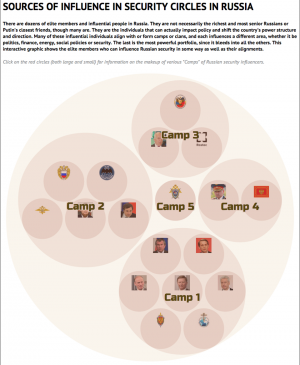
* Stratfor: Cracks appear in Putin’s Kremlin as the stress on Russia grows
* Toward Operational Art in Special Warfare
* Ceasefire and 97 Flavors of Opposition
** In Cyberspace Warfare, India is Still Shooting in the Dark
Why The PAK-FA May Win The Stealth Dogfight Rakesh Krishnan Simha
** Commentary: War Makes Victorious Armies Stupid
* Why the Arabs Don’t Want Us in Syria
Russia’s Cost-Benefit Interest in Syria
The real danger of Brexit Leaving the EU would hurt Britain—and would also deal a terrible blow to the West
Cease-Fire To Come Into Effect In Syria
While Syria's vital signs are starting to fail, there is a shimmer of hope for the war torn country:
Today a planned cease-fire could bring most if not all hostilities to a halt. "The coming days will be critical and the world will be watching," US-President Barack Obama said on Thursday. The agreement could be a first step towards ending the chaos and violence in Syria, Obama added. Fighting should cease from Friday at midnight local time.
At a meeting in Munich two weeks ago, the 17-nation International Syria Support Group (ISSG), which includes the United States, Russia and other major powers, agreed to work towards the cessation of hostilities. However, the U.S. and Russia had also agreed that the fight against the extremist Islamic State (IS) and the al-Qaida affiliated Nusra Front would continue with full force.
The Syrian government under President Bashar al-Assad, which is highly dependent on Russian military support, is likely to stick to the deal. Almost 100 rebel factions fighting Syrian government forces have also agreed to respect the cessation of hostilities.
The war in Syria is now in its fifth year and more than 250,000 people have been killed, some sources counting more than 400,000 dead. Approximately 13.5 million people have been displaced. As the chart below shows, the country is on the brink. The United Nations will convene a new round of peace talks possibly beginning in March. A first round of talks had been abruptly aborted early on in February.
The impact of war on Syria

U.S. Shale Gas Sets Sail…Now What?
The U.S. Armed Forces—or Global Rent-a-Force?
Apple-FBI Encryption Case Has Huge Implications
Who really hacked Sony? Cybersecurity researchers say they finally know
A group they've dubbed "Lazarus Group" is well organized and tied to numerous other attacks on governments, banks, and military institutions in the US and South Korea since 2009.
By Jack Detsch, Staff writer, FEBRUARY 24, 2016
More than a year after the devastating Sony Pictures hack, a trio of cybersecurity firms claim to have pinpointed the culprits behind the breach that rattled Hollywood and invigorated President Obama's cybersecurity agenda.
The companies said in a report released Wednesday that an outfit it dubs "Lazarus Group," which has carried out high-profile attacks on government agencies, militaries, and banks in the US and South Korea since 2009, is responsible for the Sony Pictures incursion in November 2014.
The firms didn't connect Lazarus Group directly to North Korea, which US law enforcement and many security experts believe funded the Sony Pictures hack in retaliation for the "The Interview," a comedy distributed by Sony about an assassination plot against North Korean leader Kim Jong-un.
"What we've found clearly communicates a very well resourced organization that is extremely well-motivated, extremely well-organized, and has demonstrated since 2009 their ability to operate," said Andre Ludwig, the senior technical director at Novetta, a Virginia cybersecurity firm. It published the report along with AlienVault and Kaspersky Lab.
Their research also connected Lazarus Group to distributed denial of service, or DDoS, attacks that targeted South Korea's government, military, and major banks in 2011, as well as to "Operation Troy," a military espionage campaign targeting South Korea.
The report found traces of the Lazarus Group's malware in China, India, Japan, and Taiwan. That could indicate the Sony hack was the work of one group – or closely linked networks – that potentially collaborated on technical resources, attacks, and coordinated server infrastructure. The hackers appeared to communicate in Korean, according to malware samples the researchers analyzed.
The security researchers say they based their finding on hundreds of millions of malware samples related to Sony and other hacks – ultimately attributing 2,000 samples and 45 families of malware to the Lazarus Group.