 … Indian assistance in Afghanistan is focused on, ‘Afghan led, Afghan owned and controlled,’ projects … India’s Small Development Projects are spread all over the country … economic development is the basic foundation for peace in Afghanistan … it has to be owned, led and controlled by them - a point emphasised by Indian policy makers … external actors particularly China and Pakistan have a limited role in that …Indian Engagement with Afghanistan: An Economic Perspective 1.5 MB
4 September 2018
Indian Engagement with Afghanistan: An Economic Perspective
… Indian assistance in Afghanistan is focused on, ‘Afghan led, Afghan owned and controlled,’ projects … India’s Small Development Projects are spread all over the country … economic development is the basic foundation for peace in Afghanistan … it has to be owned, led and controlled by them - a point emphasised by Indian policy makers … external actors particularly China and Pakistan have a limited role in that …Indian Engagement with Afghanistan: An Economic Perspective 1.5 MBIndia Is Getting Cold Feet About Trump’s America
BY ATMAN TRIVEDI, APARNA PANDE
 On the 2016 campaign trail, now-U.S. President Donald Trump assured an Indian-American audience: “There won’t be any relationship more important to us.” Secretary of State Mike Pompeo periodically reminds everyone of India’s centrality to U.S. Asia policy. Growing warmth toward India is one of the few policies to have survived the change in administrations intact. With India now the world’s sixth-largest economy, and growing fears in Washington about a rising China, New Delhi is looking like an increasingly attractive partner—especially as the two nations, at least theoretically, share similar values: democracy, rule of law, and entrepreneurship. But just as the United States is warming up to India, India is starting to get cold feet about the whole idea.
What’s Wrong With the US Afghanistan Strategy?
By Kashif Hussain
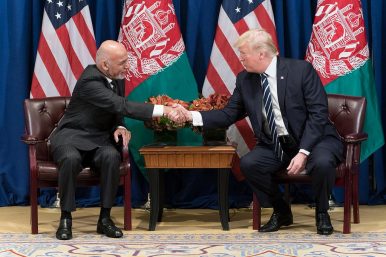 The United States’ Afghanistan-centric South Asia strategy aimed at outlining a plan for victory in its more than one-and-a-half decade long war with the Taliban. A combination of tools — including diplomacy, economic might, intelligence and military power — was employed during the past year for that purpose. However, at the same time, the current situation in Afghanistan reflects a gloomy picture ridden with chaos and disorder, largely as a result of clashes between Afghan security forces and Taliban insurgents. There have also been widespread suicide bomb blasts across the country.
Can Russia End the War in Afghanistan?
By Samuel Ramani
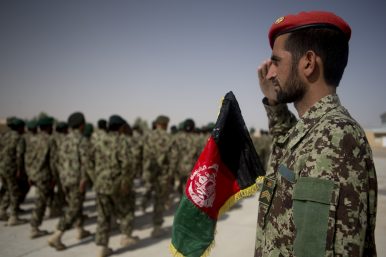 On August 27, Mohammed Jawed Hejri, a senior official in Afghanistan’s Takhar province, alleged that Russian or Tajik border aircraft launched a bombing raid against narcotics smugglers in northern Afghanistan. While the Russian Ministry of Defense swiftly denied Hejri’s allegations, the bombing raid sparked a fresh debate on Moscow’s strategic interests in Afghanistan. Although Russia has been criticized by senior U.S. officials, like General John Nicholson and the U.S. Department of State’s Alice Wells, for allegedly providing arms to the Taliban, Russian policymakers have emphasized Moscow’s commitment to peace in Afghanistan. The benefits of a stable Afghanistan for Russian policymakers are manifold, as a peace settlement in Afghanistan would enhance the security of crucial Russian allies in Central Asia, like Kyrgyzstan and Tajikistan, and stem the inflow of narcotics and militants into Russia’s southern frontiers. Through a series of Moscow-format talks, which began as a result of a December 2016 gathering of senior officials from China, Pakistan, and Russia on combatting Islamic State (ISIS), Russia is seeking to establish a leading role in the stabilization of Afghanistan and showcase its conflict arbitration prowess to a broad international audience.
The New U.S. Commander in Afghanistan Brings Along the Same Stale Ideas
by Sophia Larson
As the anniversary of the September 11 attacks draws near, the Afghanistan War—the nearly seventeen-year-old conflict those terrible events spawned—is seeing a change in leadership. Army Lt. Gen. Austin Scott Miller, America’s ninth commander, is preparing to take charge of the effort but has already admitted to his lack of innovative thinking. At his confirmation hearing in June,he told the Senate that he couldn’t guarantee a timeline for bringing U.S. troops home. This is unfortunate—and expected. Despite the change of command, Miller represents the same stale thinking that has permeated U.S. foreign policy for the last two decades.
Muslim Governments Silent as China Cracks Down on Uighurs
 As calls grow in the U.S. and Europe to pressure China to halt alleged human-rights abuses against its Muslim minority, Beijing has so far escaped any serious criticism from governments across the Islamic world. Almost three weeks after a United Nations official cited “credible reports” that the country was holding as many as 1 million Turkic-speaking Uighurs in “re-education” camps, governments in Muslim-majority countries have issued no notable statements on the issue. The silence became more pronounced this week after a bipartisan group of U.S. lawmakers urged sanctions against senior Chinese officials.
Does China Have What It Takes to Be a Superpower?
By Marc Champion and Adrian Leung
As the U.S. well knows, it’s expensive to be a superpower. The costs of maintaining a large military, leading diplomatic missions and providing aid to foreign countries all add up. The more China extends itself around the globe, the heavier the burden will be. While the country has deep pockets, there are economic and financial challenges at home, and if things go belly up domestically it could put strains on President Xi Jinping’s ambitions. As the Chinese general Sun Tzu wrote in “The Art of War” two and a half millennia ago, “first count the cost.”
Chinese billionaire Jack Ma says the US wasted trillions on warfare instead of investing in infrastructure
Jay Yarow
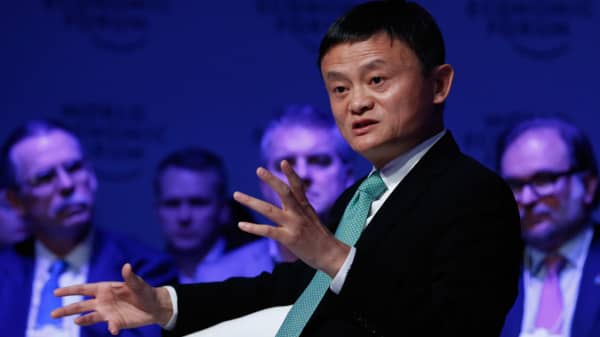 Alibaba founder Jack Ma fired a shot at the United States in an interview at the World Economic Forum in Davos, Switzerland. Ma was asked by CNBC's Andrew Ross Sorkin about the U.S. economy in relation to China, since President-elect Donald Trumphas been talking about imposing new tariffs on Chinese imports. Ma says blaming China for any economic issues in the U.S. is misguided. If America is looking to blame anyone, Ma said, it should blame itself. "It's not that other countries steal jobs from you guys," Ma said. "It's your strategy. Distribute the money and things in a proper way."
Interview: Leta Hong Fincher
By Shannon Tiezzi
 In 2018, the #MeToo movement erupted on Chinese social media, with women standing up to accuse prominent men in the media, academic, and entertainment spheres of sexual harassment and assault. However, Chinese advocates of greater transparency around these issues faced an additional barrier not shared by #MeToo activists in the West: censorship and threats from the Chinese government. This nexus between the growing tide of feminism in China and the government’s heavy-handed attempts to thwart the movement is exactly the subject of Betraying Big Brother: The Feminist Awakening in China, the latest book by Leta Hong Fincher. Hong Fincher, who received her Ph.D. from Tsinghua University, has written extensively on Chinese feminism and gender issues, including in her previous book Leftover Women: The Resurgence of Gender Inequality in China.
Can China Burnish Its Image in South Africa?
By Samuel Ramani
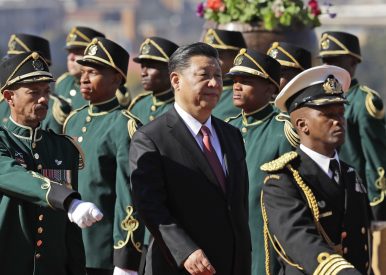 On August 24, Major General Shao Yuanming, the deputy chief of staff of China’s Central Military Commission’s Joint Staff Department, arranged a meeting with South Africa’s military chief Solly Shoke in Beijing to enhance bilateral security cooperation. This meeting gained widespread international attention, as it underscored China’s solidarity with South Africa in the aftermath of U.S. President Donald Trump’s criticisms of the South African government’s plan to redistribute farmland, which is mostly held by white farmers.
China Declared Islam a Contagious Disease – and Quarantined 1 Million Muslims
By Eric Levitz
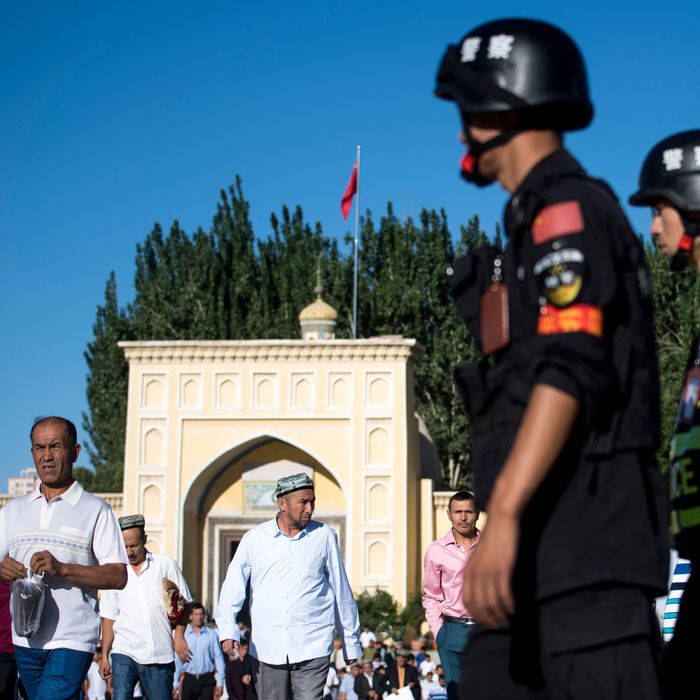 China is among the most ethnically homogeneous large countries in the world, with Han Chinese accounting for 91 percent of its population. The ruling Communist Party considers China’s homogeneity and social cohesion to be pillars of its strength (and, also, potent rationalizations for discrimination against ethnic minorities and authoritarian rule). But the territory of Xinjiang, in northwest China, is home to a large population of Uighurs, a predominantly Muslim, Turkic ethnic group. The Chinese government has long worried that the Uighurs will attempt to establish an independent homeland in the region, which they commonly call East Turkestan. In 2009, ethnic riots in Xinjiang claimed hundreds of lives; since then, individual Uighur nationalists have carried out multiple terrorist attacks.
Muslim Governments Silent as China Cracks Down on Uighurs
As calls grow in the U.S. and Europe to pressure China to halt alleged human-rights abuses against its Muslim minority, Beijing has so far escaped any serious criticism from governments across the Islamic world. Almost three weeks after a United Nations official cited “credible reports” that the country was holding as many as 1 million Turkic-speaking Uighurs in “re-education” camps, governments in Muslim-majority countries have issued no notable statements on the issue. The silence became more pronounced this week after a bipartisan group of U.S. lawmakers urged sanctions against senior Chinese officials.Oman Will Bend, But Not Break, From Gulf Pressure
Oman has long maintained a neutral posture in Persian Gulf disputes, but the country has to work hard to avoid taking sides.
With the United States targeting as many of Iran's economic lifelines as it can, Saudi Arabia and the United Arab Emirates are likely to question Oman's economic links to the Islamic republic.
Riyadh and Abu Dhabi have their own reasons to bring Oman's policies into line with their own, but they will not be able to replicate their hard-line Qatar blockade strategy without losing the support of Washington.
Oman could deflect external pressure by making adjustments to its policies, thereby preserving its overall independence.
Facing Syria and Russia, UN prepares to prove the impotence of its "soft power"
by Tom Rogan
 The only real utility of the United Nations lies in its facilitation of dialogue and its ideal location in New York City, which makes it a central gathering house for U.S. intelligence operations.
I note this in light of new U.N. warnings against a looming Russian, Syrian, and Iranian offensive in Idlib province, Syria. Were the U.N. that which it asserts to be — a respected international institution that protects humanitarian interests — it would be able to prevent what is about to happen in Idlib. Which is to say, prevent a slaughter. But it will fail.
The U.N. is trying its best. Warning against the looming offensive's impact on civilians, on Friday, U.N. High Commissioner for Refugees Filippo Grandi said the situation was "going to be very difficult." Grandi added that other refugees "will be watching very closely what is happening in Idlib in the next few months." This is a clear warning from a senior U.N. official in the exigent interest of preventing a near-term humanitarian catastrophe.
Europe Could Miss Its Opportunity for Political Realignment
JEAN PISANI-FERRY
Will the continent’s voters be offered the opportunity to decide on the key challenges their societies are facing, or will tactical maneuvering obfuscate the choices and permit the continued dominance of traditional politics? The nine months between now and the election of the next European Parliament will provide the answer.
PARIS – “There are two sides at the moment in Europe. One is led by Macron, who is supporting migration. The other one is supported by countries that want to protect their borders.” This is how Hungarian Prime Minister Viktor Orbán described the European political landscape during his August meeting with the Lega party’s Matteo Salvini, the strongman in the Italian government. “If they want to see me as their main opponent, they are right,” French President Emmanuel Macron instantly replied.2
The Belt and Road in Europe: 5 Years Later
By Nadège Rolland
 This fall will mark the fifth anniversary of the launch of what is now called in English the Belt and Road Initiative or BRI. Five years on, the jury is still out about the BRI’s nature and actual outcomes, but Beijing’s promises of investments in infrastructure projects across Eurasia and beyond have undoubtedly managed to capture the world’s attention. The BRI’s real objectives and multilayered ambitions are still not well understood, but there’s an emerging awareness that its impact will be felt far beyond the realm of infrastructure construction. What has become very clear is the BRI’s importance for the top Chinese leadership: Now that the BRI has been enshrined in the Chinese Communist Party (CCP) Charter, and its offshoot, the “community of shared future,” has been included in the People’s Republic of China Constitution, it is harder for skeptics to continue to claim that the BRI is an empty slogan that will soon fade.
Is Mattis Next Out the Door?
By FRED KAPLAN
It looks like Secretary of Defense Jim Mattis may be next in line to get the boot for disloyalty to President Donald Trump. For some time now, Mattis has made statements and pursued policies at odds with Trump’s predilections, especially when it comes to strengthening U.S. commitments to NATO and assuring allies in Asia. But his most recent challenges have been particularly upfront, and this time Trump hit back. The latest flap began Tuesday, when Mattis was asked at a news conference about the future of U.S. joint military exercises with South Korea. At the June summit in Singapore with North Korean leader Kim Jong-un, Trump had promised to suspend those exercises, saying they were provocative and expensive.
U.S. Foreign Policy John McCain and the Meaning of Courage
By H. R. McMaster
Carl von Clausewitz, the Prussian philosopher of war, wrote in the early nineteenth century that “courage is of two kinds: first, physical courage, or courage in the presence of danger; and next, moral courage, or courage before responsibility.” The late U.S. Senator John McCain demonstrated both types. His physical courage was apparent during the 23 combat missions he flew over North Vietnam, especially the last of these, when he was shot down over Hanoi, severely wounded, and captured by the North Vietnamese. During his captivity over the next five and a half years, more than two of which he spent in solitary confinement, he demonstrated not only physical but also moral courage while enduring the worst possible forms of torture. Perhaps his most courageous act as a prisoner of war came when he refused to accept early release, in order to remain with his fellow Americans and deny the North Vietnamese a propaganda victory.
The shale gas challenge
Shashikant Yadav, M.P. Ram Mohan
No Ecosystem on Earth Is Safe From Climate Change
ROBINSON MEYER
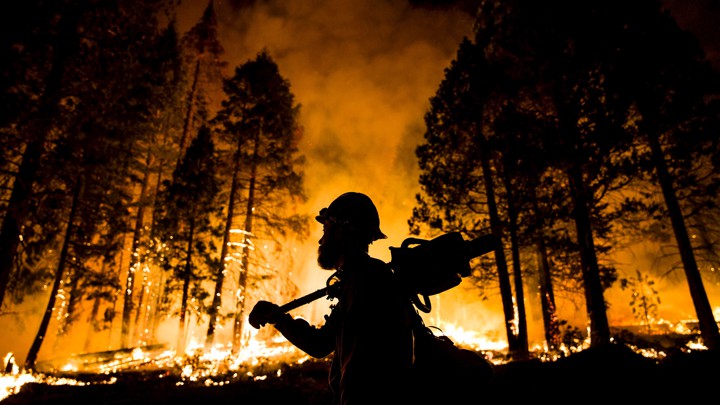 If climate change continues unabated, nearly every ecosystem on the planet would alter dramatically, to the point of becoming an entirely new biome, according to a new paper written by 42 scientists from around the world. They warn that the changes of the next 200 years could equal—and may likely exceed—those seen over the 10,000 years that ended the last Ice Age. If humanity does not stop emitting greenhouse-gas emissions, the character of the land could metamorphose: Oak forest could become grassland. Evergreen woods could turn deciduous. And, of course, beaches would sink into the sea.
This Is How Russian Propaganda Actually Works In The 21st Century
Holger Roonemaa
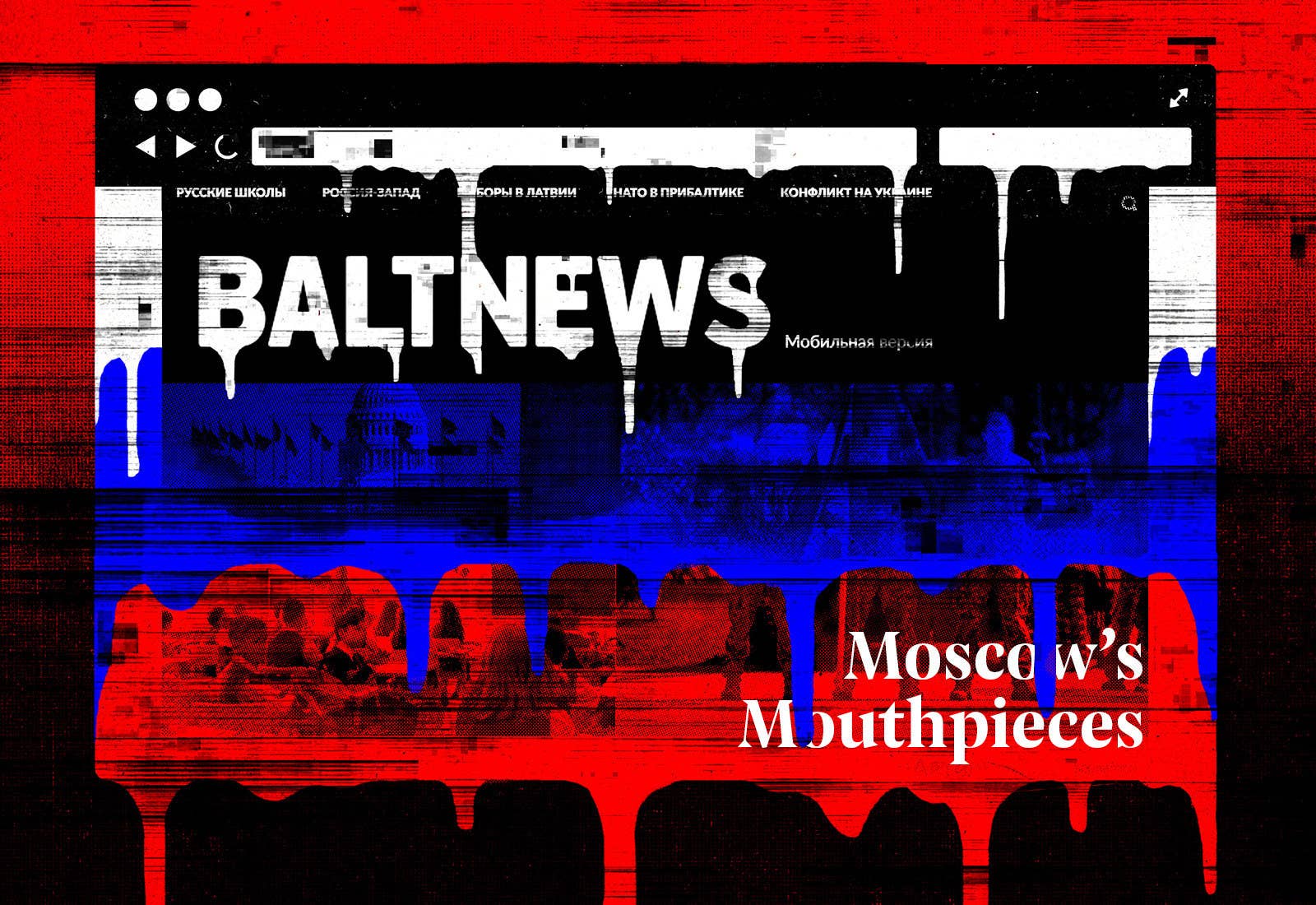 TALLINN, Estonia — The Russian government discreetly funded a group of seemingly independent news websites in Eastern Europe to pump out stories dictated to them by the Kremlin, BuzzFeed News and its reporting partners can reveal. Russian state media created secret companies in order to bankroll websites in the Baltic states — a key battleground between Russia and the West — and elsewhere in Eastern Europe and Central Asia. The scheme has only come to light through Skype chats and documents obtained by BuzzFeed News, Estonian newspaper Postimees, and investigative journalism outlet Re:Baltica via freedom of information laws, as part of a criminal probe into the individual who was Moscow’s man on the ground in Estonia.
Microwave Weapons Are Prime Suspect in Ills of U.S. Embassy Workers
By William J. Broad
 Doctors and scientists say microwave strikes may have caused sonic delusions and very real brain damage among embassy staff and family members.
During the Cold War, Washington feared that Moscow was seeking to turnmicrowave radiation into covert weapons of mind control.
More recently, the American military itself sought to develop microwave arms that could invisibly beam painfully loud booms and even spoken words into people’s heads. The aims were to disable attackers and wage psychological warfare.
Now, doctors and scientists say such unconventional weapons may have caused the baffling symptoms and ailments that, starting in late 2016, hit more than three dozen American diplomats and family members in Cuba and China. The Cuban incidents resulted in a diplomatic rupture between Havana and Washington.
Russia’s new Spectrum EW system enters service
 The Russian Ministry of Defence (MoD) said on 28 August that a new electronic warfare (EW) system, designated Spectrum, has entered service with an inaugural exercise in the Urals.
The complex is based on an AMN-233114 Tigr-M 4×4 vehicle, which has fitted to its roof an array of mission systems, including an optical surveillance suite and a large container.
The vehicle is manned by specialists from the brigade-level EW forces that Russia operates. They are typically charged with interrupting or disrupting enemy communications. However, the Spectrum is described as a vehicle for “tracking of the specified territories where potentially dangerous objects can appear”.
How the Air Force data strategy is evolving
By: Valerie Insinna
/arc-anglerfish-arc2-prod-mco.s3.amazonaws.com/public/S4JI2NG77ZD5PGHEJAKDHUKT3A.jpg) The Air Force’s ambitious new intelligence, surveillance and reconnaissance strategy calls for a sensing grid that fuses together data from legacy platforms (such as the RQ-4 Global Hawk), emerging technologies (like swarming drones), other services’ platforms and publicly available information. Artificial intelligence will decipher that data. Such a system may sound like science fiction, but the service believes it could be up by 2028.
The Air Force’s ambitious new intelligence, surveillance and reconnaissance strategy calls for a sensing grid that fuses together data from legacy platforms (such as the RQ-4 Global Hawk), emerging technologies (like swarming drones), other services’ platforms and publicly available information. Artificial intelligence will decipher that data. Such a system may sound like science fiction, but the service believes it could be up by 2028.
Lt. Gen. VeraLinn “Dash” Jamieson, the deputy chief of staff for ISR, explained the genesis for the Air Force’s new “Next Generation ISR Dominance Flight Plan,” which lays out the service’s goals for the next 10 years. She spoke recently with Valerie Insinna of sister publication Defense News.
How the Air Force data strategy is evolving
The Air Force’s ambitious new intelligence, surveillance and reconnaissance strategy calls for a sensing grid that fuses together data from legacy platforms (such as the RQ-4 Global Hawk), emerging technologies (like swarming drones), other services’ platforms and publicly available information. Artificial intelligence will decipher that data. Such a system may sound like science fiction, but the service believes it could be up by 2028. Lt. Gen. VeraLinn “Dash” Jamieson, the deputy chief of staff for ISR, explained the genesis for the Air Force’s new “Next Generation ISR Dominance Flight Plan,” which lays out the service’s goals for the next 10 years. She spoke recently with Valerie Insinna of sister publication Defense News.How Does the Blockchain Work?
Michele D'Aliessi
Blockchain technology is probably the best invention since the internet itself. It allows value exchange without the need for trust or a central authority. Imagine you and I bet $50 on tomorrow’s weather in San Francisco. I bet it will be sunny, you that it will rain. Today we have three options to manage this transaction: We can trust each other. Rainy or sunny, the loser will give $50 to the winner. If we are friends, this could be a good way of managing it. However, friends or strangers, one can easily not pay the other. We can turn the bet into a contract. With a contract in place both parties will be more prone to pay. However, should either of the two decide not to pay, the winner will have to pay additional money to cover legal expenses and the court case might take a long time. Especially for a small amount of cash, this doesn’t seem like the optimal way to manage the transaction.We can involve a neutral third party. Each of us gives $50 to a third party, who will give the total amount to the winner. But hey, she could also run away with all our money. So we end up with one of the first two options: trust or contract.
Exclusive: U.S. accuses China of 'super aggressive' spy campaign on LinkedIn
WASHINGTON (Reuters) - The United States’ top spy catcher said Chinese espionage agencies are using fake LinkedIn accounts to try to recruit Americans with access to government and commercial secrets, and the company should shut them down. William Evanina, the U.S. counter-intelligence chief, told Reuters in an interview that intelligence and law enforcement officials have told LinkedIn, owned by Microsoft Corp., about China’s “super aggressive” efforts on the site. He said the Chinese campaign includes contacting thousands of LinkedIn members at a time, but he declined to say how many fake accounts U.S. intelligence had discovered, how many Americans may have been contacted and how much success China has had in the recruitment drive.
German Cabinet approves new cybersecurity agency
/arc-anglerfish-arc2-prod-mco.s3.amazonaws.com/public/RCDNNN4Z3FBQNIVNF4Q3PPZUFM.jpg) COLOGNE, Germany – Germany is one step closer to getting its own version of a Defense Advanced Research Projects Agency, as officials here seek to bolster the country's cybersecurity posture. The Cabinet of Chancellor Angela Merkel this week approved the new organization, to be headed jointly by the Defense and Interior ministries. The outfit is slated to get a budget of €200 million ($230 million) between 2019 and 2022. The new “Agency for Innovation in Cybersecurity” will eventually have 100 employees. The German parliament, the Bundestag, will debate the proposal in the upcoming months. Once the funding is cleared, analysts will begin their work in earnest next year.
COLOGNE, Germany – Germany is one step closer to getting its own version of a Defense Advanced Research Projects Agency, as officials here seek to bolster the country's cybersecurity posture. The Cabinet of Chancellor Angela Merkel this week approved the new organization, to be headed jointly by the Defense and Interior ministries. The outfit is slated to get a budget of €200 million ($230 million) between 2019 and 2022. The new “Agency for Innovation in Cybersecurity” will eventually have 100 employees. The German parliament, the Bundestag, will debate the proposal in the upcoming months. Once the funding is cleared, analysts will begin their work in earnest next year.The elements that make security an enabler rather than a hindrance
/arc-anglerfish-arc2-prod-mco.s3.amazonaws.com/public/ZSW4IKBRAVENNFSB3QQM5NWZKE.jpg) The Defense Information Systems Agency is taking action to improve its authentication practices. Agency leaders no longer consider the Common Access Card (CAC) optimal for authentication in today’s mobile-centric environment and are exploring alternatives. While CACs are effective, they’re not as agile or secure as the Department of Defense needs to be. Cards are easily confiscated, lost or stolen and acquiring a new card is time consuming. Also, CACs don’t plug into mobile devices and tablets, limiting members of the defense community’s ability to utilize technology that could help accomplish its mission.
The Defense Information Systems Agency is taking action to improve its authentication practices. Agency leaders no longer consider the Common Access Card (CAC) optimal for authentication in today’s mobile-centric environment and are exploring alternatives. While CACs are effective, they’re not as agile or secure as the Department of Defense needs to be. Cards are easily confiscated, lost or stolen and acquiring a new card is time consuming. Also, CACs don’t plug into mobile devices and tablets, limiting members of the defense community’s ability to utilize technology that could help accomplish its mission.RAND: The United States Air Force Is Too Small
By Dave Majumdar
The United States Air Force is too small to meet the security challenges that meet the nation, a new study conducted by the RAND Corporation has found. In the unipolar moment that followed the immediate aftermath of the Cold War, American conventional military dominance allowed the Pentagon to assume some risks in force readiness and capability requirements for conflict with a major power while it undertook various open-ended “peace enforcement” and counterinsurgency operations. But in an era where the United States faces the threat of a rapidly rising China and a resurgent Russia, the findings are especially concerning.