The Profession of Arms: A Guide for Young Army Officers
It takes courage, especially for a young officer, to check a man met on the road for not saluting properly or for slovenly appearance, but, every time he does, it adds to his stock of moral courage, and whatever the soldier may say, he has respect for the officer who does pull him up.
Read Document →The Dragon's Teeth: Assessing China's Military Modernization
PLA has focused on modernising its capabilities across all warfare domains to achieve these goals. This includes land, air, and maritime operations, nuclear, space, counter-space, electronic warfare and cyberspace operations, aiming to become a fully integrated joint force.
Read Document →Transforming the PLA: A Decade of reorganisation from SSF to ISF
PRC has engaged in a sustained and broad effort to transform the PLA from an infantry-heavy, low-technology, ground forces-centric military into a high-technology, networked force with an increasing emphasis on joint operations and naval and air power projection.
Read Document →Eyes without Borders: Exploring the World of Open Source Intelligence (OSINT) in the Digital Age
Open Source Intelligence (OSINT) is gaining prominence with the rise of social media, the digital society and the vast growth of publicly and commercially available information (PAI and CAI).
Read Document →
The PLA’s Developing Cyber Warfare Capabilities and India's Options
Informationised warfare blurs the lines between peacetime and wartime. A nation in the information age cannot wait for the hostilities to break out to collect intelligence, carryout influence operations, develop antisatellite systems or design computer software weapons.
Read Document →
Galwan and After
Why did China did this when he is under tremendous pressure in all fronts, is this China's salami slice tactics being progressed rigorously, what will be new Rules of Engagement, what will be escalatory control mechanism, who has taken this decision, will there be some pressure put by China in India's North-East through insurgency.
Read Document →
India’s Joint Doctrine for Cyberspace Operations: A Critical Review
Chief of Defence Staff (CDS) General Anil Chauhan and Secretary, Department of Military Affairs, formally released declassified versions of the Joint Doctrines for Cyberspace Operations during the Chiefs of Staff Committee meeting in New Delhi.
Read Document →
Know your Enemy General(now Field Marshal) Syed Aseem Munir
Gen SA Munir's position in the hierarchy of Pakistan was not very comfortable. The state of economy, insurgency in Pakhtoonistan and Balochistan, attack on the Jaffar Express, constant protests by supporters of Imran Khan's supporters inside and outside of parliament.
Read Document →
Decoding Operation SINDOOR: Key Aspects and Implications
Precision strikes were carried out on nine sites—four in Pakistan and five in PoK—linked to anti-India terrorist groups such as the LeT, JeM and the Hizbul Mujahideen. The targeted sites included Muridke (LeT headquarters) and Bahawalpur (JeM headquarters).
Read Document →
Chinese Cyber Exploitation in India's Power Grid - Is There a linkage to Mumbai Power Outage?
The New York Times (NYT), based on analysis by a U.S. based private intelligence firm Recorded Future, reported that a Chinese entity penetrated India’s power grid at multiple load dispatch points. Chinese malware intruded into the control systems that manage electric supply across India, along with a high-voltage transmission substation and a coal-fired power plant
Read Document →25 April 2020
India’s National Cyber Security Strategy : How to Go About It
India’s COVID-19 Cooperation With the Middle East
The Last Sikhs and Hindus in Afghanistan Plead for U.S. Help
Amid COVID–19, Pakistan Launches an ‘Islam Friendly’ Action Plan to Keep Mosques Open
Last week, Pakistan’s president met with prominent religious leaders to formulate a plan for congregational prayers during the month of Ramzan (Ramadan). The Pakistani state agreed to a 20-point action plan after consultation with religious scholars of all sects. How the Illicit Drug Trade Is Adapting to the Coronavirus Pandemic
COVID-19: Time to Rethink International Peace & Security
At time of writing, the United States is the emerging epicenter of the COVID-19 pandemic and over one-third of the world’s population is on some sort of lockdown. The virus has spread like wildfire across the planet and poses the greatest existential global threat since World War II.The Great U.S.-China Divorce Has Arrived
China and COVID-19 in MENA
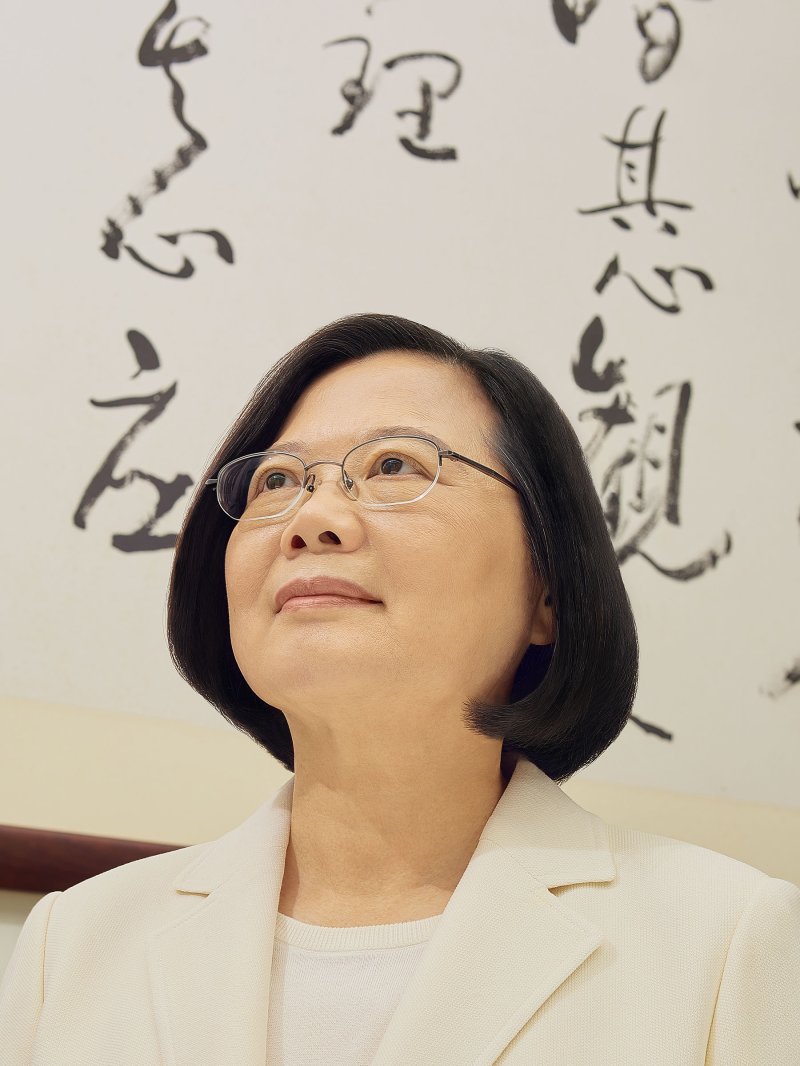
President of Taiwan: How My Country Prevented a Major Outbreak of COVID-19
Taiwan is an island of resilience. Centuries of hardship have compelled our society to cope, adapt, and survive trying circumstances. We have found ways to persevere through difficult times together as a nation, and the COVID-19 pandemic is no different. Despite the virus’s highly infectious nature and our proximity to its source, we have prevented a major outbreak. As of April 14, we have had fewer than 400 confirmed cases.OPEC Plus’ Zero-Sum Oil Game
Making Sense of China’s Latest Bid to Administer Sovereignty in the South China Sea
At the end of last week, China took yet another step to expand its administrative claims over the South China Sea. On Saturday, China’s Ministry of Civil Affairs announced that the State Council of China had approved two new administrative divisions under Sansha City, an earlier administrative unit created in 2012 to encompass the South China Sea. While nominally a “city,” Sansha encompasses 2 million square kilometers and more than 200 features. The End of Grand Strategy America Must Think Small
Whatever else U.S. President Donald Trump has done in the field of international relations, he can claim one signal accomplishment: making grand strategy interesting again. For decades, American foreign policy elites in both parties embraced liberal internationalism, the idea that Washington should sustain and expand a global order that promoted open markets, open polities, and multilateral institutions. But Trump has repeatedly attacked the key pillars of liberal internationalism, from questioning the value of nato to blowing up trade agreements to insulting allies. When, in July 2017, his national security team met with him in a windowless Pentagon meeting room known as “the Tank” to educate him about the virtues of the liberal international order, Trump blasted them as “a bunch of dopes and babies,” according to The Washington Post. A Return To Normalcy?
South Korea Offers a Lesson in Best Practices
When it comes to the novel coronavirus, South Korea has taken tracing to a new level. When passengers deplane at Incheon International Airport near Seoul, they pass through mandatory temperature checks and are required to download the health ministry’s self-diagnosis app. Once at their destinations, they must use the app every day to self-report any symptoms of COVID-19, the disease caused by the new coronavirus. The movements of those who test positive are tracked, and other people in their vicinity receive social-distancing alerts on their phones.USA vs Everybody? Why Foreign Policy Will Be a Backdrop to Domestic Policy in 2020
What Does Russia Want From the United States?
The much-publicized “reset” was shorthand for the Barack Obama administration’s effort to push through the logjams that had built up in U.S.-Russia relations in the George W. Bush years, and harness that relationship to achieve Washington’s new objectives, mostly in Afghanistan and Iran. A reset, however, has also been a long-standing objective in Moscow’s own policy toward the United States.The end of economic growth
What economies face now may not be solely a coronavirus-triggered meltdown. As devastating as the coming recession—or depression—is likely to be, the health crisis is exacerbating problems in a system that was already under strain.Russia’s COVID-19 Measures Short-Change Its Economy
Recession and Depression
A recession is an essential part of the business cycle. Among other things it culls the weaker businesses and redistributes capital and labor for better uses. It is painful but necessary and it ends as it began, as a function of a healthy economy.
Nationalizing Supply Chains Is the Wrong Response to COVID-19
Has Netanyahu’s End Finally Come? How Bibi Lost His Grip on Israeli Politics
Next March, Israelis will head to the polls for the third time in less than a year, and, once again, the vote will amount to a referendum on the rule of Prime Minister Benjamin Netanyahu. Netanyahu may now be in the final act of his political career: the Magician, as Israelis used to call their longest-serving prime minister, has lost his erstwhile grip on the political system, having failed twice to form a coalition following last year’s elections. But that Netanyahu is holding on at all, even as he faces indictment on several corruption charges, is remarkable—and a testament to just how much he has transformed Israel’s democracy. FAQ: A Shale New Deal
COVID–19 Is a Test for Climate Migration and the World Is Failing
The loss of life and economic chaos wrought by COVID-19 serves as a forewarning for how the world might cope with mass migration as a result of climate change. The inevitable emergence of climate migration poses a great risk to many nations, and, now more than ever, governments and international institutions must begin contingency planning. As Challenges Mount, Can Europe Correct Its Course?
Smart Weapons Need to Be Smarter
In January, an Iranian gunner, using Russian equipment, fired surface-to-air missiles (SAMs) at a Ukrainian passenger airliner, killing 176 people. When the airliner was shot down near Tehran, tensions were high. Iran had struck an American base in response to the U.S. killing of the Iranian military leader Qassem Soleimani. Nervous Iranian anti-aircraft crews expected retaliation, and the gunner in question likely thought he was shooting down a military target.