A once in a decade series of events in the Asia-Pacific region have conspired to bring about closer ties between America’s most important allies in the Asia-Pacific. Regardless of who wins the election in November, the U.S. has an opportunity to expand this emerging alliance to include other areas of potential cooperation beyond nominal defense ties.The Profession of Arms: A Guide for Young Army Officers
It takes courage, especially for a young officer, to check a man met on the road for not saluting properly or for slovenly appearance, but, every time he does, it adds to his stock of moral courage, and whatever the soldier may say, he has respect for the officer who does pull him up.
Read Document →The Dragon's Teeth: Assessing China's Military Modernization
PLA has focused on modernising its capabilities across all warfare domains to achieve these goals. This includes land, air, and maritime operations, nuclear, space, counter-space, electronic warfare and cyberspace operations, aiming to become a fully integrated joint force.
Read Document →Transforming the PLA: A Decade of reorganisation from SSF to ISF
PRC has engaged in a sustained and broad effort to transform the PLA from an infantry-heavy, low-technology, ground forces-centric military into a high-technology, networked force with an increasing emphasis on joint operations and naval and air power projection.
Read Document →Eyes without Borders: Exploring the World of Open Source Intelligence (OSINT) in the Digital Age
Open Source Intelligence (OSINT) is gaining prominence with the rise of social media, the digital society and the vast growth of publicly and commercially available information (PAI and CAI).
Read Document →
The PLA’s Developing Cyber Warfare Capabilities and India's Options
Informationised warfare blurs the lines between peacetime and wartime. A nation in the information age cannot wait for the hostilities to break out to collect intelligence, carryout influence operations, develop antisatellite systems or design computer software weapons.
Read Document →
Galwan and After
Why did China did this when he is under tremendous pressure in all fronts, is this China's salami slice tactics being progressed rigorously, what will be new Rules of Engagement, what will be escalatory control mechanism, who has taken this decision, will there be some pressure put by China in India's North-East through insurgency.
Read Document →
India’s Joint Doctrine for Cyberspace Operations: A Critical Review
Chief of Defence Staff (CDS) General Anil Chauhan and Secretary, Department of Military Affairs, formally released declassified versions of the Joint Doctrines for Cyberspace Operations during the Chiefs of Staff Committee meeting in New Delhi.
Read Document →
Know your Enemy General(now Field Marshal) Syed Aseem Munir
Gen SA Munir's position in the hierarchy of Pakistan was not very comfortable. The state of economy, insurgency in Pakhtoonistan and Balochistan, attack on the Jaffar Express, constant protests by supporters of Imran Khan's supporters inside and outside of parliament.
Read Document →
Decoding Operation SINDOOR: Key Aspects and Implications
Precision strikes were carried out on nine sites—four in Pakistan and five in PoK—linked to anti-India terrorist groups such as the LeT, JeM and the Hizbul Mujahideen. The targeted sites included Muridke (LeT headquarters) and Bahawalpur (JeM headquarters).
Read Document →
Chinese Cyber Exploitation in India's Power Grid - Is There a linkage to Mumbai Power Outage?
The New York Times (NYT), based on analysis by a U.S. based private intelligence firm Recorded Future, reported that a Chinese entity penetrated India’s power grid at multiple load dispatch points. Chinese malware intruded into the control systems that manage electric supply across India, along with a high-voltage transmission substation and a coal-fired power plant
Read Document →30 August 2020
Can 'The Quad' Work Together to Contain Chinese Aggression?
A once in a decade series of events in the Asia-Pacific region have conspired to bring about closer ties between America’s most important allies in the Asia-Pacific. Regardless of who wins the election in November, the U.S. has an opportunity to expand this emerging alliance to include other areas of potential cooperation beyond nominal defense ties.Indo-Pacific Pivot in India’s Geostrategy
Gilded aspirations
Taiwan and the United States — much thunder, little rain
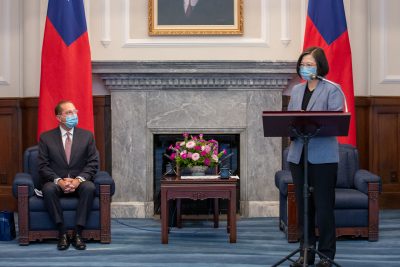
Since April, the administration of US President Donald Trump has been ratcheting up its rhetoric and actions regarding China. This strategy is intended to deflect blame for its mismanagement of the COVID-19 pandemic at home. It is having the side effect of appearing to dismantle the policy of ‘engagement’ with China of the previous seven US administrations and the way they treated Taiwan.The Current Situation in Pakistan
To Counter China Online, Regulate Big Tech
The heads of Amazon, Google, Apple and Facebook fended off tough questions from lawmakers last month at a hearing of the House Judiciary Committee’s antitrust subcommittee. To help allay concerns about monopolistic business practices, each CEO sought to portray his company as representing American values and serving American interests. They all did so in part by pointing to a threat supposedly bigger than their own companies: China.China Locks Down Xinjiang to Fight Covid-19, Angering Residents
First came the notices that Chinese officials had declared a “wartime” state. Then the authorities started going door to door, sealing off apartments and warning residents to stay inside.Why there won’t be a US-China war
In 1976, world heavyweight champion Mohammed Ali fought an exhibition bout in Tokyo with karate master Antonio Inoki. Inoki spent most of the match on his back kicking at Ali’s shins crab-fashion.China and New Start: Reading the Strategic Situation
Where does Biden stand on China and Taiwan?
Joint Subcommittee Briefing on "China’s Oppression of Muslim Uyghurs in Xinjiang"
Chinese-Made Drones: A Direct Threat Whose Use Should Be Curtailed
China, Open-Source Information, and Transparency
Download Report
Exclusive: Israeli Deal with Saudis, Other Gulf States, Is an 'Inevitability,' Says Kushner
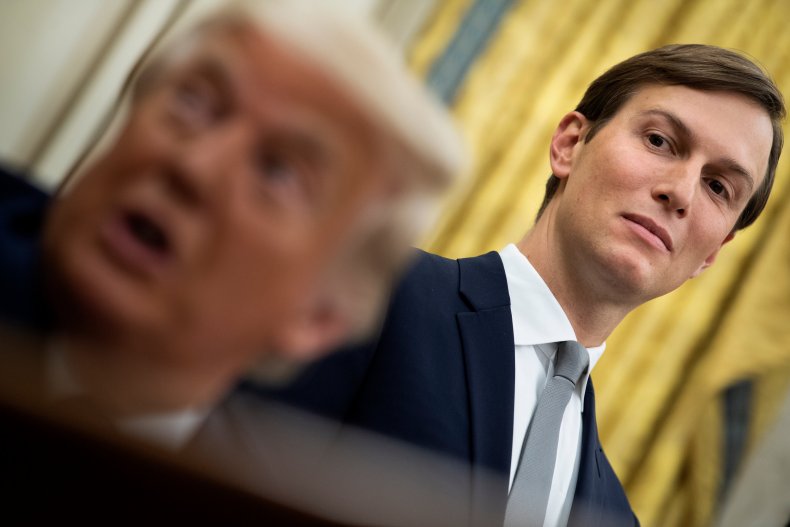
With a historic agreement normalizing relations between Israel and the United Arab Emirates now in its pocket, the Donald Trump administration believes further progress toward peace in the Middle East is coming. In an exclusive interview with Newsweek, Jared Kushner, Trump's special adviser and a key broker of the deal between Israel and the UAE (as well as the president's son-in-law), says he believes similar agreements between Israel and other Gulf states—and even Saudi Arabia, the keeper of Islam's two holiest cities—"are an inevitability. The question is the time frame."All Great-Power Politics Is Local
US Army tests network cyber tools under real-world conditions
Falling Trade, Rising Imbalances...

Reviving the Liberal World Order: An American Challenge
Duel Britannia: The myth of Britain’s culture war
The Role of Russian Private Military Contractors in Africa
RUSSIAN ACTIVE MEASURE;S CAMPAIGNS AND INTERFERENCE IN THE 2016 U.S. ELECTION
Cyber Command takes the fight abroad
Cyber Command launched in 2010 with a mission of defending Defense Department networks, but it has evolved into a more proactive organization, its top leaders say.How to Compete in Cyberspace
In early October 2019, personnel from U.S. Cyber Command landed in Podgorica, the capital of Montenegro, at the invitation of the country’s government. Montenegro has faced increased harassment from Russia since joining NATO in 2017, and the Cyber Command team was there to investigate signs that hackers had penetrated the Montenegrin government’s networks. Working side by side with Montenegrin partners, the team saw an opportunity to improve American cyber defenses ahead of the 2020 election.Algorithmic Warfare: Army Consolidating Cyber Operations Forces
EMP Weapons: How to Beat the U.S. Military in a War?
This past year, the United States has witnessed a greatly increased threat from North Korea. U.S. intelligence has now confirmed that North Korea not only possesses up to sixty nuclear warheads, but it has developed the miniaturization technology required to mount them atop a number of different types of intercontinental ballistic missiles (ICBMs), which it has tested over the past year.