The Profession of Arms: A Guide for Young Army Officers
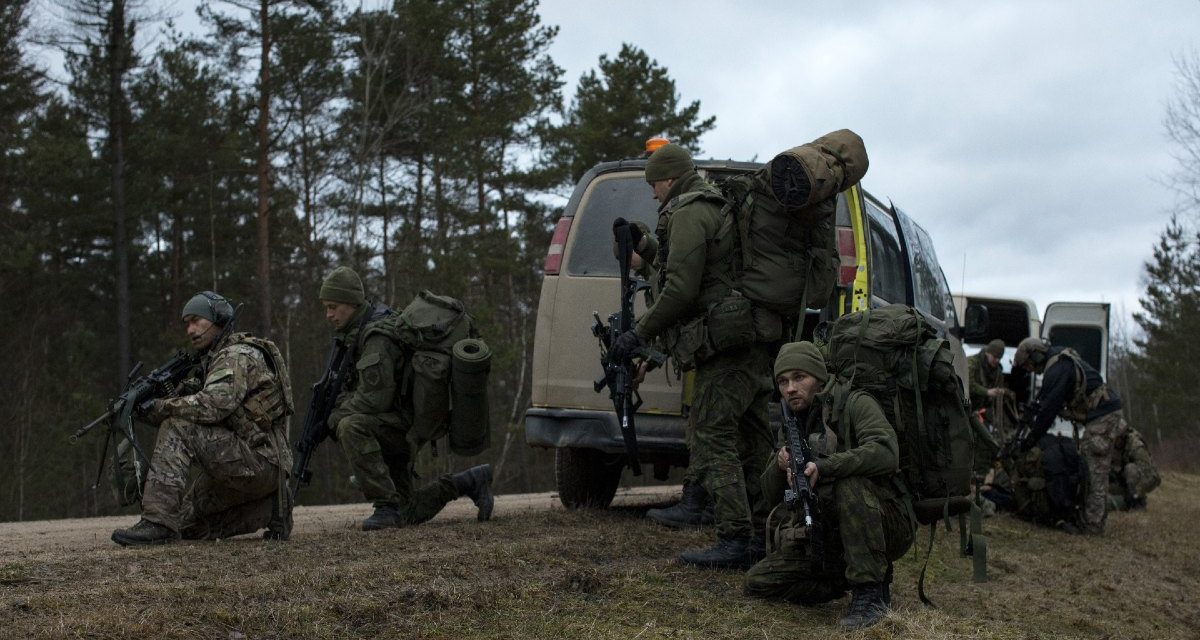
It takes courage, especially for a young officer, to check a man met on the road for not saluting properly or for slovenly appearance, but, every time he does, it adds to his stock of moral courage, and whatever the soldier may say, he has respect for the officer who does pull him up.
Read Document →The Dragon's Teeth: Assessing China's Military Modernization
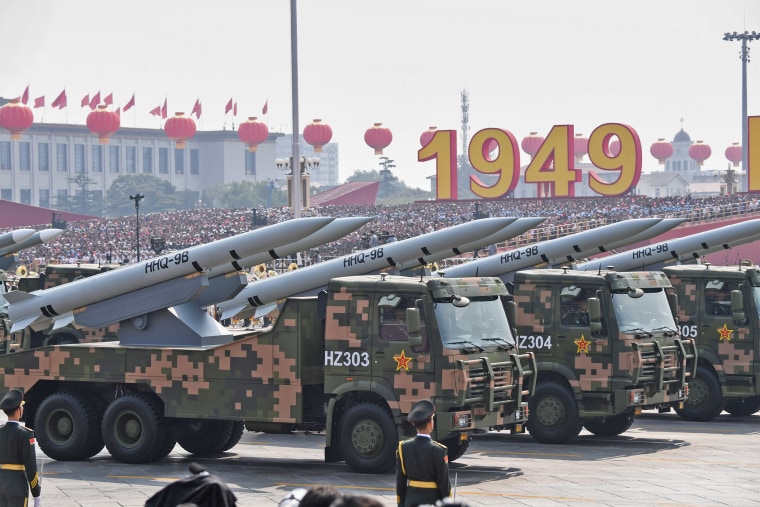
PLA has focused on modernising its capabilities across all warfare domains to achieve these goals. This includes land, air, and maritime operations, nuclear, space, counter-space, electronic warfare and cyberspace operations, aiming to become a fully integrated joint force.
Read Document →Transforming the PLA: A Decade of reorganisation from SSF to ISF
PRC has engaged in a sustained and broad effort to transform the PLA from an infantry-heavy, low-technology, ground forces-centric military into a high-technology, networked force with an increasing emphasis on joint operations and naval and air power projection.
Read Document →Eyes without Borders: Exploring the World of Open Source Intelligence (OSINT) in the Digital Age
Open Source Intelligence (OSINT) is gaining prominence with the rise of social media, the digital society and the vast growth of publicly and commercially available information (PAI and CAI).
Read Document →
The PLA’s Developing Cyber Warfare Capabilities and India's Options
Informationised warfare blurs the lines between peacetime and wartime. A nation in the information age cannot wait for the hostilities to break out to collect intelligence, carryout influence operations, develop antisatellite systems or design computer software weapons.
Read Document →
Galwan and After
Why did China did this when he is under tremendous pressure in all fronts, is this China's salami slice tactics being progressed rigorously, what will be new Rules of Engagement, what will be escalatory control mechanism, who has taken this decision, will there be some pressure put by China in India's North-East through insurgency.
Read Document →
India’s Joint Doctrine for Cyberspace Operations: A Critical Review
Chief of Defence Staff (CDS) General Anil Chauhan and Secretary, Department of Military Affairs, formally released declassified versions of the Joint Doctrines for Cyberspace Operations during the Chiefs of Staff Committee meeting in New Delhi.
Read Document →
Know your Enemy General(now Field Marshal) Syed Aseem Munir
Gen SA Munir's position in the hierarchy of Pakistan was not very comfortable. The state of economy, insurgency in Pakhtoonistan and Balochistan, attack on the Jaffar Express, constant protests by supporters of Imran Khan's supporters inside and outside of parliament.
Read Document →
Decoding Operation SINDOOR: Key Aspects and Implications
Precision strikes were carried out on nine sites—four in Pakistan and five in PoK—linked to anti-India terrorist groups such as the LeT, JeM and the Hizbul Mujahideen. The targeted sites included Muridke (LeT headquarters) and Bahawalpur (JeM headquarters).
Read Document →
Chinese Cyber Exploitation in India's Power Grid - Is There a linkage to Mumbai Power Outage?
The New York Times (NYT), based on analysis by a U.S. based private intelligence firm Recorded Future, reported that a Chinese entity penetrated India’s power grid at multiple load dispatch points. Chinese malware intruded into the control systems that manage electric supply across India, along with a high-voltage transmission substation and a coal-fired power plant
Read Document →1 April 2021
The Shia Fatemiyoun Brigade: Iran’s Prospective Proxy Militia in Afghanistan
Pakistan’s Dual Counter-Terrorism Challenges: Tehreek-i-Taliban Pakistan’s Merger and Cross-Border Campaign from Afghanistan
China and the Myanmar Junta: A Marriage of Convenience
China’s 2027 Goal Marks the PLA’s Centennial, Not an Expedited Military Modernization
Endless U.S.-China Contest Risks 'Catastrophic' Conflict, Henry Kissinger Warns
Beijing Speaks on the Proposed Group of Seven Expansion
Potential Military Implications of Pingtan Island’s New Transportation Infrastructure
Semiconductor Scandal A Concerning Backdrop to Xi’s Pursuit of “Core Technologies”
Is China About to Deploy Private Military Companies in Central Asia?
China's growing firepower casts doubt on whether U.S. could defend Taiwan

David vs Goliath: How Space-Based Assets Can Give Taiwan an Edge

Classified US military war game set to take place as concerns about threats posed by China and Russia increase
Yemen’s Emerging Political Coalitions: A First Step Toward De-escalation?
Almost Overnight, New Ships Make U.S. Coast Guard A Big Geopolitical Player

Hypersonic Weapons Really Matter to U.S. Deterrence of Russia
US Response to SolarWinds Cyber Penetrations: A Good Defense Is the Best Offense
According to U.S. officials, Russia is the likely perpetrator of the SolarWinds cyber compromise of federal agencies, private sector firms, NGOs and academic institutions. The scale and impact brought accusations of a reckless and indiscriminate operation. Some politicians labeled this an act of war, while other commentators dismissed the SolarWinds compromise as espionage. Calls for retribution were widespread.How Did EU-Russian Relations Collapse and What Comes Next?

Israel: The Not-So-Secret Nuclear Weapon Superpower?
In a private email leaked to the public in September of 2016, former secretary of state and retired U.S. Army general Colin Powell alluded to Israel having an arsenal of “200 nuclear weapons.” While this number appears to be an exaggeration, there is no doubt that Israel does have a small but powerful nuclear stockpile, spread out among its armed forces. Israeli nuclear weapons guard against everything from defeat in conventional warfare to serving to deter hostile states from launching nuclear, chemical, and biological warfare attacks against the tiny country. Regardless, the goal is the same: to prevent the destruction of the Jewish state.War is Changing. So Should the Pentagon’s Budget
We All Live in Germany’s World

DARPA Hopes to Improve Computer Vision in ‘Third Wave’ of AI Research
The military’s primary advanced research shop wants to be a leader in the “third wave” of artificial intelligence and is looking at new methods of visually tracking objects using significantly less power while producing results that are 10-times more accurate.Breaking the Move-Countermove Cycle: Using Net Assessment to Guide Technology
All Eyes on Digital Payments
GRAY IS HERE TO STAY: PRINCIPLES FROM THE INTERIM NATIONAL SECURITY STRATEGIC GUIDANCE ON COMPETING IN THE GRAY ZONE