The Profession of Arms: A Guide for Young Army Officers
It takes courage, especially for a young officer, to check a man met on the road for not saluting properly or for slovenly appearance, but, every time he does, it adds to his stock of moral courage, and whatever the soldier may say, he has respect for the officer who does pull him up.
Read Document →The Dragon's Teeth: Assessing China's Military Modernization
PLA has focused on modernising its capabilities across all warfare domains to achieve these goals. This includes land, air, and maritime operations, nuclear, space, counter-space, electronic warfare and cyberspace operations, aiming to become a fully integrated joint force.
Read Document →Transforming the PLA: A Decade of reorganisation from SSF to ISF
PRC has engaged in a sustained and broad effort to transform the PLA from an infantry-heavy, low-technology, ground forces-centric military into a high-technology, networked force with an increasing emphasis on joint operations and naval and air power projection.
Read Document →Eyes without Borders: Exploring the World of Open Source Intelligence (OSINT) in the Digital Age
Open Source Intelligence (OSINT) is gaining prominence with the rise of social media, the digital society and the vast growth of publicly and commercially available information (PAI and CAI).
Read Document →
The PLA’s Developing Cyber Warfare Capabilities and India's Options
Informationised warfare blurs the lines between peacetime and wartime. A nation in the information age cannot wait for the hostilities to break out to collect intelligence, carryout influence operations, develop antisatellite systems or design computer software weapons.
Read Document →
Galwan and After
Why did China did this when he is under tremendous pressure in all fronts, is this China's salami slice tactics being progressed rigorously, what will be new Rules of Engagement, what will be escalatory control mechanism, who has taken this decision, will there be some pressure put by China in India's North-East through insurgency.
Read Document →
India’s Joint Doctrine for Cyberspace Operations: A Critical Review
Chief of Defence Staff (CDS) General Anil Chauhan and Secretary, Department of Military Affairs, formally released declassified versions of the Joint Doctrines for Cyberspace Operations during the Chiefs of Staff Committee meeting in New Delhi.
Read Document →
Know your Enemy General(now Field Marshal) Syed Aseem Munir
Gen SA Munir's position in the hierarchy of Pakistan was not very comfortable. The state of economy, insurgency in Pakhtoonistan and Balochistan, attack on the Jaffar Express, constant protests by supporters of Imran Khan's supporters inside and outside of parliament.
Read Document →
Decoding Operation SINDOOR: Key Aspects and Implications
Precision strikes were carried out on nine sites—four in Pakistan and five in PoK—linked to anti-India terrorist groups such as the LeT, JeM and the Hizbul Mujahideen. The targeted sites included Muridke (LeT headquarters) and Bahawalpur (JeM headquarters).
Read Document →
Chinese Cyber Exploitation in India's Power Grid - Is There a linkage to Mumbai Power Outage?
The New York Times (NYT), based on analysis by a U.S. based private intelligence firm Recorded Future, reported that a Chinese entity penetrated India’s power grid at multiple load dispatch points. Chinese malware intruded into the control systems that manage electric supply across India, along with a high-voltage transmission substation and a coal-fired power plant
Read Document →15 December 2020
Cross-Border Data Access for Law Enforcement: What Are India’s Strategic Options?
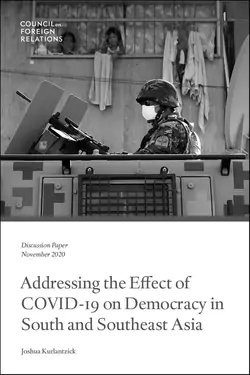
Addressing the Effect of COVID-19 on Democracy in South and Southeast Asia
South and Southeast Asia have demonstrated mixed results in combating the coronavirus pandemic, yet the COVID-19 pandemic has been a political boon for illiberal leaders. (Illiberal leaders undermine open societies and free political systems; they usually still allow elections, but they damage or outright destroy political institutions and norms and attack civil liberties.) These politicians include leaders such as Indian Prime Minister Narendra Modi, elected in free and fair elections, and more autocratic leaders such as Cambodian Prime Minister Hun Sen, whose elections have been increasingly unfree and unfair. In South and Southeast Asia, illiberal leaders, many of whom are illiberal populists, have used the pandemic as an opportunity to consolidate political and economic power, regardless of whether these actions contribute to actual public health responses.China Leadership Monitor
Countering China: Germany in the Indo-Pacific Region
The Geopolitics of the Mekong and A Radical Proposal for ASEAN to Navigate It

Iconic Moments in Foreign Policy: China-Africa Relations
With U.S. Restrictions on Huawei and ZTE, Where Will Rural America Turn?
The Party That Failed

Terrorism-Related Simulations
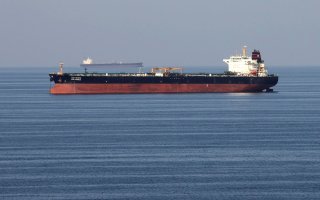
Would Iran Really Try to Close the Strait of Hormuz?

Air Force Research Institute (AFRI)
African Infrastructure Development: What Should Be Done to Win the Next Decade?
Africa is experiencing economic growth deceleration that reached 2.9% on average between 2010 and 2018, against 5.4% between 2000 and 2010. The sectoral performance of African economies depends critically on the stock and quality of infrastructure, directly as an essential input (for example, energy and transport) and indirectly by increasing total factor productivity. African economic integration can never be fully achieved with poor infrastructure, both in terms of quantity, quality, and access. Africa’s changing demographics will eventually strain the existing infrastructure, particularly the health and education infrastructure, and thus have a detrimental effect on the human capital that forms the backbone of economic growth and development.Overlooked and underrated? The role of youth and women in preventing violent extremism
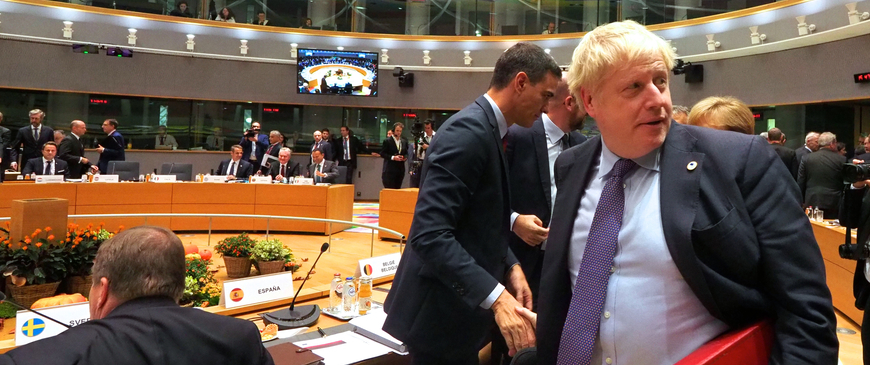
POST-BREXIT FOREIGN, SECURITY AND DEFENCE CO-OPERATION: WE DON'T WANT TO TALK ABOUT IT

Challenges and Opportunities for the Biden-Harris Administration
U.S. Nuclear Warhead Modernization and “New” Nuclear Weapons
Would America Approve a Draft to Fight a World War III?
Since the 1970s, the United States has had an All-Volunteer Force (AVF). From the beginning of the United States until the end of the Vietnam War, the country had always conscripted eligible male members of its population to fight—and win—the nation’s wars. Yet, the American experience in Vietnam broke the national consensus on the draft. Since then, policymakers have struggled to square public ambivalence about foreign intervention with what they’ve viewed as preserving the national interest.Coronavirus: Poor Countries Set to Suffer as Wealthier Nations Hoard Vaccine
Roughly seventy poor countries will only be able to vaccinate 10 percent of their populations against the coronavirus because wealthier nations are hoarding more doses than they actually need, according to the People’s Vaccine Alliance, an organization that includes Amnesty International, Frontline AIDS, Global Justice Now, and Oxfam. AN EQUAL ALLIANCE WITH A GLOBAL AGENDA
The global economic cost of COVID-19 vaccine nationalism
Vaccine nationalism could cost the global economy up to $1.2 trillion a year in GDP.5G WIRELESS:Capabilities and Challenges for an Evolving Network
CO20200 | AI Governance and Military Affairs – Artificial Intelligence and Arms Control: What it Means for Singapore
How to deal with AI-enabled disinformation
Aircraft Carriers: Fearsome Military Machine Or Floating Casket?
Since the 1950s, the supercarrier has been the most visible representation of U.S. military power and maritime hegemony. Although supercarriers have participated in nearly every military conflict since the commissioning of USS Forrestal in 1955, no carrier has come under determined attack from a capable opponent. In part, this is because supercarriers are very difficult to attack, but the symbolic grandeur of the massive ships also plays a role; no one wants to know what the United States might do if one of its carriers came under attack.This Is No Job for a General