Iwas recently in Berlin to give a talk about my book, Temporary People, to a roomful of scholars whose work focuses on the countries of the Persian Gulf. Set in the United Arab Emirates, my fiction explores the lives of people like my parents, men and women who left their homes in the southern Indian state of Kerala in the 1970s to work abroad. It is steeped in the South Asian lingo of much of the UAE’s immigrant population. My stories dwell on the consequences of migration to the Gulf, on what that movement of people does to both home and host countries, to languages, and to families.The Profession of Arms: A Guide for Young Army Officers
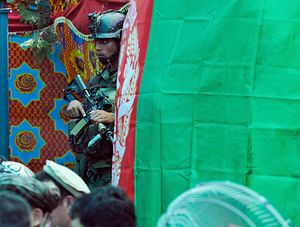
It takes courage, especially for a young officer, to check a man met on the road for not saluting properly or for slovenly appearance, but, every time he does, it adds to his stock of moral courage, and whatever the soldier may say, he has respect for the officer who does pull him up.
Read Document →The Dragon's Teeth: Assessing China's Military Modernization
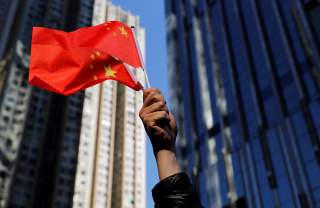
PLA has focused on modernising its capabilities across all warfare domains to achieve these goals. This includes land, air, and maritime operations, nuclear, space, counter-space, electronic warfare and cyberspace operations, aiming to become a fully integrated joint force.
Read Document →Transforming the PLA: A Decade of reorganisation from SSF to ISF
PRC has engaged in a sustained and broad effort to transform the PLA from an infantry-heavy, low-technology, ground forces-centric military into a high-technology, networked force with an increasing emphasis on joint operations and naval and air power projection.
Read Document →Eyes without Borders: Exploring the World of Open Source Intelligence (OSINT) in the Digital Age
Open Source Intelligence (OSINT) is gaining prominence with the rise of social media, the digital society and the vast growth of publicly and commercially available information (PAI and CAI).
Read Document →
The PLA’s Developing Cyber Warfare Capabilities and India's Options
Informationised warfare blurs the lines between peacetime and wartime. A nation in the information age cannot wait for the hostilities to break out to collect intelligence, carryout influence operations, develop antisatellite systems or design computer software weapons.
Read Document →
Galwan and After
Why did China did this when he is under tremendous pressure in all fronts, is this China's salami slice tactics being progressed rigorously, what will be new Rules of Engagement, what will be escalatory control mechanism, who has taken this decision, will there be some pressure put by China in India's North-East through insurgency.
Read Document →
India’s Joint Doctrine for Cyberspace Operations: A Critical Review
Chief of Defence Staff (CDS) General Anil Chauhan and Secretary, Department of Military Affairs, formally released declassified versions of the Joint Doctrines for Cyberspace Operations during the Chiefs of Staff Committee meeting in New Delhi.
Read Document →
Know your Enemy General(now Field Marshal) Syed Aseem Munir
Gen SA Munir's position in the hierarchy of Pakistan was not very comfortable. The state of economy, insurgency in Pakhtoonistan and Balochistan, attack on the Jaffar Express, constant protests by supporters of Imran Khan's supporters inside and outside of parliament.
Read Document →
Decoding Operation SINDOOR: Key Aspects and Implications
Precision strikes were carried out on nine sites—four in Pakistan and five in PoK—linked to anti-India terrorist groups such as the LeT, JeM and the Hizbul Mujahideen. The targeted sites included Muridke (LeT headquarters) and Bahawalpur (JeM headquarters).
Read Document →
Chinese Cyber Exploitation in India's Power Grid - Is There a linkage to Mumbai Power Outage?
The New York Times (NYT), based on analysis by a U.S. based private intelligence firm Recorded Future, reported that a Chinese entity penetrated India’s power grid at multiple load dispatch points. Chinese malware intruded into the control systems that manage electric supply across India, along with a high-voltage transmission substation and a coal-fired power plant
Read Document →12 February 2020
The Hidden Cost of Migrant Labor
Iwas recently in Berlin to give a talk about my book, Temporary People, to a roomful of scholars whose work focuses on the countries of the Persian Gulf. Set in the United Arab Emirates, my fiction explores the lives of people like my parents, men and women who left their homes in the southern Indian state of Kerala in the 1970s to work abroad. It is steeped in the South Asian lingo of much of the UAE’s immigrant population. My stories dwell on the consequences of migration to the Gulf, on what that movement of people does to both home and host countries, to languages, and to families.Europe in Afghanistan: After Nearly 20 Years, What Has Been Achieved?
The arrival of a new EU Commission has seen the renewal of ambition in European foreign policy. This ambition is more necessary than ever for the EU’s approach to Afghanistan after months of immobility caused by EU and Afghan elections and the breakdown of U.S.-Taliban diplomacy. Documents leaked by TOLO News last October revealed the Afghan government’s preparation for a new round of “intra-Afghan dialogues,” which are projected to begin this year in Oslo with the cooperation of the EU and Norway after the Afghan government’s presidential transition of power is finally settled.Why the Coronavirus Reminds Us of the Lesson of SARS
Transatlantic Clash of the Titans: What America and China Will Fight Over Next
China's Military Is Hoping To Study Its Way Out Of Its Combat Experience Gap Vs. America
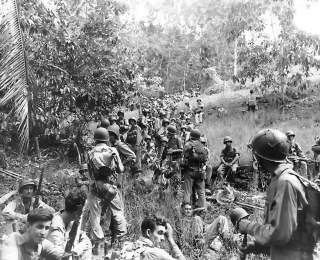
Key point: At the grand strategic level, this Chinese Navy analysis assesses that Japan’s mistakes in the Guadalcanal campaign were partly a failure to reckon with the true significance of the Midway battle a couple of months prior in June 1942.The Geo-Technological Triangle Between the US, China, and Taiwan
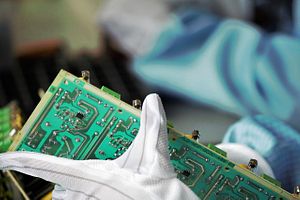
In the 21st century, the battlefield between superpowers relies more on the trade of bits, bytes, and computers than bombs, bullets, and coal. Technological dominance is a key factor in power struggles, replacing “arms race” with “AI race” and “space” with “silicon.” The software armory of sophisticated technology running on artificial intelligence is birthed from hardware chips no larger than a postage stamp. The entire digital ecosystem runs on silicon, made fragile by highly interconnected semiconductor supply lines.The Geopolitics of the Novel Coronavirus
Social Credit and the Chinese Military: Counting the PLA’s Troubles?
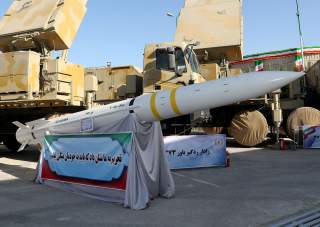
Why Iran's Missile Attacks (And Threats) Matter to Americans
Will Irish Elections Lead to Unification?
Greece Is at the Nexus of the Geopolitical Crossroads
Uncomfortable Lessons: Reassessing Iran’s Missile Attack
The Muslim World’s Question: ‘What Happened to Us?’
All the King’s Men: Authoritarianism, Loyalty and the Syrian Collapse
The Role of Aid and Development in the Fight Against Extremism
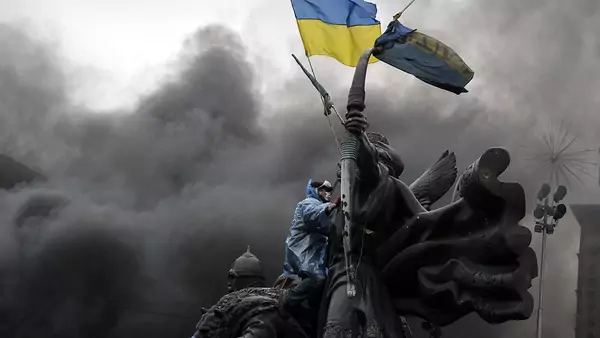
Ukraine: Conflict at the Crossroads of Europe and Russia
Ukraine has long played an important, yet sometimes overlooked, role in the global security order. Today, the country appears to be on the front lines of a renewed great-power rivalry that many analysts say will dominate international relations in the decades ahead. Will Belarus Be the Next Ukraine?
As political upheaval, a slow-burning war with Russia, and a general sense of chaos have engulfed Ukraine over the past six years, neighboring Belarus has come to seem like an oasis of stability: stagnant but calm. In recent weeks, that calm has been shattered by oil cutoffs, protests, government shuffles, snap military exercises, and sharp criticism of Russia by Belarusian President Alexander Lukashenko.FBI Director Warns of Ongoing Russian ‘Information Warfare’
FBI Director Chris Wray said Wednesday that Russia is engaged in “information warfare” heading into the 2020 presidential election, though he said law enforcement has not seen ongoing efforts by Russia to target America’s election infrastructure.The Enduring Legacy of the Nuremberg and Tokyo Trials
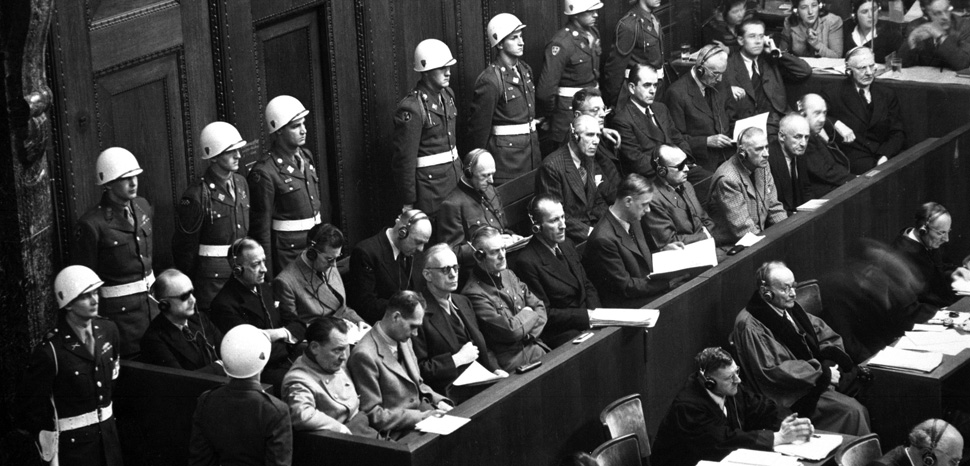
Noam Chomsky once said, “For the powerful, crimes are those that others commit.” This was not the case for Germany and Japan post-World War II. The victorious Allied powers established the first international criminal tribunals to prosecute political and military officials for war crimes and other atrocities committed during wartime. The four major Allied governments – the United States, the United Kingdom, France, and the Soviet Union – set up the International Military Tribunal (Nuremberg trials) in Nuremberg, Germany, to prosecute and punish the major war criminals of the European Axis.Top 10 Technology Trends for 2020
The Digital Dictators
Sanctions Are Not an Alternative to War
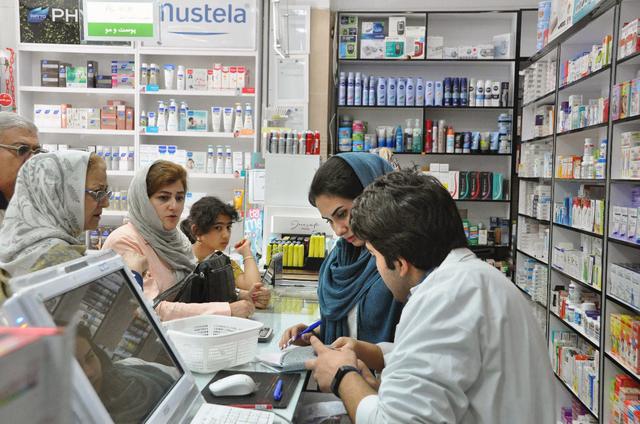
Iranians organize their daily lives around the scarcities brought upon them by sanctions on basic goods, including life-saving medications.Critical Infrastructure Companies Need to Better Protect Their Operational Technologies
Weak encryption means putting our military at risk – CyberScoop
In a recent letter to Rep. Ro Khanna, D-Calif., DoD Chief Information Officer Dana Deasy made clear that the use of encryption to protect the mobile devices of our service members and their stored data is an “imperative.” Deasy makes clear that the use of commercial encryption and virtual private networks (VPNs) are key to DoD’s cybersecurity strategy. Therefore, “maintaining a domestic climate for state-of-the-art security and encryption is critical to the protection of our national security.”
Here are the Pentagon’s issues with the Army’s new command post set-up
The Army’s new command post tool received lukewarm results from the Pentagon’s weapon testers, though the Army asserts that deficiencies have been fixed.