After declaring a national emergency on Feb. 15, U.S. President Donald Trump said: “I didn’t need to do this, but I’d rather do it much faster.” He was referring to the speed with which he could now initiate special powers to access the funds needed to build a wall on the U.S.-Mexico border. Clearly, expediency shaped the president’s decision—and will shape the legal challenges to it, too.The Profession of Arms: A Guide for Young Army Officers
It takes courage, especially for a young officer, to check a man met on the road for not saluting properly or for slovenly appearance, but, every time he does, it adds to his stock of moral courage, and whatever the soldier may say, he has respect for the officer who does pull him up.
Read Document →The Dragon's Teeth: Assessing China's Military Modernization
PLA has focused on modernising its capabilities across all warfare domains to achieve these goals. This includes land, air, and maritime operations, nuclear, space, counter-space, electronic warfare and cyberspace operations, aiming to become a fully integrated joint force.
Read Document →Transforming the PLA: A Decade of reorganisation from SSF to ISF
PRC has engaged in a sustained and broad effort to transform the PLA from an infantry-heavy, low-technology, ground forces-centric military into a high-technology, networked force with an increasing emphasis on joint operations and naval and air power projection.
Read Document →Eyes without Borders: Exploring the World of Open Source Intelligence (OSINT) in the Digital Age
Open Source Intelligence (OSINT) is gaining prominence with the rise of social media, the digital society and the vast growth of publicly and commercially available information (PAI and CAI).
Read Document →
The PLA’s Developing Cyber Warfare Capabilities and India's Options
Informationised warfare blurs the lines between peacetime and wartime. A nation in the information age cannot wait for the hostilities to break out to collect intelligence, carryout influence operations, develop antisatellite systems or design computer software weapons.
Read Document →
Galwan and After
Why did China did this when he is under tremendous pressure in all fronts, is this China's salami slice tactics being progressed rigorously, what will be new Rules of Engagement, what will be escalatory control mechanism, who has taken this decision, will there be some pressure put by China in India's North-East through insurgency.
Read Document →
India’s Joint Doctrine for Cyberspace Operations: A Critical Review
Chief of Defence Staff (CDS) General Anil Chauhan and Secretary, Department of Military Affairs, formally released declassified versions of the Joint Doctrines for Cyberspace Operations during the Chiefs of Staff Committee meeting in New Delhi.
Read Document →
Know your Enemy General(now Field Marshal) Syed Aseem Munir
Gen SA Munir's position in the hierarchy of Pakistan was not very comfortable. The state of economy, insurgency in Pakhtoonistan and Balochistan, attack on the Jaffar Express, constant protests by supporters of Imran Khan's supporters inside and outside of parliament.
Read Document →
Decoding Operation SINDOOR: Key Aspects and Implications
Precision strikes were carried out on nine sites—four in Pakistan and five in PoK—linked to anti-India terrorist groups such as the LeT, JeM and the Hizbul Mujahideen. The targeted sites included Muridke (LeT headquarters) and Bahawalpur (JeM headquarters).
Read Document →
Chinese Cyber Exploitation in India's Power Grid - Is There a linkage to Mumbai Power Outage?
The New York Times (NYT), based on analysis by a U.S. based private intelligence firm Recorded Future, reported that a Chinese entity penetrated India’s power grid at multiple load dispatch points. Chinese malware intruded into the control systems that manage electric supply across India, along with a high-voltage transmission substation and a coal-fired power plant
Read Document →25 February 2019
India Has a Lesson for Trump: National Emergencies Are a Disaster for Democracy
After declaring a national emergency on Feb. 15, U.S. President Donald Trump said: “I didn’t need to do this, but I’d rather do it much faster.” He was referring to the speed with which he could now initiate special powers to access the funds needed to build a wall on the U.S.-Mexico border. Clearly, expediency shaped the president’s decision—and will shape the legal challenges to it, too.Pulwama, Imran Khan’s ‘Naya Pakistan’ and Pakistan’s ‘New Mind-Set’
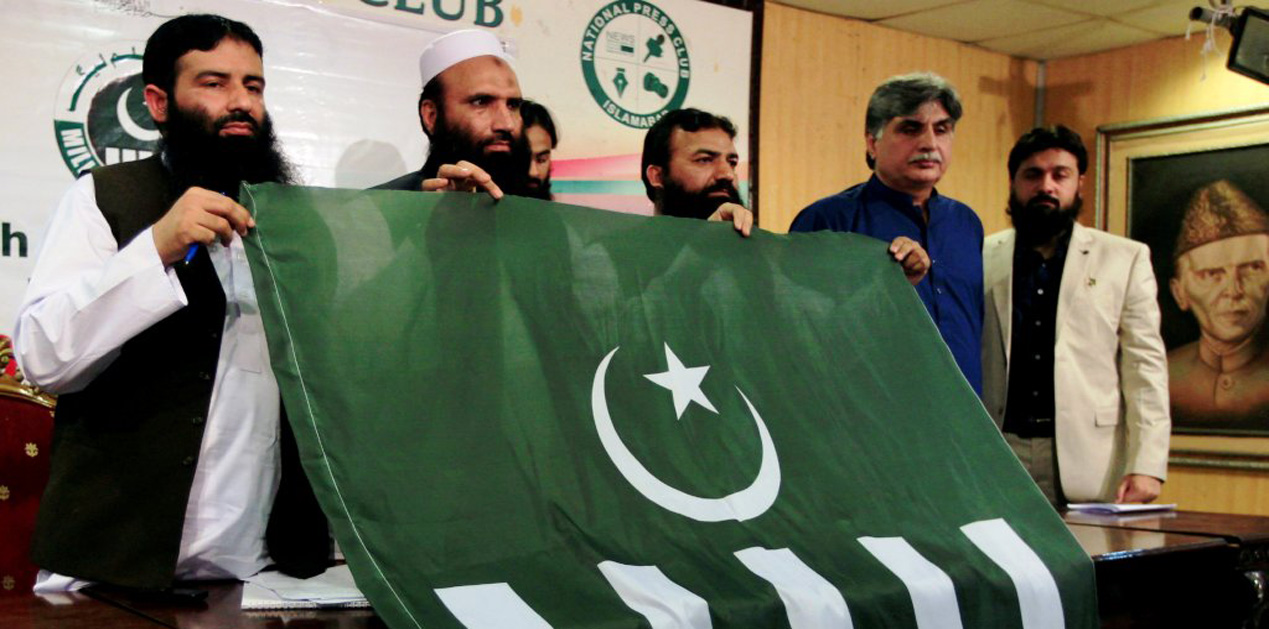
The Pulwama attack has to be seen against the background of events in the wider region. On 13th February, a suicide attack on killed 27 Iranian soldiers in Sistan Balochistan province of Iran. The Iranian National Guards Corps (IRGC) ground forces commander Brigadier General Mohammad Pakpour stated that the suicide bomber was a Pakistani national Hafiz Mohamed Ali. The methodology was also similar to the attack in J&K. An explosive laden car rammed into a bus carrying members of the IRGC1.Iran and India Slam Pakistan for 'Sheltering Terrorists'
Iran and India are both outraged over recent terror attacks that appear to involve networks linked to extremists in Pakistan. Islamic Revolutionary Guard Corps Commander Mohammed Ali Jafar called on Pakistan to fight "takifiri" terrorists after 27 IRGC members were killed in a suicide bombing targeting a bus near the Pakistan border.Pakistan’s Governance Changes Won’t Be Enough to Offer It Economic Salvation
Saudi Arabia’s Crown Prince Mohammed Bin Salman’s recent visit to Pakistan has taken place at a time when Islamabad is looking to shore up its political and diplomatic clout internationally. However, the goal of attracting investments and gaining diplomatic influence internationally is not going to be easy for Pakistan. Currently, the country is battling to leave behind its enduring image as a state that supports extremist ideas internally and externally and whose governance structures are rooted in corruption malpractice.The Looming Taiwan Crisis
Just as important was the United States’ decision to recognize, effective January 1 that year, the government of the People’s Republic of China – then, as today, run by the Communist Party – as China’s sole legal government. The change paved the way for expansion of trade and investment between the world’s largest economy and the world’s most populous country, and enabled closer collaboration against the Soviet Union.Explained: Why is China shielding the Jaish-e-Mohammad?
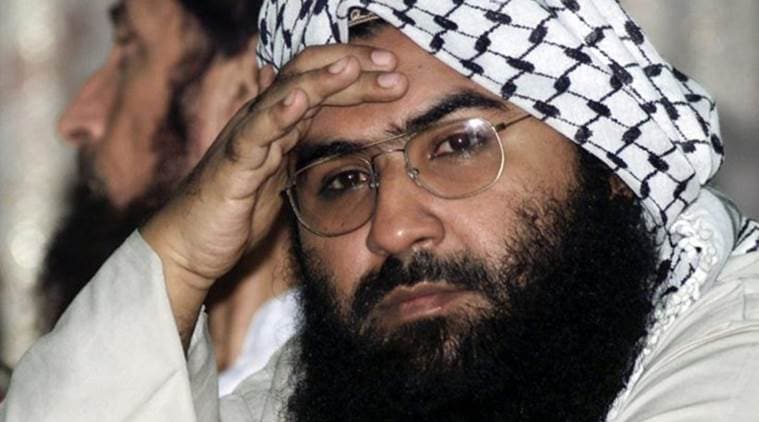
India’s proposal, put forward in February 2016 after the Pathankot attack, to designate Azhar as a global terrorist under the 1267 regime has been blocked four times by China, most recently in January 2017.Why Bangladesh overtook Pakistan
Bring a Measure of Justice to the End of the Afghanistan War
It was my senior year at Georgetown and I watched from my dorm room as the Pentagon burned and smoldered. The day after graduation, I eagerly enlisted in the Army and asked the recruiter to send me to Afghanistan — a just war, by all accounts. Instead, the Army sent me to Iraq, a preventative war that had no connection to the 9/11 attacks. It was a swift lesson: soldiers are mere cogs in the military-industrial complex and can’t pick and choose their conflicts.Is the Taliban Making a Pledge It Cannot Keep?
China Rushes to Dominate Global Supply of Lithium
China is increasingly dominating the supply of what’s been described as “white petroleum,” the soft, silvery metal lithium, seen as key to the momentum-gathering electric vehicle (EV) revolution.The New Containment Handling Russia, China, and Iran
ISIS Might Come Back. That’s Just One More Reason to Get Out of Syria
U.S. military intervention cannot address the grievances that fuel ISIS. Nor does it protect American interests or serve our defense.Pre-Emptively Striking Iran Would Be One of the Worst Blunders in American History
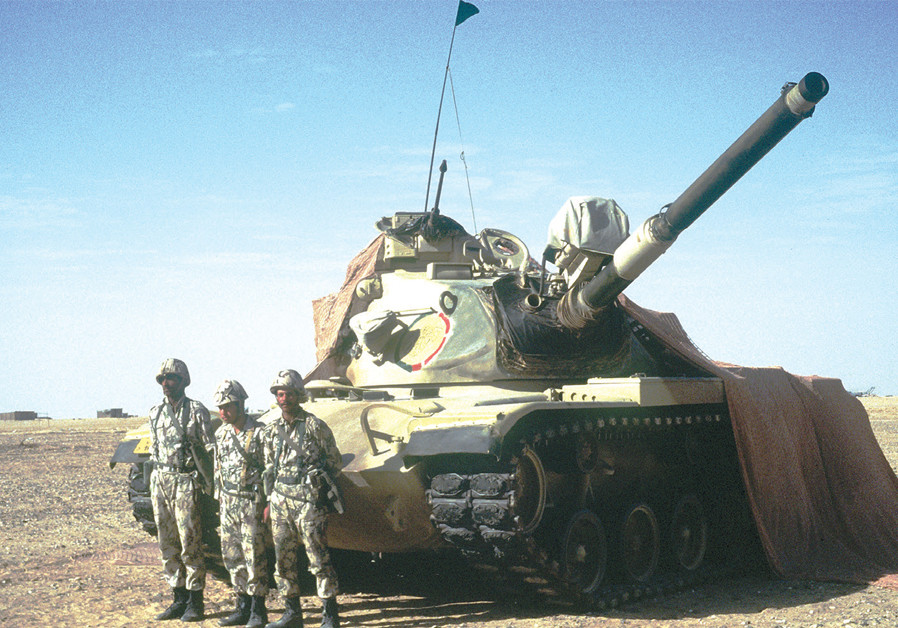
Iran is a longstanding and steadfast opponent of the United States. It promotes terrorism, extremism and instability in the Middle East, with brutal allies like Syrian President Bashar al-Assad and Lebanon’s Hezbollah. The Iranian regime continues to develop advanced weaponry while repressing internal dissent. There is no question that the United States, its partners in the Middle East and Europe, and many Iranians themselves would prefer a different government than the theocratic one that has held power since 1979. But the idea of a pre-emptive American attack on Iran, which periodically resurfaces in Washington, would be a monumental mistake.ARAB ARMIES UNDER THE MICROSCOPE
New Era Of Nuclear Rearmament – Analysis
Thirty years ago, when the Berlin Wall was brought down marking the end of the Cold War, the threat of conflict between two nuclear-armed, ideologically opposed superpowers receded, and my generation, which had grown up in the shadow of the bomb, breathed a sigh of relief. Although the nuclear threat did not vanish then, it certainly became subdued as the process of disarmament and control seemed to move forward along a clear path of no return. US Stryker Vehicles in Europe Have Deep Cyberwar Weaknesses - Pentagon Report
The two newest versions of the US Army’s Stryker combat vehicle in Europe have “cybersecurity vulnerabilities that can be exploited,” a US Department of Defense report reveals. It’s a growing problem for the US’ high-tech vehicles and weapons systems ‒ and one that reflects the priorities of the military-industrial complex, an expert tells Sputnik.Sanctions Will Widen the Russia-West Rift in 2019
The United States is all but guaranteed to increase sanctions against Russia in the coming months. With Congress's hawks demanding a hard line on Moscow and the White House favoring moderation, the extent of U.S. sanctions will fall somewhere between the two extremes. The European Union will also increase sanctions against Russia, albeit to a much more limited degree than the United States. Russia will succeed in managing the economic fallout from the sanctions with its sanctions insulation strategy, but prolonged measures will continue to undermine the country's longer-term economic outlook.Russia Chooses Paupers as Partners, with Questionable Benefit
In December, President Vladimir Putin called for Russia's economy “to enter another league.” But that priority is far from clear if one looks at where the Kremlin places its foreign policy chips.How Geopolitics Is Bringing Nationalism Back to Spain
Like so many other European countries, Spain is now experiencing a re-emergence of nationalism. In Spain's case, it is occurring as a reaction to Catalan separatism. Spain's geography has contributed to competing nationalisms in the country, which has led to resistance in the country's periphery to Madrid's centralizing efforts. The April 28 general election will most likely result in a fragmented parliament, opening the door for nationalists to be key in the formation of a government. This would lead to renewed discord with Catalonia and potential clashes with the European Union. Calls for constitutional reform will grow louder, but political fragmentation would make that process increasingly difficult to complete.The Future of the Liberal Order Is Conservative A Strategy to Save the System
What does cyberwar look like? We're about to find out, but from an unlikely source
New report questions effectiveness of cyber indictments
A recent report throws cold water on one of the U.S. government’s key pillars for what it calls whole-of-government deterrence in cyberspace: indictments.Rethink 2%: NATO ‘Defense Spending’ Should Favor Cyber
Building data-driven culture: An interview with ShopRunner CEO Sam Yagan
NATO researchers used social media to learn details of a military exercise and manipulate troops. It wasn’t very hard to do.
NATO affiliated researchers recently conducted a test to see whether they could use some of the same social media techniques Russia famously used in an attempt to influence the US presidential election to infiltrate a NATO ally’s military exercise.White House Orders Agencies to Defend the Skies From Cyberattacks
Agencies need to step up their efforts to defend the aviation industry against a growing array of emerging threats like cyberattacks and drones, the White House said Wednesday.International Intrigue Over Venezuela’s Gold Could Help Decide Maduro’s Fate
A country’s gold reserves are meant to provide stability and financial ballast, not cash for everyday purchases. Only in the most extreme cases do they become a source of currency for vital supplies. That is exactly what is happening in Venezuela, where the political crisis has triggered the kind of international intrigue usually scripted in Hollywood. The embattled government of President Nicolas Maduro is trying to cash in its reserves while the opposition and its foreign backers maneuver to keep the country’s gold and any hard currency from its sale out of Maduro’s hands. How Does Space Policy Directive-4 Reorganize U.S. Military Space Operations?
The AI Road to Serfdom?
Estimates of job losses in the near future due to automation range from 9% to 47%, and jobs themselves are becoming ever more precarious. Should we trust the conventional economic narrative according to which machines inevitably raise workers' living standards?Military spending: 20 companies profiting the most from war
There was a 1.1 percent increase in global military spending in 2017, according to the Stockholm International Peace Research Institute.