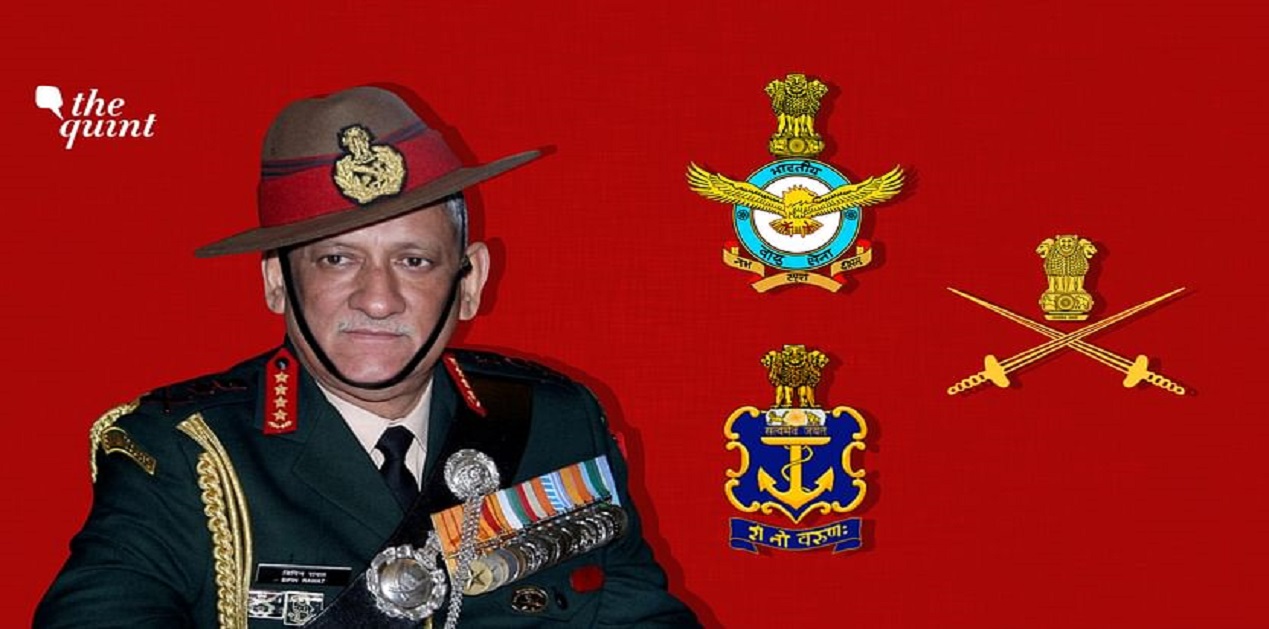
Nearly two decades after submission of the Kargil Review Committee (KRC) report in 1999, the Group of Ministers (GOM) Report in 2001 and recommendations of the Naresh Chandra Task Force in 2012, the Chief of Defence Staff (CDS) for the Indian armed forces has become a reality. Implementation was set into motion following Prime Minister Modi‘s announcement to this effect on August 15, 2019. Thereafter, a high-level committee under the National Security Adviser (NSA) set about evolving a framework and charter of responsibility for the CDS. After nearly four months of extensive deliberations, the Cabinet Committee of Security (CCS), on December 24, 2019 accorded approval for creation of the post of the CDS.The Profession of Arms: A Guide for Young Army Officers
It takes courage, especially for a young officer, to check a man met on the road for not saluting properly or for slovenly appearance, but, every time he does, it adds to his stock of moral courage, and whatever the soldier may say, he has respect for the officer who does pull him up.
Read Document →The Dragon's Teeth: Assessing China's Military Modernization
PLA has focused on modernising its capabilities across all warfare domains to achieve these goals. This includes land, air, and maritime operations, nuclear, space, counter-space, electronic warfare and cyberspace operations, aiming to become a fully integrated joint force.
Read Document →Transforming the PLA: A Decade of reorganisation from SSF to ISF
PRC has engaged in a sustained and broad effort to transform the PLA from an infantry-heavy, low-technology, ground forces-centric military into a high-technology, networked force with an increasing emphasis on joint operations and naval and air power projection.
Read Document →Eyes without Borders: Exploring the World of Open Source Intelligence (OSINT) in the Digital Age
Open Source Intelligence (OSINT) is gaining prominence with the rise of social media, the digital society and the vast growth of publicly and commercially available information (PAI and CAI).
Read Document →
The PLA’s Developing Cyber Warfare Capabilities and India's Options
Informationised warfare blurs the lines between peacetime and wartime. A nation in the information age cannot wait for the hostilities to break out to collect intelligence, carryout influence operations, develop antisatellite systems or design computer software weapons.
Read Document →
Galwan and After
Why did China did this when he is under tremendous pressure in all fronts, is this China's salami slice tactics being progressed rigorously, what will be new Rules of Engagement, what will be escalatory control mechanism, who has taken this decision, will there be some pressure put by China in India's North-East through insurgency.
Read Document →
India’s Joint Doctrine for Cyberspace Operations: A Critical Review
Chief of Defence Staff (CDS) General Anil Chauhan and Secretary, Department of Military Affairs, formally released declassified versions of the Joint Doctrines for Cyberspace Operations during the Chiefs of Staff Committee meeting in New Delhi.
Read Document →
Know your Enemy General(now Field Marshal) Syed Aseem Munir
Gen SA Munir's position in the hierarchy of Pakistan was not very comfortable. The state of economy, insurgency in Pakhtoonistan and Balochistan, attack on the Jaffar Express, constant protests by supporters of Imran Khan's supporters inside and outside of parliament.
Read Document →
Decoding Operation SINDOOR: Key Aspects and Implications
Precision strikes were carried out on nine sites—four in Pakistan and five in PoK—linked to anti-India terrorist groups such as the LeT, JeM and the Hizbul Mujahideen. The targeted sites included Muridke (LeT headquarters) and Bahawalpur (JeM headquarters).
Read Document →
Chinese Cyber Exploitation in India's Power Grid - Is There a linkage to Mumbai Power Outage?
The New York Times (NYT), based on analysis by a U.S. based private intelligence firm Recorded Future, reported that a Chinese entity penetrated India’s power grid at multiple load dispatch points. Chinese malware intruded into the control systems that manage electric supply across India, along with a high-voltage transmission substation and a coal-fired power plant
Read Document →17 February 2020
Creating an Effective CDS for India’s National Defence
Nearly two decades after submission of the Kargil Review Committee (KRC) report in 1999, the Group of Ministers (GOM) Report in 2001 and recommendations of the Naresh Chandra Task Force in 2012, the Chief of Defence Staff (CDS) for the Indian armed forces has become a reality. Implementation was set into motion following Prime Minister Modi‘s announcement to this effect on August 15, 2019. Thereafter, a high-level committee under the National Security Adviser (NSA) set about evolving a framework and charter of responsibility for the CDS. After nearly four months of extensive deliberations, the Cabinet Committee of Security (CCS), on December 24, 2019 accorded approval for creation of the post of the CDS.Beyond Rajapaksa’s Visit, Are India and Sri Lanka Really on the Same Page?
Is Donald Trump About to Make Peace with the Taliban?
Before President Donald Trump scuttled the talks last September, the United States and the Taliban were the closest they had ever been to sign an agreement since the war in Afghanistan began 18 years ago. Now, three months after those talks resumed thanks in part to a prisoner exchange that swapped two western professors in Taliban custody for three of the movement’s commanders, U.S. and Taliban negotiators are really, really close—so close, in fact, that a deal could be announced within a matter of days.What’s the True Human Cost of US Reconstruction Efforts in Afghanistan?
Costs are all-too-often spoken of in dollar signs and bottom lines, rather than an accounting of coffins. And when death is factored in, war-related deaths get the headlines, or sometimes the nigh uncountable number of civilian casualties gets top billing. But the ongoing reconstruction efforts in Afghanistan have had their human costs, too.Stuck in Central China on Coronavirus Lockdown
Shiyan, China—Before Shiyan, a city in Hubei province, went into quarantine, the sum of thirty yuan (about $4) could buy two cabbages, enough spring onions for two soups, a large white radish, two lettuces, a potato, and ten eggs. Not any more. Wanting to record the hiked prices, I took two photos of price cards in my local district’s largest supermarket. Immediately, a shop assistant approached. “You can’t do that,” she said. “Please delete them.” Even after I agreed, she stood peering over my shoulder to see my phone, to make sure that the images were gone. “You could report her,” a local resident told me later: national orders have forbidden merchants to raise their prices.While U.S. Worries About China, Europe Stays Focused on Russia
Coronavirus Casualty: China’s Ambitious Belt and Road Plan Is Under Threat
The Emergence of a China-Backed Cryptocurrency in the Era of the Digital Yuan
Earth just had hottest January since records began, data shows
Last month was the hottest January on record over the world’s land and ocean surfaces, with average temperatures exceeding anything in the 141 years of data held by the National Oceanic and Atmospheric Administration.How the Arctic Caught Fire
Germany’s Unwelcome Leadership Gap
The Middle East Thinks America Is Going Crazy
Irish unification is becoming likelier
Understanding the Deterrent Impact of U.S. Overseas Forces
RAND Report: Are Heavy Ground Combat Units Better Than Light Forces and Airstrikes?
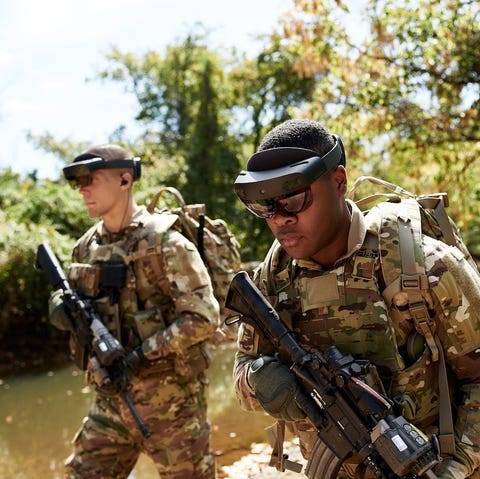
'Mixed Reality' Goggles Will Give U.S. Army Soldiers Super Vision
The U.S. Army, using Microsoft’s Hololens, has developed new goggles to help soldiers on the battlefield.The Landscape of Economic Change: 1990-2018
This Gas Glut Feels Different
By now, everyone knows that the world is flush with natural gas. Commodities go through cycles, of course, and gas is no different—today’s oversupply is tomorrow’s undersupply, and up and down the roller coaster we go. But this glut feels different. For one, it is an unusual glut. There is too much gas in the market, plunging spot prices in North America, Europe, and Asia, but there is also record investment in new supply for liquefied natural gas (LNG). It is, in other words, a downward super cycle, where record oversupply is coinciding with record-level investment in new supply. What exactly is happening, and how might it play out?The US Fears Huawei Because It Knows How Tempting Backdoors Are
Sinn Fein Just Upended Ireland’s Status Quo. What Comes Next?
“THE SHINNERS TAKE IT ALL” blared the front page of the Irish Daily Star on Monday, using a slang term for Sinn Fein supporters, as it became clear that a true electoral earthquake had hit Ireland. As exit polls showed Brexit was a nonissue compared to Ireland’s housing and health crises, voters turned on the establishment parties that have been leading them since the foundation of the state a century ago.