In less than six months, the XXIII Olympic Winter Games will begin in Pyeongchang, South Korea. But with an increasingly militant North Korea located less than 161 kilometers (100 miles) away, legitimate concerns have arisen over the event's potential disruption. Thomas Bach, the president of the International Olympic Committee (IOC), recently said he was closely monitoring the situation, adding that it would be a topic of discussion at the committee's upcoming meeting in Peru. Even so, it's hard not to wonder who will bear the responsibility of ensuring the safety of athletes and spectators in Pyeongchang. The answer has been constantly evolving for over four decades.The Profession of Arms: A Guide for Young Army Officers
It takes courage, especially for a young officer, to check a man met on the road for not saluting properly or for slovenly appearance, but, every time he does, it adds to his stock of moral courage, and whatever the soldier may say, he has respect for the officer who does pull him up.
Read Document →The Dragon's Teeth: Assessing China's Military Modernization
PLA has focused on modernising its capabilities across all warfare domains to achieve these goals. This includes land, air, and maritime operations, nuclear, space, counter-space, electronic warfare and cyberspace operations, aiming to become a fully integrated joint force.
Read Document →Transforming the PLA: A Decade of reorganisation from SSF to ISF
PRC has engaged in a sustained and broad effort to transform the PLA from an infantry-heavy, low-technology, ground forces-centric military into a high-technology, networked force with an increasing emphasis on joint operations and naval and air power projection.
Read Document →Eyes without Borders: Exploring the World of Open Source Intelligence (OSINT) in the Digital Age
Open Source Intelligence (OSINT) is gaining prominence with the rise of social media, the digital society and the vast growth of publicly and commercially available information (PAI and CAI).
Read Document →
The PLA’s Developing Cyber Warfare Capabilities and India's Options
Informationised warfare blurs the lines between peacetime and wartime. A nation in the information age cannot wait for the hostilities to break out to collect intelligence, carryout influence operations, develop antisatellite systems or design computer software weapons.
Read Document →
Galwan and After
Why did China did this when he is under tremendous pressure in all fronts, is this China's salami slice tactics being progressed rigorously, what will be new Rules of Engagement, what will be escalatory control mechanism, who has taken this decision, will there be some pressure put by China in India's North-East through insurgency.
Read Document →
India’s Joint Doctrine for Cyberspace Operations: A Critical Review
Chief of Defence Staff (CDS) General Anil Chauhan and Secretary, Department of Military Affairs, formally released declassified versions of the Joint Doctrines for Cyberspace Operations during the Chiefs of Staff Committee meeting in New Delhi.
Read Document →
Know your Enemy General(now Field Marshal) Syed Aseem Munir
Gen SA Munir's position in the hierarchy of Pakistan was not very comfortable. The state of economy, insurgency in Pakhtoonistan and Balochistan, attack on the Jaffar Express, constant protests by supporters of Imran Khan's supporters inside and outside of parliament.
Read Document →
Decoding Operation SINDOOR: Key Aspects and Implications
Precision strikes were carried out on nine sites—four in Pakistan and five in PoK—linked to anti-India terrorist groups such as the LeT, JeM and the Hizbul Mujahideen. The targeted sites included Muridke (LeT headquarters) and Bahawalpur (JeM headquarters).
Read Document →
Chinese Cyber Exploitation in India's Power Grid - Is There a linkage to Mumbai Power Outage?
The New York Times (NYT), based on analysis by a U.S. based private intelligence firm Recorded Future, reported that a Chinese entity penetrated India’s power grid at multiple load dispatch points. Chinese malware intruded into the control systems that manage electric supply across India, along with a high-voltage transmission substation and a coal-fired power plant
Read Document →17 September 2017
*** Who Will Protect the Next Olympics From North Korea?
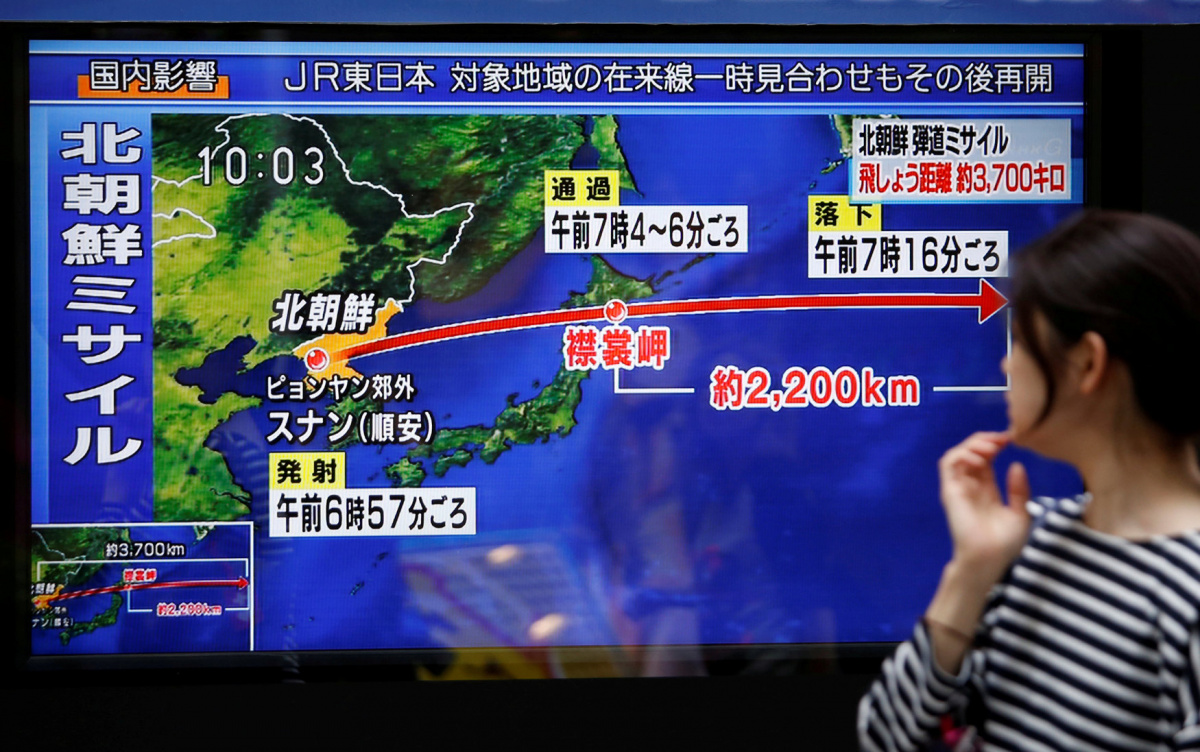
In less than six months, the XXIII Olympic Winter Games will begin in Pyeongchang, South Korea. But with an increasingly militant North Korea located less than 161 kilometers (100 miles) away, legitimate concerns have arisen over the event's potential disruption. Thomas Bach, the president of the International Olympic Committee (IOC), recently said he was closely monitoring the situation, adding that it would be a topic of discussion at the committee's upcoming meeting in Peru. Even so, it's hard not to wonder who will bear the responsibility of ensuring the safety of athletes and spectators in Pyeongchang. The answer has been constantly evolving for over four decades.Far From Myanmar Violence, Rohingya in Pakistan Are Seething
KARACHI, Pakistan — It was happening again, but worse than ever: Hundreds of thousands of ethnic Rohingya Muslims were fleeing Myanmar while under attack by the security forces, and the deaths kept mounting.Nuclear India: Revisiting Issues, Challenges and Threats
The bureaucracy is ailing
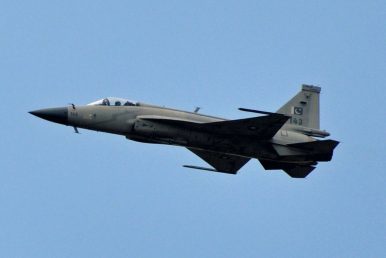
There is no point in denying that the Indian bureaucracy is one of the worst in the world and is widely notorious for its labyrinthine rules and genetic negativity. India is also among the most corrupt nations; surely a large part of the bureaucracy must have either connived in it or abdicated its tasks. On the Corruption Perceptions Index, India's rank is 79th, which is rather shameful, while, where 'the ease of doing business' is concerned, we have moved just a couple of notches but are still below 129 other nations. What amazes us, however, is that even so, several lakhs of young and not-so-young aspirants spend months and years to prepare and appear for the prestigious civil services examinations. They include a large number from the Indian Institutes of Technology, National Institutes of Technology, Indian Institutes of Management, medical colleges and rank-holders of Indian and foreign universities - for a job where they would earn a pittance. It is certainly not true that they enter the services to be a party to corruption, except for a very small section, and to most 'public service' is better than enriching a merchant. It confers greater responsibility and social prestige. In spite of such 'good boys' heading administration, India's ranking is 168th in the world where literacy rate in concerned; 131st in the Human Development Index while in the Global Hunger Index we are below 96 nations.Air Forces of Pakistan, China Begin 'Shaheen VI' Exercises
Apple, the iPhone, and the Future of the Chinese Economy
Can North Korea Drag the U.S. and China Into War?
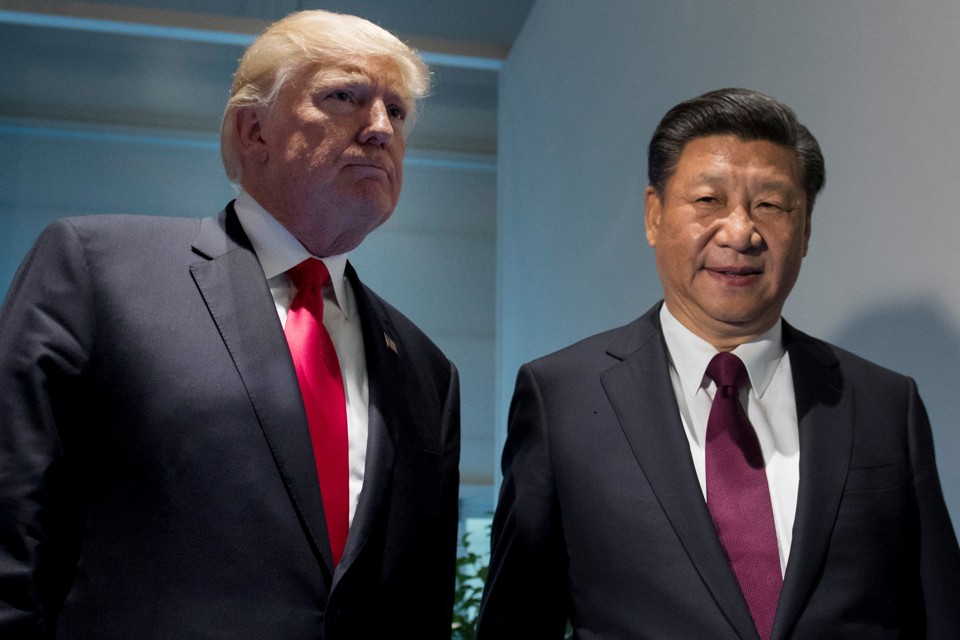
Amid the exchange of threats between North Korea and the United States, ongoing North Korean nuclear and missile tests, and U.S. talk of “all options,” there is growing concern about the real possibility of war with North Korea. What many have not yet reckoned with is an even darker specter. Could events now cascading on the Korean Peninsula drag the U.S. and China into a great-power war?China and India: The Roots of Hostility
Who Benefits From China’s Belt and Road in the Arctic?
In Persian Gulf, computer hacking now a cross-border fear
Tony Cole, Vice President of FireEye Inc., a cybersecurity firm headquartered in Milpitas, California, speaks at the FireEye Cyber Defence Live conference, Tuesday, Sept. 12, 2017, in Dubai, United Arab Emirates. State-sponsored hacks have become an increasing worry among countries across the Persian Gulf. They include suspected Iranian cyberattacks on Saudi Arabia to leaked emails causing consternation among nominally allied Arab nations.How Al-Qaeda Benefits From America’s Political Divisions
IRGC Touts Drone Strikes Against the Islamic State
How North Korea Is Ensuring a Nuclear Arms Race in Asia
BRIEFS COLUMNS THE DEAD DROP OUR EXPERTS ABOUT US FEEDBACK SPONSORSHIP PODCASTS THREAT CONFERENCE Twitter Linkedin Facebook Instagram Russia’s Looming Military Exercise: A 21st Century Trojan Horse?
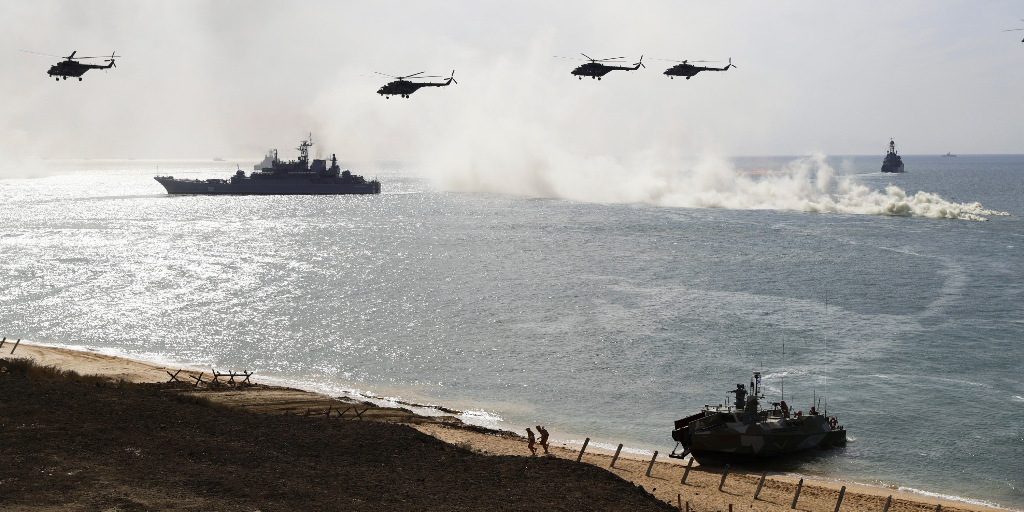
Beginning Thursday, as many as 100,000 Russian and Belarusian troops will launch major military exercises along the border of three NATO countries.North Korea Hackers Step Up Bitcoin Attacks
In the Pacific Theater, A Cold War Sequel

Should the World Fear Russia's Robots?
Donald Trump and the Art of Foreign-Policy Bluffing
Responding to Hurricanes While Assuming No More Wars
Drone Warfare: A New Way to Look at Killer Robots
All the Secret Weapons the U.S. Military Would Use to Crush Russia or China in a War
Defence Reforms: Why is it Critical to Bite the Proverbial Bullet?
The art of public diplomacy
How Silicon Valley is erasing your individuality
Franklin Foer is author of “World Without Mind: The Existential Threat of Big Tech,” from which this essay is adapted.