The 19th annual summit between India and Russia held last week testifies to the highest level attention that both countries give to their bilateral relationship. That India and Russia held their 19th annual summit last week testifies to the highest level attention that both countries give to their bilateral relationship. For Russia, the relationship with India is not the most important and for India, ties with Russia are not uppermost in foreign policy priorities. Yet, the annual summits have been held without break, which is exceptional. This suggests that for Russia, the bilateral relationship is worth nurturing because, apart from direct bilateral benefits, it gives to Russian foreign policy a strong Asian dimension. The esteem that the Indian leadership shows for President Vladimir Putin contrasts with his demonisation by the West.The Profession of Arms: A Guide for Young Army Officers
It takes courage, especially for a young officer, to check a man met on the road for not saluting properly or for slovenly appearance, but, every time he does, it adds to his stock of moral courage, and whatever the soldier may say, he has respect for the officer who does pull him up.
Read Document →The Dragon's Teeth: Assessing China's Military Modernization
PLA has focused on modernising its capabilities across all warfare domains to achieve these goals. This includes land, air, and maritime operations, nuclear, space, counter-space, electronic warfare and cyberspace operations, aiming to become a fully integrated joint force.
Read Document →Transforming the PLA: A Decade of reorganisation from SSF to ISF
PRC has engaged in a sustained and broad effort to transform the PLA from an infantry-heavy, low-technology, ground forces-centric military into a high-technology, networked force with an increasing emphasis on joint operations and naval and air power projection.
Read Document →Eyes without Borders: Exploring the World of Open Source Intelligence (OSINT) in the Digital Age
Open Source Intelligence (OSINT) is gaining prominence with the rise of social media, the digital society and the vast growth of publicly and commercially available information (PAI and CAI).
Read Document →
The PLA’s Developing Cyber Warfare Capabilities and India's Options
Informationised warfare blurs the lines between peacetime and wartime. A nation in the information age cannot wait for the hostilities to break out to collect intelligence, carryout influence operations, develop antisatellite systems or design computer software weapons.
Read Document →
Galwan and After
Why did China did this when he is under tremendous pressure in all fronts, is this China's salami slice tactics being progressed rigorously, what will be new Rules of Engagement, what will be escalatory control mechanism, who has taken this decision, will there be some pressure put by China in India's North-East through insurgency.
Read Document →
India’s Joint Doctrine for Cyberspace Operations: A Critical Review
Chief of Defence Staff (CDS) General Anil Chauhan and Secretary, Department of Military Affairs, formally released declassified versions of the Joint Doctrines for Cyberspace Operations during the Chiefs of Staff Committee meeting in New Delhi.
Read Document →
Know your Enemy General(now Field Marshal) Syed Aseem Munir
Gen SA Munir's position in the hierarchy of Pakistan was not very comfortable. The state of economy, insurgency in Pakhtoonistan and Balochistan, attack on the Jaffar Express, constant protests by supporters of Imran Khan's supporters inside and outside of parliament.
Read Document →
Decoding Operation SINDOOR: Key Aspects and Implications
Precision strikes were carried out on nine sites—four in Pakistan and five in PoK—linked to anti-India terrorist groups such as the LeT, JeM and the Hizbul Mujahideen. The targeted sites included Muridke (LeT headquarters) and Bahawalpur (JeM headquarters).
Read Document →
Chinese Cyber Exploitation in India's Power Grid - Is There a linkage to Mumbai Power Outage?
The New York Times (NYT), based on analysis by a U.S. based private intelligence firm Recorded Future, reported that a Chinese entity penetrated India’s power grid at multiple load dispatch points. Chinese malware intruded into the control systems that manage electric supply across India, along with a high-voltage transmission substation and a coal-fired power plant
Read Document →11 October 2018
Why Vladimir Putin's India visit is of great significance
The 19th annual summit between India and Russia held last week testifies to the highest level attention that both countries give to their bilateral relationship. That India and Russia held their 19th annual summit last week testifies to the highest level attention that both countries give to their bilateral relationship. For Russia, the relationship with India is not the most important and for India, ties with Russia are not uppermost in foreign policy priorities. Yet, the annual summits have been held without break, which is exceptional. This suggests that for Russia, the bilateral relationship is worth nurturing because, apart from direct bilateral benefits, it gives to Russian foreign policy a strong Asian dimension. The esteem that the Indian leadership shows for President Vladimir Putin contrasts with his demonisation by the West.Pakistani Poker: Playing Saudi Arabia Against China – Analysis
No easy escape from Afghan war for Trump
Not for the first time, the U.S. is showing signs of desperation in trying to end its war in Afghanistan, by renewing efforts for a peace deal with the Taliban and — yet again — reviewing combat strategy. Ending the longest war in American history, which marks its 17th anniversary on Oct. 7, appears integral to President Donald Trump’s broader plan to roll back America’s “imperial overreach” — the phenomenon of a great power going into decline when it takes on excessive global commitments. In contrast to China’s use of economic tools to achieve strategic objectives, the U.S. has too often reached for the gun instead of the purse. Many in Washington now believe U.S. retrenchment must include staying out of faraway wars and making allies pay their fair share for defense.The Taliban’s Fight for Hearts and Minds
China’s Imperial Project Runs into Resistance
Grand on ambition but short on transparency, Chinese President Xi Jinping’s marquee project, the Belt and Road Initiative (BRI), seeks to refashion the global economic and political order by luring nations desperate for infrastructure investments into China’s strategic orbit. The BRI is essentially an imperial project aiming to make real the mythical Middle Kingdom. The BRI, rolled out in 2013, attracted many countries, as China offered to finance and build major infrastructure projects, including ports, highways, energy plants and railroads. But after a smooth sailing, the BRI is now encountering strong headwinds, as partner-countries worry about China ensnaring them in sovereignty-eroding debt traps. China has extended huge loans to financially weak states, only to strengthen its leverage through debt entrapment Indeed, Beijing has converted big credits not just into political influence but also a military presence, as its first overseas naval base at Djibouti illustrates.A Conversation With Wang Yi
South China Sea Showdown: What Happens If a U.S. Navy and Chinese Vessel Collide?
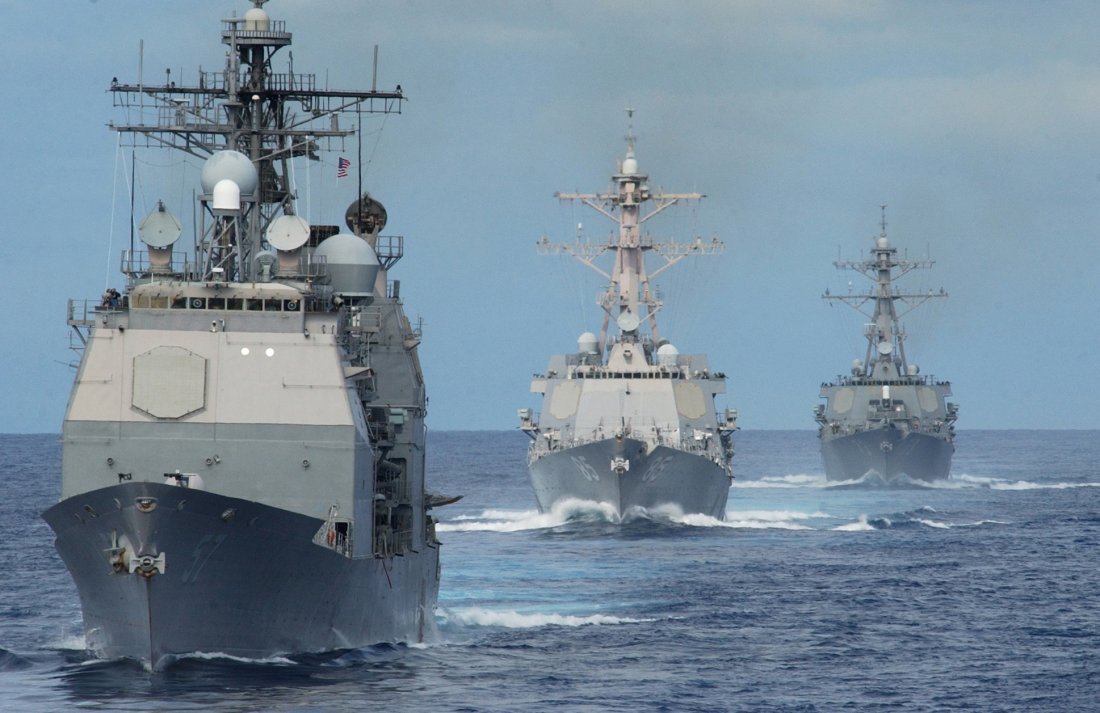
What would happen should a U.S. Navy warship collide with a Chinese vessel while demonstrating on behalf of freedom of the sea?Trump´s Middle East Policy
Jack Thompson argues that Donald Trump’s Middle East policy represents a significant change from that of Barack Obama. For instance, in addition to isolating Iran, the president appears to be supporting the ascendancy of bloc consisting of Saudi Arabia, Israel and the United Arab Emirates. However, this agenda has emerged in piecemeal fashion rather than as part of a coherent strategy – and there are few indications that administration officials have considered the long-term implications of their approach. This CSS Analyses in Security Policy was originally published in October 2018 by the Center for Security Studies (CSS). It is also available in German and French.Israel’s War with Iran Is Inevitable
Major Climate Report Describes a Strong Risk of Crisis as Early as 2040
INCHEON, South Korea — A landmark report from the United Nations’ scientific panel on climate change paints a far more dire picture of the immediate consequences of climate change than previously thought and says that avoiding the damage requires transforming the world economy at a speed and scale that has “no documented historic precedent.” The report, issued on Monday by the Intergovernmental Panel on Climate Change, a group of scientists convened by the United Nations to guide world leaders, describes a world of worsening food shortages and wildfires, and a mass die-off of coral reefs as soon as 2040 — a period well within the lifetime of much of the global population. The report “is quite a shock, and quite concerning,” said Bill Hare, an author of previous I.P.C.C. reports and a physicist with Climate Analytics, a nonprofit organization. “We were not aware of this just a few years ago.” The report was the first to be commissioned by world leaders under the Paris agreement, the 2015 pact by nations to fight global warming.Reimagining Diplomatic Relations for a Changing World
A Better Approach To Globalization – Analysis
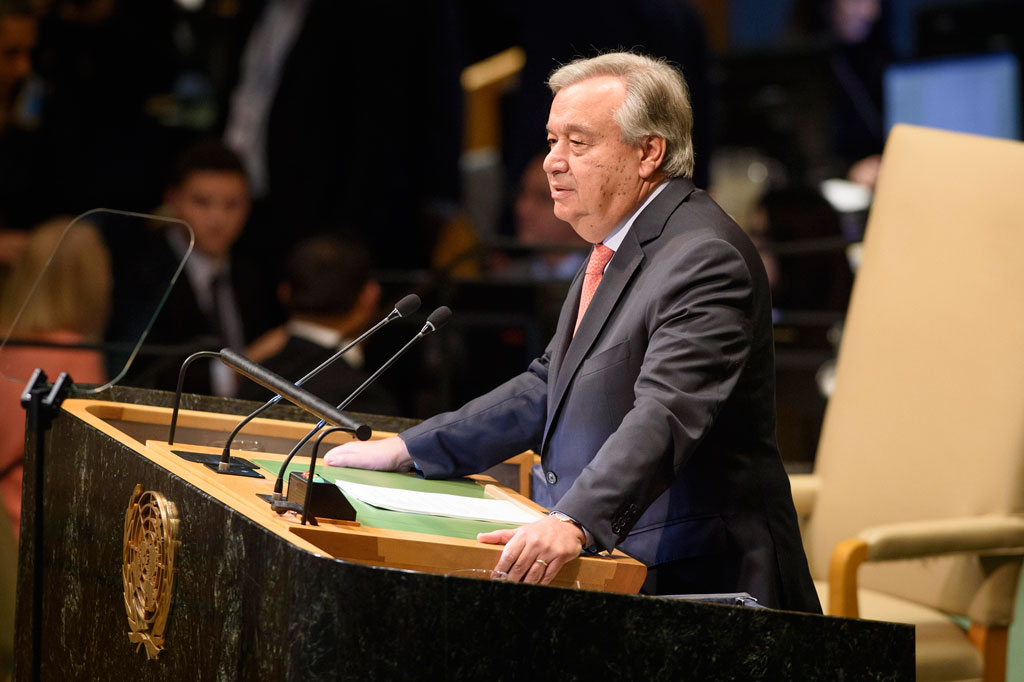
United Nations Secretary-General Address to the General Assembly
Our future rests on solidarity. We must repair broken trust. We must reinvigorate our multilateral project. And we must uphold dignity for one and for all.Global warming will make deadly heatwaves an annual threat in India and Pakistan
The ultimate guide to negative-emission technologies
The Decline and Fall of Brazil’s Political Establishment
How the Pentagon can help improve supply chain cybersecurity
Can this AI find a terrorist in a surveillance video?
WASHINGTON — A Connecticut-based video analytics and cloud computing firm is pitching the U.S. Army on an artificial intelligence that can tag cars, people and weapons in drone footage, saving troops from drowning in data. IronYun used an appearance at the Association of the U.S. Army’s annual meeting to market a capability that uses multiple algorithms running simultaneously for intelligence, surveillance and reconnaissance — potentially saving thousands of man-hours of screen viewing. The idea of automatically searching through the reams of data brought in by military surveillance assets — often referred to as a “tsunami” by Pentagon experts — is an increasingly realistic thanks to emerging AI capabilities. And AI is an emerging priority for the Defense Department, which has several significant AI initiatives underway. Google has contracted with the Pentagon for similar AI-drone services, under the banner of the controversial Project Maven.Google Plus Will Be Shut Down After User Information Was Exposed
Our Trust Deficit With Artificial Intelligence Has Only Just Started – Analysis
“We suffer from a bad case of trust-deficit disorder,” said UN Secretary-General Antรณnio Guterres in his recent General Assembly speech. His diagnosis is right, and his focus on new technological developments underscores their crucial role shaping the future global political order. Indeed, artificial intelligence (AI) is poised to deepen the trust-deficit across the world. The Secretary-General, echoing his recently released Strategy on New Technologies, repeatedly referenced rapidly developing fields of technology in his speech, rightly calling for greater cooperation between countries and among stakeholders, as well as for more diversity in the technology sector. His trust-deficit diagnosis reflects the urgent need to build a new social license and develop incentives to ensure that technological innovation, in particular AI, is deployed safely and aligned with the public interest.The UK is practicing cyberattacks that could black out Moscow
There’s a serious threat to the supply chain, says Pentagon
Amid concern that the Chinese government has infected the U.S. supply chain, a new Pentagon report says that the cybersecurity industry has not paid enough attention to protecting a foundational sector. Most cybersecurity research is focused on cloud services, data management and other types of information systems, but security of the manufacturing industry’s supply chain has been overlooked, according to the Oct. 5 report. “Cybersecurity has not become an ingrained norm in manufacturing, especially in small and medium-sized manufacturers,” the report said. If these issues are not addressed, the American industrial base faces even more vulnerabilities and a “substantial reduction in the number of suppliers compliant with requirements and thereby eligible to provide products and services to [the Department of Defense],” the report warned.The Top American General In Vietnam Considered Using Nukes During The Siege Of Khe Sanh, New Documents Reveal
The top commander of U.S. military forces in Vietnam readied nuclear weapons for use on the battlefield in the early months of the brutal 1968 battle at Khe Sanh, according to recently declassified documents obtainedby the New York Times. A series of memos, declassified in 2014 and first discovered by historian Michael Beschloss, reveals that Gen. William C. Westmoreland had in February 1968 activated Fracture Jaw, a secret plan to move nuclear warheads into South Vietnam “so that they could be used on short notice” should U.S. troops face imminent defeat at Khe Sanh. Westmoreland, who had previously touted the North Vietnamese advanced on Khe Sanh as “the main event” of the Communist advance, put Fracture Jaw together with the approval of the then-U.S. Pacific Command chief Adm. Ulysses S. Grant Sharp Jr. so that, “should the situation in the DMZ area change dramatically, we should be prepared to introduce weapons of greater effectiveness against massed forces.”