Recent days have seen the most dangerous confrontation between Pakistan and India for two decades. A suicide-bombing in Kashmir (by an Indian Kashmiri), followed by tit-for-tat sorties by Indian and Pakistani warplanes, have left the two nuclear-armed powers on the brink of a catastrophic stand-off. Why is Kashmir so often the flashpoint?The Profession of Arms: A Guide for Young Army Officers
It takes courage, especially for a young officer, to check a man met on the road for not saluting properly or for slovenly appearance, but, every time he does, it adds to his stock of moral courage, and whatever the soldier may say, he has respect for the officer who does pull him up.
Read Document →The Dragon's Teeth: Assessing China's Military Modernization
PLA has focused on modernising its capabilities across all warfare domains to achieve these goals. This includes land, air, and maritime operations, nuclear, space, counter-space, electronic warfare and cyberspace operations, aiming to become a fully integrated joint force.
Read Document →Transforming the PLA: A Decade of reorganisation from SSF to ISF
PRC has engaged in a sustained and broad effort to transform the PLA from an infantry-heavy, low-technology, ground forces-centric military into a high-technology, networked force with an increasing emphasis on joint operations and naval and air power projection.
Read Document →Eyes without Borders: Exploring the World of Open Source Intelligence (OSINT) in the Digital Age
Open Source Intelligence (OSINT) is gaining prominence with the rise of social media, the digital society and the vast growth of publicly and commercially available information (PAI and CAI).
Read Document →
The PLA’s Developing Cyber Warfare Capabilities and India's Options
Informationised warfare blurs the lines between peacetime and wartime. A nation in the information age cannot wait for the hostilities to break out to collect intelligence, carryout influence operations, develop antisatellite systems or design computer software weapons.
Read Document →
Galwan and After
Why did China did this when he is under tremendous pressure in all fronts, is this China's salami slice tactics being progressed rigorously, what will be new Rules of Engagement, what will be escalatory control mechanism, who has taken this decision, will there be some pressure put by China in India's North-East through insurgency.
Read Document →
India’s Joint Doctrine for Cyberspace Operations: A Critical Review
Chief of Defence Staff (CDS) General Anil Chauhan and Secretary, Department of Military Affairs, formally released declassified versions of the Joint Doctrines for Cyberspace Operations during the Chiefs of Staff Committee meeting in New Delhi.
Read Document →
Know your Enemy General(now Field Marshal) Syed Aseem Munir
Gen SA Munir's position in the hierarchy of Pakistan was not very comfortable. The state of economy, insurgency in Pakhtoonistan and Balochistan, attack on the Jaffar Express, constant protests by supporters of Imran Khan's supporters inside and outside of parliament.
Read Document →
Decoding Operation SINDOOR: Key Aspects and Implications
Precision strikes were carried out on nine sites—four in Pakistan and five in PoK—linked to anti-India terrorist groups such as the LeT, JeM and the Hizbul Mujahideen. The targeted sites included Muridke (LeT headquarters) and Bahawalpur (JeM headquarters).
Read Document →
Chinese Cyber Exploitation in India's Power Grid - Is There a linkage to Mumbai Power Outage?
The New York Times (NYT), based on analysis by a U.S. based private intelligence firm Recorded Future, reported that a Chinese entity penetrated India’s power grid at multiple load dispatch points. Chinese malware intruded into the control systems that manage electric supply across India, along with a high-voltage transmission substation and a coal-fired power plant
Read Document →14 September 2019
Why Kashmir Is the Flashpoint for Indo-Pakistani Confrontations
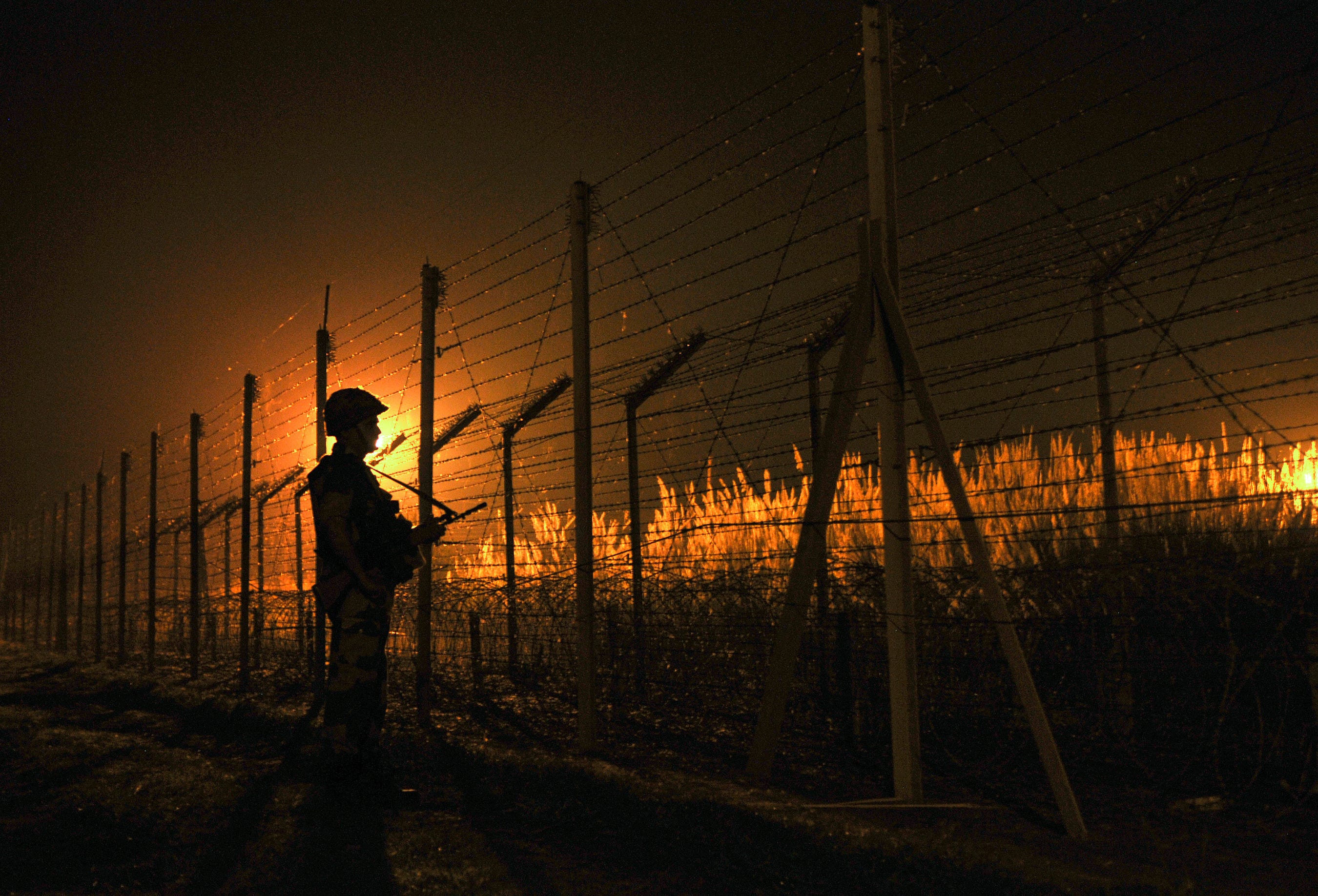
Recent days have seen the most dangerous confrontation between Pakistan and India for two decades. A suicide-bombing in Kashmir (by an Indian Kashmiri), followed by tit-for-tat sorties by Indian and Pakistani warplanes, have left the two nuclear-armed powers on the brink of a catastrophic stand-off. Why is Kashmir so often the flashpoint?Engaging with India’s Electrification Agenda: Powering Assam
The Taliban Hardly Deserve Camp David Talks With a President. What Was Trump Thinking?
Afghans Want Peace, but Not Like This
KABUL—Sakhi Murad Sadar, his wife, and their two children were asleep in the family’s living room on Sept. 2 when a car bomb was detonated on the street nearby, ripping the house apart, smashing its windows, and almost killing the family.Compassionate Warfare, a Hard Promise to Keep: COIN in Iraq and Afghanistan
There’s Still a Path Forward With the Taliban
The Taliban Kills a Glimmer of Hope in Helmand
Afghans fear Trump’s Taliban move means more civilians die
In this Tuesday, Sept. 10, 2019, photo, Afghans inspect their damaged house after a large explosion last week near a compound housing several foreign organizations and guesthouses, in Kabul, Afghanistan. The Taliban car bomb targeted the compound but instead shredded Afghan homes, with stunned and bloodied families picking up children and fleeing in darkness as their once-solid world collapsed. As America on Wednesday mourns thousands of civilians killed in the 9/11 attacks, weary Afghans watch their own toll from the aftermath continue to rise. (AP Photo/Rahmat Gul)Sri Lanka’s Radical Approach to Deradicalization Worked Before. It Can Again
In the four months since coordinated suicide bombers killed more than 250 people across Sri Lanka on Easter Sunday, the country’s embattled government has been forced to grapple with a common question in the post-9/11 era. How do you stop enemies willing to kill themselves for a political or religious cause?Hong Kong Reaches a Point of No Return
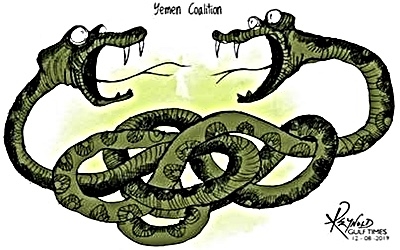
While Hong Kong Chief Executive Carrie Lam's overdue decision to withdraw a contentious extradition bill will calm some of the crisis in Hong Kong, it will not appease all protesters, especially more radical ones. Even if the standoff abates, negating the need for a harsher crackdown, Hong Kongers' political and socio-economic grievances toward Beijing are so deep that another flare-up is likely to occur eventually. As Hong Kong's political and ideological polarization deepens, it could threaten the city's business environment in the long term as the region's competition for capital flows intensifies further, making it harder to recover from the current crisis.Saudi Arabia Is Losing Yemen to Iran
Don't Ignore Serious Nonmilitary Threats To US National Security
How Brexit Is Undoing Britain’s Political System
Fresh Approaches Enable Russia-Ukraine Prisoner Swap
We Are Teetering on the Edge of a Hinge Point With North Korea
A Post-Soviet “War and Peace”
Rafael Nadal Shows Why the Young Guard Will Have to Wait
When Nadal won his first United States Open in 2010, there was no retractable roof high over his head, no digital serve clock counting down in a corner of Arthur Ashe Stadium and causing him grief.Strategic Partnership or Strategic Dependence?
Tomgram: Andrew Bacevich, Ending War, American-Style
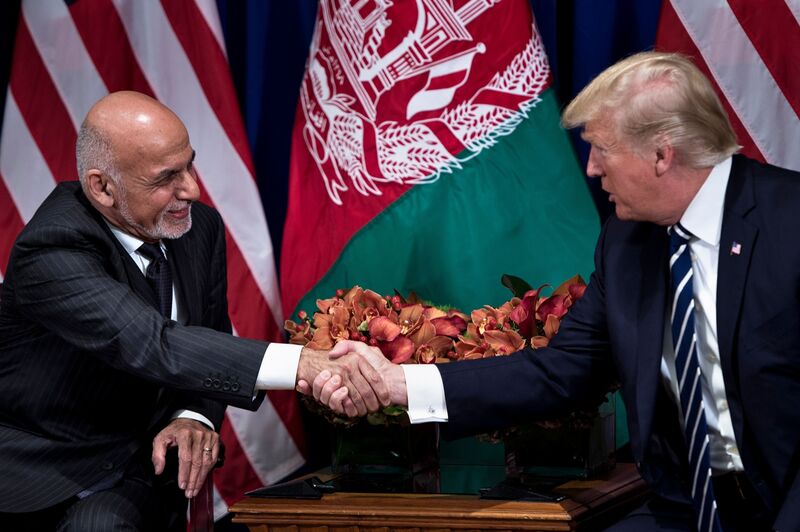
The Taliban hardly deserve Camp David talks with a president. What was Trump thinking?
The New US Strategy to Remove Maduro in Venezuela
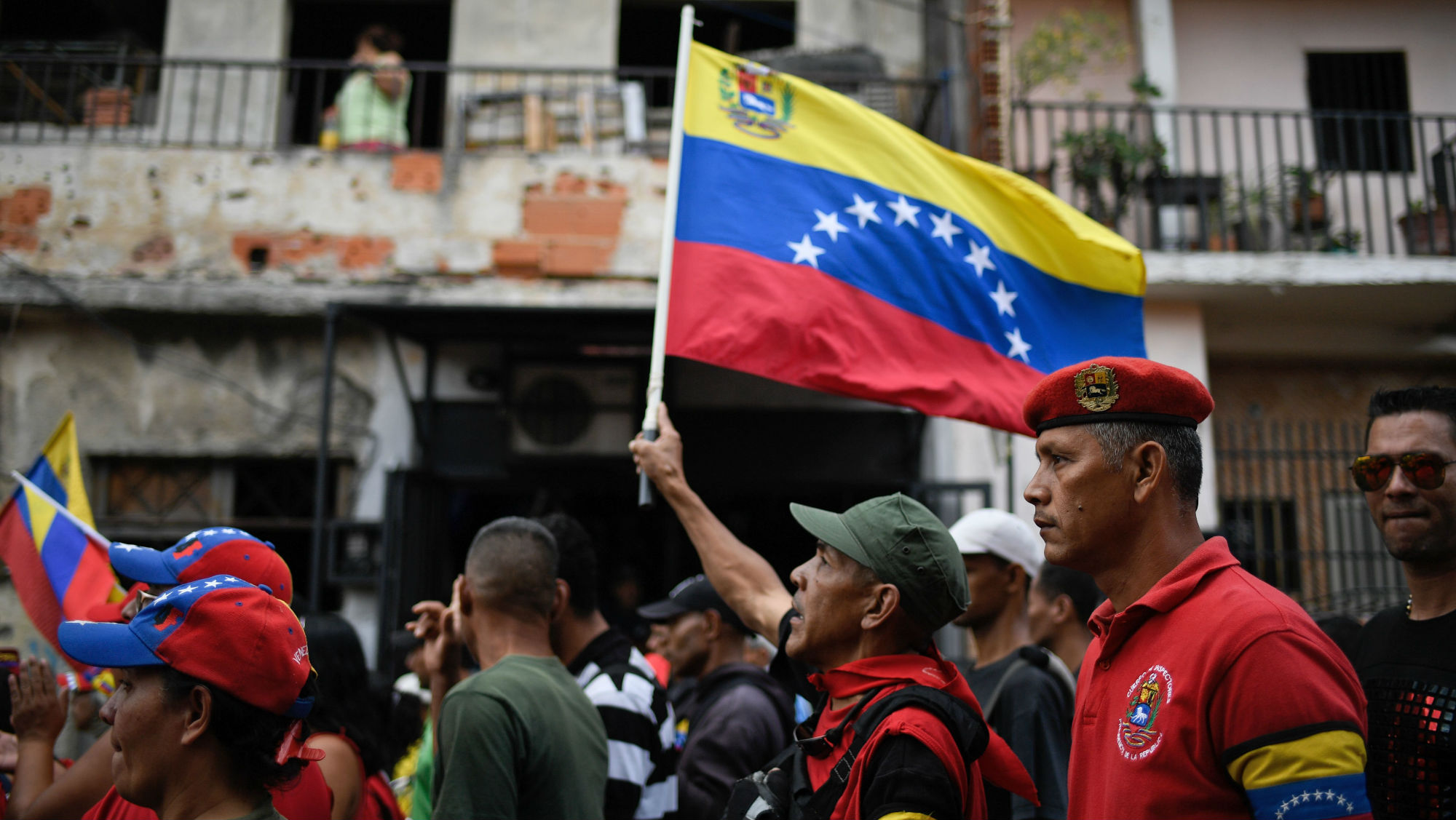
After months of little progress, it seems the United States may be getting closer to removing Venezuelan President Nicolas Maduro from office. Until relatively recently, Washington had been pushing to unseat Maduro by throwing its support behind opposition leader Juan Guaido, hoping that he could inspire an uprising that could overthrow the president. So far, that strategy hasn’t worked. So Washington has come up with a new plan: negotiate a transition directly with the Maduro government. It’s been able to do this only because the sanctions imposed on Venezuela have weakened the government enough to force it to the negotiating table. Maduro’s departure now seems to be a question of when, not if.A Trump-Rouhani meeting: inevitable or inconceivable?
Over the last two weeks there have been a flurry of statements from American and Iranian officials on the possibility of negotiations between Iran and the United States. Will they happen, or won’t they? While some think that talks are increasingly likely, a recent commentary in the Washington Post suggests that hurdles abound.There is no Plan B for dealing with the climate crisis
Lack of progress towards decarbonization of world energy systems has created justifiable panic about the climate crisis. This has led to an intensified interest in technological climate interventions that involve increasing the reflection of sunlight to space by injecting substances into the stratosphere which lead to the formation of highly reflective particles. When first suggested, such albedo modification schemes were introduced as a “Plan B,” in case the world economy fails to decarbonize, and this scenario has dominated much of the public perception of albedo modification as a savior waiting in the wings to protect the world against massive climate change arising from a failure to decarbonize. But because of the mismatch between the millennial persistence time of carbon dioxide and the sub-decadal persistence of stratospheric particles, albedo modification can never safely play more than a very minor role in the portfolio of solutions. There is simply no substitute for decarbonization. This article is free-access through October 31, 2019.Student Feature – Spotlight on the WTO and its Appellate Body Crisis
Google and Facebook Have Failed Us
Inthe crucial early hours after the Las Vegas mass shooting, it happened again: Hoaxes, completely unverified rumors, failed witch hunts, and blatant falsehoods spread across the internet.How Data Hoarding Is the New Threat to Privacy and Climate Change
Asmachine learning and other data-intensive algorithms proliferate, more organizations are hoarding data in hopes of alchemizing it into something valuable. From spy agencies to network infrastructure providers, data collection is part and parcel of the digital economy. The best data can be combined with clever algorithms to do incredible things — but digital hoarding and computationally-intensive workloads have externalities too.Google pays France over $1 billion to settle tax case
Tech giant Google said Thursday it has paid over one billion dollars to French authorities to settle a years-long dispute over allegations of tax fraud.What does state-of-the-art cybersecurity look like to the Pentagon?
The Department of Defense wants to hear from industry leaders about the Pentagon’s proposal to grade contractors on their cybersecurity.How Each Big Tech Company May Be Targeted by Regulators
Amazon, Apple, Facebook and Google have been the envy of corporate America, admired for their size, influence and remarkable growth.